昆明の雨の夜、菌子火鍋店で「鮮度が光る」という意味を教わった
At 7:05 in the evening, just as Kunming’s rain thickened from a drizzle, I turned into a shining street dragging a suitcase still dusty from the high-speed rail station. Neon reflected off the wet ground, and the red lantern outside a mushroom hot pot shop swayed gently in the wind while a staff member lowered the plastic door curtain. I stopped at the entrance to shake the water from my umbrella, wondering whether hot pot was too extravagant for one person, when the owner was already waving me in through the steam: “Come in. In Kunming, when it rains, you eat mushrooms.”
The line sounded so much like a local law that I had almost no room to argue. The restaurant was small, with wooden tables polished bright, photos of different mushrooms on the walls, and handwritten warnings everywhere. The most prominent one read: Wild mushrooms must be cooked patiently; only those who do not rush get to taste true freshness. When I sat down, a family of three occupied the next table. Their child tapped a bowl with chopsticks, the father was busy blanching greens, and the mother watched the timer over the pot with serious concentration. That focus made me realize that mushroom hot pot here was not merely “having dinner.” It felt more like a nighttime ritual with rules, waiting, and a trace of reverence.
The owner’s surname was Duan, and she spoke with a steady rhythm. She took one look at me and asked whether it was my first time eating mushroom hot pot in Kunming. I nodded. She immediately opened the menu to the most approachable page and, instead of pushing the expensive items, first explained the broth, the mushroom varieties, the order of ingredients, and the waiting time. She said many outsiders hear the word “fresh” and imagine strong flavor, heavy seasoning, something striking at once. But Yunnan mushroom freshness, she said, is often bright, thin, and slow to unfold, like a row of shop signs in the distance on a rainy night after the water has washed the air and made everything suddenly clearer.
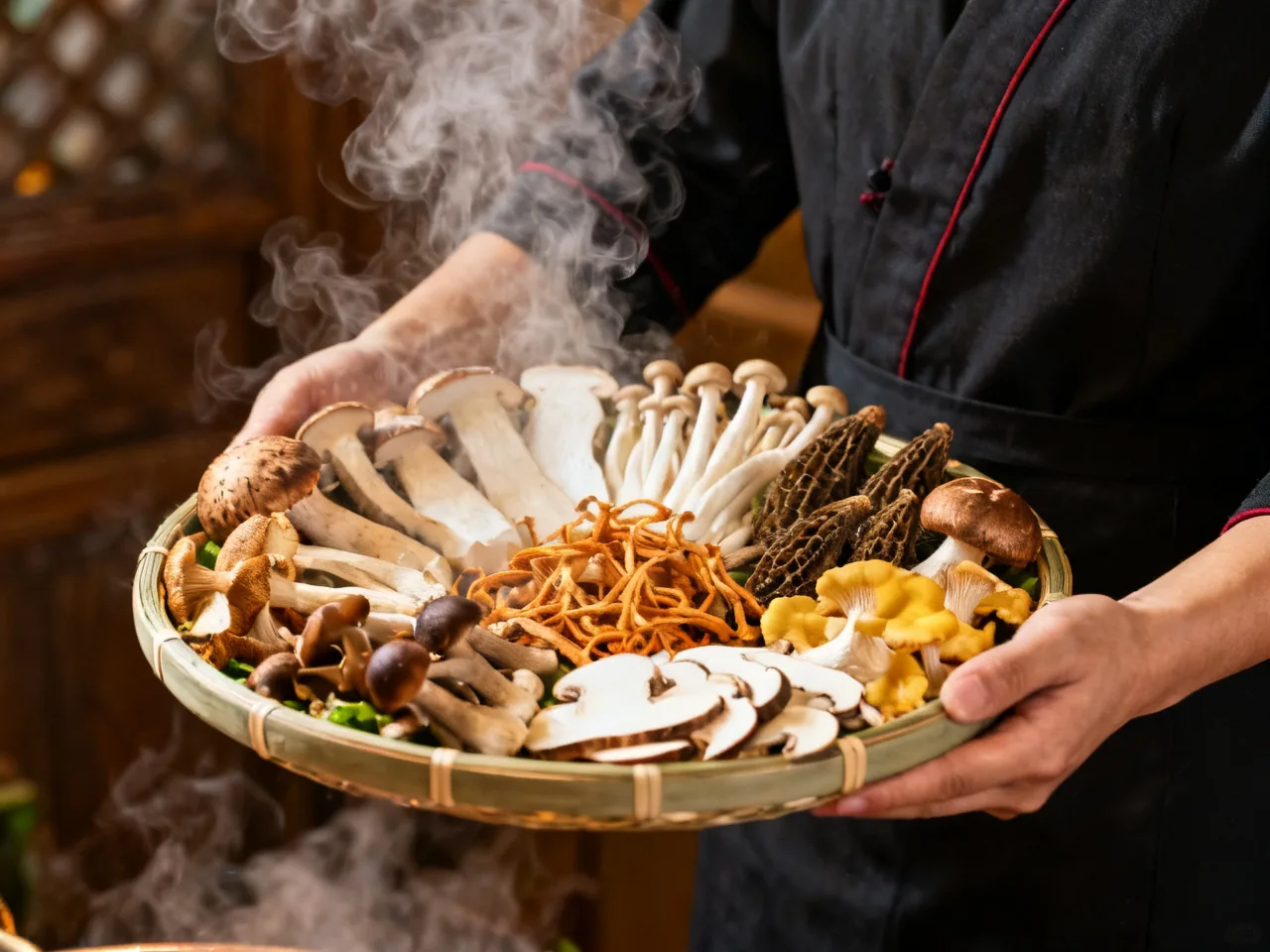
I ordered a relatively clear broth with porcini, termitomyces, jianshouqing, and several seasonal mushrooms chosen by the owner. She added tofu, greens, and a small plate of thinly sliced ham, saying they would round out the soup. When the pot arrived, white steam surged upward. There were no mushrooms in it yet, only a clear broth and a few slices of ginger, but it already carried a scent of wood, earth, and mountain paths after rain. It was not the kind of fragrance city restaurants usually chase. It felt more like a door had just been opened, and outside that door was a damp forest where your shoes might crunch softly on fallen twigs.
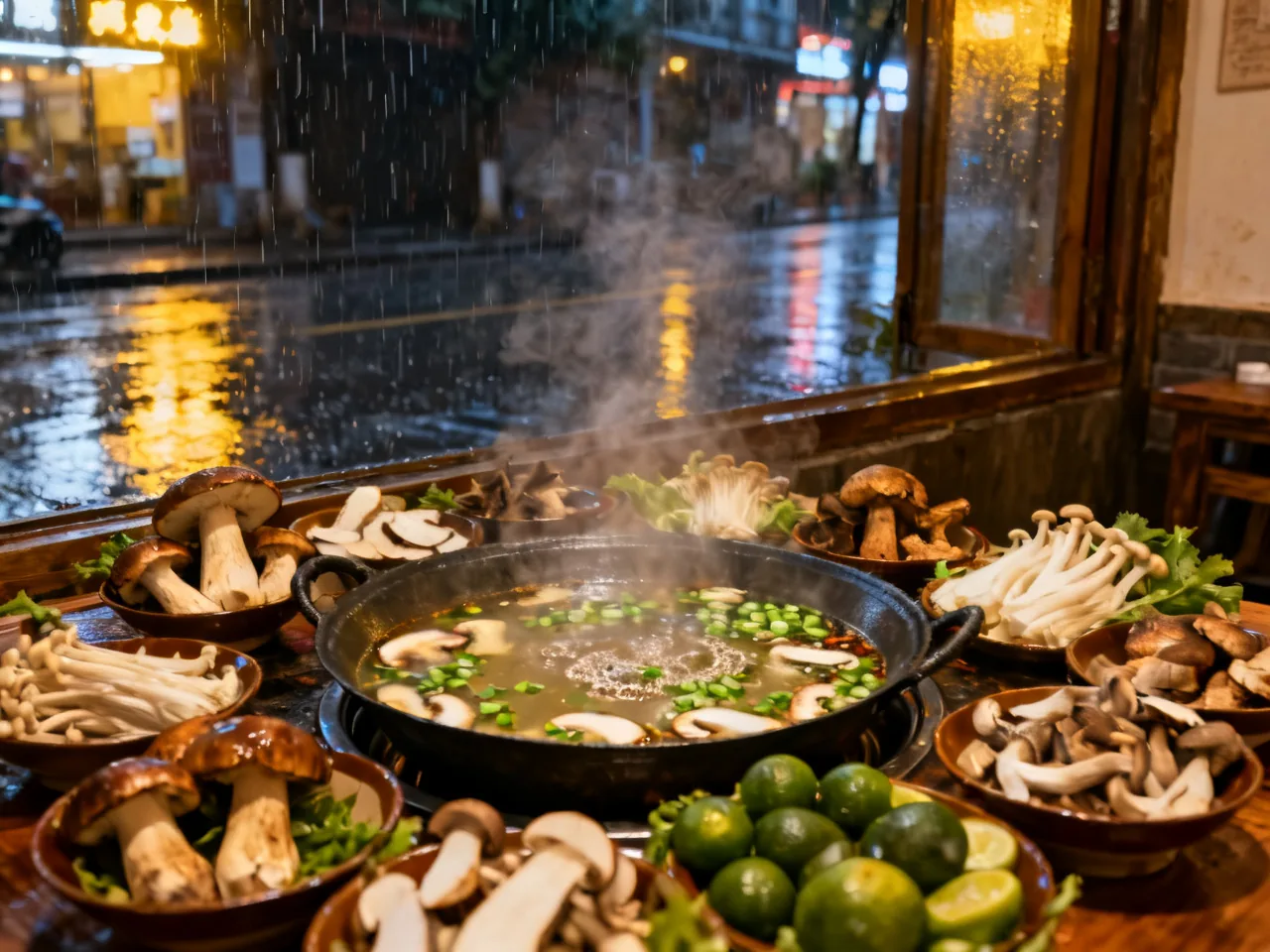
Before anything went in, Owner Duan pulled the jianshouqing to one side and warned me seriously, “This one must follow the timing. Don’t be brave.” As she said it, the mother at the neighboring table also looked up and agreed, as if the two of them had just formed a tiny joint task force among strangers. It made me laugh, but it also made me pay attention. Once the mushrooms slid into the pot one plate after another, the surface stayed calm for a moment, then began releasing fine bubbles. The aroma did not rush outward; it spread layer by layer. Rain tapped the plastic curtain with a muted rhythm, while the pot answered with a lighter bubbling sound, the two tempos gradually folding together inside the small shop.
Waiting was the most important part of the meal and the part outsiders often struggle with most. We are too used to pursuing efficiency in cities, as if everything delicious should produce a result within three minutes. But that night, watching the timer change bit by bit, I suddenly felt that Kunming had put eating back into a more patient place. During the wait, Owner Duan poured me a small cup of hot tartary buckwheat tea and said the recent rain had been good for mushroom season. Then she asked where I was from, where I had been that day, and whether I had just arrived in Kunming. I told her I had stepped off the train not long ago and had barely seen the city yet. She smiled and said, “Then starting with this means you haven’t gone wrong.”
When I took the first sip, I finally understood what she meant by “bright.” It was not the satisfaction of heavy fat, nor the impact of salt and spice pressing straight onto the tongue. It was a kind of clarity, like glass suddenly turning transparent after being wiped clean. The porcini gave the broth structure, the termitomyces brought out a fine thread of sweetness, the ham quietly supported the savory base, and each mushroom variety left a little edge of its own instead of fighting for attention. The soup stayed clean all the way from the tip of the tongue to the throat—so clean that I instinctively slowed down, wanting to check whether I had missed some detail.
Then came the textures. Jianshouqing can turn slippery if handled badly and worse if cooked incorrectly, but that night, after the proper time, it had a surprisingly fine resilience. The termitomyces felt as if rainy air had been compressed into its fibers, releasing fragrance the moment I bit down. The tofu had absorbed the broth completely; its edges were slightly hot, and when it opened it delivered the freshness all at once. Outside, a bus sent water splashing across the road. Inside, someone stood to grab tissues and chair legs brushed softly over the floor. Meanwhile I kept lowering my head over a second bowl of soup, feeling the fatigue I had carried from the station slowly taken apart by the heat.
Many people come to Yunnan wanting a checklist of “the most famous” places, as if completing a food itinerary were the point. But what I felt more strongly that night was that the truly moving part of food does not always lie in reputation; it lies in the scene created by weather, place, and the way people speak. Rainy Kunming, droplets on the door curtain, the owner’s steady voice, and the mother at the next table watching the timer all participated in the taste of that mushroom hot pot. If you want to approach Chinese food first from a broader street-food angle, a good primer on ten Chinese street snacks is useful. But on a rainy night in Kunming, you understand that some forms of freshness belong only to slower table-side moments.
Later, Owner Duan brought me a small portion of rice noodles and said they were good for gathering up the final broth. I had assumed they were simply there to fill me up, but they introduced yet another layer: the noodles caught all the mushroom fragrance from before, sliding down almost without chewing while still leaving that forest-like aftertaste in the mouth. She stood by the counter doing the bills and casually chatting with a regular about the market prices of mushrooms for the next day, in the same tone one might discuss the weather. Listening to her say, “At this time of year, the termitomyces are still pretty good,” I suddenly felt that the reliability of a city’s food often rests in this kind of unperformed daily judgment.
If you plan to keep exploring Kunming the next day for breakfast, rice noodles, or more local flavors, it helps to build a sense of the rhythm of everyday Chinese eating first. A map of Chinese breakfasts makes excellent background reading before or after a trip, because you begin to notice that the foods you truly remember rarely stand alone. They stay attached to a street corner at dawn, rain at night, or someone who told you not to rush.
By the time I left, it was nearly nine. The rain had not stopped; it had only turned finer, as though wrapping the whole street in a thin layer. Owner Duan walked me to the door and reminded me to zip my suitcase properly so rain would not get inside. From under the eaves I turned back once more. Steam still fogged the glass, the family next door had finished, their child drooping asleep over the father’s shoulder, and on the table only an emptied pot remained with the surface still faintly trembling. Streetlights lit the puddles with pale gold edges. I rolled my suitcase slowly toward the hotel, the clean, bright aftertaste of mushroom broth still in my mouth, as if I were carrying the whole rainy night of Kunming there with me.