シェアサイクルは使いにくいわけじゃない、難しいのは先に駐輪エリアを確認すること
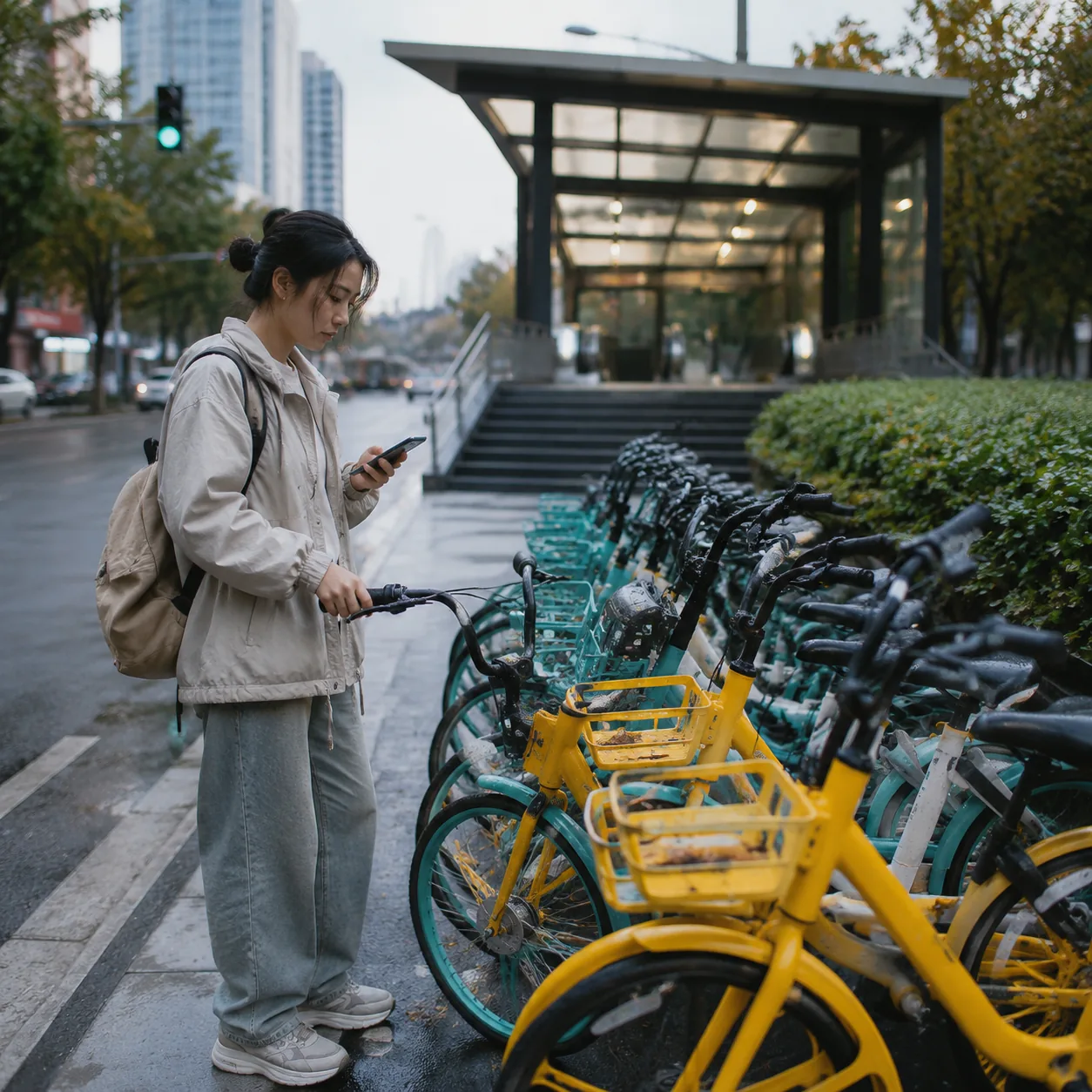
At 7:45 on a Tuesday morning in April 2025, I stood outside Tongzilin metro station in Chengdu with my phone in my right hand, a laptop bag on my left shoulder, and the dampness of last night’s rain still clinging to my shoes. A row of yellow and teal shared bikes stood beside the metro exit, water beads hanging on their bells and a few ginkgo leaves lying in their baskets. I had moved to the city not long before and was planning to ride two kilometers to my language school. The map showed that cycling would take only twelve minutes, much faster than transferring to a bus. I unlocked a bike and thought I was finally commuting like a local, but I did not first check whether parking was allowed near my destination.
The ride began smoothly. Chengdu’s morning rush hour had a soft kind of busyness: steam rose from a pancake stall, delivery riders passed along the side of the bike lane, and roses had just opened in the roadside flowerbeds. I followed navigation through an intersection and then rode south along a street lined with plane trees. The shared bike itself was not difficult to use: scanning, unlocking, adjusting the seat, and testing the brakes were easy to learn within minutes. The real problem was waiting at the destination. When I reached the school gate and tried to park by the roadside, the phone displayed a warning: this location was outside the parking zone, and locking the bike there might cause a relocation fee.
I stood at the edge of the sidewalk, with students hurrying into the school behind me and a small van unloading goods in front of me. The electronic fence on my phone was a pale blue area about two hundred meters away, near the entrance of a small lane. I tried pushing the bike a few steps forward, but the warning did not disappear; I moved back, and it still remained. Class would start in ten minutes, and I began to sweat. A commuter in a dark blue jacket parked his own bike nearby. Seeing me repeatedly looking down at my phone, he reminded me, “You need to park inside the white marked box. This school gate isn’t a parking point. Go past the traffic light, and there’s a row beside the convenience store.”
After hearing him, I finally looked around carefully. There were indeed white parking boxes painted on the ground, but I had focused only on the navigation destination and had not noticed the markings. The bike company had drawn electronic fences in the app, and city management had marked physical parking areas on certain roads. Sometimes the two matched perfectly, and sometimes I needed to walk a bit farther to align them. I pushed the bike across the traffic light and found the white box beside the convenience store. More than a dozen bikes were already parked there, their front wheels mostly facing the same direction, and pedestrians could still pass easily. I moved my bike into the box, tapped to end the ride again, and the warning finally turned green.
I was still three minutes late. When I entered the classroom, the teacher was writing the Chinese characters for “transportation” on the whiteboard, and the whole class laughed because my real example was more immediate than the textbook. During the break, I told my Korean classmate Minji and my French classmate Luca about it, and both said they had faced similar situations. Minji once rode from a metro exit to her office, only to discover that the area around the office tower was entirely no-parking, so she had to push the bike around to the back gate. Luca failed to end a ride beside a park and thought the app was broken, only later learning that he was inside a scenic management area and had to park near the designated entrance.
After that day, I began to treat shared bikes as a tool that requires planning the parking first, not as a toy to unlock casually and ride away. Chinese cities have many shared bikes, and using them is inexpensive, but they exist within an order connected to metro stations, buses, sidewalks, commercial streets, and park entrances. If bikes are parked properly, the next user can find them easily, pedestrians are not blocked, tactile paving is not occupied, and sanitation workers do not have to move bikes one by one. If bikes are parked poorly, I may pay an extra fee, and others may be forced to detour. The idea is not complicated, but I truly remembered it only after nearly being late one morning.
The first method I organized for myself was to zoom in on the destination before scanning the code. Many people wait until they arrive to deal with ending the ride, but now I open the map before departure, enlarge the destination area enough to see intersections and buildings, and then check the parking-zone display in the bike app. If there is no blue or green allowed-parking area near the destination, I choose an approved spot in advance and treat it as my real destination. This seems to take an extra half minute, but it can save five minutes of pushing the bike around and can prevent anxiety in rain, darkness, or a hurry.
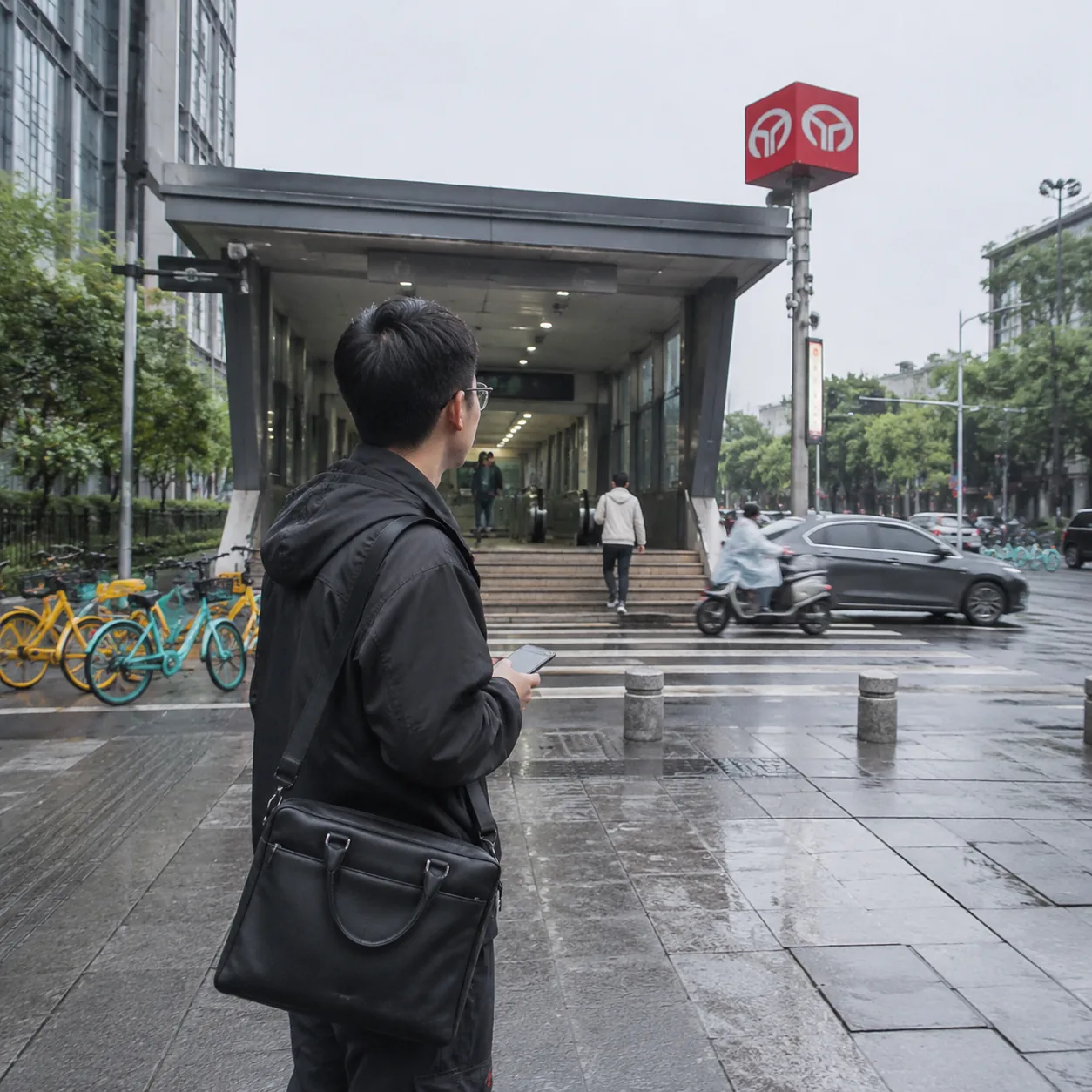
The second method is to look at “metro exit” more precisely. In cities such as Chengdu, Shanghai, Beijing, and Guangzhou, metro stations often have many exits, and exits A, B, and C may be separated by a wide road or distributed along different sides of malls, office towers, and parks. Shared bikes often gather near certain exits, while other exits have no parking zones nearby. In the past I would say, “I’ll just ride to the metro station.” Now I check which exit I need, which exit I will return from, and whether there are physical white parking boxes nearby. If I take a bike from Exit A in the morning and return through Exit D at night, I may not be able to park in the same place.
The third method is to check the bike’s condition before unlocking it. After that late arrival, I once scanned a bike beside a park and rode a few dozen meters before realizing that the rear brake was weak and the seat was loose. Fortunately, I was not going fast, so I stopped by the roadside and pushed it back to the parking area to change bikes. Later I learned to check four things quickly before unlocking: whether the tires are obviously low, whether the brakes respond when squeezed, whether the seat height can be fixed, and whether the basket contains trash or standing water. Shared bikes move constantly; one bike may have just been used by many people, and a normal appearance does not guarantee that every part is ready for the road.
The fourth method is not to follow only the shortest route when riding at night. One evening at 9:30, I was about to ride home from a riverside park, and navigation suggested a route through a small lane that would save three minutes. The entrance was dark, and the shadows of trees were dense, so I hesitated. A commuter who had just parked heard me asking for directions and said, “Don’t take that road at night. It’s narrow, there are many electric scooters, and the streetlights are not continuous. Ride along the main road. It has one more traffic light, but it’s safer.” I followed his advice. The main road had a clear bike lane, streetlights, and pedestrians. It took a few more minutes, but the entire ride felt much more stable.
The fifth method is to treat safe parking as part of the ride’s ending. Many people relax when they reach the destination, and that is when they are most likely to leave the bike leaning beside a tree, near steps, or at the entrance of a residential compound. Now I do several small things: push the bike into the parking box, avoid tactile paving, avoid fire access routes, and do not block shop doors. I try to keep the bike facing the same direction as others, and I make sure the rear wheel does not stick into the sidewalk. I leave only after the return is confirmed, not immediately after hearing the lock sound. Sometimes the lock clicks but the app is still processing; sometimes the location has not refreshed, and the phone asks me to adjust the position again. The ride is truly finished only when the app shows the fee and completed order.
Shared bikes have also helped me understand the real meaning of the “last kilometer” in Chinese cities. The metro is fast, but between a metro exit and an office, school, market, or park gate, there is often a distance that is neither very long nor very short. Walking may take fifteen minutes, hailing a car may be too short a trip, and buses may require waiting. Shared bikes fill that gap perfectly. They allow a foreigner to enter the details of the city more easily: where breakfast stalls appear in the morning, which road has shade, which bridge is windy, and which intersection has many right-turning vehicles. But entering those details requires respecting road and parking order, not treating the bike as a disposable tool.
One weekend, Minji and I arranged to drink tea near People’s Park. The area around the park was crowded with tourists, older residents, children, sugar-painting stalls, and many people slowly pushing bikes. We initially wanted to ride to the main gate, but we checked the parking zones first and found that most of the area near the main gate did not allow parking. The approved spot was under a row of trees outside a side gate. We simply changed the navigation destination to that side-gate parking point, parked properly, and walked into the park. We did not stand anxiously at the entrance because of a failed return, and we did not block the crowd with our bikes. Three extra minutes of walking gave us a relaxed start.
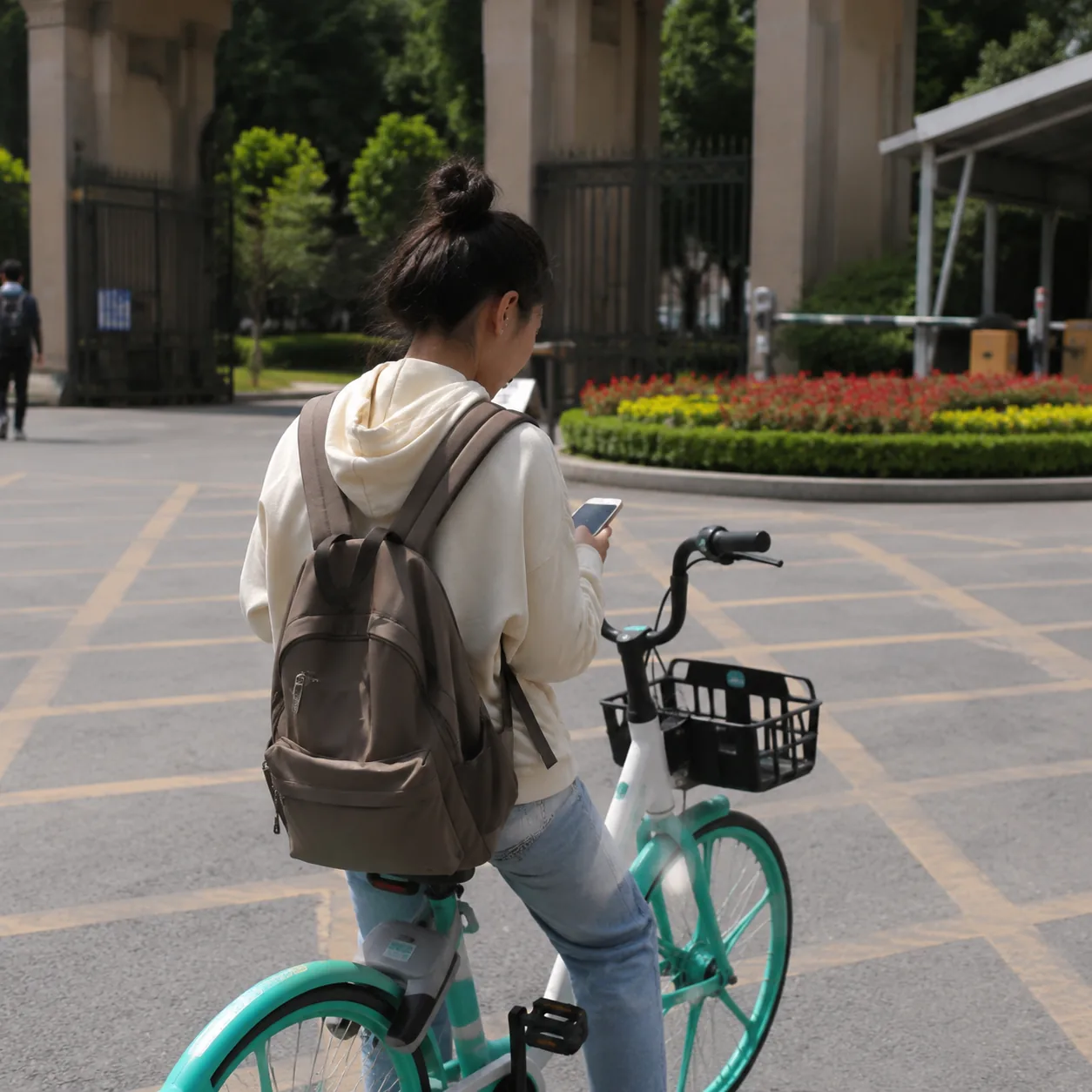
Beside the park, I also noticed a detail. Many local commuters barely needed to look at their phones when parking. They naturally pushed bikes into the fixed area and gently straightened them with one foot. Visitors often stopped at the closest point to the scenic entrance, then received app reminders to move. The difference was not that one group was smarter; it was that one group was more familiar with the city’s invisible boundaries. Electronic fences are not meant to make life difficult. They are meant to keep large numbers of moving bikes in places where they do not block passage. Once I understood that boundary, shared bikes actually felt freer, because I knew where to begin and where to end.
I gradually learned to identify places unsuitable for temporary parking. Metro elevator entrances, accessible ramps, tactile paving, bus stops, fire hydrants, the front of mall glass doors, and residential gate barriers may seem convenient, but they all interfere with others. Especially on rainy days, everyone wants to stay near the roof edge, and if bikes crowd the doorway, pedestrians must detour through puddles. The convenience of shared bikes should not depend on making others’ movement inconvenient. If one person pushes a bike ten meters farther, dozens of people may pass more smoothly. That impact is more direct than I imagined when I first arrived in China.
Sometimes friends ask whether it is difficult for foreigners to ride shared bikes in China. I say the difficult part is not the bike itself, but the two moments of observation before starting and before ending. Before starting, check the parking zone, bike condition, and route. Before ending, check the electronic fence, ground markings, and whether the bike would block anyone. As for scanning, paying, unlocking, and returning, the app processes are already quite clear. What truly requires experience is matching the rules on the screen with the street in front of you. If you are willing to look a few more times, many seemingly troublesome reminders can be avoided in advance.
I also remind newly arrived friends not to study the map while riding in traffic. In Chinese cities, bike lanes contain not only bicycles but also electric scooters, delivery bikes, tricycles, and occasionally pedestrians who have entered by mistake. Their speeds differ greatly, and sudden stopping or wobbling can be dangerous. My method is to memorize two or three key intersections before departure. If I become unsure while riding, I stop at a wider sidewalk edge or a parking area to check the phone. I also keep headphone volume low because the bell of an electric scooter behind me, a car warning at an intersection, or a pedestrian’s reminder may all be safety information.
One evening I left language school after dark, and the road surface reflected a little light. I first planned to ride straight home, but I noticed that several bikes in the nearby parking zone had broken lights or soft tires. Instead of choosing one casually to save effort, I walked to the metro exit on the other side and picked a bike with clear brakes and a stable seat. I walked five extra minutes, but the ride felt secure the whole way. The low cost of shared bikes can make people less alert, but however cheap the ride is, the bike is still a vehicle on real roads, not a shopping cart inside a mall.
One reason I like riding shared bikes in Chengdu is that it lets me feel the city’s warmth. On spring mornings, people put freshly steamed buns into paper bags by the roadside. On summer evenings, the breeze under trees feels more comfortable than the air inside a metro station. In autumn, passing along the river, I can smell osmanthus mixed with hotpot base. On winter nights, convenience-store lights make parking areas look warm. Cycling shows me daily life that I cannot see inside a metro carriage. But this warmth should not be gained through disorderly parking. The more I enjoy the convenience, the more I should help the next user continue smoothly.
Now when I arrive at an unfamiliar metro exit, my first glance is no longer only for the nearest bike. I first look for where I will be able to return one. Is there a white box on the ground? Does the app show an approved parking area? Are there guards or signs nearby? Which direction does traffic come from? Does the road have lighting at night? I run through these questions quickly before scanning. If the answers are unclear, I would rather walk to the next row of bikes than unlock one in an uncertain place. Once the ride begins, the parking problem at the destination will have to be faced sooner or later. The later I face it, the more likely I am to make a poor decision under time pressure.
Looking back at that first morning riding from Tongzilin metro station, I do not consider it a failure. In the embarrassment of being three minutes late, I learned a very practical urban rule: the freedom of shared bikes does not mean stopping wherever I want. It means knowing where stopping is allowed and then moving easily within those boundaries. A commuter’s reminder, a white line on the ground, and an electronic fence in the app changed me from someone who could scan a code into someone who could actually use the service well. The distance between those two states was just one careful observation.
So if someone asks me for the most important skill in using shared bikes in China, I will not first explain how to scan the code, and I will not first compare which company is cheaper. I will say: check the parking zone before departure, and check the surroundings again before ending the ride. Clarify whether the bike can be returned near the destination, think through whether the route is suitable for night riding, and check the bike condition and ground markings. After that, the remaining steps become simple. Shared bikes have never been truly difficult to use; the difficult part is whether we are willing to pay a little attention beyond speed. That bit of attention can save unnecessary walking and help the city move more smoothly.