一杯の麺で、中国を歩き尽くす
I have a habit: when I arrive in a new city, my first meal isn’t at a famous restaurant — it’s a bowl of noodles.
Not because noodles are the best food, but because they’re the most honest. Every region’s noodles carry a local consensus about what a meal should be — rich broth or clear, heavy spice or none, soft texture or chewy, elaborate toppings or bare. Understand the bowl, and you’ve understood half the city’s character.
It took me three days of eating in Lanzhou before I understood the rules.
On the first day, I walked into an ordinary-looking shop and pointed at the menu: “One bowl of beef noodles.” The owner asked: “Thin or wide?” I hesitated. That’s when I learned there are seven widths: hair-thin, thin, medium-thin, medium, chive-leaf, wide, extra-wide. This isn’t a gimmick — the difference is real. Thin noodles absorb broth fast and dissolve on the tongue; wide noodles hold their chew and carry more sauce.
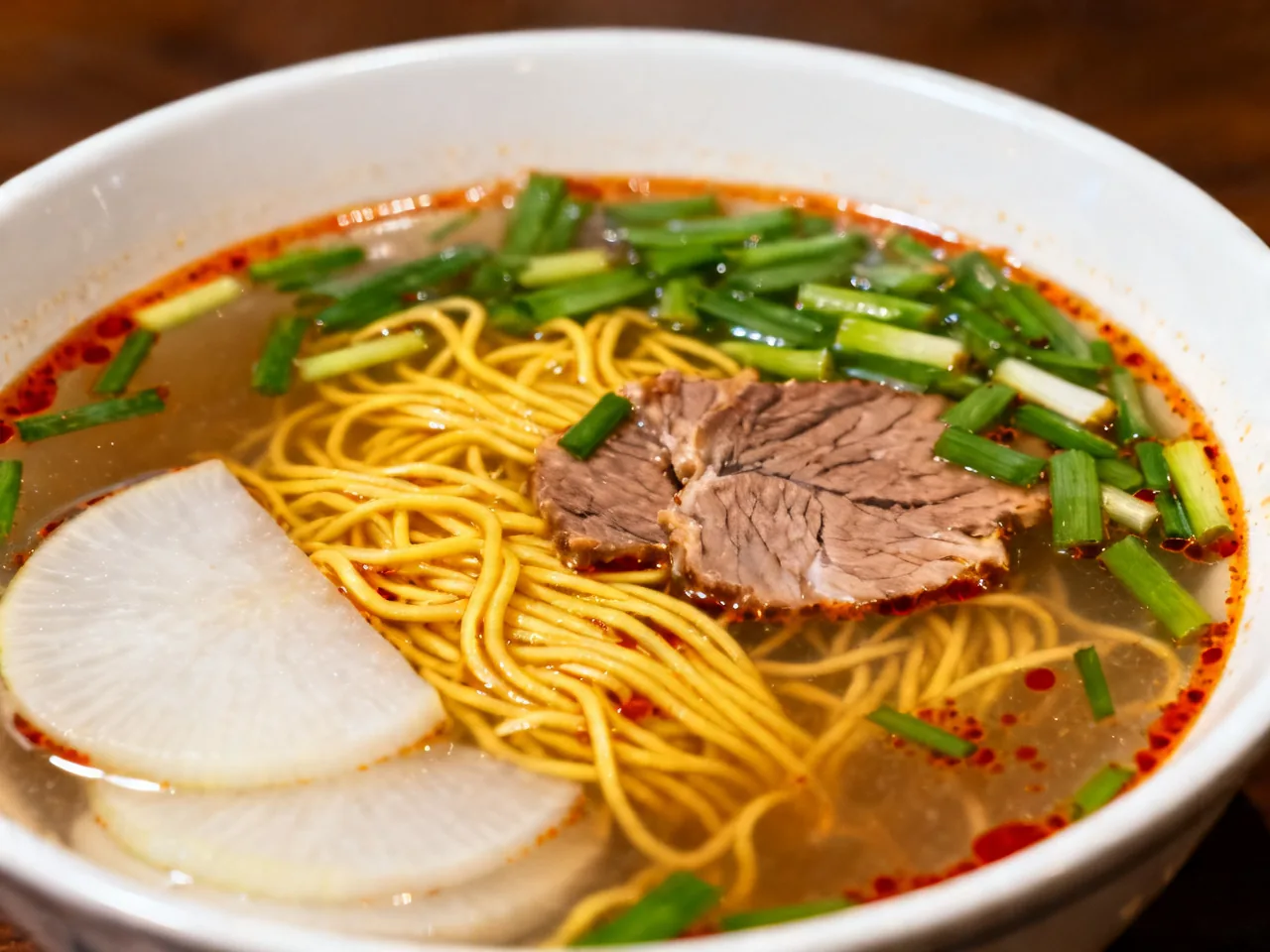
The broth is clear, not red — beef bones and meat simmered down to an amber liquid with a thin film of oil on the surface. Toppings: sliced beef, white radish, cilantro, chili oil. That’s it, nothing else. Lanzhou people queue at 7 or 8am, eat standing up, finish in ten minutes, and head to work. This bowl isn’t a pleasure — it’s fuel.
Wuhan people call breakfast “guòzǎo” — eating out in the morning. It’s a way of life, not just filling your stomach.
Hot dry noodles (热干面) are its centerpiece. First-timers are usually confused: the noodles are dry, no broth, but it’s not quite a cold noodle dish either. The key is alkaline noodles and sesame paste. Noodles are par-cooked, coated in oil, and dried. At serving time, they’re blanched hot and topped with sesame paste, soy sauce, vinegar, scallions, and pickled radish. The paste must be thick, fragrant, and clingy enough to coat every strand. Wuhan people judge a bowl by one criterion: is the sesame paste good enough?
Around 5–6 yuan a bowl. Eating it crouched on the sidewalk is one of the most common morning sights in the city. The morning I was there, I found a shop that had been open for over twenty years. The owner moved fast — from order to bowl in under two minutes. Nobody around me was sitting. Everyone stood or crouched, finished, set down the bowl, and left. The efficiency reminded me of Lanzhou mornings, but the flavor was an entirely different world.
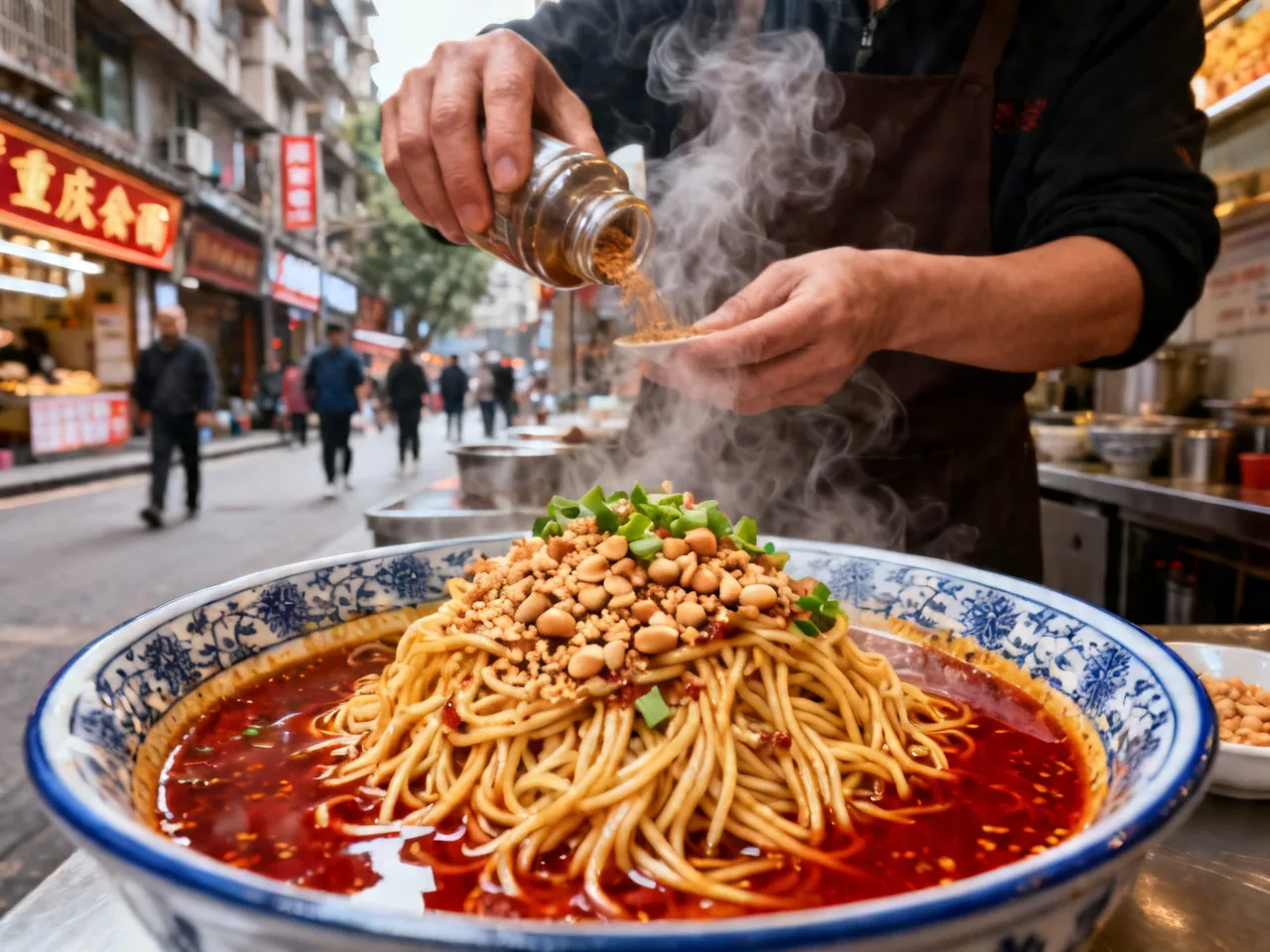
Shanxi people say noodles need “backbone.”
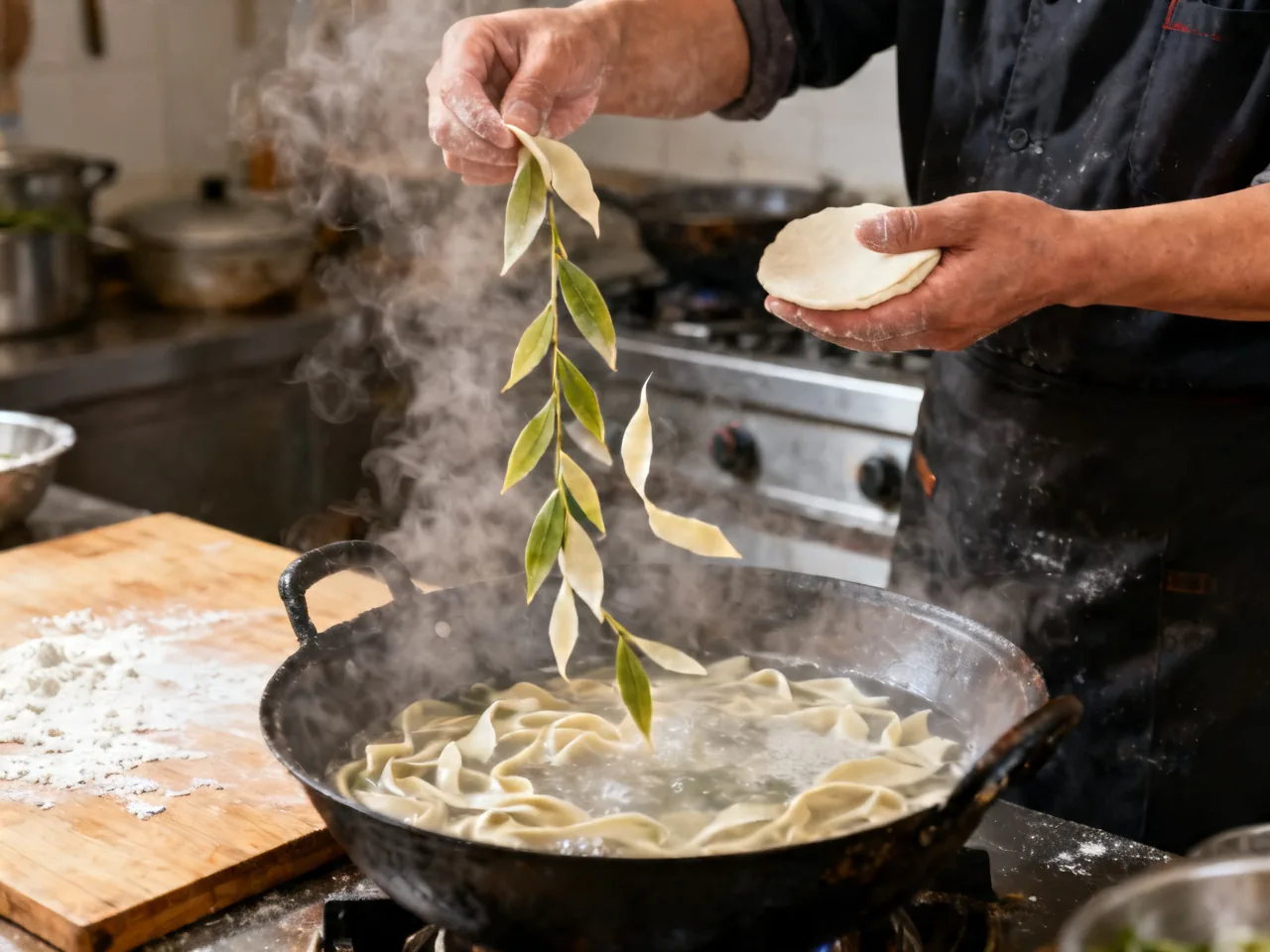
Knife-cut noodles (刀削面) are made by shaving a block of dough directly into boiling water with a curved blade. Each piece varies in thickness, width, and curve — that inconsistency is the point. Thicker parts are chewy, thinner parts springy. One bowl, two textures.
Shanxi actually has dozens of noodle forms beyond knife-cut — cat’s ear pasta, poke noodles, oat noodles in rolls — but for visitors, knife-cut noodles are the most accessible entry point. Served with tomato-egg sauce, the tangy, slightly sweet gravy pairs naturally with the chewy noodles.
In Guangzhou, noodles become a matter of precision.
Wonton noodles use “bamboo pole noodles” — alkaline noodles pressed with a large bamboo pole, thin as thread, intensely springy. The broth is made from dried flounder and pork bones, clear but deeply savory. Wontons have thin skin and generous filling; the shrimp must go in whole, never minced. To judge quality, look at the wonton skin first: if it’s translucent enough to see the pink of the shrimp inside, that’s a good sign.
A bowl at an old Guangzhou teahouse costs 30–50 yuan, more than a street stall, but the difference in craft is real. I once had an 18-yuan bowl in Guangzhou — thick skin, minced shrimp, flat broth. Later I found an old-school place: 40 yuan, translucent skin, whole shrimp, broth so savory I scraped the bowl clean. Double the price, more than double the experience.
Four bowls, four philosophies. Lanzhou wants clarity. Wuhan wants fragrance. Shanxi wants chew. Guangdong wants umami.
There’s also Chongqing spicy noodles, Xinjiang pulled noodles, Beijing zhajiang noodles, Shanghai plain noodles in broth. Each one answers the same question in a different way: what should a meal actually be?
Related Reads
- The 8 Great Cuisines of China
- Spellbound at First Bite: A Stranger’s Descent into Chengdu’s Heat
- Street Steam: The Real Pulse of Chinese Cities
- The Peppercorn Dossier: Sichuan’s Flavor Map Through a Botanist’s Eyes
- 10-Day East China Five-City Loop