お茶の国はどのようにコーヒーを愛するようになったのか
Three scenes, three eras.
1989, Nanjing Road, Shanghai. A young office worker hesitates five minutes at the Friendship Store counter before spending twenty-eight yuan on a jar of Nescafé instant coffee — nearly half his monthly salary. He doesn’t truly enjoy the bitter brown powder it produces, but having a jar of Nescafé on his desk signals sophistication and worldliness.
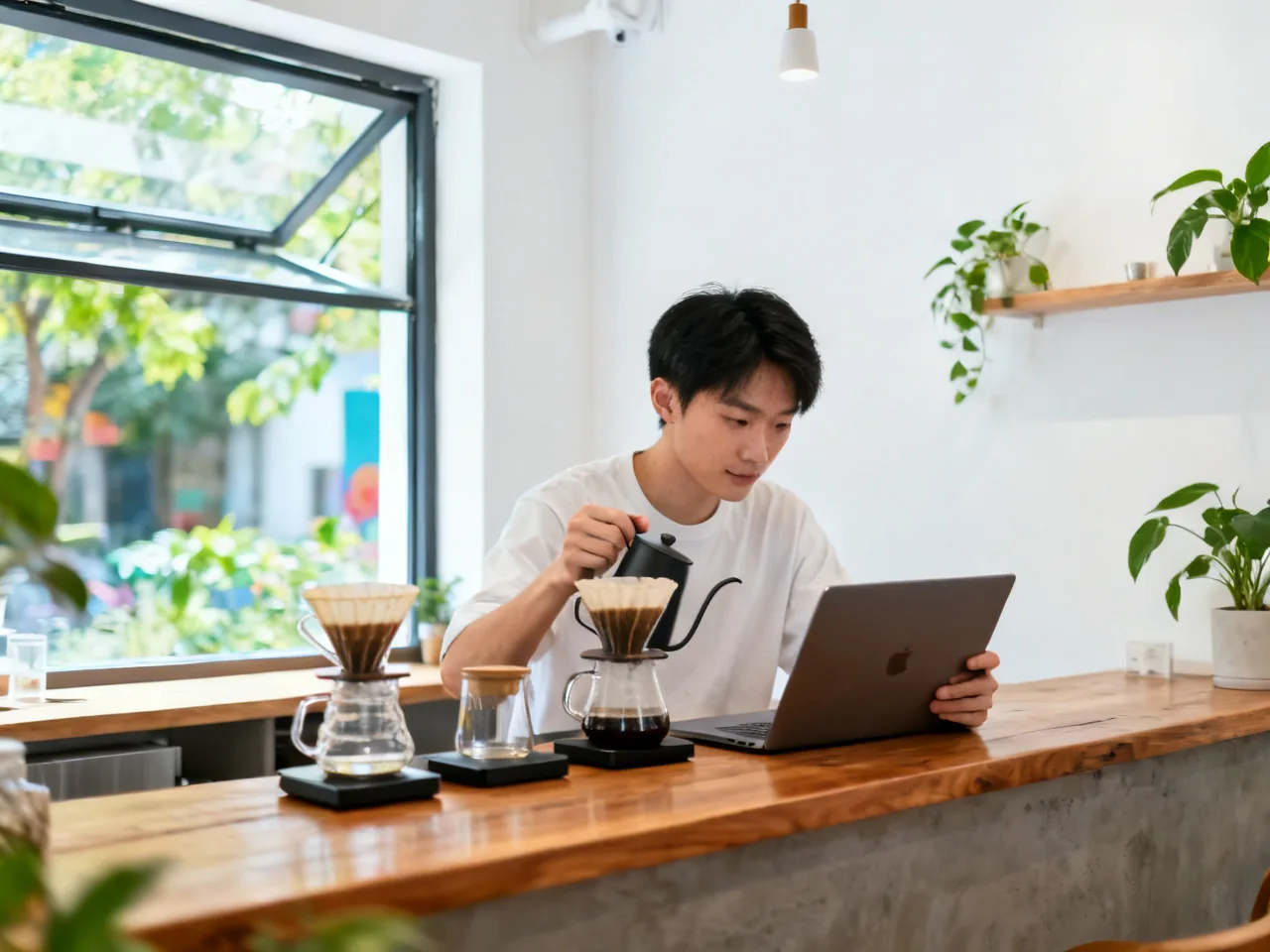
2015, China World Trade Center, Beijing. In a specialty coffee shop, a young woman back from studying abroad asks the barista in English about the flavor notes of an Ethiopian Yirgacheffe. The pour-over kettle traces concentric circles at ninety-two degrees. A single cup costs fifty-eight yuan, and nobody bats an eye.
2024, a county town intersection. A Luckin Coffee sits between a Shaxian snack shop and a Lanzhou noodle joint. A high-schooler in uniform orders a 9.9-yuan coconut latte on his phone, sipping while scrolling short videos. To him, coffee isn’t ritual or status — just a tasty cold drink.
These three scenes compress thirty-five years of China’s coffee revolution.
The Instant Era: Coffee as Symbol (1980s–2000s)
When Nescafé officially entered the Chinese market in 1989, it faced a nation where annual per-capita coffee consumption was less than one cup. People here had been drinking tea for millennia, holding fast to the belief that “tea is the national drink.” Nescafé’s strategy was clever — rather than teaching Chinese consumers to appreciate coffee’s flavor, it positioned coffee as a ticket to modern living. The classic slogan “Taste is great!” became a generational memory. By 2000, Nescafé held over seventy percent of China’s instant coffee market.
Most Chinese coffee drinkers of that era loaded their cups with sugar and creamer, because what they were really consuming wasn’t coffee itself but the meaning the act of “drinking coffee” carried. This mirrored the era’s broader attitude toward Western things — what mattered wasn’t the taste but the faraway world it conjured.
The Starbucks Middle Act: The Third Space Arrives (1999–2017)
In 1999, Starbucks opened its first China store at Beijing’s China World Trade Center. It brought more than better-tasting coffee — it introduced a whole new concept: the “third space.” Beyond home and office, China’s urban middle class suddenly discovered they needed somewhere to sit, open a laptop, and look busy. Starbucks filled that gap perfectly. By 2017, Starbucks operated over 3,000 stores in China, opening a new one every fifteen hours on average. A latte cost over thirty yuan — light-luxury spending in cities with average monthly incomes of 5,000 yuan — but Chinese consumers happily paid up.
Tellingly, Starbucks’ best sellers in China were never black Americanos but various milk-and-sugar confections. Chinese consumers had embraced caffeine, yet their taste preferences still carried local DNA. Like the Chinese approach to all imported culture — you can come in, but you play by our rules. This power of cultural fusion is visible everywhere in China, from festival traditions to eating habits.
The Luckin Blitz: Coffee for the Masses (2018–Present)
In 2018, Luckin Coffee burst onto the scene, flipping the table with internet-era tactics. Free first cup, social-media referral splits, delivery — it dragged coffee prices from the thirty-yuan range to under fifteen. Despite nearly dying after a 2020 financial fraud scandal, Luckin staged a miraculous comeback. By late 2023, it surpassed 16,000 stores, with quarterly revenue overtaking Starbucks China, making it the largest coffee chain in the country by store count.
Luckin’s real contribution isn’t how many cups it sold but how it fundamentally reshaped Chinese perceptions of coffee. A 9.9-yuan coconut latte transformed coffee from “white-collar exclusive” to “everyone’s drink.” County-town youth, delivery riders, construction workers — the democratization of caffeine in China was accomplished in a distinctly Chinese way: through price wars and supply-chain efficiency.
Yunnan’s Rise: From Plantation to Specialty
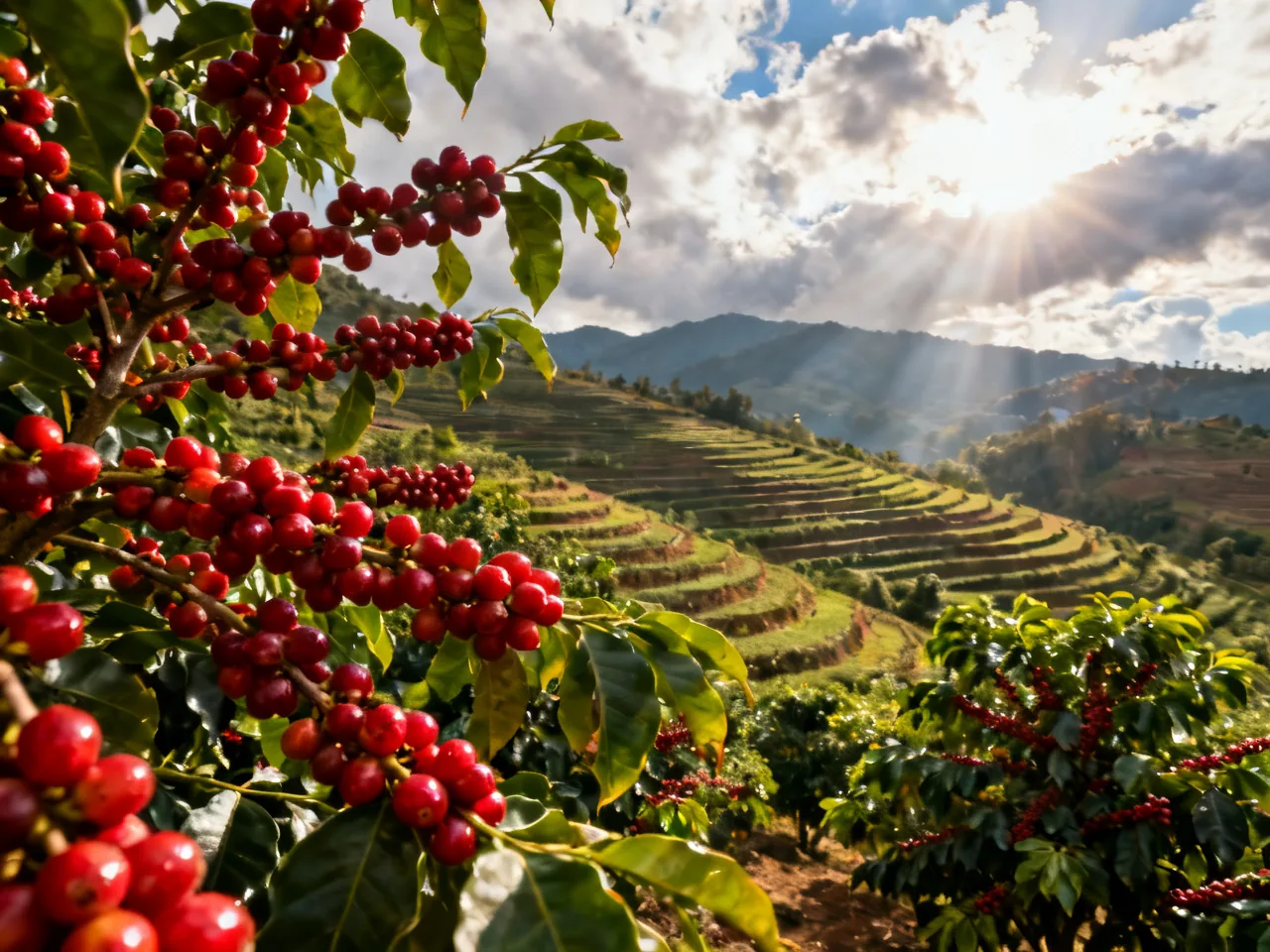
There’s another thread to this story. Yunnan’s Pu’er and Baoshan regions have grown coffee for over a century, but for most of that time served only as a cheap-commodity source in the global supply chain. The last five years changed everything. In 2023, Yunnan produced over ninety-eight percent of China’s coffee beans, with specialty-grade beans jumping from under five percent to nearly fifteen percent of output. Kunming and Dali have sprouted hundreds of independent cafés using local beans for pour-overs — twenty-five yuan gets you quality rivaling Kenya AA. If you’re traveling on a tight budget, a Yunnan coffee trip is an exceptional value proposition.
Tea and Coffee: Not Replacement, but Coexistence
China’s coffee market exceeded 600 billion yuan in 2023, with per-capita annual consumption reaching roughly sixteen cups. Compared to Japan’s two hundred or South Korea’s three hundred fifty, that figure remains low — but the growth rate is staggering, averaging over fifteen percent annually for the past five years. Yet tea consumption hasn’t declined; it’s growing too. The Chinese haven’t abandoned tea for coffee. They’ve simply made room for both: an Americano in the morning for energy, a pot of Longjing in the afternoon for calm.
Perhaps this is the most Chinese answer possible. Five thousand years of tea culture haven’t been washed away by thirty-five years of coffee waves, and coffee hasn’t remained forever labeled a “foreign drink.” Two kinds of leaves — yes, coffee beans essentially come from a leaf too — have each found their place on this land. Just as this country has always done: not either-or, but both-and.