中国の朝食屋台で、熱い包子はまず口を裂いて蒸気を逃がすと初めて学んだ
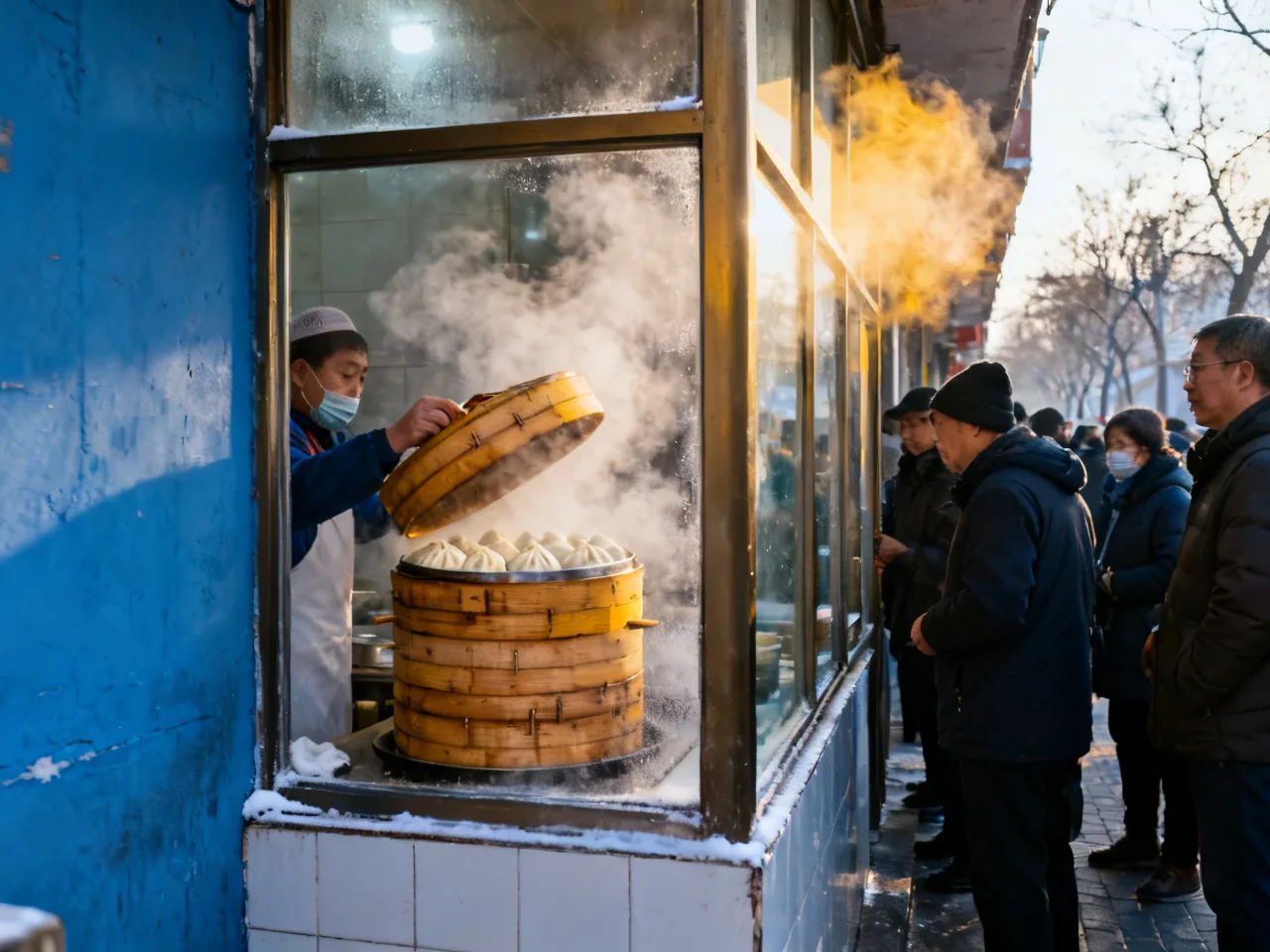
Winter mornings in China have a very specific kind of pull, especially when you have not even fully seen the breakfast stall yet and only notice the steam first. That morning I left home early. The air on the street looked pale, and even my breath came out white. The glass of the baozi shop on the corner was already fogged over by heat. Behind that cloudy layer, figures moved back and forth while bamboo steamers were lifted and closed again in a rhythm so ordinary it almost felt theatrical. As a foreigner, I used to approach these breakfast stalls with the enthusiasm of a traveler: hot food should be eaten immediately, walking while eating made it feel more authentic, and taking a bite the second you got it in your hand seemed like the proper way to join local life. That was exactly the mindset I brought into the queue.
There were plenty of people in line, but it moved quickly. The customers ahead of me all spoke with practiced efficiency—how many meat buns, how many vegetable buns, soy milk or not, egg or not—and each transaction was over in seconds. I listened and learned while standing there, feeling mildly proud of myself. After living in China for a while, I thought scenes like this no longer made me nervous. When it was my turn, I ordered in Chinese, and the owner swiftly picked up the buns, dropped them into a plastic bag, and casually asked if I also wanted a hot soy milk. I said no, took the bag, and immediately felt my palm recoil from the heat. Even through the thin plastic, the steam pushed outward as if the food were trying to escape. But instead of becoming cautious, my first reaction was excitement: the hotter it was, the fresher it must be, and that meant it was perfect to eat right away.
I stepped to the side of the doorway, planning to eat one while it was still hot and then continue on my way. The air outside was cold, the bun in my hand was hot, and that contrast had initially made me feel deeply content. So I pulled one from the bag and, with almost no pause at all, opened my mouth and bit in. In the next second, I was firmly taught a lesson by the blast of steam and hot filling inside. It was not the kind of pain dramatic enough to make me jump around, but it was more than enough to trigger a full-body reflex. My lips tightened, my breathing stalled, and my eyes nearly shut. I yanked the bun away before finishing the bite and stood there frozen, probably looking ridiculous.
At that moment, an auntie standing nearby waiting for her own breakfast saw what happened and smiled. It was not a mocking smile. It was the smile of someone thinking, of course that happened. She said very naturally that you should not rush a hot baozi like that; usually you tear a small opening first and let the steam out. I nodded while still trying to assess with my tongue whether I had actually burned myself badly. Seeing me flustered, she added that buns fresh from the steamer are always hottest inside, so I should never take a big bite immediately. Her tone was wonderfully ordinary, as if she was not teaching me a clever trick but simply pulling me gently out of a tiny mishap. In that moment, I felt something deeply textured about everyday life in China: the advice was brief, the method was specific, and the warmth behind it was real.
I followed her advice and carefully tore a small opening in the surface of the bun. Immediately, a stream of white steam rushed out, especially visible in the cold air, as if the bun itself had taken a winter breath. After waiting a few seconds, I tried biting the edge. It was still hot, but no longer dangerous. And in those few seconds, I suddenly understood why the people around me did not receive fresh baozi and then instantly devour them in large bites. It was not because they lacked appetite or failed to appreciate the heat. It was because they knew that between deliciousness and impatience, a tiny buffer was needed. The movement is so small that it barely registers, yet without it, your relationship to breakfast changes from enjoyment into combat with temperature.
Later I realized that this resembled many other details I have learned in China. At first, I interpreted “acting like a local” as a matter of speed: speak faster, order faster, grab the food and immediately know what to do, as if any hesitation meant I was still inexperienced. But the truth has often been the opposite. The people who seem most at ease in daily life are not impressive because they move quickly everywhere. They are impressive because they know exactly where to pause. Take out your water bottle before the subway security check. Shake your umbrella before entering the mall on a rainy day. Do not stand directly in front of a compound access door while waiting. Let the steam out of a freshly cooked baozi before biting it. To an outsider, these actions may seem too minor to matter. But they are exactly what make someone look natural, considerate, and comfortable in the environment.
The auntie eventually got her own breakfast and, before leaving, glanced at me once more as if checking that I would not repeat the mistake. I smiled and thanked her. She waved it off and quickly disappeared into the flow of people on the street. The entire exchange probably lasted no more than fifteen seconds, yet I still remember it clearly. Not because “the baozi was too hot” was such a dramatic event, but because the advice felt so deeply lived-in. It was not classroom knowledge. It was not a formal rule. It was exactly the kind of information someone newly fitting into Chinese daily life most needs: real, useful, lightly kind, and delivered at the precise moment when you are about to embarrass yourself.
Since then, every time I eat baozi in China, my movements automatically slow by half a beat. First hold it properly. First test the temperature. First tear a small opening at the edge. Watch the steam come out. Then decide how to eat it. Sometimes I even see someone who looks like a visitor grab a bun from a stall and rush to bite it, and I instantly picture my own face from that morning when I got burned. But I do not run over to correct anyone, because I know many everyday lessons only become memorable when you taste them yourself, literally and physically. For me, that tiny burned-mouth moment was not embarrassing. It felt more like an honest entrance fee. It taught me that even the simplest roadside staple has its own rhythm and manners.
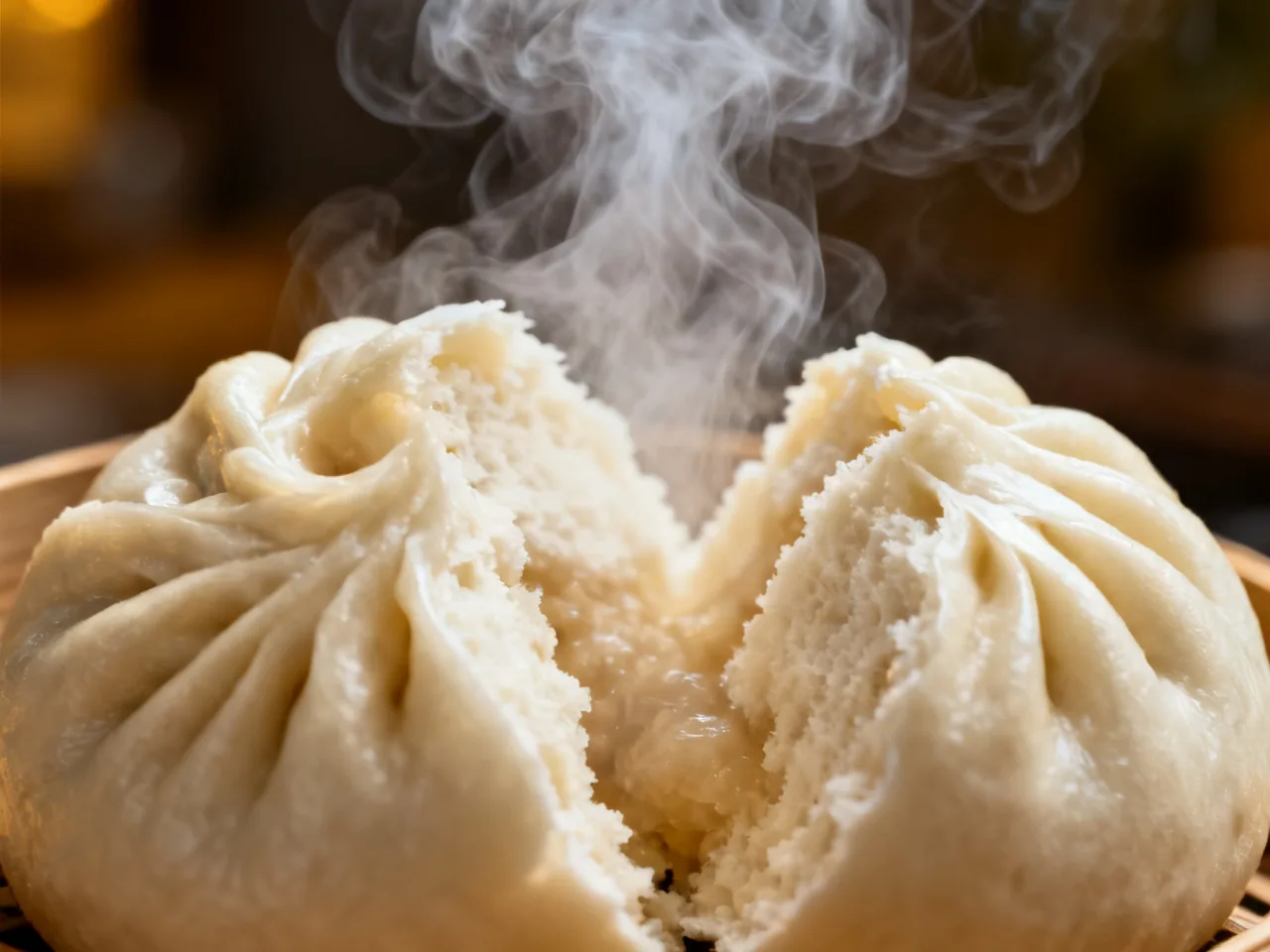
If someone asked me now what is hardest to learn about living in China, I would not answer only “the language,” and I would not answer only “all the administrative procedures.” I would say that harder, and more interesting, are the everyday calibrations that nobody teaches in a formal lesson. When should you move fast, and when should you slow down instead? When should you speak directly, and when is it better to watch how others do it first? When can you use something the moment it is handed to you, and when must you first give it a little space? That moment outside the baozi stall compressed all of those questions into one mouthful of steam I almost bit into too soon. What it left with me was not which filling tasted best, but that plain, warm reminder rising out of the steam: tear a small opening first and let it breathe. For a foreigner learning how life is actually lived in China, that kind of reminder lingers even longer than breakfast itself.