中国の果物屋で初めてスイカを買ったとき、その場で切るか持ち帰るかを先に言うことを学んだ
The first time I bought watermelon from a street-side fruit shop in China, my plan was extremely simple: choose a piece that looked red, weigh it, pay, and leave. It was a humid summer evening just after I came out of the metro, and the whole street still held the sticky warmth of a day that had not fully cooled. Rows of watermelons were stacked outside the shop, their rinds freshly misted with water and shining bluish-green under the lights. There were tiny droplets and bits of melon leaf on the ground. On one side of the store, refrigerated cases pushed cool air outward; on the other, the owner’s knife landed on the chopping board with a dull heavy sound. The air mixed the sweetness of Hami melon, the fragrance of peaches, and the direct refreshing smell of watermelon just cut open. As a foreigner still adjusting to the rhythm of street shopping in China, I assumed fruit buying would work the way it often does elsewhere: selection and price are the main things. I did not expect the part that would stall me was the question of how the fruit was meant to be eaten after purchase.
That evening I chose half a watermelon. After weighing it, the owner looked up and casually asked, “Want it cut? Taking it away or eating now?” I stood there holding that half melon and froze on the spot. In my earlier experience, buying fruit usually ended at payment, perhaps with a bag and then departure. But here the owner was asking the next layer of the decision: were you going to eat it now or take it home? Did you want it cut into pieces? Packed into a box? In those few seconds, I suddenly realized I had not thought through the most practical question at all. I still had some walking to do before reaching my place. Carrying half a watermelon in my arms was technically possible, but clearly inconvenient. If I had it cut on the spot, I had not thought about how it would be packed, how I would eat it, or whether I even had a spoon.
Seeing my hesitation, the owner quickly continued, “Want a spoon in it? Cut into chunks and packed in a box?” That was the moment I realized that many Chinese fruit shops are not selling only “fruit itself.” They are also selling a whole layer of service built around the eating scenario. You can buy a whole watermelon and take it home to chill. Or buy half and have the shop cut it into bite-size pieces, pack it into a clear box, and add a small fork or spoon so you can carry it on the way, bring it back to the office, or place it straight into a refrigerator. That service mentality surprised me deeply because it was not some theatrical sales technique. It was simply a default assumption that the shop could also help think through how the fruit would actually enter your life after purchase.
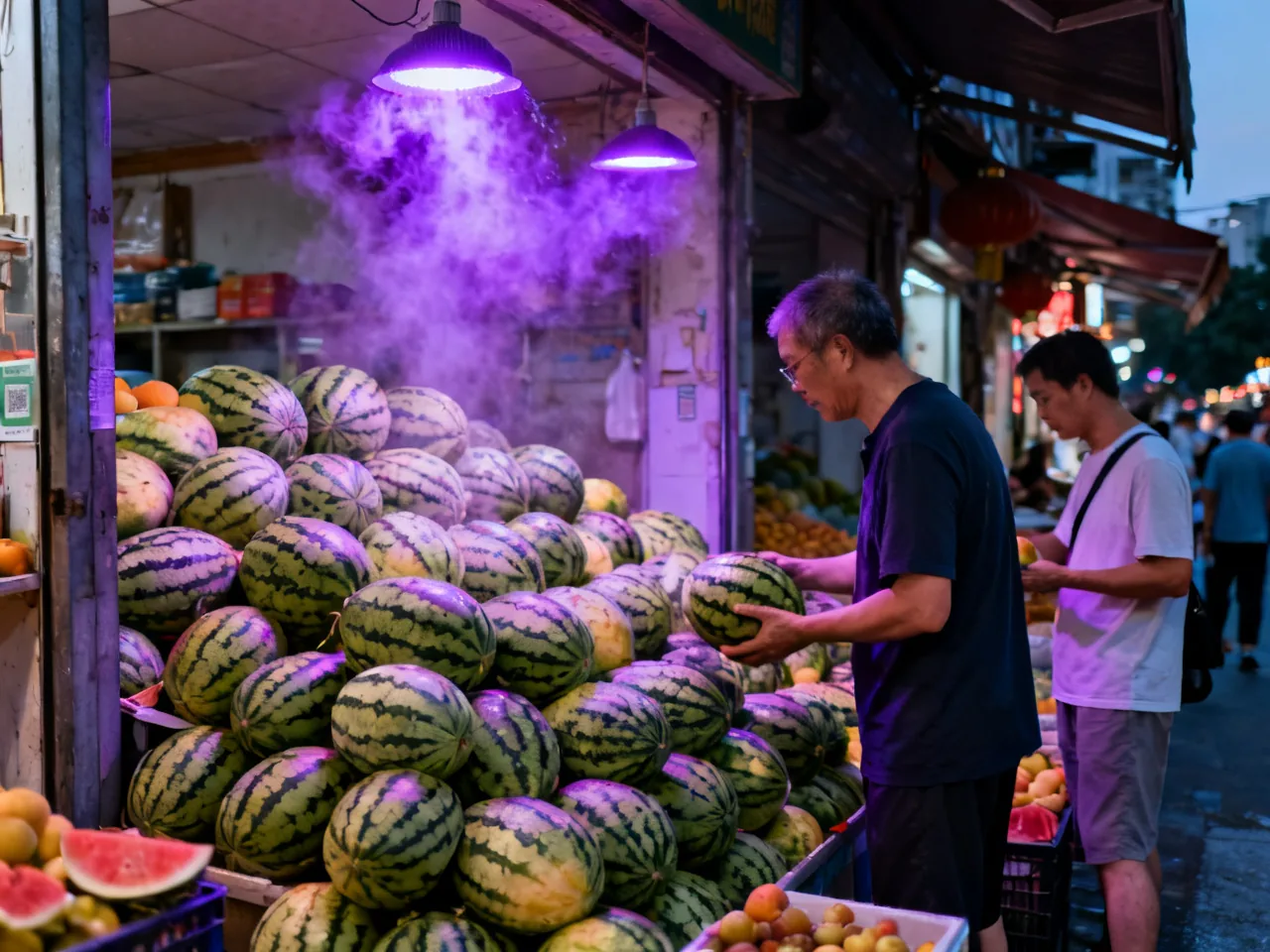
In the end, I chose to have it cut and boxed. The owner placed the half watermelon on the board, sliced it into large neat sections in a few strokes, then cut those down into bite-size pieces. Under the white shop light, the red flesh looked especially vivid, and most of the black seeds were removed with quick efficiency. Then he arranged the pieces into a transparent plastic container, snapped on the lid, and handed me a small spoon. Standing there watching the process, I suddenly felt that the image of myself just moments earlier—hugging half a watermelon and staring blankly—looked exactly like someone who had not yet entered the logic of the scene. For the owner, none of this was extra trouble. It was part of an ordinary daily routine: first ask how you want to eat it, then decide how to cut it, and finally decide how to pack it.
Later, in other fruit shops, I found that this habit of asking about use first was very common. Not every customer is taking fruit home to handle personally. Some people want relief from the heat while still on the street. Some are bringing fruit back to an office to share with coworkers. Some plan to put it in the fridge for later that evening. Others only want to stand outside the shop, eat a few bites, and continue walking. Different situations call for entirely different treatment: whether to cut it at all, how large the pieces should be, whether a box is needed, whether plastic wrap makes more sense, whether to include a fork. That is one of the things that has most impressed me about many forms of street-level service in China. The shopkeeper does not treat the transaction as ending the moment money and goods change hands. They often think one step ahead and help catch the actual use of the item too.
I gradually learned to think one step ahead before buying watermelon. If I was heading straight home, taking a larger uncut piece might be more economical. If I still had shopping to do or another ride to catch, having it cut and boxed was far easier. If several people were going to eat it together, asking the owner to cut it into shareable pieces was usually much simpler than going home and looking for a knife. The change sounds tiny, yet it genuinely transformed the way I felt when buying fruit. Before, I always put myself into a rushed mindset of “just buy it first and figure it out later.” Later I understood that much of what makes Chinese shops feel so smooth and considerate is precisely that they already assume the purchase itself is not the end. It is the beginning of use.
Once I even saw a young woman just off work buy a small section of watermelon, and before she had explained much at all, the owner asked, “Eating it at the office or taking it home?” She laughed and said she was bringing it back to work, and he immediately cut it smaller and packed it flatter so it would fit more easily into a little office fridge. That scene stayed with me because the question was not about some abstract preference. It was about a concrete life setting. And because of that, answering whether the melon should be cut is not really a technical issue. It is a route-of-life issue: where are you going next, and in what form should this watermelon accompany you there?
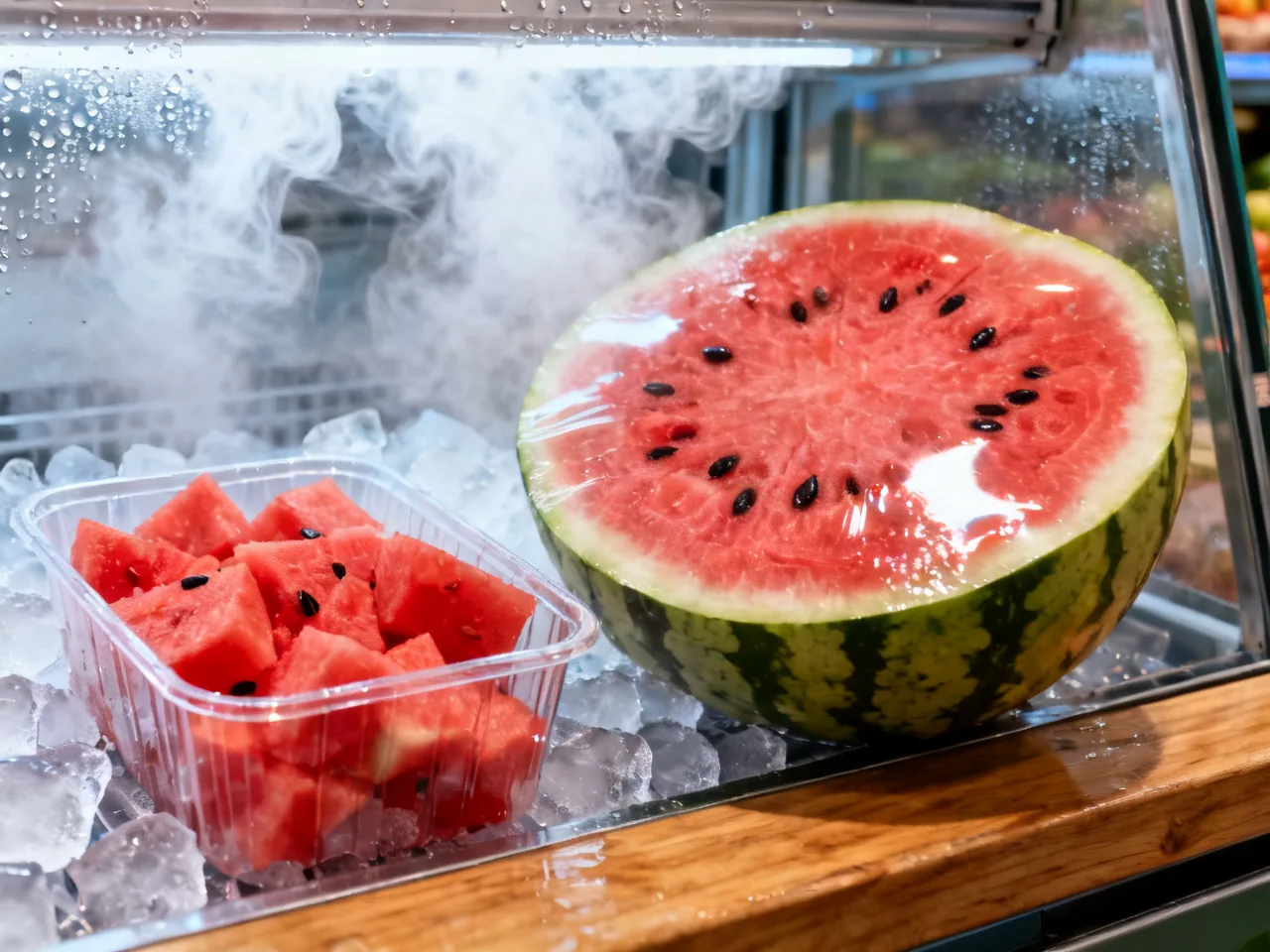
Now, if a foreign friend newly living in China asks me what sentence is easiest to forget when buying watermelon from a fruit shop, I say this: tell the owner first whether you want it cut for immediate eating or taken away whole. Once that sentence is spoken, many of the following details fall into place naturally: bag or box, spoon or no spoon, chunks or larger slices, even whether half a melon or a quarter makes more sense. For me, that first moment of standing in the fruit shop hugging half a watermelon and blanking out was tiny, but also very typical. It showed me that one of the most appealing features of everyday Chinese street service is not luxury at all. It is that someone often thinks half a step ahead of you about what comes next. Since then, every time I walk into a fruit shop, the first question in my mind is no longer only “what should I buy,” but “how am I actually going to eat it?”