中国でベジタリアンとして食べることは、想像より難しく、想像より簡単
Let’s start with the contradiction: many vegetarians arrive in China having heard that “Chinese vegetarian food is terrible,” while others insist that “China has the world’s oldest vegetarian tradition.” Both statements are true. They’re just talking about different Chinas.
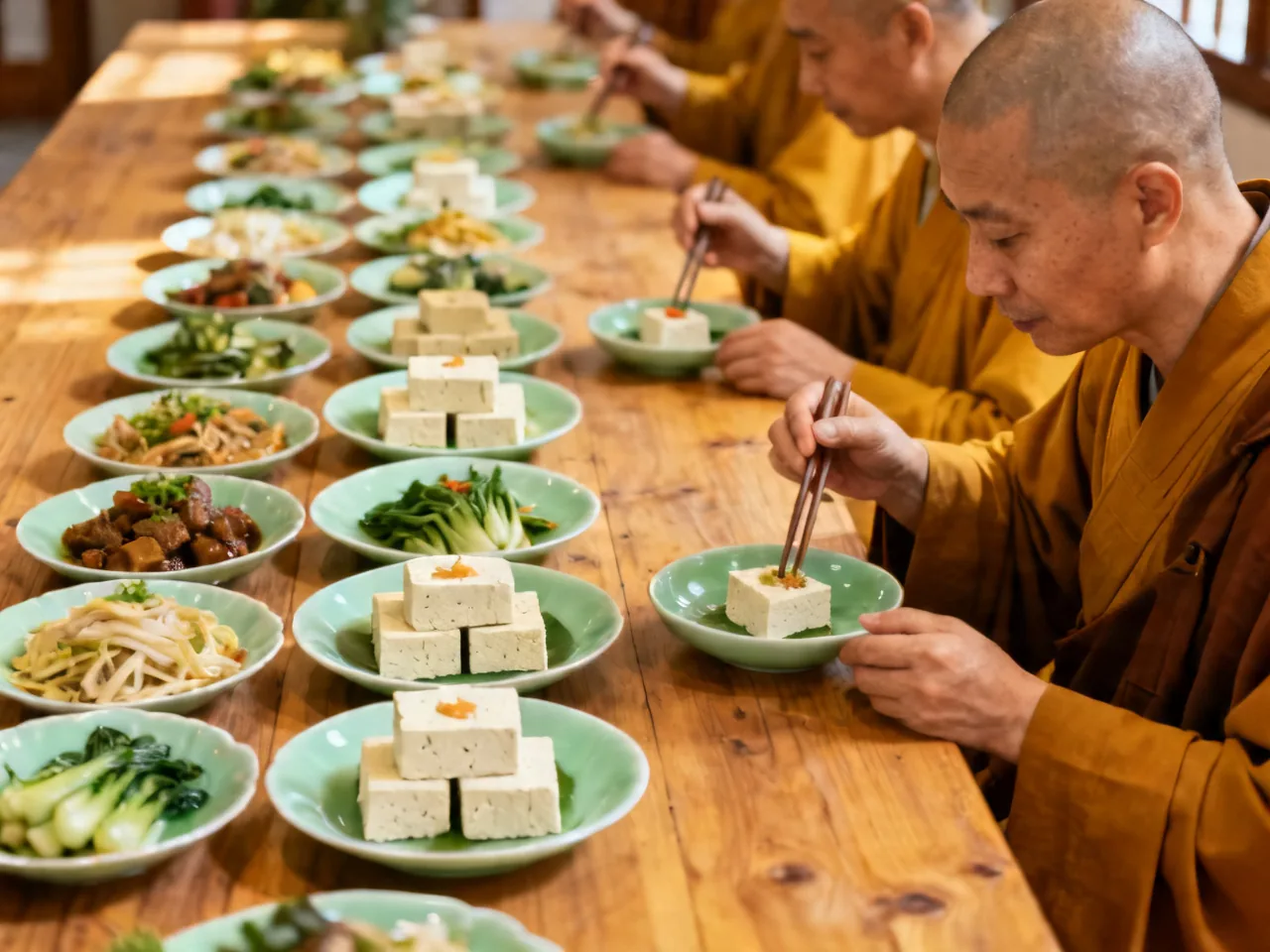
One is street-level China — the lard casually added to stir-fries, the “vegetable dishes” built on meat broth, the plate of “just a little shredded pork” that arrives after you said no meat. The other is temple China — a Buddhist vegetarian tradition fifteen hundred years deep, where tofu, wheat gluten, and mushrooms have been elevated to astonishing heights.
China’s Buddhist temple meal tradition traces back to the Northern and Southern Dynasties period. Emperor Wu of Liang issued a decree in 511 CE requiring Han Buddhist monks to abstain from meat — a tradition that continues unbroken today. Step into the dining hall of any Han Buddhist temple and you’ll find a complete dietary philosophy: not only no meat, but also abstention from the “five pungents” — scallions, garlic, chives, shallots, and asafoetida.
Near Lingyin Temple in Hangzhou, several vegetarian restaurants open to the public operate nearby. On a weekday at lunch, one of them is filled with ordinary diners who aren’t Buddhist practitioners. A woman who came specially from Shanghai ordered “vegetarian Dongpo pork” — layers of tofu skin rolled and pressed into a shape nearly indistinguishable from the original, soft in texture, rich with braised sauce. She said she wasn’t Buddhist, but came every few months: “because the cooks here are serious.”
Over the past decade, vegetarian restaurants in China’s first-tier cities have undergone a visible transformation. Shanghai, Beijing, Chengdu, and Guangzhou have all seen a wave of modern vegetarian restaurants targeting younger diners — no longer selling themselves on meat imitation, but presenting the textures and flavors of ingredients directly.
On the menu of a vegetarian restaurant in Shanghai’s Jing’an District, there’s a dish called “matsutake and tofu”: fresh matsutake sliced and steamed with silken tofu, seasoned with only a small amount of salt and sesame oil. It’s not cheap, but diners pay willingly, because the logic of the dish is clear — good ingredients, minimal intervention, no explanation needed.
For most vegetarians, the real challenge isn’t finding a vegetarian restaurant — it’s ordering genuinely vegetarian food at an ordinary restaurant. A few practical strategies:
Saying “I’m vegetarian — no meat, fish, or shrimp of any kind, and no lard” is far more effective than saying “I don’t eat meat.” In Chinese culinary context, the latter is often interpreted as “no large pieces of meat,” and chicken broth, lard, or fish sauce may quietly appear anyway.
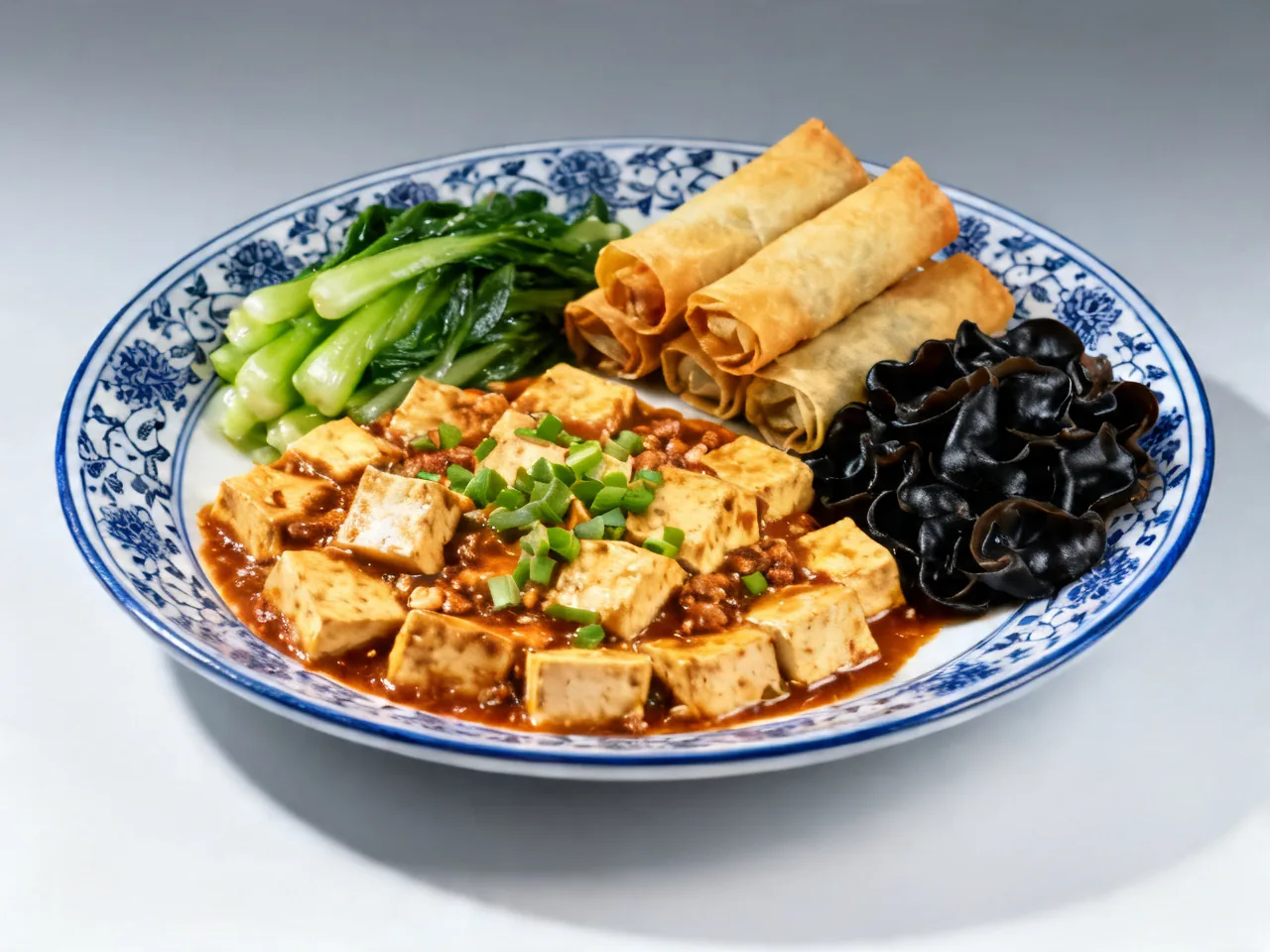
Egg fried rice, stir-fried seasonal vegetables, mapo tofu (request no minced meat), smashed cucumber salad, steamed egg custard — these can be ordered at most Chinese restaurants with relatively low risk.
Chengdu is an underrated vegetarian city. Sichuan cuisine has a large repertoire of dishes centered on tofu, konjac, and mushrooms, and the mala flavor system doesn’t rely on meat to build its layers of taste. Chengdu ranks among the top Chinese cities for number of vegetarian restaurants, and prices are accessible.
Xiamen’s vegetarian culture runs deep, shaped by Southern Fujian Buddhist tradition — temple dining halls and neighborhood vegetarian restaurants coexist, offering genuine variety. Beijing’s vegetarian scene has grown rapidly in recent years, concentrated especially around Sanlitun and Wudaokou where younger crowds gather.
Eating vegetarian in China requires some patience, some preparation, and a willingness to communicate directly. But once you find the right places, you’ll discover that the depth of Chinese vegetarian cuisine extends far beyond what any travel guide can adequately describe.
Related Reads
- The 8 Great Cuisines of China
- Spellbound at First Bite: A Stranger’s Descent into Chengdu’s Heat
- Street Steam: The Real Pulse of Chinese Cities
- The Peppercorn Dossier: Sichuan’s Flavor Map Through a Botanist’s Eyes
- 10-Day East China Five-City Loop