皮蛋:誤解された中国の卵
The first time I showed a foreign friend a century egg was at a small restaurant in Beijing. The server brought out a plate of century egg with tofu — dark brown egg wedges arranged over silken tofu, drizzled with soy sauce and sesame oil, scattered with scallions. My friend stared at it for a long time. “What is this? Why is it black?” I told him: it’s pídàn, a preserved duck egg. Try a bite. He did. Three seconds of silence. Then: “This is a hundred times better than I expected.”
That’s the usual fate of the century egg — frightened by the appearance, conquered by the taste.
The history of the century egg goes back roughly six hundred years to the Ming dynasty. The earliest written records come from Yiyang, Hunan, where local lore says a family discovered duck eggs that had been sitting in a pool of lime water for two months. They tasted them, found the flavor strange and compelling, and figured out the method from there. It sounds like folklore, but lime really is one of the core ingredients.
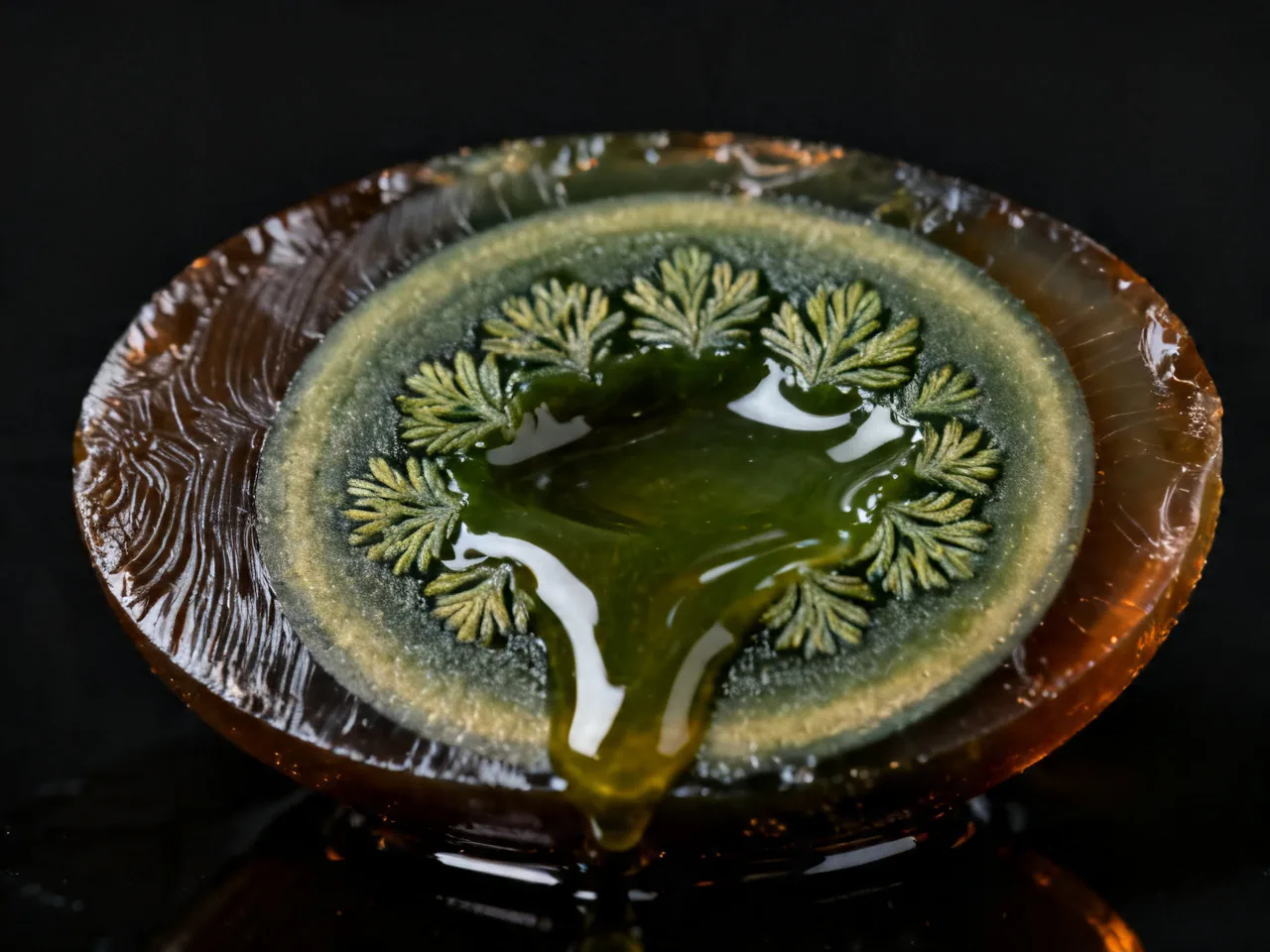
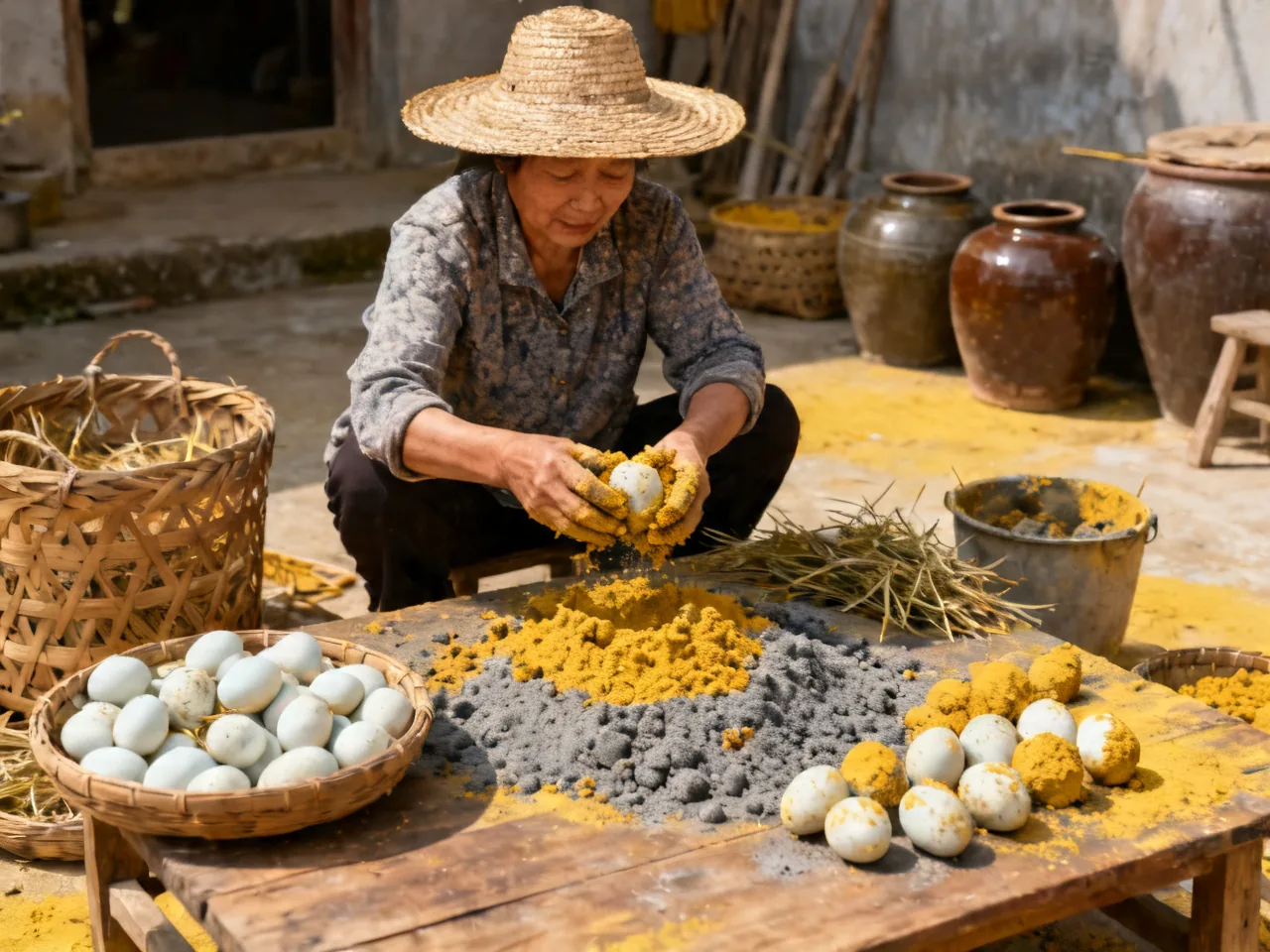
Traditional century eggs are made by coating duck eggs in a mixture of wood ash, quicklime, salt, tea leaves, and yellow clay, then leaving them for thirty to a hundred days. The alkaline compounds penetrate the shell, denaturing the proteins: the white turns into a dark brown, semi-transparent gel; the yolk becomes a soft, grey-green center. No heat involved — pure chemistry.
In 2011, CNN ran a list of the world’s most disgusting foods. Century egg made the cut. The reaction in China was considerable — people felt unfairly maligned. But the controversy also prompted some useful public education: traditional century eggs did contain lead. The old method used litharge (lead oxide), which accelerated protein coagulation and shortened curing time. Long-term heavy consumption of lead-containing eggs carried real health risks. Modern industrial production replaced lead with copper sulfate or zinc sulfate long ago. The century eggs you buy at a supermarket today are essentially lead-free.
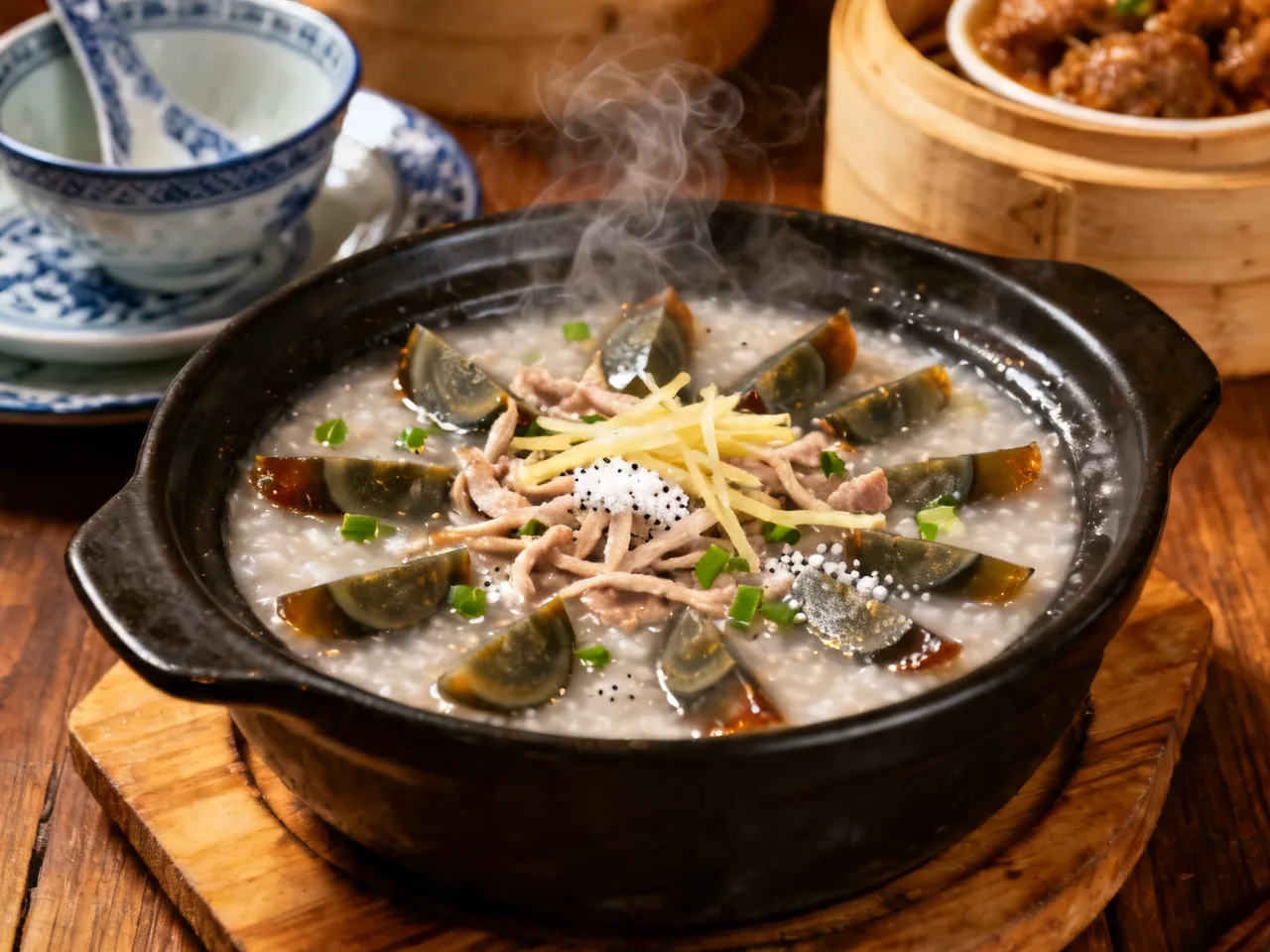
Century egg has different regional preparations, but a few are universally recognized as classics.
Century egg with tofu is the most everyday version. Silken tofu cut into blocks, century egg cut into wedges, dressed with soy sauce, black vinegar, sesame oil, scallions, and fresh chili. The savory richness of the egg against the mild tofu is one of the best cold dishes for summer. At home I use soft tofu and pine-flower eggs — the ones with fern-like patterns in the white — and add minced garlic to the dressing. Better than most restaurants.
Century egg and pork congee is a Cantonese breakfast staple. Rice cooked down to a silky porridge, century egg diced, lean pork marinated and added, finished with ginger, scallions, and white pepper. The egg softens further in the hot congee, melting into the rice.
Eaten straight with a dipping sauce is common in Hunan — halved, dipped in chopped chili sauce or ginger-vinegar, eaten alongside baijiu. This method demands quality eggs: the yolk must be soft-centered, not fully set.
Choosing a good century egg comes down to a few things. First, the shell: intact, no cracks, even coating. Second, give it a shake: no sloshing means the white has set properly. Third, look at the cut surface: the white should be dark brown and semi-translucent with a slight sheen; the yolk should be grey-green on the outside, with a soft, darker center. If the white looks pale or the yolk is fully hardened, the quality is lower.
Pine-flower eggs — with white crystalline fern patterns in the white — are considered the best grade. The clearer the patterns, the better the curing process.
Practical Notes
- Century egg with tofu is available at most Chinese restaurants, ¥15-30
- Century egg congee: best found at Cantonese tea houses and congee shops in Guangzhou or Hong Kong
- Supermarket buying: look for “无铅皮蛋” (lead-free) or “松花蛋”; recommended brands: Shendan, Xianheng
- Storage: cool, dry place for 1-2 months; refrigerate after opening and eat soon
- Best intro for foreign friends: century egg with tofu — highest acceptance rate
Related Reads
- The 8 Great Cuisines of China
- Spellbound at First Bite: A Stranger’s Descent into Chengdu’s Heat
- Street Steam: The Real Pulse of Chinese Cities
- The Peppercorn Dossier: Sichuan’s Flavor Map Through a Botanist’s Eyes
- 10-Day East China Five-City Loop