黄山の麓の白い灯りの小料理屋が、山に登る前に胃も心も落ち着かせてくれた
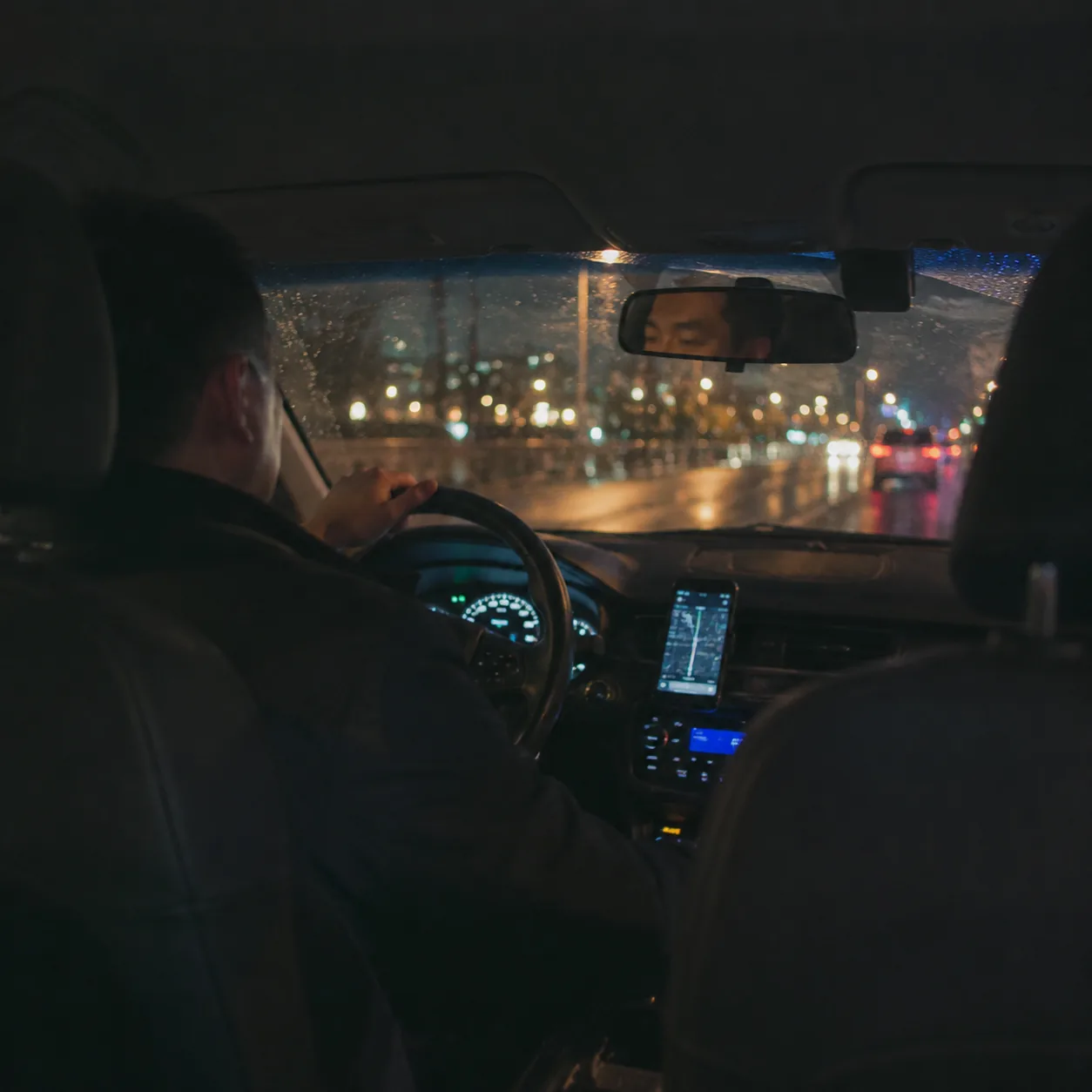
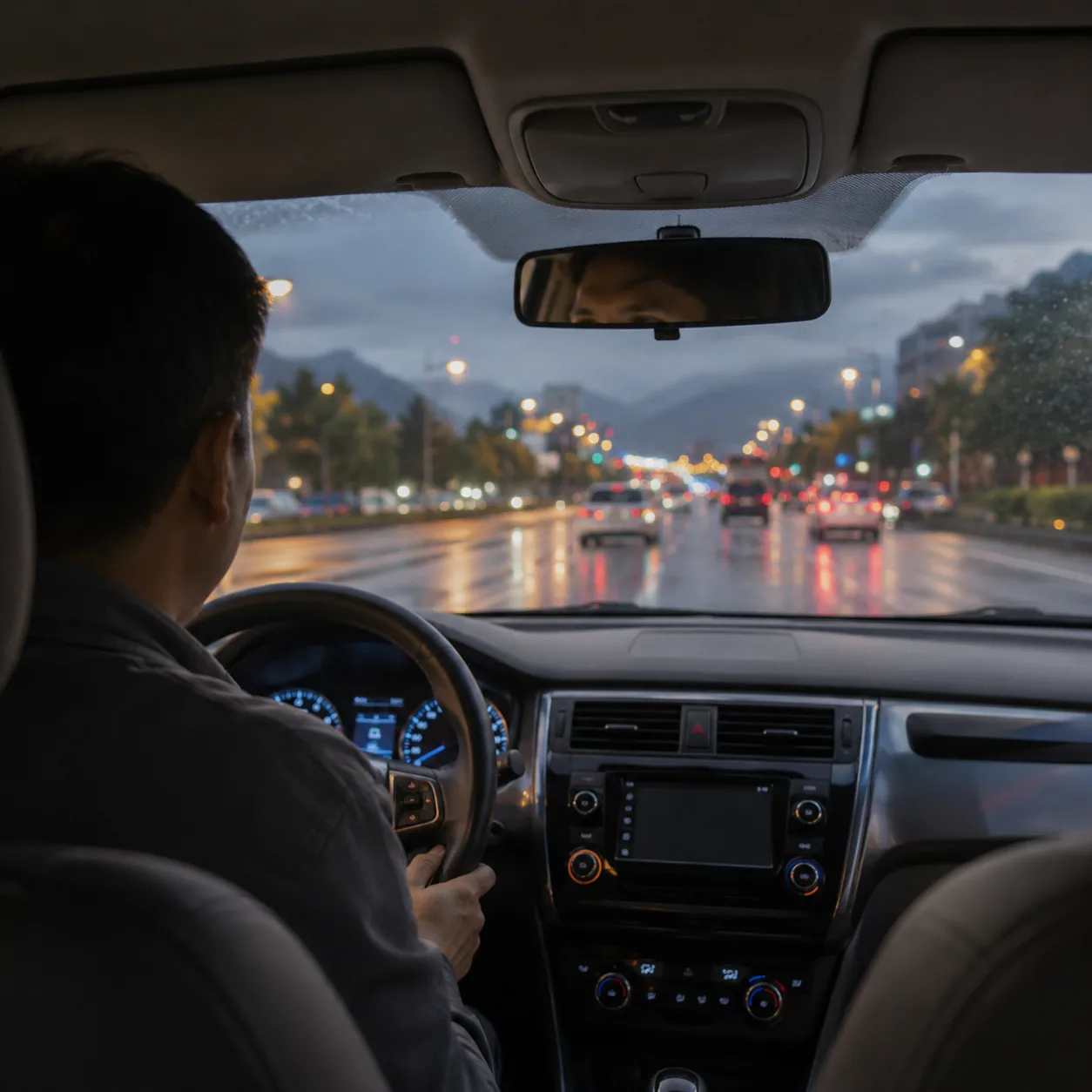
When I arrived in Tunxi, Huangshan City, the sky was already turning dark, and the taxi from the airport drove toward town along wet shining roads. The driver’s surname was Wang. His left hand rested on the steering wheel, and his right hand occasionally lowered the window a little to let the mist out. He asked whether I was going up the mountain the next day. I said yes, and added that I had saved several highly rated Anhui restaurants on my phone because I wanted to try mandarin fish and hairy tofu. He smiled without judging my plan and simply said I should not go too far that night. The road was slippery after rain, and my stomach had just come down from a flight, so I should eat something hot first. I come from Vancouver, Canada, and I am used to marking every travel meal with stars in advance. Yet that night, what stayed in my memory was not any circled restaurant, but a small downstairs eatery lit by a white lamp.
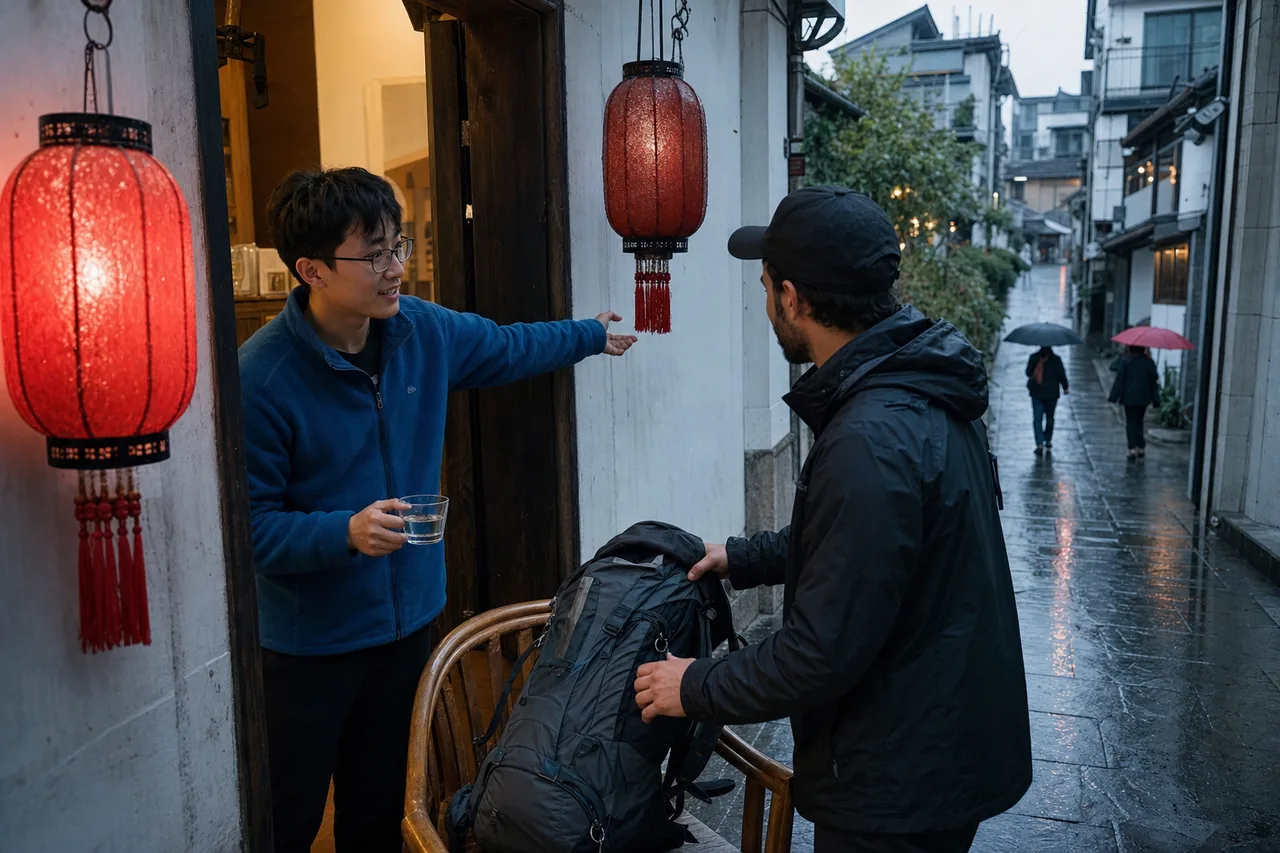
My guesthouse stood in a side lane beside the old street. Two red lanterns hung at the entrance, damp from rain, their color deeper than in photos. The young man at the front desk wore a blue fleece jacket. He helped put my backpack on a wooden chair and handed me a cup of hot water. When he heard that I had not eaten dinner, he stepped to the door and pointed. “Twenty meters ahead, on the right, there’s a small place where locals eat after work. Don’t mind the small front. The soup is hot.” I asked whether it had a signature dish. He thought for a moment and said nothing there was especially made for photographs, but the rice was steamed well. I hesitated then, because the saved list on my phone still seemed to remind me that hundreds of reviews could not have appeared for no reason.
In the end, I followed his direction. The shop sign had only four Chinese characters, red on a white background, slightly faded at the edges. At the entrance stood two plastic buckets: one filled with washed greens, the other with several muddy bamboo shoots. The glass door was not fully closed, and steam slipped out through the gap, carrying the smell of lard, minced garlic, and rice. When I pushed the door open, four of the six tables were already occupied. At one sat three men in work uniforms, at another a young couple with a child, and at another two elderly people eating noodles face to face. No one held a camera. My soles slipped lightly on the tiles, and the owner looked up from behind the stove, saying the rain outside was heavy and I should sit down to warm up first.
The menu was written on a whiteboard on the wall, some characters blurred at the edges by steam. I recognized only a few words: greens, tofu, egg, and soup. The owner saw my hesitation, came over with a pencil, and asked whether I could eat spicy food. I said a little was fine, but I would climb the mountain the next day and did not want anything too oily. She nodded, as if she had already narrowed the choices to what suited me, then wrote in her small notebook: tomato egg soup, stir-fried greens with dried tofu, and a small portion of pork with dried bamboo shoots. I asked whether they had mandarin fish. She smiled and said yes, they did, but for one person at night it would be too heavy, and since it was late, a few small dishes with rice would be enough. She said this naturally, as if her duty was not to sell more, but to help me sleep well that night.
I sat by the wall, with an old poster of Huangshan’s Welcoming Pine behind me, one corner repaired with clear tape. There was no door between the kitchen and the dining area. When the oil in the wok began to crackle, the whole little shop seemed struck by tiny raindrops. The men in work uniforms were talking about a construction site below the mountain, speaking quickly. I could catch only a few words: tomorrow morning, materials, master worker. The child of the young couple dropped a piece of tofu onto the table. The father did not scold him, only used chopsticks to push it back toward the bowl, while the mother took a tissue from her bag and wiped the table. The dinner had no drama, yet I suddenly relaxed, because it did not require me to perform as a knowledgeable traveler.
The first dish to arrive was tomato egg soup. The white porcelain bowl was large, steam rising from the surface. The egg ribbons were fine, and the tomatoes had been cooked until their edges wrinkled, red seeping into the broth. I took a spoonful. Sourness arrived first, followed by the softness of egg and a little freshness from scallions. The cold airplane sandwich, airport coffee, and damp taxi air seemed slowly settled back into my body by that mouthful of soup. As the owner passed, she glanced at my bowl and said I should drink slowly while it was hot and not burn myself. I nodded but still could not resist another sip. That warmth was not the kind announced in a refined restaurant. It came from the stove flame, the bowl’s wall, and a person’s reminder all at once.
The stir-fried greens with dried tofu arrived soon after. The greens were not arranged into neat shapes for presentation; some leaves were large, some stems long. The dried tofu was sliced in uneven thickness, its edges browned slightly by wok heat. It tasted plainly crisp, with the salt just right and the minced garlic not overpowering. The pork with dried bamboo shoots came in a small clay pot. The pieces of pork were not large, and the fatty parts had been stewed until translucent. The dried bamboo shoots had absorbed the sauce and gave a slight chew when bitten. It did not have the posture of a famous dish that demanded to be remembered, yet every mouthful reminded me that the mountains, rain, bamboo, and human patience of this place could hide inside one small dish.
Halfway through the meal, the rain outside grew heavier, and the glass door rattled lightly in the wind. A delivery rider in a raincoat came in to pick up an order, his hair dotted with water. He did not sit down. He opened his insulated box, and the owner handed two packed meals from the kitchen, then added an extra packet of tissues into the bag. The rider thanked her. Before turning away, he saw me clumsily trying to pick up a piece of dried bamboo shoot with chopsticks and smiled, gesturing that I should support it from underneath. I followed his movement and finally kept the bamboo shoot from falling back into the bowl. We shared no common language, but for a brief moment we stood on the same side because of one slice of bamboo shoot.
The elderly man at the next table noticed that I was a foreigner and asked where I came from. I said Canada. He nodded and said foreigners also visited Huangshan in winter, but in this season there was a lot of rain and heavy mist on the mountain, so scenery depended on luck. I asked whether I would see a sea of clouds the next day. He did not give me easy hope. He only said the weather on the mountain was like a person’s temper and could not be rushed. His wife added that I should eat enough before leaving in the morning because the wind on the mountain paths was strong. I wrote those two sentences into my phone notes, and they comforted me more than any scenic description. They were not meant to excite me; they were meant to spare me discomfort.
I had thought that a good travel meal needed a clear name and story, preferably with a piece of history I could tell friends. But the virtue of this meal was precisely that it did not try to prove itself. The rice was served in an ordinary stainless steel bowl with a small dent on the rim; the soup spoon handle had faded flowers printed on it; an electric fan still hung in the corner in winter, simply not turned on. Everything seemed part of long-term life rather than a scene arranged temporarily for me. Eating in that environment, I did not feel invited to watch Huangshan. I felt allowed to sit for a while at its foot.
The owner’s son, about twelve or thirteen, came in from outside with a schoolbag and mud on his shoes. He first called out to his mother, then put the bag behind the counter. While tossing food in the wok, the owner asked whether he had much homework. He gave a vague answer and went to wash his hands by the sink. After washing, he did not immediately eat. Instead, he helped carry a plate of stir-fried greens to the elderly couple’s table. The old man said he had grown taller, and the boy lowered his head with an embarrassed smile. That moment felt more welcoming than the Welcoming Pine poster on the wall, because it did not put me at the center. It let me see where the real center was: family, mealtime, a familiar sentence, and the traces of a child growing up inside the shop.
When I paid, I found the meal much cheaper than I had expected. The owner used a calculator, the number appearing on the screen. Then she glanced at the little soup left on the table and asked whether I wanted to pack some rice, saying I could heat it the next morning. I said no, because the guesthouse had breakfast. She nodded, took a small packet of tissues from beside the counter, and pushed it toward me, saying I should carry it up the mountain because it would be useful when the wind was strong. I thought of all the carefully prepared items in my backpack: waterproof bags, power banks, hiking socks, each born from planning before departure. This packet of tissues came from the reality after a meal. It was almost weightless, yet it made my luggage feel more complete.
On the way back to the guesthouse, the old street shops were still lit: some selling baked flatbreads, some tea leaves, some small woodcarvings. There were fewer tourists than during the day. Water had gathered on the stone road, and lights shook inside it. I passed a restaurant I had originally saved. A bright menu hung at the door, the photos were vivid, and the dish names were beautiful. A few hours earlier, I might have walked in firmly and compared which dish best represented Huizhou. But after that ordinary dinner, I no longer felt urgent about proving I had eaten the correct thing. The reality of a place is sometimes not at the top of a list. It hides in the tone with which someone asks whether you can eat spicy food, what time you will leave tomorrow, and whether the soup is too hot.
At 5:30 the next morning, I ate breakfast in the guesthouse dining room. On the table were congee, steamed buns, pickles, and eggs, while outside the window the sky was still blue-black. I put the packet of tissues from the previous night into my jacket pocket and deleted several meal stops from my phone itinerary that had been too tightly arranged. Not because they were bad, but because I finally admitted that travel did not need every step filled in advance. When the mountain shuttle arrived and the driver urged everyone to hurry, I lifted my backpack, and the tissues in my pocket rubbed softly against the jacket. The sound was tiny, yet it felt like an echo of the spatula touching the wok in the small restaurant.
The mountain road wound upward, the mist growing thicker, and the shadows of trees outside the window receded layer by layer. Beside me sat a woman from Shanghai. Seeing me keep looking out, she asked what I had eaten the night before. I said tomato egg soup, greens with dried tofu, and pork with dried bamboo shoots. She laughed and said, “Isn’t that just home cooking?” I said yes, but I thought it was very good. She nodded and said home cooking before climbing was the most stable kind of meal, because the stomach would not lose its temper. Hearing that, I suddenly understood why that dinner felt more real than a signature dish: it did not turn Huangshan into a name that had to be consumed. It first settled me, a person from far away, back into a body that could walk properly, watch mist properly, and feel cold and warmth properly.
At the transfer point, the rain stopped for a while, and the mountain shapes appeared and disappeared in the mist. I touched the tissues in my pocket and remembered the owner saying they would be useful when the wind was strong. Around me, tourists were adjusting trekking poles and raincoats, and I retied my shoelaces. In that moment, I did not regret missing the famous restaurants saved in my phone. Instead, I felt I had already received an unobtrusive permission from the foot of the mountain: not every trip had to become a display, and not every meal had to become proof. The strength of an ordinary dinner was that it let a person land after moving too much, then continue toward the mountains with a little patience left by hot soup.