Приключение по Шёлковому пути
Many travelers think the Silk Road is just “desert plus ruins.” The reality is far richer — you’ll cross four provinces, three climate zones, and encounter some of China’s most dramatic landscapes: Yardang landforms, Danxia cliffs, Gobi desert, snow mountains, and oasis towns. You also experience Han, Hui, and Uyghur cultures on a single route.
| D1-D2 | ||
| D3 | ||
| D4-D5 | ||
| D6 | ||
| D7-D8 | ||
| D9-D10 |
The classic route runs from Xi’an through Gansu province to Dunhuang and onward to Turpan. You’ll need 10 to 14 days. The best window is mid-May through mid-October — earlier or later means some mountain passes may be snowed in and desert nights drop below freezing.
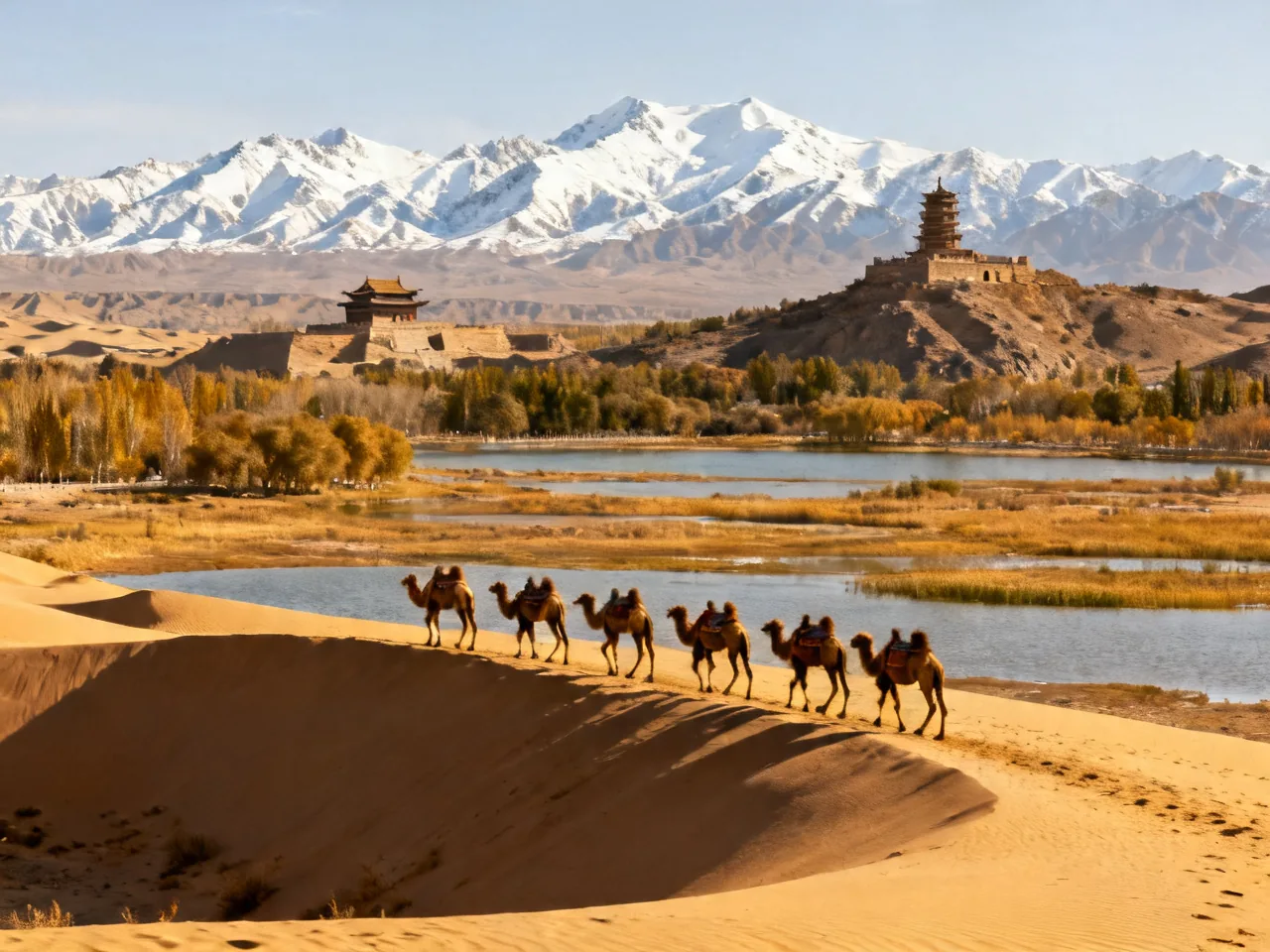
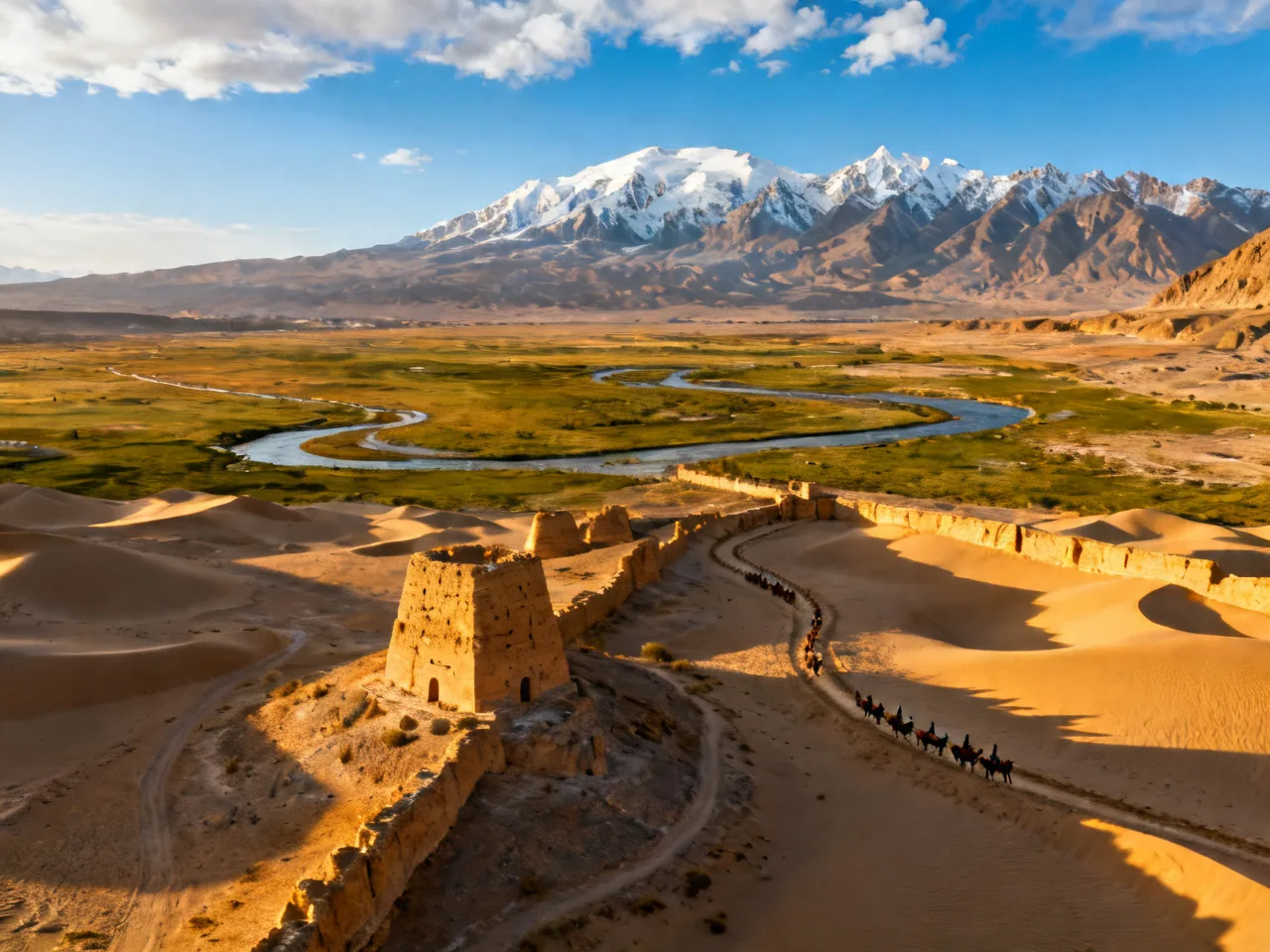
Among the top five experiences: Mogao Caves (book 30 days ahead — only 6,000 visitors per day), Zhangye Danxia at sunset, camel riding at Mingsha Mountain, watching the sun set behind Jiayuguan Fort, and the ancient Karez underground irrigation channels in Turpan.
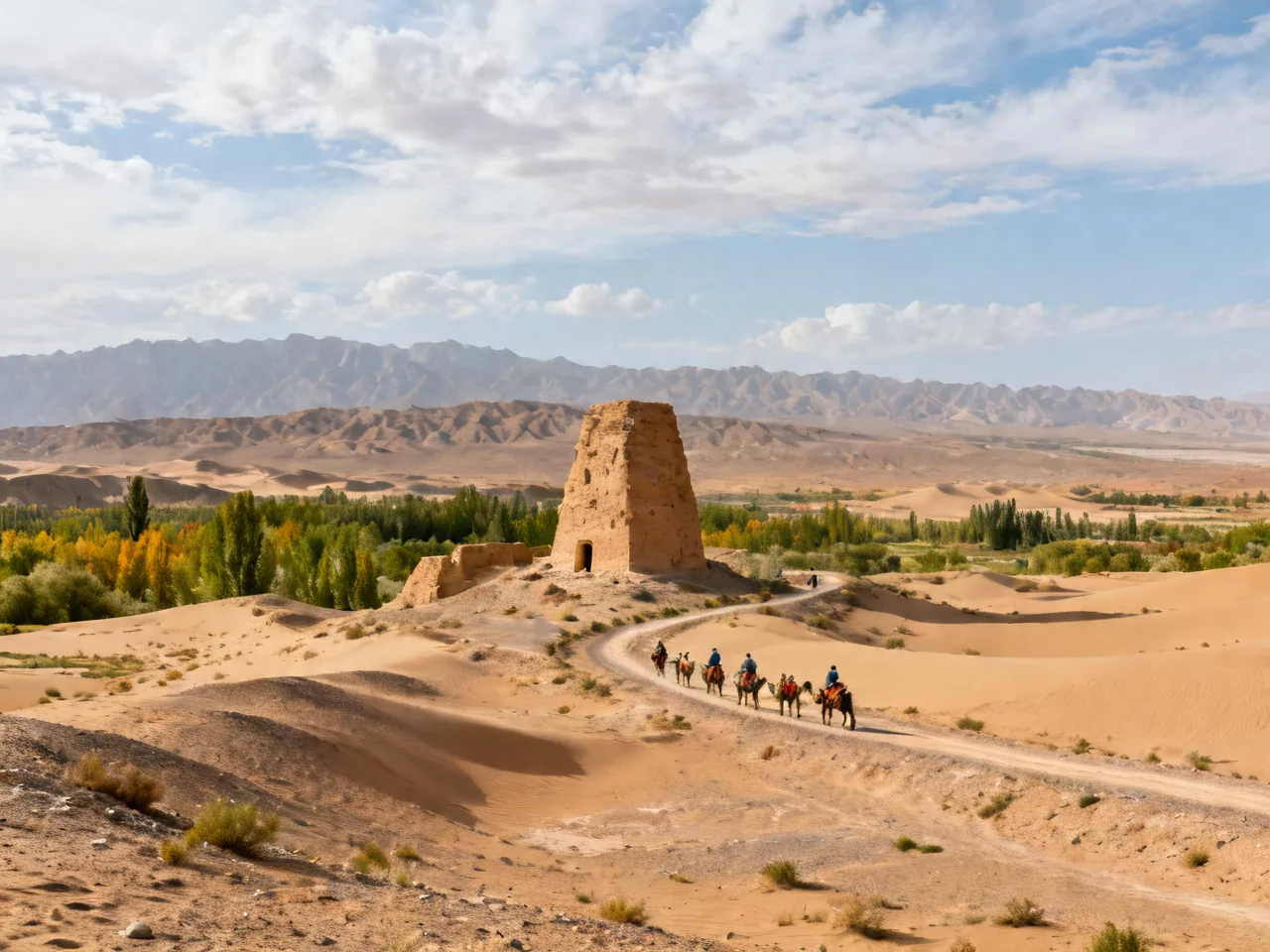
Budget reference per person per day: budget 300-400 RMB, comfortable 600-800 RMB, premium 1200+ RMB. Must-haves: SPF50+ sunscreen, a light down jacket for desert nights, a large power bank. Food transitions from Lanzhou beef noodle and lamb in Gansu to big plate chicken and baked naan in Xinjiang.
Xi’an to Dunhuang has direct flights (3 hours) or sleeper trains (15 hours). But the best way is to drive or hire a car — the Silk Road’s magic is between cities, in the empty stretches where the landscape shifts every hour. Car hire runs 800-1000 RMB per day for an SUV with driver, split among 4 passengers.
The Silk Road isn’t a route you should rush. If time is limited, just do Xi’an to Dunhuang and slow down — spend an extra night in Zhangye to see two sunsets, take an afternoon in Dunhuang watching the desert change colors. Those quiet moments are what the Silk Road is really about.
Related Reads
- 10-Day East China Five-City Loop
- Lijiang Old Town: Naxi Culture & Snow Mountain Views
- Zhangjiajie Glass Bridge & Tianmen Mountain Guide
- Guilin Li River Scenic Tour Complete Guide
- Spring Bloom Map: China’s Most Beautiful Flower Fields