Несколько минут в ночном круглосуточном магазине впервые дали мне почувствовать, что я тоже вошёл в ночной ритм китайского города
I used to think of convenience stores as daytime supply points: places to buy water, tissues, or a quick snack, all in fast motions, like completing a tiny task while already on the move. But one night in China I really stepped into a convenience store after midnight, and the feeling was completely different. It was nearly twelve. The street was no longer bright and busy like daytime. Many shops had already pulled down their shutters, and only the lit signs at intersections and the occasional delivery scooter still moved through the dark. I had only meant to buy a bottle of water. Yet the moment I pushed open the door and heard the hum of the refrigerators, the microwave beep, and someone softly saying at the counter, “Add one more oden item,” I suddenly felt that this space was no longer a daytime stop made in passing. It was a small buffer zone preserved for people whose day had not finished yet.
There were not many people inside, yet the scene had layers. A young office worker who seemed freshly off work stood in front of the hot-food shelf staring at rice balls and boxed meals with an expression already half emptied out. A delivery rider came in for an energy drink while new orders kept lighting up his phone. A student-looking customer held instant noodles waiting for hot water, backpack by the feet, as if just out of a study room. What stayed with me most was that although nobody disturbed anyone else, everyone clearly carried the feeling that the night was not fully wrapped up. No one was in a dramatic hurry, yet no one was fully relaxed either. That mood—somewhere between fatigue, refueling, and setting out again—made the convenience store look like a small interface the city keeps open for its unfinished people.
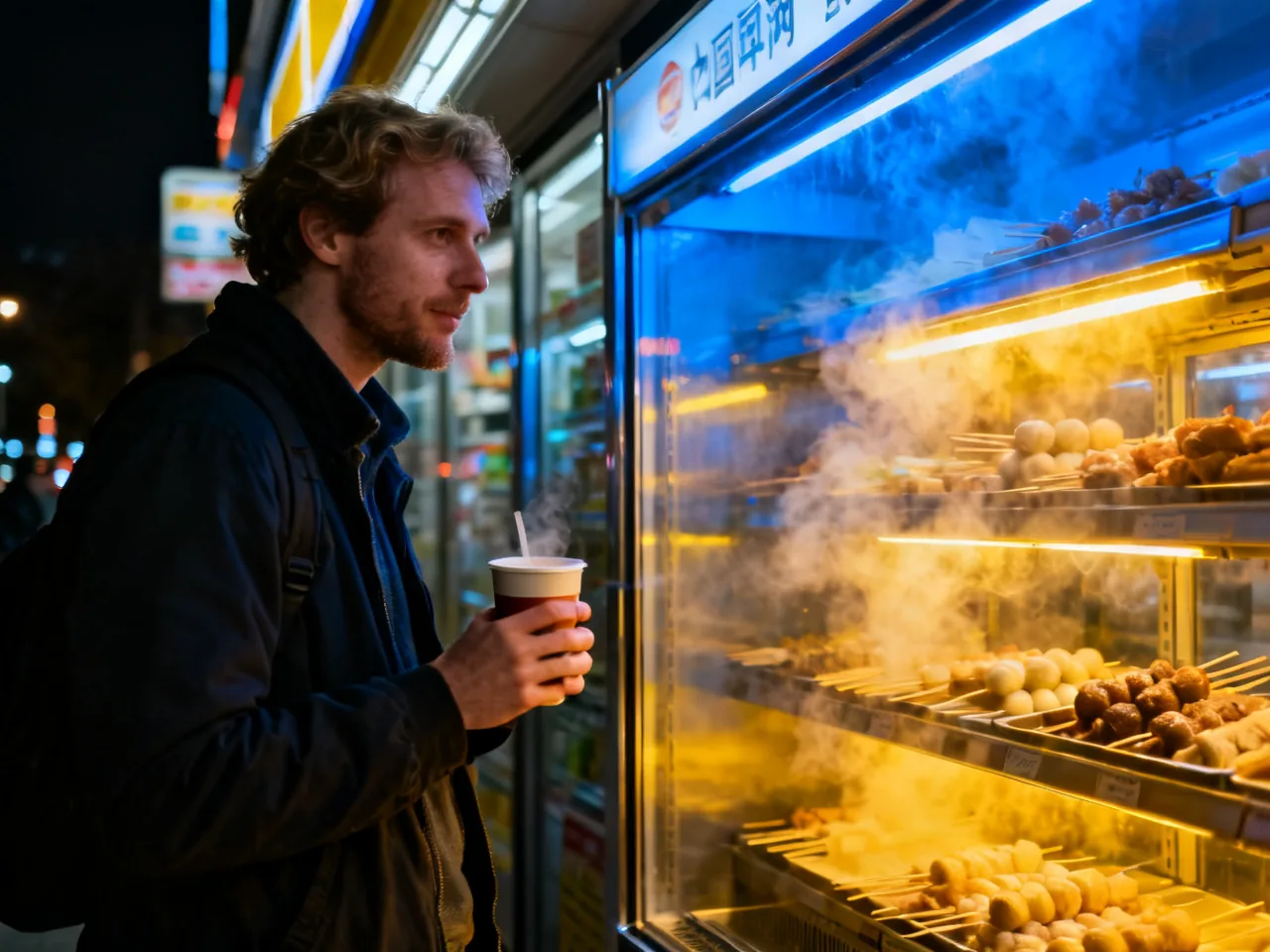
That night I ended up buying more than water. I took a tea egg and a carton of hot milk as well, then sat for a few minutes on a high stool by the window. Outside, people occasionally hurried past. Inside, the air-conditioning was steady and the light was so white that it almost refused emotion. Yet that was exactly what made the place calming. You begin to notice that the most important thing about a late-night convenience store is not the variety of goods. It is the way it lets you place yourself in a middle condition—when the city has not fully gone to sleep and neither have you—without needing to explain yourself. You do not have to socialize there, and you do not have to perform efficiency. You can simply stand still, wait for food to heat up, take in a little sugar and warmth, and then decide whether you are going home, continuing onward, or walking a bit farther first.
Later I increasingly felt that if foreigners want to understand urban nightlife in China, they do not necessarily need to begin with bar streets or night markets. A late-night convenience store can reveal the real rhythm much more clearly. The people gathered there are not only those “out for fun.” They are also office workers just off overtime, delivery riders, students heading back late, and people who could not sleep and came out to buy something small. Each person stays only a few minutes, yet all of them leave behind a trace of nighttime body heat in the same space. That is also why I came to believe even more strongly in speaking naturally or simply lingering naturally in low-pressure settings, because a convenience store is exactly the kind of place where even without saying much, you can slowly connect to the pulse of the city.
Later, at around one in the morning, I walked into another convenience store and saw a security guard sitting by the register with hot soy milk in his hands, chatting slowly with the clerk. Near the entrance, a young woman checked the location of her ride-hailing car on her phone while holding a loaf of bread she had just bought. The scene was extremely ordinary, yet it felt complete to me. The city at night does not suddenly become empty. It contracts into a handful of nodes that remain lit, and the convenience store is one of the most stable among them. It is not extravagantly lively, yet it keeps catching the people who are still on the road. For me, that feeling of being quietly caught is one of the gentlest parts of urban China after midnight.
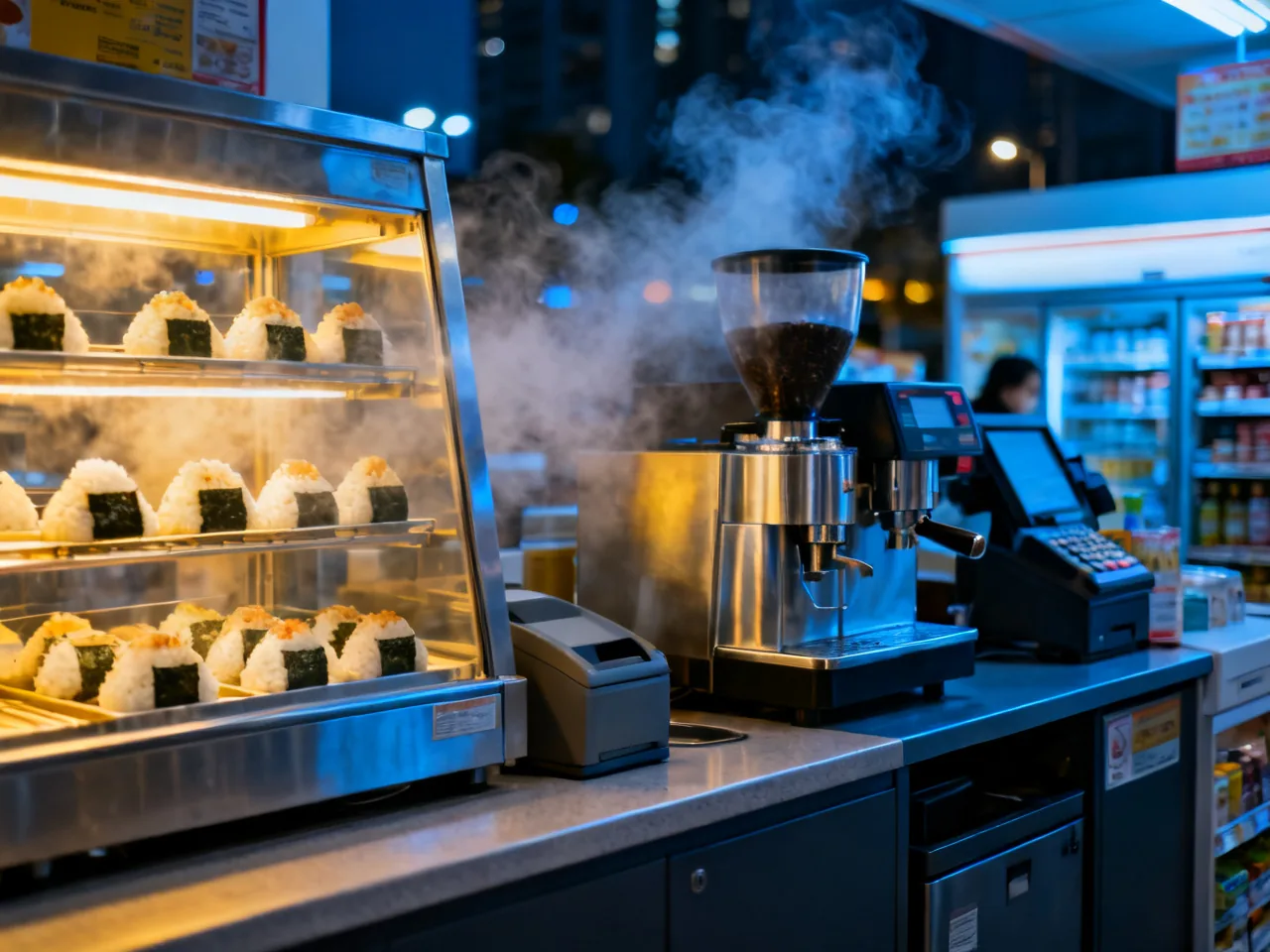
If someone asks me now where to feel that a Chinese city is still breathing late at night, I would say: spend a few minutes in a convenience store. It does not matter whether you buy much. What matters is that there you can see people and rhythms that daytime often hides: the tired but still functioning, the quiet but not truly stopped, the mutually unfamiliar yet sharing the same light. Those few minutes are brief, but they are enough to show that urban night is not simply the blank space left behind by day. It is another layer of life—lighter, slower, and in some ways even more real.