День еды в Мусульманском квартале Сианя: и желудок, и кошелёк довольны
We stepped through the old stone archway at the north end of Beiyuanmen just after 9 AM, and the street was already alive. Charcoal smoke drifted between the narrow shopfronts, carrying the warm scent of cumin and star anise. Vendors slapped dough against wooden boards, steam erupted from bamboo baskets, and a man with a voice like a foghorn bellowed for customers. Xi’an’s Muslim Quarter doesn’t ease into the day — it hits you all at once.
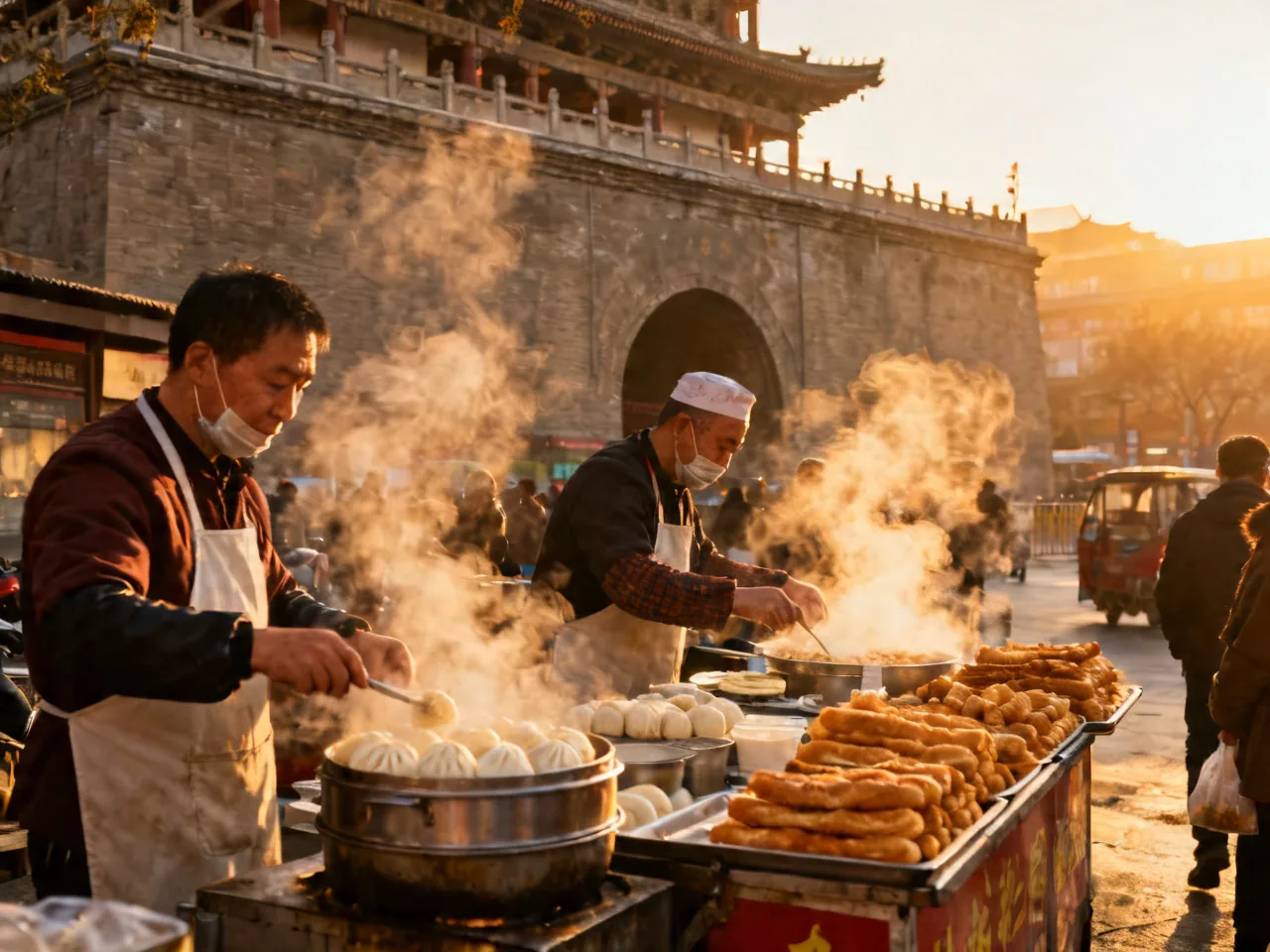
Our first stop: a bowl of hu la tang (spicy pepper soup) at Lao Liu’s, ¥8. The owner ladled out a thick, rust-colored broth loaded with diced beef, peanuts, tofu skin, and glass noodles, then finished it with a spoonful of chili oil and a splash of vinegar. The pepper heat is real — it builds fast and lingers. Honestly, if you’re not used to spice, this one might catch you off guard. The fix is a tuo tuo mo (¥2), a dense flatbread you tear into chunks and soak in the soup. The bread absorbs the broth and mellows everything out. A solid, no-frills breakfast for ¥10 total.
Walking south along the street around 10 AM, we hit that in-between hour when breakfast stalls overlap with lunch prep. We stopped to watch a man pull noodles in a tiny shop with no sign — just a doorway and a flour-dusted counter. He stretched the dough, folded it, stretched again, each pull doubling the strands until they hung like silk threads from his raised hands. We stood there for five minutes, mesmerized. Not every moment on this street is about eating; sometimes it’s about watching craft in motion.
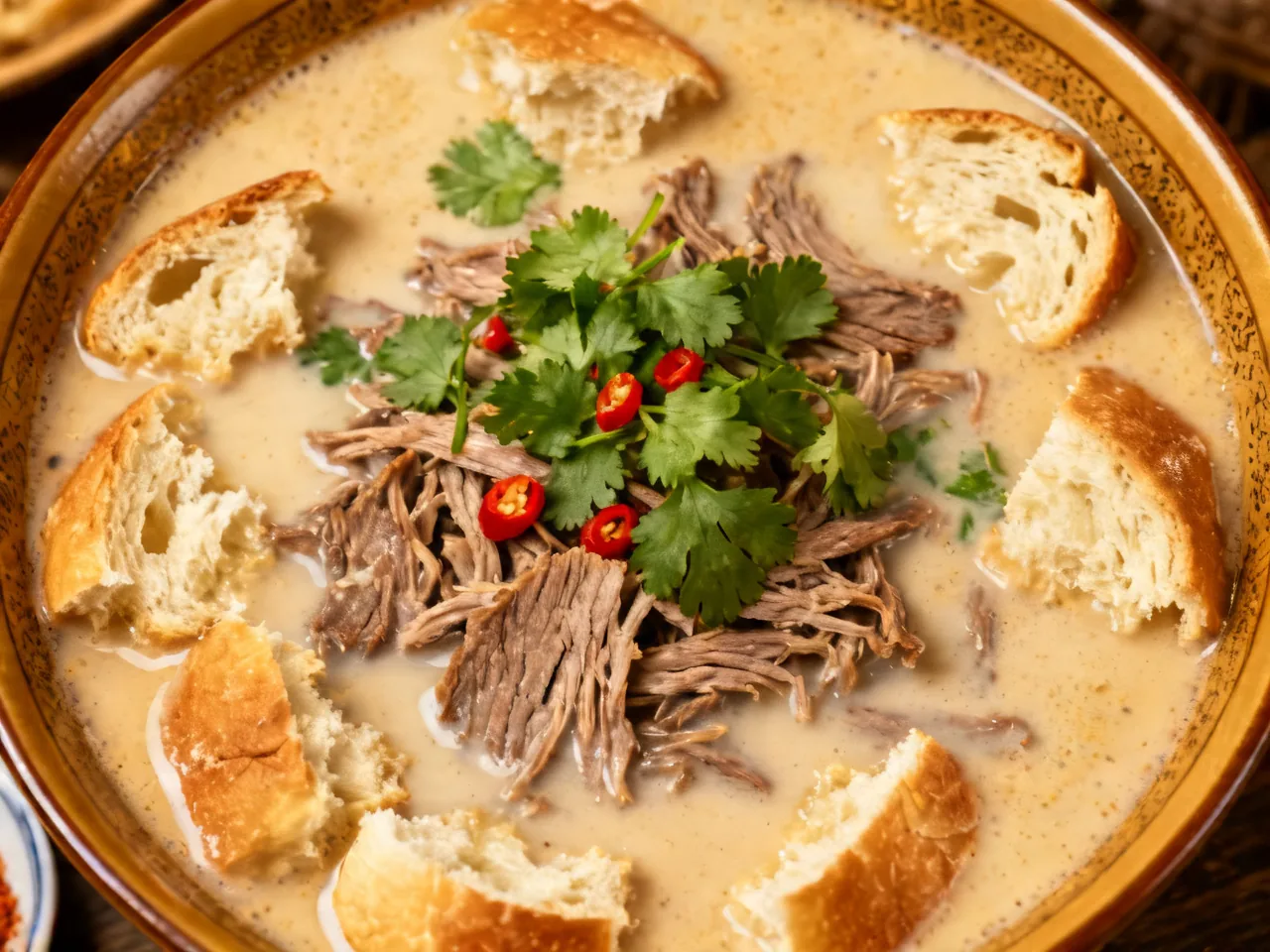
At 10:30 we joined the queue at Lao Mi’s — about twenty minutes for a regular bowl of niu rou pao mo (bread-soaked beef soup), ¥35. The ritual starts before the cooking: you’re handed two rounds of unleavened bread and told to tear them into tiny pieces, ideally no bigger than a soybean. We sat on plastic stools, ripping bread and chatting, for a good fifteen minutes. The bowl that came back was enormous — shredded beef, glass noodles, and wood ear mushrooms swimming in a rich, milky broth that had soaked into every crumb of bread. The soup was deeply savory without any gamey taste, and the bread held its texture perfectly. This was the best thing we ate all day. ¥35 well spent.
By noon the crowd had doubled. We squeezed through the flow and grabbed fresh pomegranate juice (¥10) from a stall where the vendor pressed the fruit right in front of us. Tart, sweet, and exactly what we needed after a morning of heavy food. A word of caution: some stalls water theirs down noticeably. Pick one where you can watch the fruit go into the press.
At 1 PM we tackled the legendary biangbiang noodles at Lao Li’s, ¥18 a bowl. The noodles are wide as a belt — literally three fingers across — topped with chili flakes, minced garlic, and scallions. The cook poured a ladle of smoking-hot oil over the top and it sizzled violently, releasing an explosion of roasted chili fragrance that made everyone nearby turn their heads. The noodles were chewy and satisfying, the chili oil coating every strand. Our honest take: the portion is huge but it’s a touch too salty. Splitting one bowl between two people and adding a cold side dish is the move.
By 3 PM our stomachs needed a break but our hands kept reaching for snacks. We picked up osmanthus rice cakes (¥5 for three pieces) — soft, sticky, studded with tiny golden flowers, gently sweet with a floral perfume. Lovely. We also tried a bag of mung bean cakes (¥10) and… they were just okay. Dry, crumbly, nothing special. Skip those.
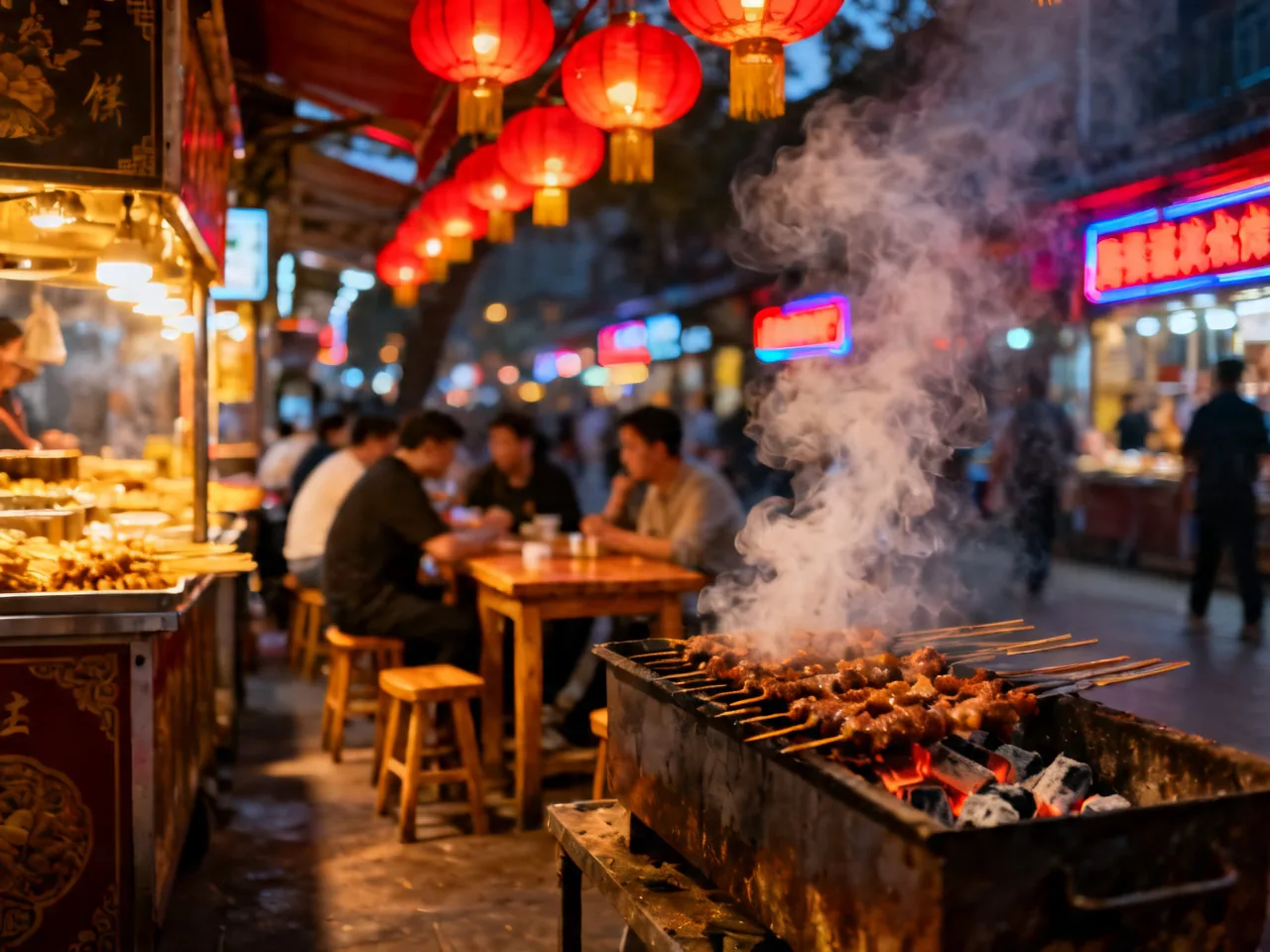
At 6 PM the street transformed. Lanterns and neon replaced daylight, and the charcoal grills glowed orange in the dusk. We sat down at Lao Jin’s kebab stall and ordered ten beef skewers (¥3 each) and five lamb tendon skewers (¥4 each). The beef was charred on the outside, juicy inside, generously dusted with cumin and chili. The lamb tendon was the surprise hit — chewy, smoky, with a depth of flavor that only comes from slow grilling over real charcoal. We washed it all down with two bottles of Bing Feng soda (¥3 each), a local orange fizz that pairs with barbecue the way beer pairs with pizza. This is how you do a Xi’an evening.
At 8 PM we closed out the day with zeng gao (steamed glutinous rice cake) from an old shop near the south end, ¥8. Layers of sticky rice, red dates, and kidney beans, steamed until the date paste melted into the rice. It’s somewhere between mochi and eight-treasure rice pudding — sticky, naturally sweet, comforting. The perfect gentle ending to a day of bold flavors.
Time for the damage report. Here’s what two of us spent across the full day:
Two people, eating from 9 AM to 8 PM, eight different foods and three drinks: ¥215 total. That’s about ¥107.50 per person — roughly $15 USD for an entire day of eating. Not a single item cost more than ¥35. The Muslim Quarter isn’t flawless — some stalls are mediocre, some lines are absurd — but the math doesn’t lie. For the price of one mid-range restaurant meal back home, we ate our way through an entire day and walked away stuffed, happy, and with cash still in our pockets.
Related Reads
- The 8 Great Cuisines of China
- Spellbound at First Bite: A Stranger’s Descent into Chengdu’s Heat
- Street Steam: The Real Pulse of Chinese Cities
- The Peppercorn Dossier: Sichuan’s Flavor Map Through a Botanist’s Eyes
- 10-Day East China Five-City Loop