В первый раз у досмотра в китайском метро я научился заранее держать термос в руке
What truly overwhelmed me the first time was not just how many people were in the Shanghai metro during rush hour, but the nonstop rhythm of the security checkpoint itself. I had a backpack on, my phone in one hand, and I was moving with a dense stream of office workers into the station. The beeps near the turnstiles came one after another, the scrape of shoe soles across the floor was constant, and the wind from an arriving train curled through the corridor with a slight chill. At the security machine, the conveyor belt kept feeding bags forward without pause, and guards, passengers, metal rails, plastic trays, and recorded reminders all merged into one very fast-moving piece of daily order. At that point, as a foreigner still learning how commuting in China really works, I assumed security was simple: put your bag on the machine, walk through, and you are done. It was only after I got called back that I realized I had missed not a grand rule, but one small habit that can make you instantly flustered.
The people ahead of me that morning were all extremely practiced. Some took their backpacks off before they even reached the machine. Some separated their coffee, umbrella, or water bottle while still in line. Others seemed to know without looking what should go where, and the whole process was so smooth it was as if the body moved before the mind did. When my turn came, I hurriedly placed my backpack on the belt and thought I had matched the rhythm. Then, just as I stepped forward, the security worker raised a hand and said, “Take out the cup.” I froze for a second and then realized that a stainless-steel thermos was still sitting in the side pocket of my bag. I had completely forgotten it. Even worse, my bag had already moved halfway forward on the belt, so I had to step back against the side flow of people, pull the bag down again, and take the thermos out separately.
It was not a major incident at all, yet it carried a very specific kind of embarrassment. I had not broken any dramatic rule, but I had snagged the rhythm of a process that depends on things moving smoothly. No one behind me complained, and the security worker’s tone stayed calm as he simply repeated that the thermos needed to go through separately. Precisely because nobody was angry, I felt even more clearly that the issue was not about harshness. It was that I had taken something that could have been prepared in advance and forced it into a last-second rescue. At a metro security checkpoint, the biggest enemy is often not slowness itself. It is that flustered feeling of discovering too late that you forgot something. Once you get flustered, you step the wrong way, grab the wrong item, block someone else, and make a whole chain of movements awkward behind you.
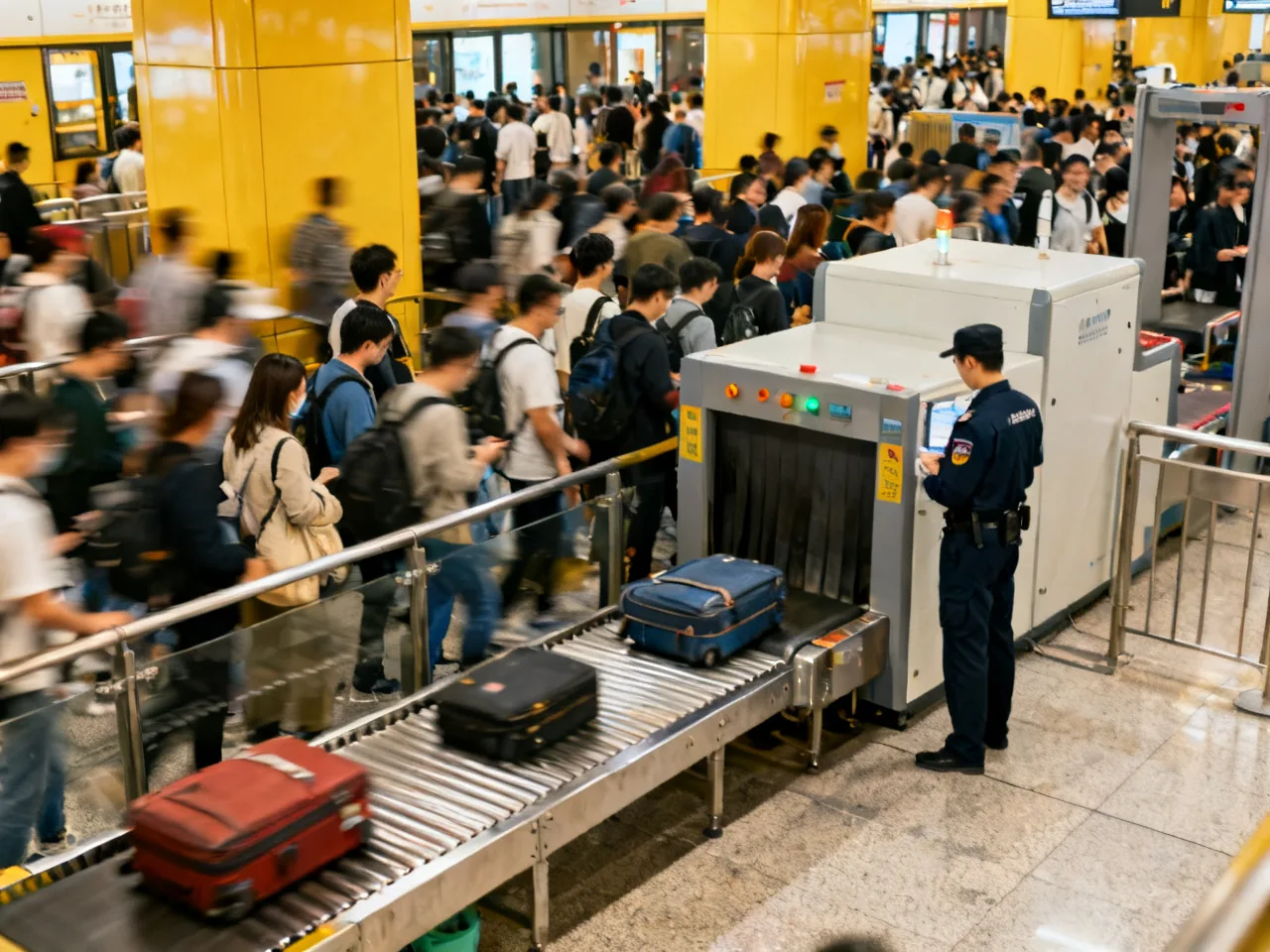
When I placed the thermos on the table separately, I finally began to observe the “default movements” of this space more carefully. Many Chinese passengers had already formed a stable pre-check routine while still waiting in line: phone put away early, backpack removed in advance, bulging pockets quickly tidied, and if they had a cup or thermos, they simply held it in one hand so it could go through separately. I realized that people who were truly familiar with the space were not reacting at the machine itself. They had already mentally completed the next few steps during the last seconds of walking toward it. That preparation was not some exaggerated nervousness. It was a very practical urban instinct: in a high-frequency public process, being ready half a step earlier saves a surprising amount of last-minute correction.
Later I started noticing that it was not only thermoses that revealed whether someone was new to the scene. One person would stuff a folding umbrella deep inside a bag and only remember it at the machine. Another would have earphone wires wrapped around a phone and become clumsy trying to fix them before passing through. Someone else would be holding breakfast in one hand and tugging a shoulder strap with the other, then discover at the table that there was no third hand available for anything else. By contrast, the practiced commuters often did not look hurried at all, yet they moved faster. Their speed did not come from rushing. It came from removing whatever might interrupt the sequence before the interruption had a chance to happen. That distinction stayed with me, because I used to define efficiency as moving quickly. Gradually I began to understand that in many Chinese public spaces, real efficiency depends less on heroic recovery and more on preparation.
Once I even saw a young man repeat exactly what I had done the first time. His bag was already halfway onto the belt when the security worker reminded him that his water bottle had not been taken out. He turned back immediately to grab it, and in that moment he nearly collided with both the people behind him and someone next to him who had just retrieved a bag. The whole thing lasted less than ten seconds, but within those ten seconds you could see a line that had been flowing smoothly suddenly wrinkle. The security worker did not scold him. He simply steadied the bag and signaled to the people behind to wait a moment. That handling stayed with me too. At Chinese metro security points, rules are not always enforced through dramatic words. Very often they are maintained because everyone around the checkpoint quietly cooperates to keep a potentially chaotic space functional. You do not need to be yelled at. Getting stuck for that one second is often enough to teach the lesson.
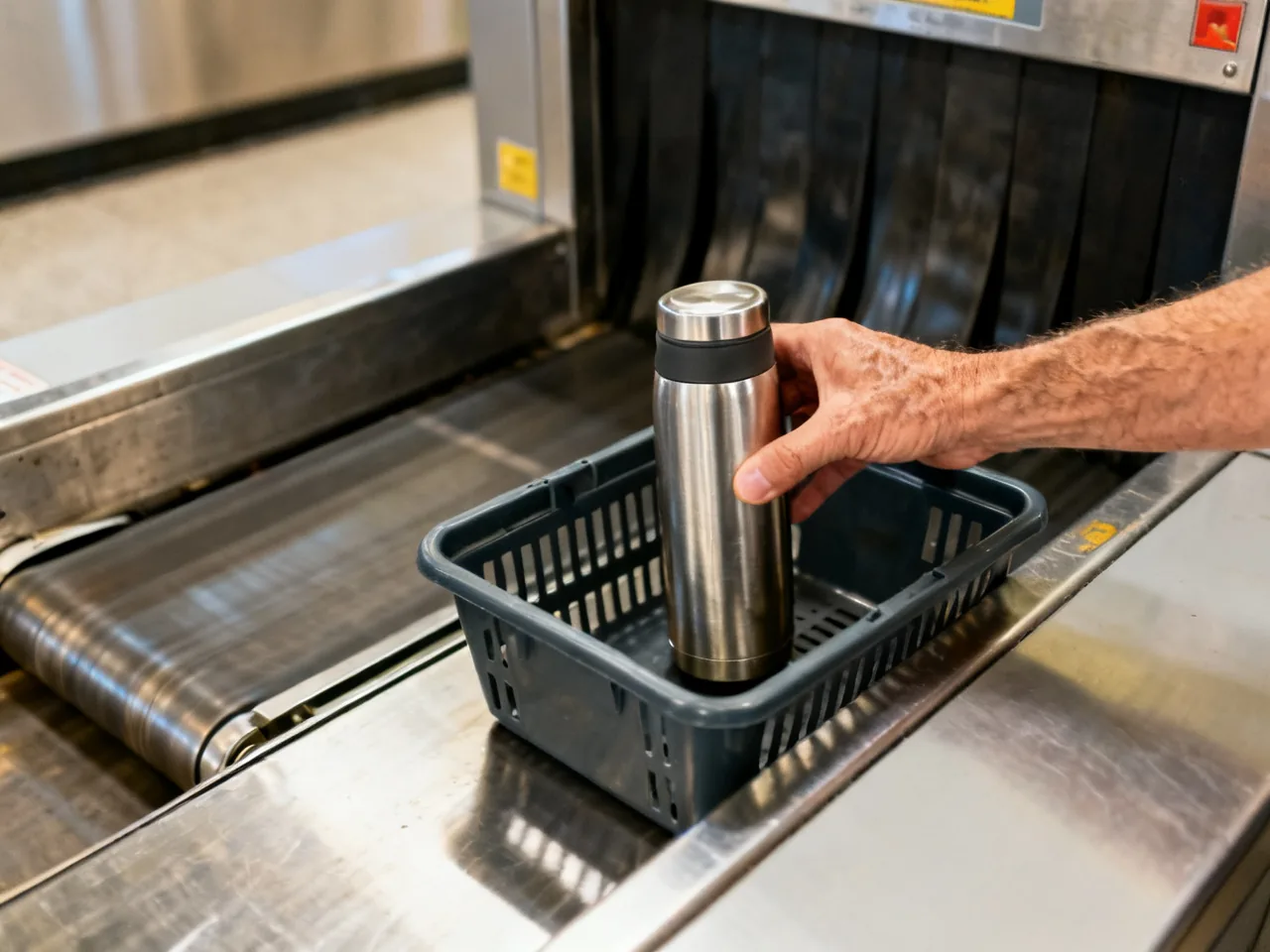
Since then, every time I walk toward a metro security checkpoint, I use the last few steps in line to pat the side of my bag, confirm the thermos is there, and take it out into my hand. The gesture is so small that it barely seems worth mentioning, yet it has made my whole commuting state much steadier. And I gradually understood that if a foreign friend newly living in China asked me which security detail is easiest to miss when taking the metro, I would absolutely say this: do not leave the thermos inside your bag waiting for someone else to remind you. Not because the consequence is dramatic, but because once you prepare it in advance, you stop letting that moment of panic control the rest of your movement. For me, that thermos became a very concrete reminder that in a dense, fast-moving public system like China’s, what keeps you from looking lost is often not how clever your reaction is at the last second, but whether you are willing to think half a step ahead before you arrive.