Ночной рынок — не достопримечательность, а другое лицо города
Let me take you somewhere: Taiwanlu Night Market, Wuhan, 9:30 PM.
Smoke from the grilled fish stalls wraps the entire street in white haze. The smell of chili and cumin hits you from half a block away. The vendor is a man in his mid-forties, tending three fish simultaneously, his brush loaded with red oil sweeping back and forth across the skin, while his eyes check whether the customers at the next table need more seasoning. His wife sits behind the cash register, phone screen lit, but her gaze continuously sweeps the whole stall. They haven’t exchanged a word, but their coordination is seamless. They’ve run this stall for eight years.
China’s night markets aren’t evenly distributed. They thrive in particular urban cultural soils: Chengdu, Chongqing, Wuhan, Changsha, Xi’an, Zhengzhou — the density and vitality of night markets in these cities far exceeds Beijing or Shanghai. The reasons aren’t complicated: climate, consumption habits, city management style, and a hard-to-quantify “willingness to be out at night.”
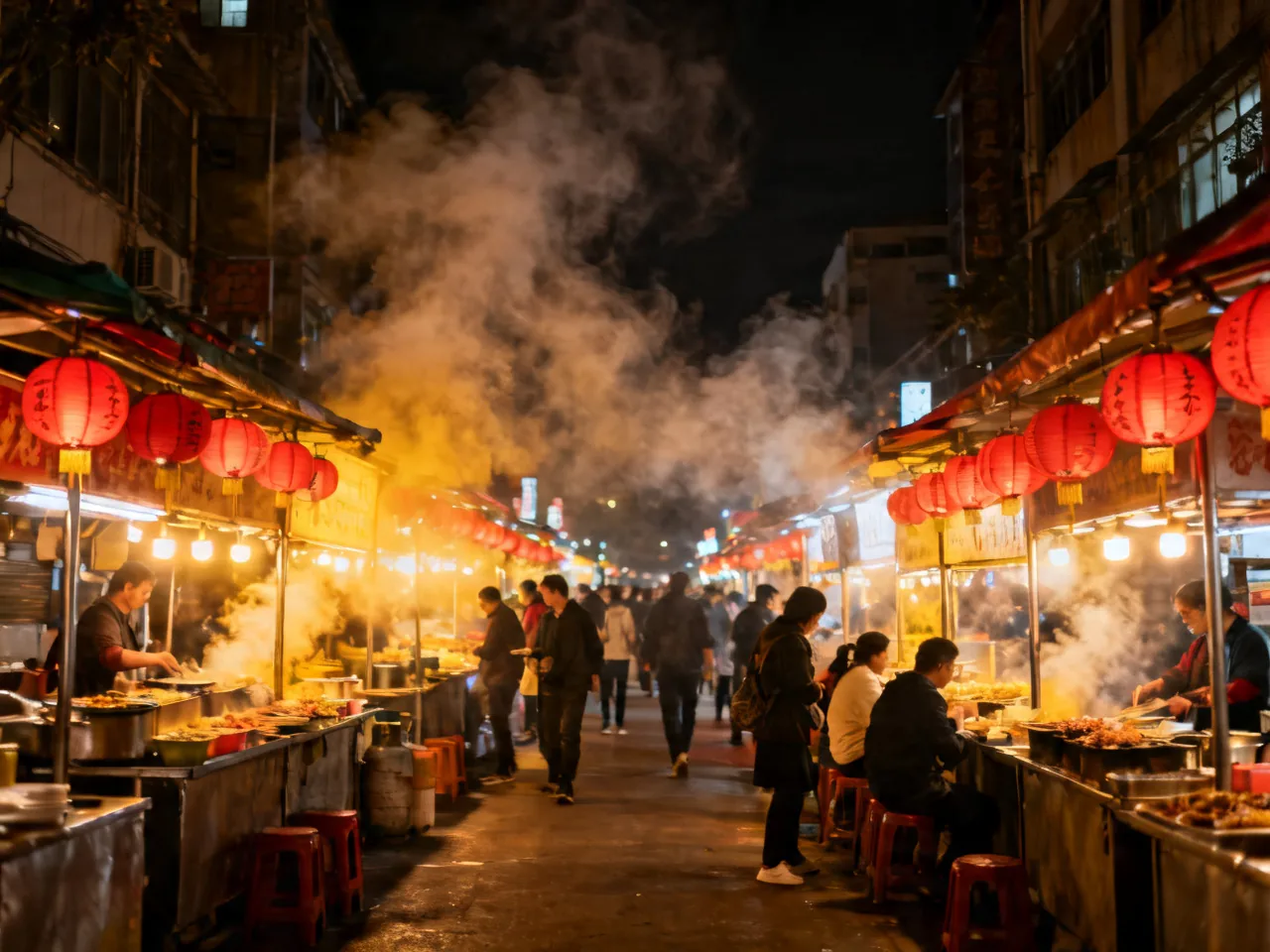
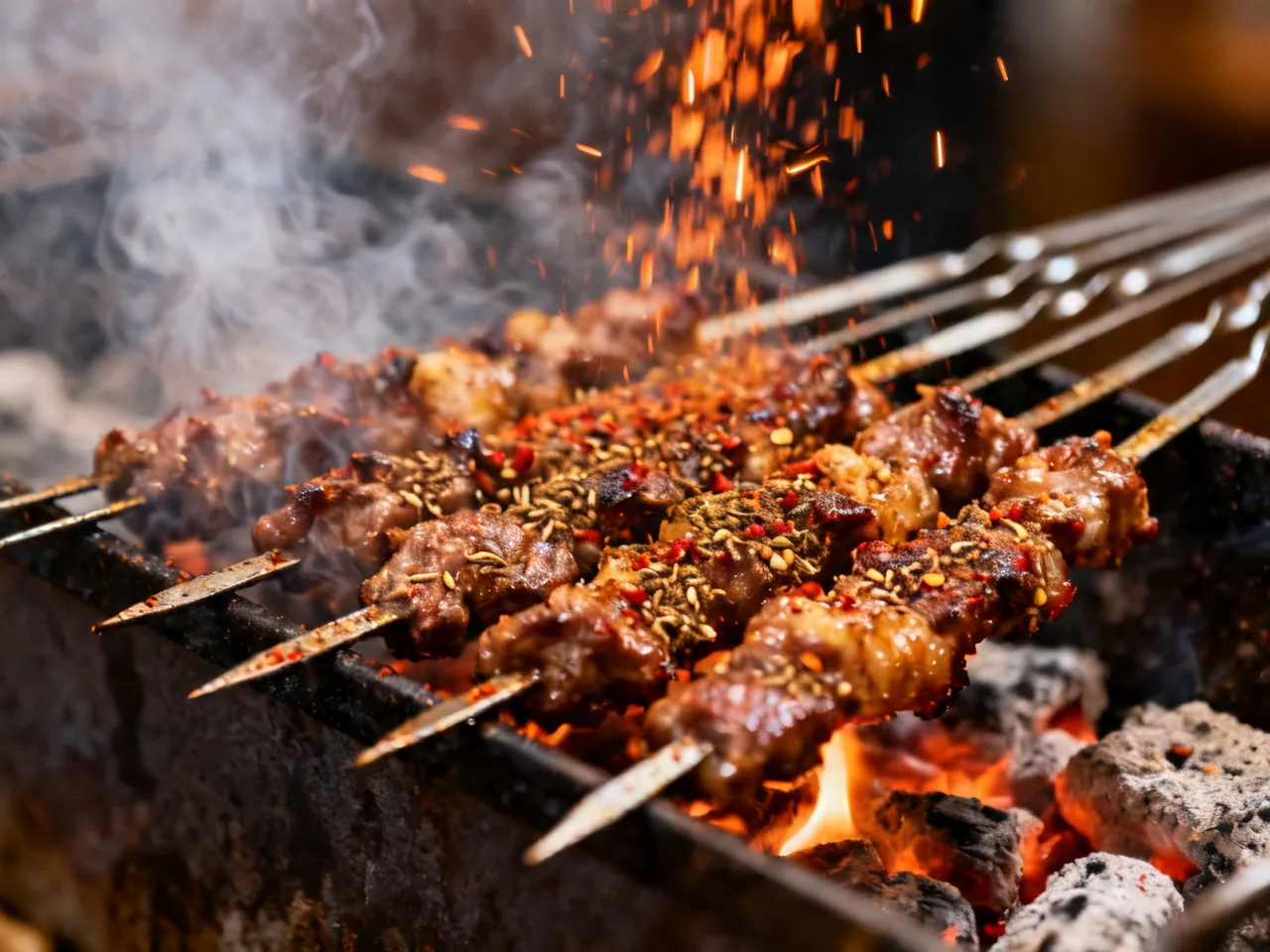
Chengdu’s night markets revolve around string skewers and mao cai, with satellite stalls offering rice jelly, bowl-bowl chicken, and ice jelly desserts. Chongqing’s are wilder — riverside open-air stalls run from dusk until 2 or 3 AM, river wind dispersing the grilling smoke, diners sitting on plastic stools drinking beer against the nightscape. Xi’an’s night markets concentrate around Muslim Quarter and Fenxiang Lane, grilled meat, liangpi, and paomo stalls packed side by side, tourists and locals indistinguishable from each other.
A fact no tour guide will tell you: the first third of most night markets is essentially set up for tourists. Stalls are tidier, prices higher, menus have English, vendors actively solicit. The genuinely good stalls tend to be in the middle or toward the end of the market, or tucked into the side alleys off the main drag.
When entering a night market, walk the full length before ordering anything. Spend fifteen minutes covering the whole market: observe which stalls have the longest queues, which vendors are busy rather than waiting, which foods are being made to order rather than pre-prepared. These three indicators are more reliable than any recommendation list.
Many foreign visitors worry about the language barrier. In practice, night markets are among the lowest-barrier food environments in China. Point at what someone else is eating and say “this one,” hold up fingers for quantity, pay and receive change — the entire transaction can complete with zero shared language.
A few useful phrases:
- “zhège duōshao qián” — how much is this
- “bù là” — not spicy
- “dǎbāo” — to go / pack it up
- “jiā yī fèn” — one more portion
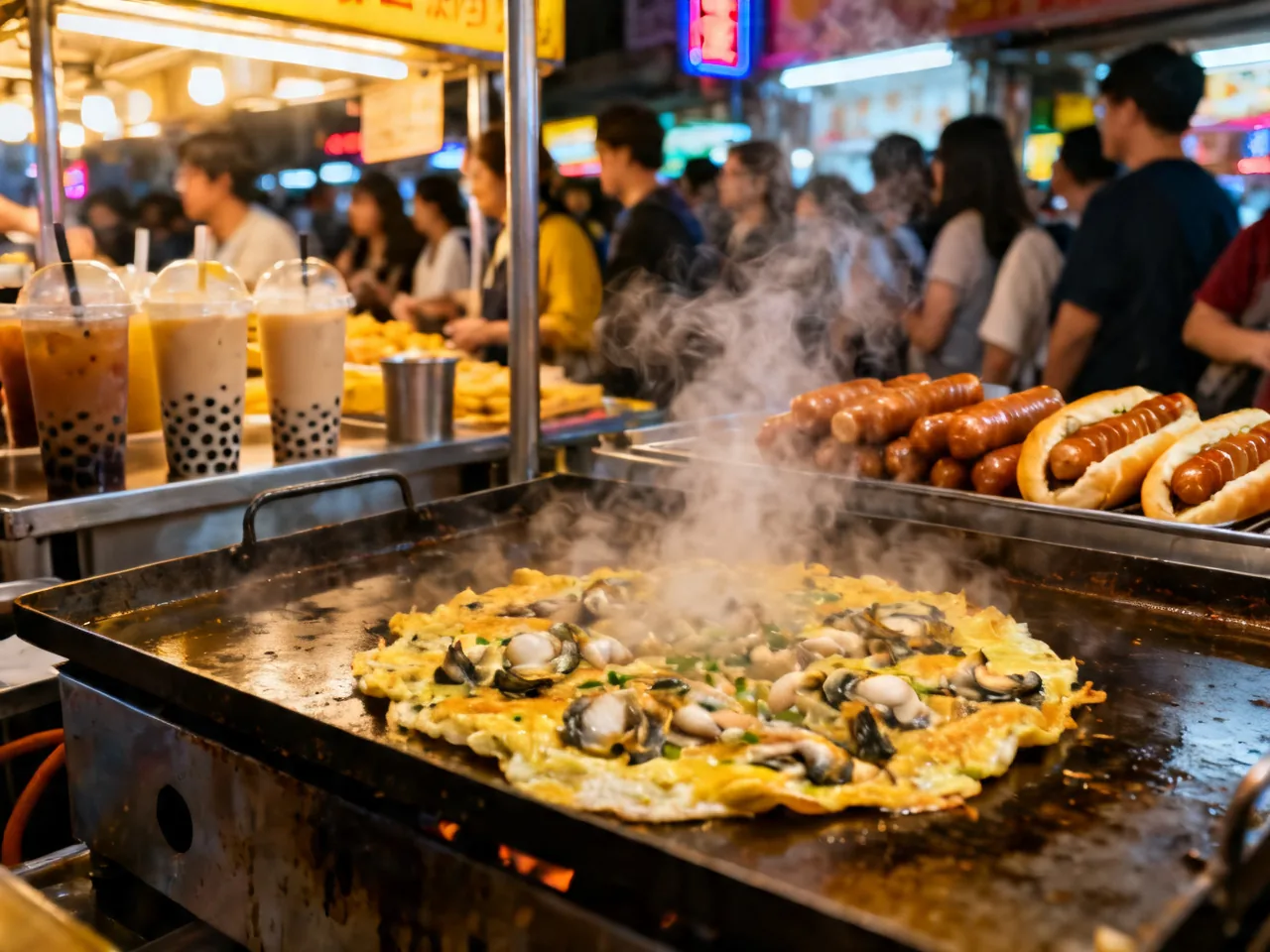
Night markets have their own temporal rhythm. Most don’t truly come alive until after 7 PM. The peak window is 9 to 11 PM — this is when crowds are densest and vendors are at their best: ingredients still fresh, pace steady, not so slammed that quality slips, not so slow that effort fades.
After midnight, night markets take on a different character. The crowds thin, stalls begin closing, but those that remain are often the most interesting — someone packing up, someone counting cash, someone sitting down to eat a bowl of whatever didn’t sell tonight. At this hour, a night market feels more like a city taking off its makeup.
Night markets don’t need a strategy guide. They need time and curiosity. Bring an empty stomach, walk in, follow the crowd, follow the smell. The city will tell you what to eat next.
Related Reads
- The 8 Great Cuisines of China
- Spellbound at First Bite: A Stranger’s Descent into Chengdu’s Heat
- Street Steam: The Real Pulse of Chinese Cities
- The Peppercorn Dossier: Sichuan’s Flavor Map Through a Botanist’s Eyes
- 10-Day East China Five-City Loop