Как выбрать способ поездок по городу в Китае: реальные различия между метро, такси и велосипедом
In third-person perspective, the author rebuilds the execution logic of “中国城市通勤怎么选:地铁、打车、骑行的真实差别” with focus on risk positions: when pace collapses and which actions tend to destabilize both budget and rhythm.
The author tracks four signal groups in 线路: congestion, waiting, payment, and return path, then reroutes dynamically.
After each transfer, ask one question: is this route serving experience, or just serving check-ins? If it is the latter, simplify immediately.
Scene anchor for this article: 这条线路.
- Can the main route be done within two transfers?
- Is the backup route saved in notes?
- Do payment and network have fallback options?
I rewrote this article in a real travel sequence instead of stacking attractions. I place 中国城市通勤, 地铁打车对比, and 共享单车指南 on one practical route: when to move, where to pause, what to eat, and how to return. Many first-time visitors only check map distance and then lose energy to queues and transfers. This version turns those hidden frictions into an executable one-day plan.
Start with the departure window. Put the most competitive spot in the first morning block, and never burn prime time on gate-finding or random shopping. Keep the middle block for walking and photo observation, and reserve the late block for food and return transfer. The benefit is resilience: even if rain or long queues hit at noon, your whole day does not collapse. This pacing logic is consistent with How to Buy China’s High-Speed Rail Tickets: A Complete Guide for Foreigners and Mobile Payments in China: Can Foreigners Use Alipay and WeChat Pay?.
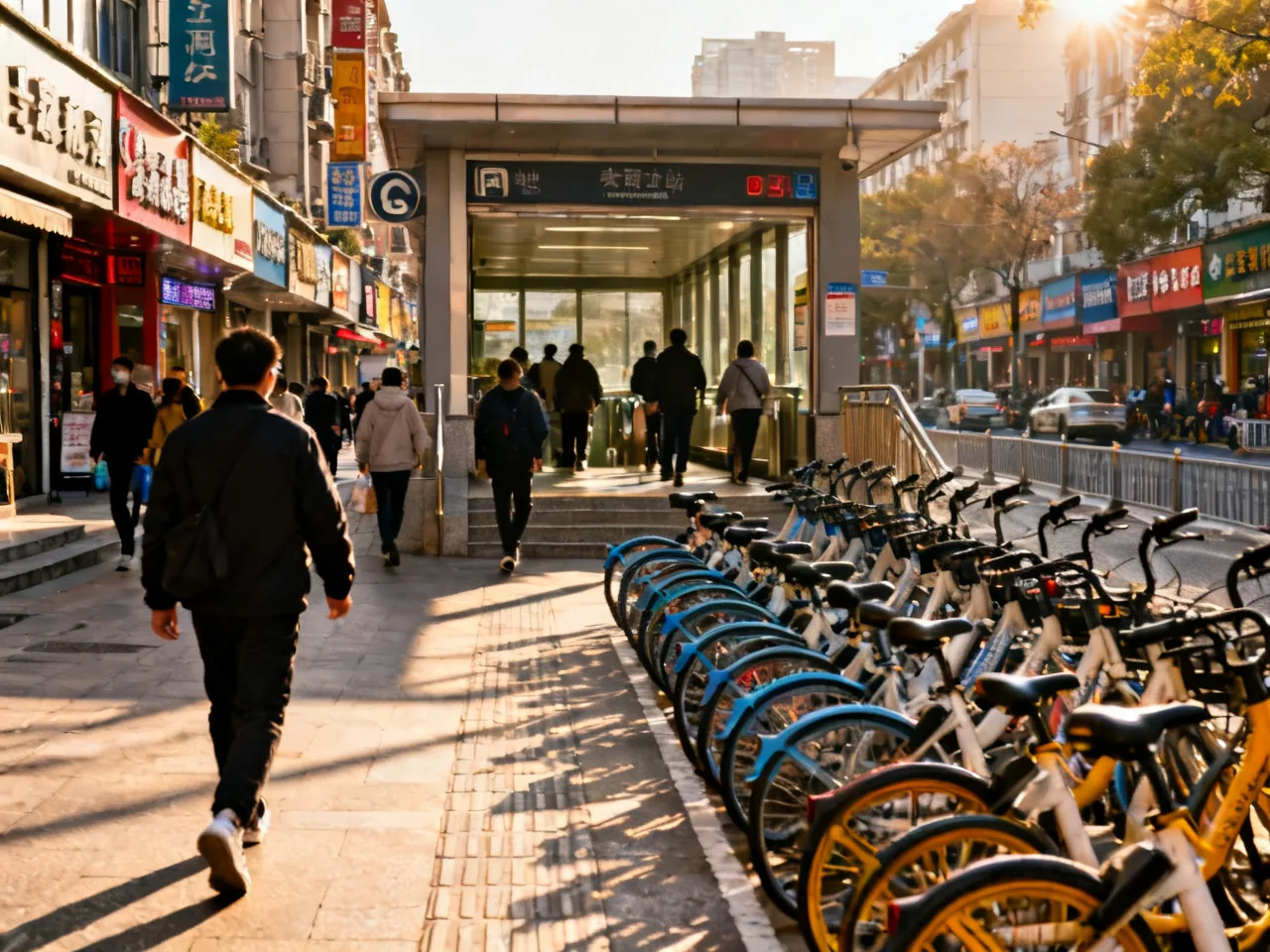
Execution Rhythm
Now the on-site decisions. Most guides tell you what to tick off, but almost none teach what to drop. My rule is simple: if a spot requires over forty minutes of standing and repeats what you just saw, skip it. Reallocate that time to 地铁打车对比 and neighborhood slow-walking for a more complete experience. For opening rules and holiday variability, I only trust authoritative sources: 中国文化和旅游部官网 Ministry of Culture and Tourism and 中国政府网 China Government Portal.
For food, I do not recommend ordering a full luxury list from the start. Begin with a baseline item, confirm taste and oil-salt level, then add if needed. In busy zones, queue cost affects budget more than menu price. I split eating into two blocks: a 30-40 minute main stop and a sub-15-minute closing snack, so return transfer remains safe.
Budget, Payment, and Return
Payment and mobility redundancy are the most overlooked layer. My checklist always uses dual backup: mobile payment as primary flow, cash or card as fallback. Keep at least two switchable transport options among metro, walking, and short taxi rides. Never bet your entire day on one app or one gate. For payment details, use When the Sun Sets, the Real Show Begins — China’s Night Economy as a practical extension.
Travel is not about filling maps, but aligning body energy with attention. When those stay synchronized, routes naturally become easier.
Completion here does not mean seeing everything; it means still having room to adjust at the end. (Scene: 这段路线; topic: 中国城市通勤怎么选:地铁、打车、骑行的真实差别).