В июне в Китае я разделяю старинные городки, горные тропы и ночные рынки на разные ритмы
The easiest mistake in China in June is trying to place every beautiful stop in the middle of the day. People open a guide and immediately imagine white walls, canals, stone lanes, mountain clouds, and glowing night markets, then try to squeeze all of them into one long stretch from morning to night. But June is not a month that rewards brute force. The air turns sticky, rain arrives without warning, and once the sun comes out, stone steps and pavements start sending heat back through your shoes. So when I recommend June routes now, I no longer arrange them by a list of cities. I arrange them by how the body feels across the day: old towns in the morning, mountain paths in the afternoon, night markets after dark.
What I want people to remember is not which city is the hottest destination, but that June travel in China works best when you separate places by time. If you divide them well, Jiangnan is not just dampness, the mountains are not just exhaustion, and the night market is not just a crowd. Once the rhythm is right, June can actually be one of the best months for reading China slowly, because water, mist, tree shade, and lights all gain more texture than they have in drier seasons.
How I Would Stitch This June Route Together
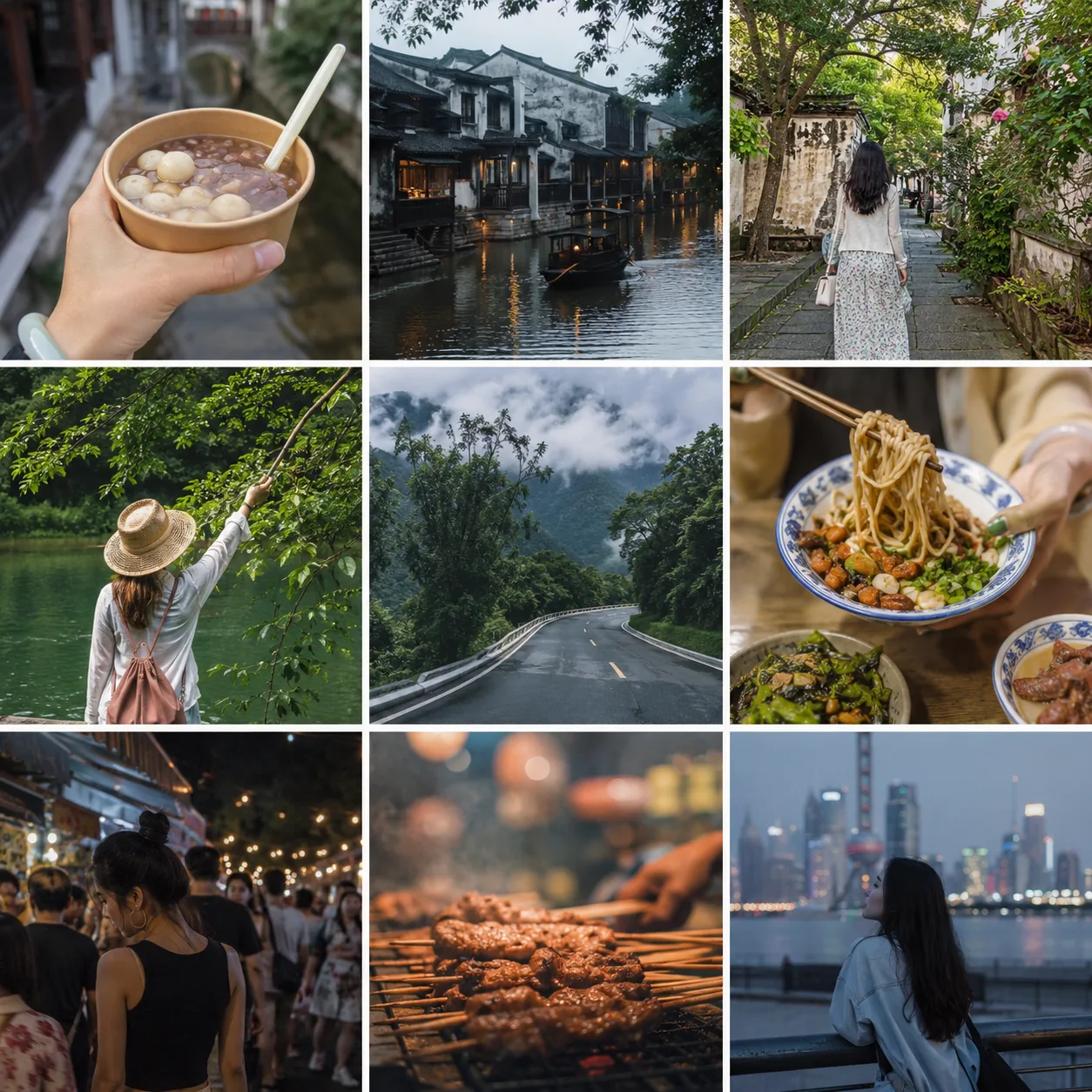
If I had to build one June route for someone coming to China for the first time, and I wanted it to feel layered without becoming exhausting, I would choose the Suzhou–Hangzhou–Huangshan belt. Not because those names are the loudest, but because they connect three June travel moods very naturally: a quiet morning lane, a middle stretch of trees and moving air, and a night that lets you sit down for something hot and look at a little light. The transitions between them are also gentler, so you do not waste too much energy forcing abrupt changes in pace.
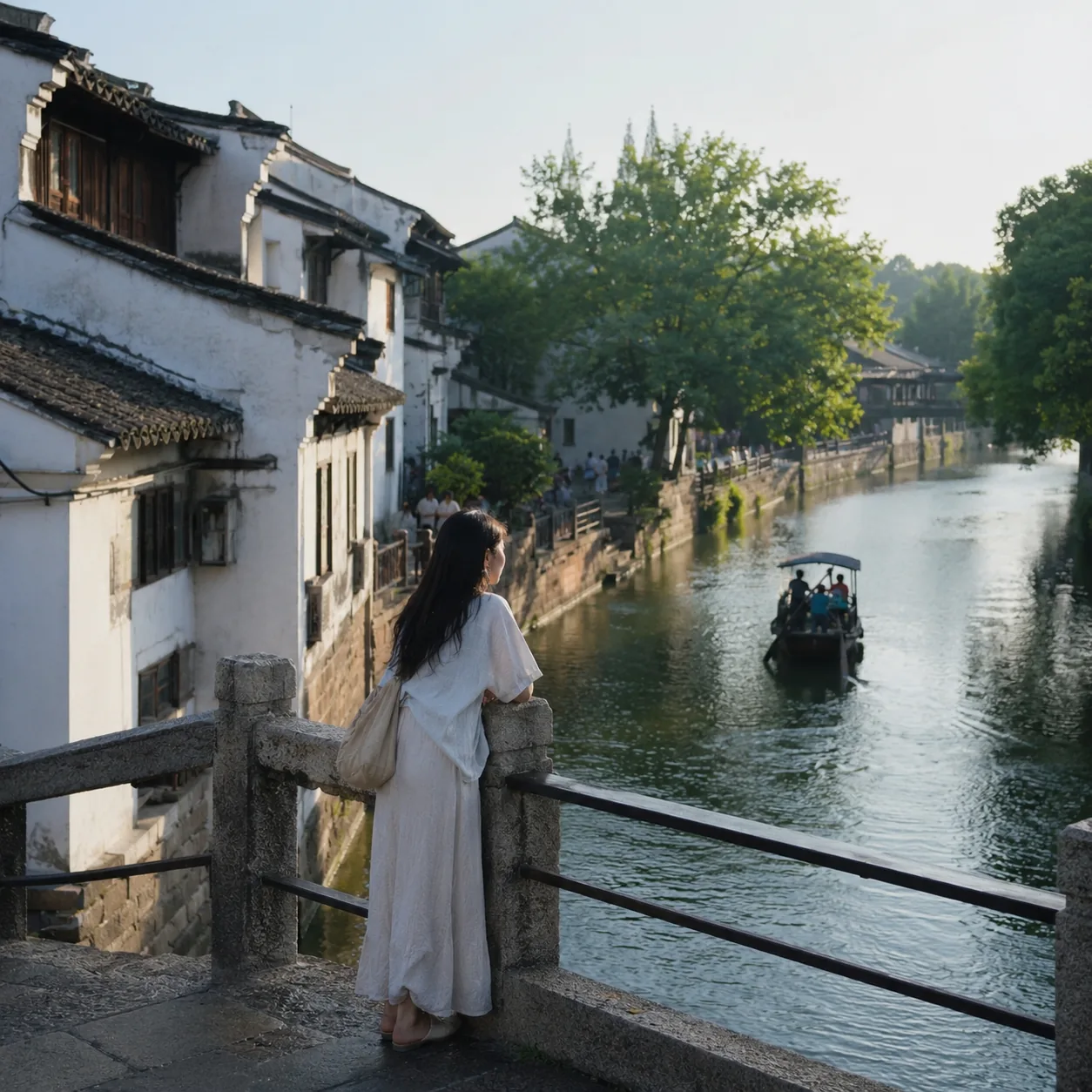
Suzhou is where I like people to process their “first sight of China.” Many first-time visitors assume old towns and canal streets must be seen at the brightest noon hour, but June rewards the opposite. In Suzhou, I would rather walk between seven-thirty and nine-thirty in the morning. Shops are only beginning to open, the canal surface has not yet been broken into pieces by too many boats, and the shadows against white walls are still soft. Even the steam from breakfast stalls feels unusually honest. You hear the metallic pull of rolling shutters, the tap of bowls and spoons, and you smell soy milk mixing with damp wood. At that hour, the city is far easier on the body than a reflective noon march.
Once I reach Hangzhou, I never force people to “finish” West Lake in a single day. June in Hangzhou punishes one kind of greed especially hard: trying to stuff the lakeside, a temple, the tea hills, and the shopping area into one unbroken leg of walking. My method is simpler and more effective. I leave the morning for one lakeside section and one tree-covered road, hide from the heat in the afternoon, then reconnect with the city at dusk. The benefit is that the water, bridge shadows, and breeze do not turn into chores. Some of the best moments are not in the center of the attraction at all, but in the instant when you lift your head between two shaded stretches and find one bright opening.
The Huangshan area is where I answer the question, “I want mountain scenery in June, but I do not want to destroy my legs.” The moment people hear “mountain,” many switch into a hard-core mode, as if the trip only counts if their calves burn and their shirts stick to their backs. But in June, what is precious in the mountains is often not the desperate summit push. It is how the clouds change position beside the pines, how you place your steps on damp stone, and how sometimes the wiser choice is to stop for ten minutes before continuing. After rain, the path carries a cool mossy smell, and when wind slips past the railings, it can strip a layer of sweat from your back in an instant. If you slow down, the mountain looks more like a real mountain than it ever does in guide photos.
In June, the Hard Part Is Not Where to Go, but How to Survive the Middle of the Day
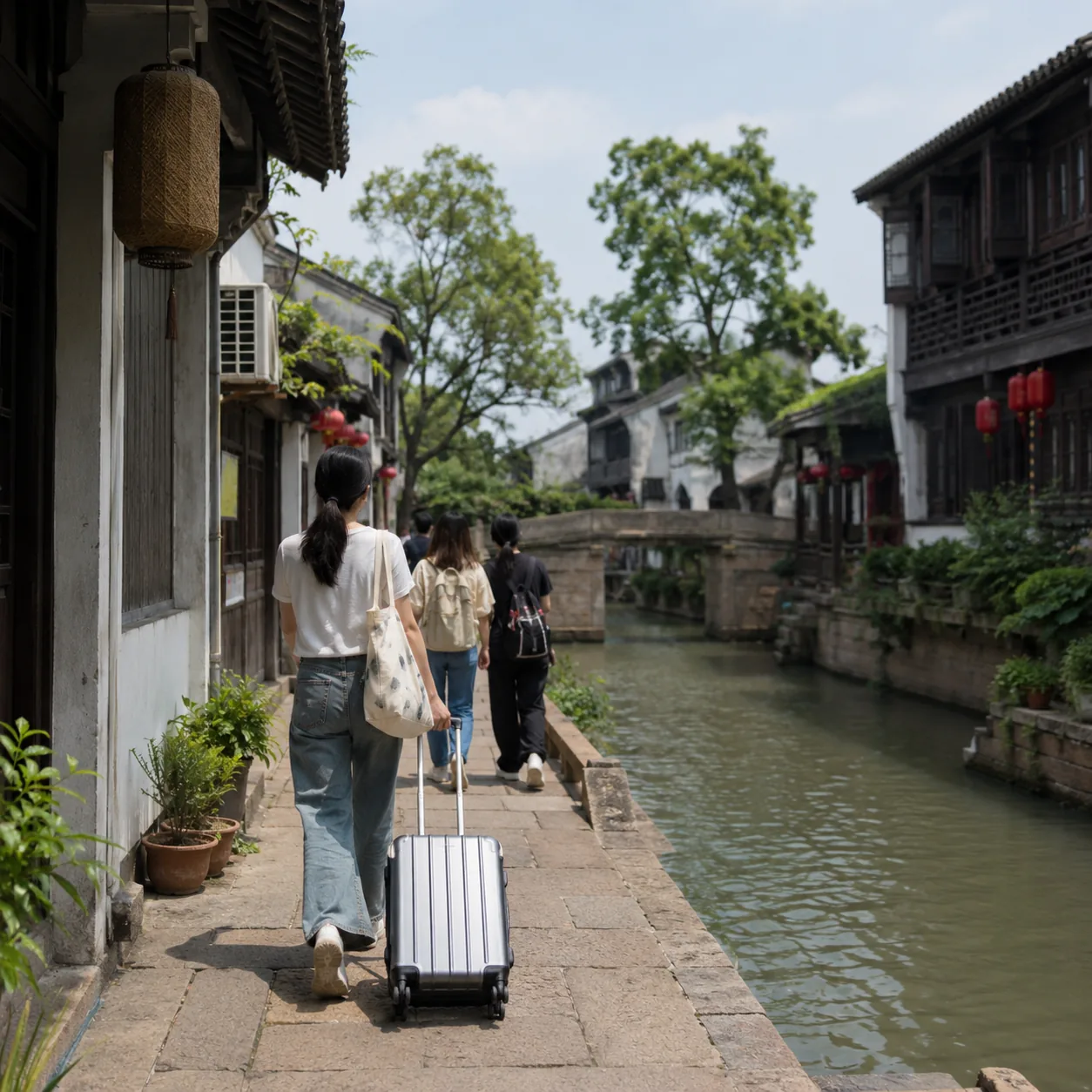
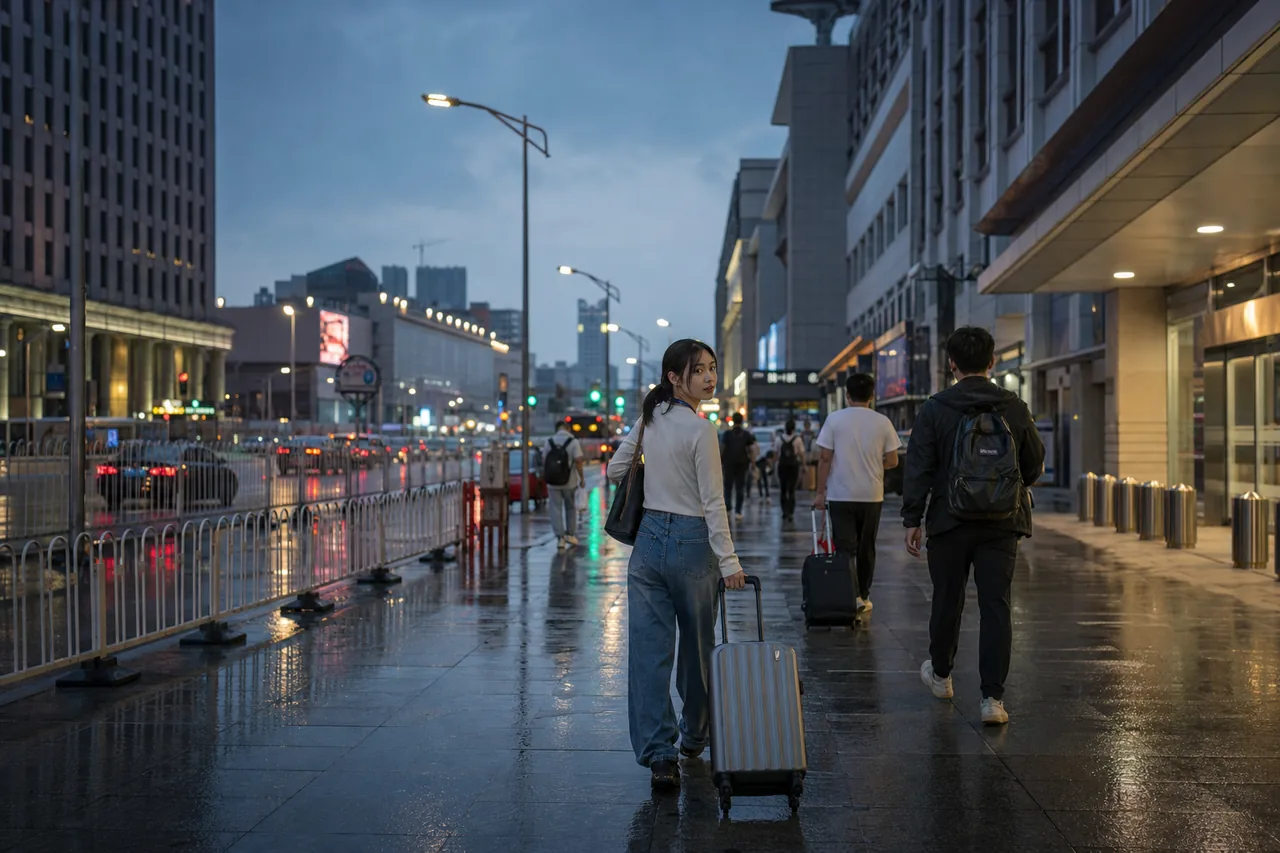
I have seen many itineraries fail, and the destination itself was rarely the true problem. The problem was leaving noon unplanned. In China in June, midday is not an empty box that can be filled casually. If you insist on long-distance walking between roughly eleven-thirty and two-thirty, your judgment becomes dull for the rest of the day. Your feet swell, your mouth stays warm no matter how much water you drink, and your patience for photos breaks before you notice it. Once irritation enters the route, even an easy plan starts to twist. That is why I now build a deliberate “cooling segment” into June itineraries: a teahouse, a bookstore, a quiet floor in an old mall, a waterside restaurant with shade, or even just a short return to the hotel to wash your face. All of them help more than stubbornness does.
That break is not laziness. It is how you save the evening for the part that matters. In many Chinese cities in June, the most charming layer only appears once the sun gives up some of its strength. Market lights, air along the water, people sitting beneath bridges talking, and the thin veil of smoke over a barbecue stall all require a body and mood that still have something left to give. If the day has already drained you, even a lively night becomes something you merely pass through. But if you know how to hold back at noon, the night remains available to your ears, nose, and appetite.
In June Night Markets, Do Not Be Greedy for Quantity—Be Greedy for Precision
At June night markets, I never recommend the “the more checkpoints, the better” mentality. The night is easier than the day, but the heat has not fully disappeared, and once the crowd thickens, the air still wraps itself around you. The steadiest method is to choose one market or one evening district and focus on your approach. First watch where the crowd narrows, then decide which end to enter from. First see which stalls local people linger at, then decide what to eat. If there is a plastic stool and a fan, do not reject it just because it is not photogenic. Sitting down often feels far better than balancing food while drifting through the crowd. The true pleasure of a Chinese night market is usually not the loudest “must-eat” bite, but whether you are willing to slow yourself for five minutes.
The Suzhou–Hangzhou–Huangshan June line is not for someone trying to “finish China” in three days. It is for someone who wants to see layers within a short span. You get an old city that is damp yet quiet in the morning, mountain paths with moving air in the afternoon, and districts that glow at night without demanding a chase. It is not a route that ends once the photos are taken. It is a route that leaves you back at the hotel with slightly sore legs, with canal sounds and vendor calls still in your ears, but with a mind that feels unexpectedly level.
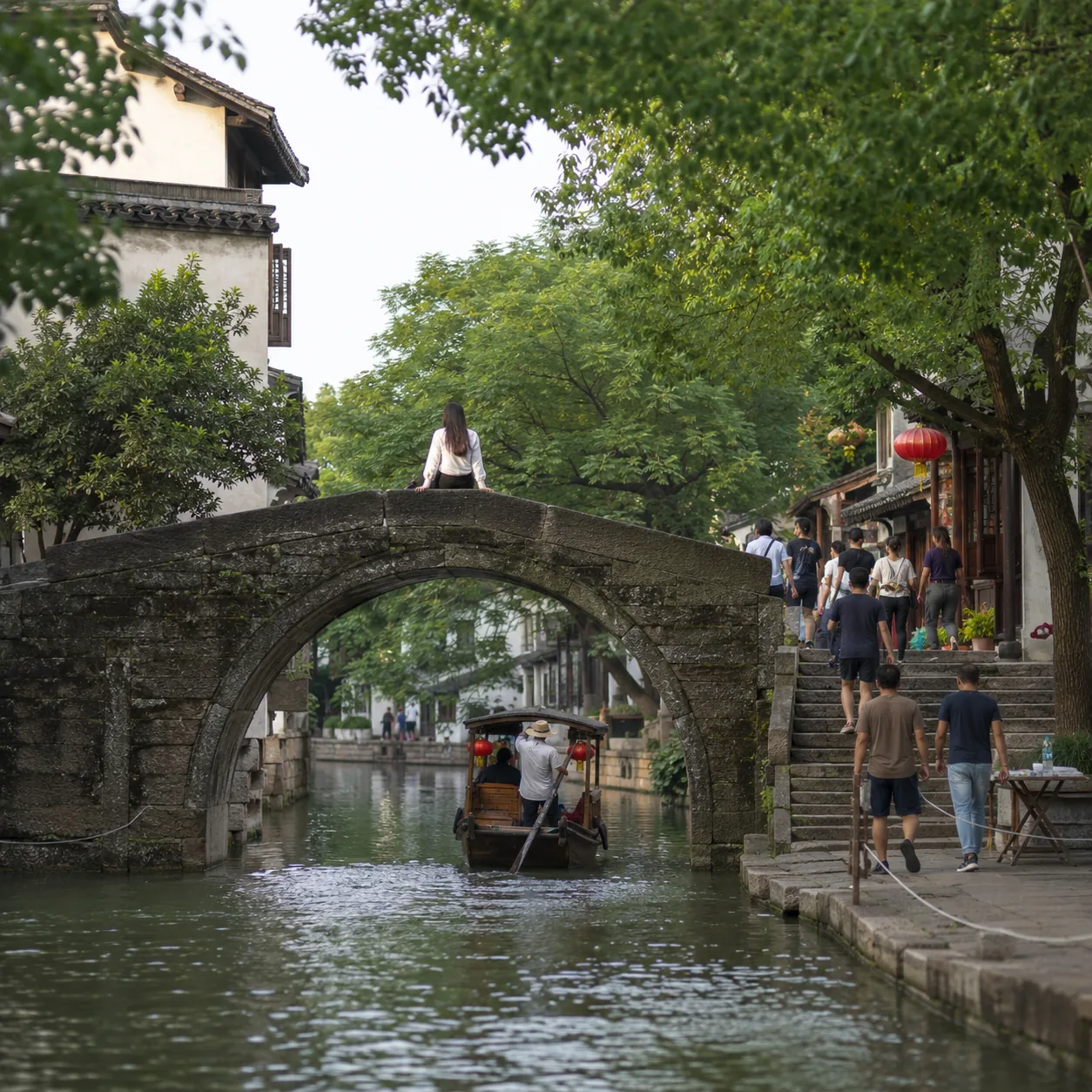
If I had to leave one final conclusion for traveling in China in June, it would be this: do not fight the weather, and do not wrestle with the checklist. If you arrange the route around how the body feels, you will see a more honest China than if you arrange it around ambition. June is not the month for proving how much you can cover. It is the month for learning when to move quickly, when to sit down, and when simply standing by a bridge long enough for one damp breeze to pass is already part of the trip.