В июне в Чэнду, уклоняясь от послеполуденной жары, я нашёл более комфортный ритм путешествия
That noon in Chengdu, I stood on the street for less than five minutes before my back was already damp. It was not the kind of heat that slams into you all at once. It wrapped around you slowly, until even breathing felt like something you had to pull through humidity. I still tried to be stubborn. I told myself I could stick to the plan: breakfast stop, old streets, a few photo spots, then another round of food in the evening—no wasted hours. But while I stood at the intersection with my bag in hand, watching the roadside leaves barely move and noticing that even the delivery riders were not rushing the way they usually do, I understood something very clearly. This was not a day for me to command the city. The city was setting the terms for me.
One of my worst habits in travel has always been treating discomfort like a moral failure. If I felt overheated, I blamed myself for not being tougher. If I got tired, I wondered whether I should have started even earlier. And if I sat down to rest, I felt a strange kind of guilt, as if the only honest way to travel was to keep moving without pause. Chengdu refused that logic completely. It did not feel like a city asking me to push through. It felt like a city telling me to sit down first, drink some tea, let the sweat fade a little, and only then decide where to go next.
When I drifted toward People’s Park, it honestly felt like the shade had rescued me. Rows of bamboo chairs were lined up under the trees. Covered bowls of tea sent up thin threads of steam. The breeze from people’s fans was not strong, but it was enough to let my shoulders relax. At the next table, a few locals talked slowly, like everyone understood that this afternoon was not meant to be overused. One server saw me standing there blankly and simply pointed to an empty chair, telling me to sit first. Only after I sat down did I realize that some of the best decisions in travel are not about where to go. They are about finally allowing yourself not to go anywhere right away.
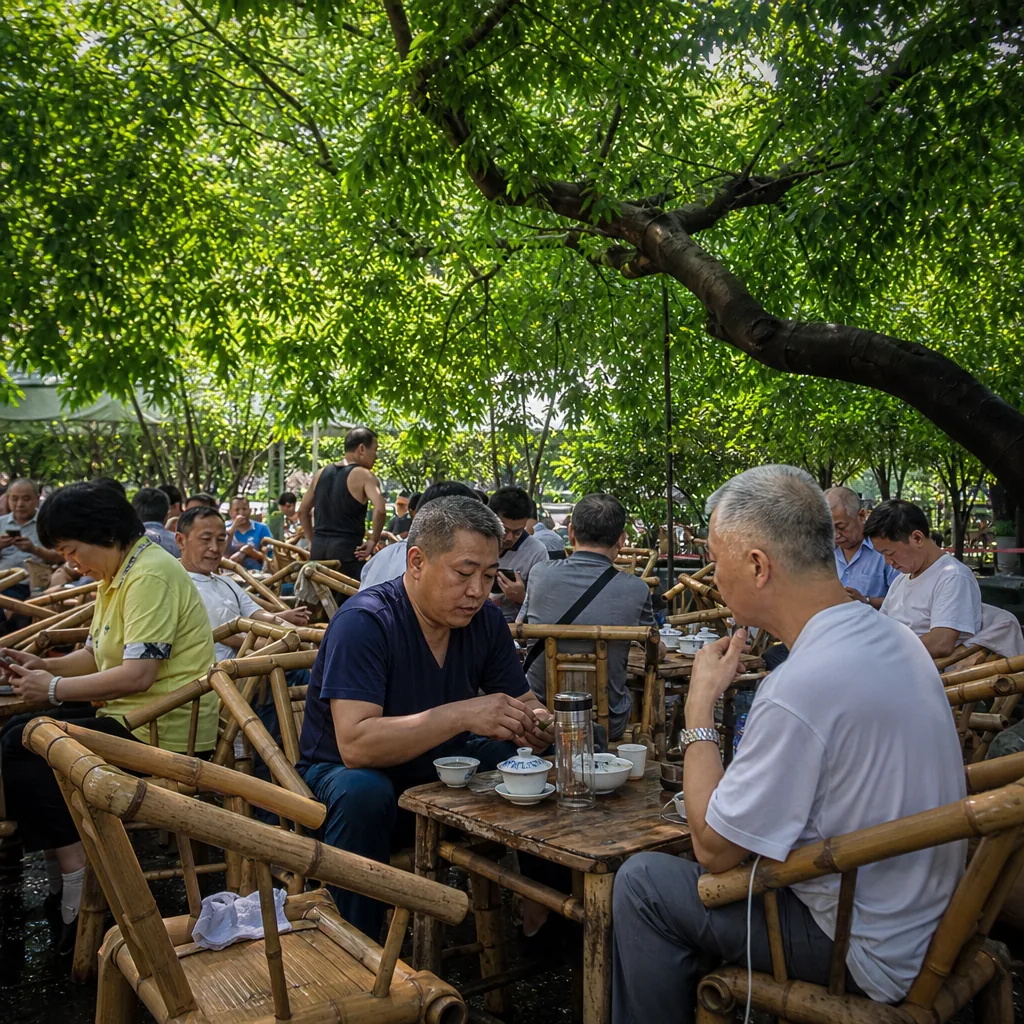
I did not cancel the day. I only changed the order of it. During the hottest hours, I stopped forcing myself outside and let the afternoon belong to teahouses, shadows, the breeze under eaves, and a stretch of time I did not need to justify to anyone. Once the sun started leaning lower and the glare on the pavement softened, the whole city seemed to exhale. People came back into the streets, but not in a frantic way. It felt more like daily life unfolding again, gently and all at once. The shift was subtle, and if I had spent noon stubbornly roasting myself outdoors, I might have missed the moment completely.
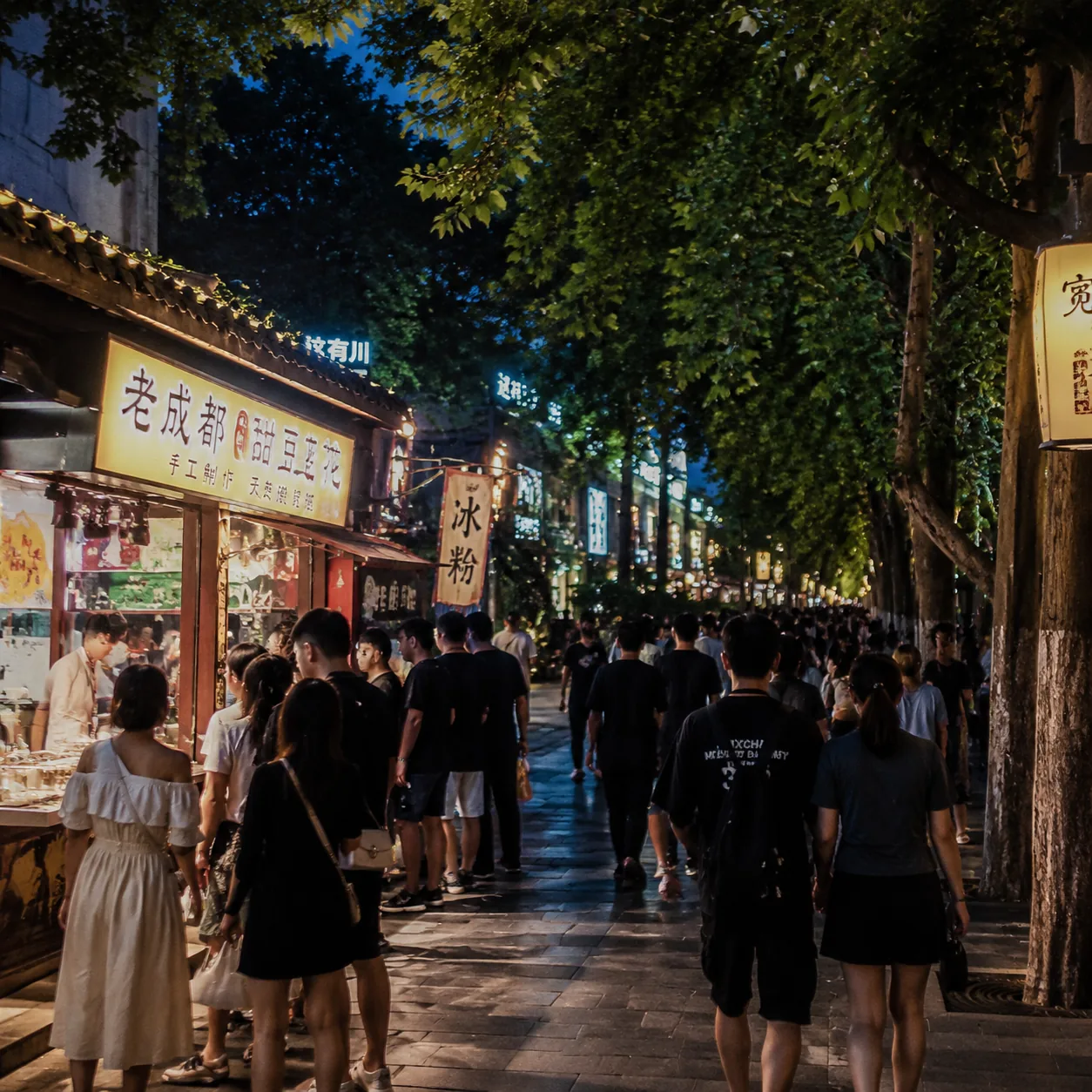
In the evening I wandered near Kuanzhai Alleys without trying to prove the day was “worth it” by cramming in more streets. I followed the tree shadows slowly. There were stalls selling iced jelly desserts, people choosing flavors, spoons tapping against glass bowls with a bright little sound. Others stepped out of teahouses carrying that slightly cooler indoor smell on their sleeves. At one small junction, evening air moved between two rows of buildings and seemed to peel away a whole layer of the day’s stickiness. That was when I understood something simple: Chengdu often feels best not when you are working hardest at it, but when you finally agree to move with it.
By the time I sat down for dinner by the river that night, I no longer wanted to side with the stubborn version of myself from noon. There was chili on the table, moisture collecting along the bowls, someone at the next table laughing loudly, and bridge lights turning on one by one in the distance. Moments like that make you realize a day does not become smaller because you paused at noon. It often becomes fuller because of that pause. When I think back on Chengdu now, the first things that return are not a single “must-see” attraction. They are the bamboo chair, the evening breeze, and one ordinary but useful lesson: when the heat rises, stop fighting it first.
On my way back that night, I passed a convenience store with cold air spilling out each time the glass door opened. Someone stood at the entrance holding an iced drink and seemed in no hurry to leave, and nobody rushed them. That is one of the best things Chengdu gave me: a sense of not needing to hurry. It did not make me tougher against the heat. It pulled me out of that exhausting urge to prove I know how to travel well. What I remember from June is not that I powered through. It is that I learned how to step back for a while, and return more comfortably when the city was ready to hold me again.