Я впервые понял одежду эпохи Мин не в музее, а в ателье, наблюдая за тем, как люди стоят
The rain had stopped, though not completely. Thin dark lines of water still rested between the stone slabs. That day I had wandered into a street that sold thread, silk, and small bronze fasteners, only intending to find a piece of cloth for a gift wrap for a friend traveling with me. But before I entered any store, two long robes hanging outside a tailor’s shop caught my feet. When the wind moved them, the hems did not flap wildly. They opened slightly, then settled back into place on their own. That single motion made me stop. These were not the vague “ancient clothes” I had seen in picture books. They were specific things: weighted, directional, arranged by a logic that only fully existed when a human body stood inside them.
After living in China for a longer time, I slowly learned that many things cannot be understood by appearance alone. Houses must be understood through how people move in them. Meals must be understood through how people sit. Clothing, even more than anything else, cannot be read only through pattern. I did not begin to understand Ming dress because I memorized terms. I understood a little because inside that tailor’s shop I saw how different people changed once dressed: how shoulders settled, how the waistline tightened, how hands emerged from sleeves, even how quickly someone turned. Clothing was not a pattern pasted onto the body. It was more like a method for arranging a person into a certain proportion.
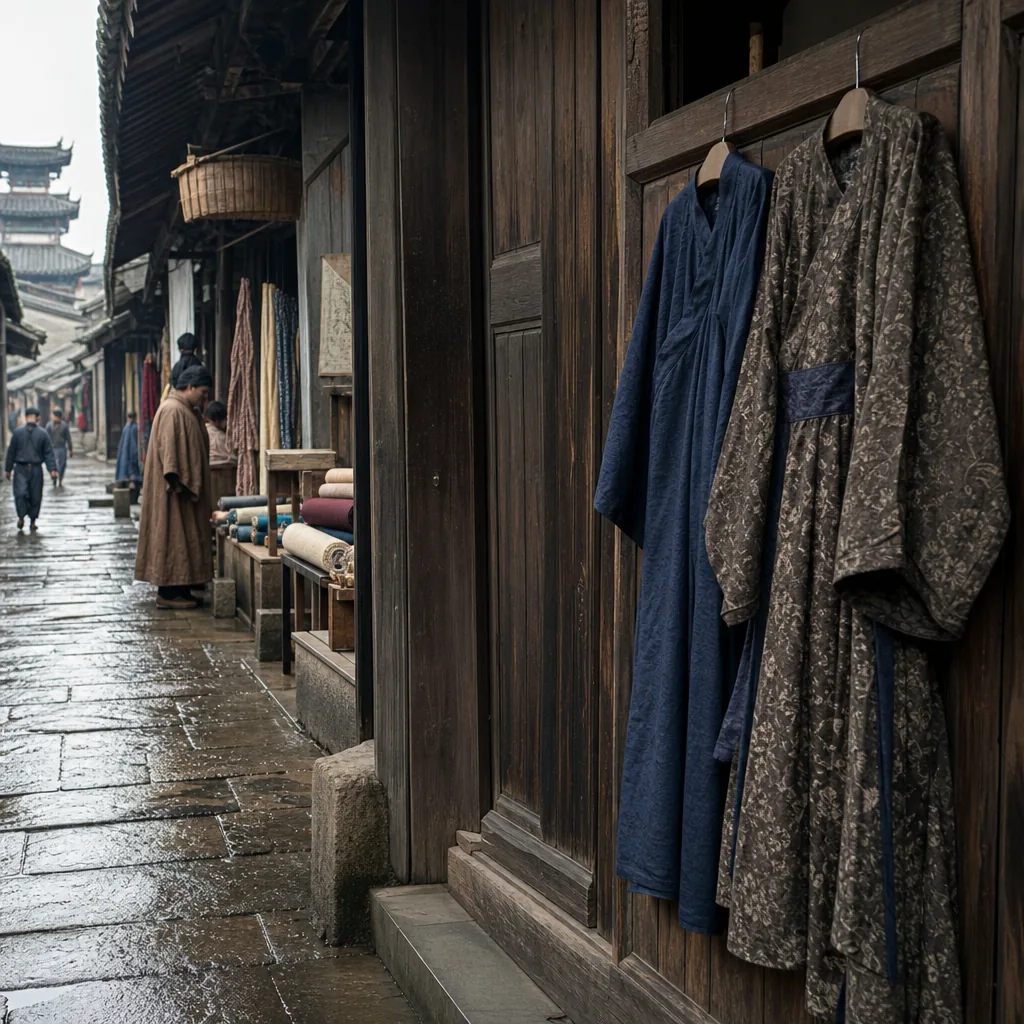
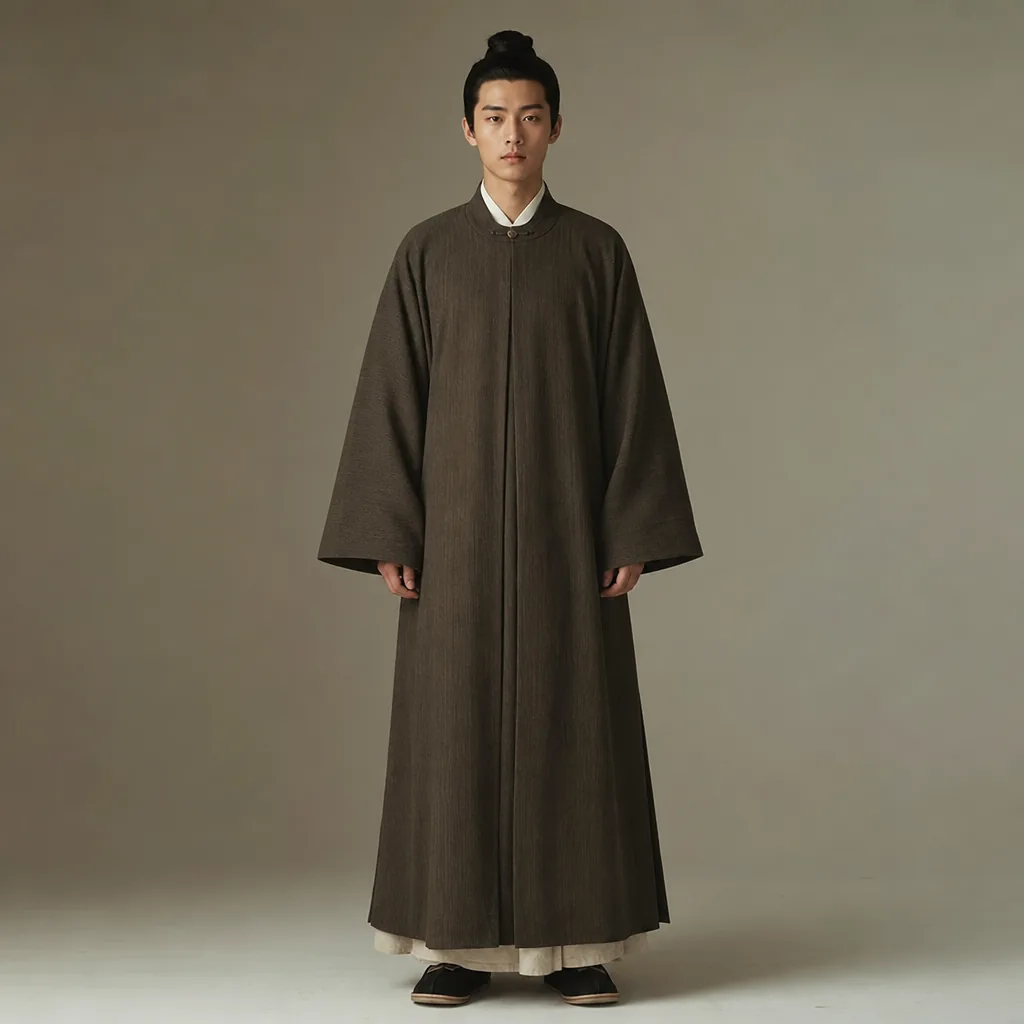
The owner of the shop was a middle-aged tailor surnamed Gu, a man who spoke slowly. He always held a short white chalk string in his hand. While measuring, he kept lifting his eyes toward the customer, as if he were not measuring the body alone but deciding what sort of shape the clothes should bring that person into. He noticed me staring at a round-collar robe, took it down, laid it over a wooden stand, and said one simple sentence: for Ming clothing, look at the lines, not only at the decoration. At first I thought this was just trade talk. But after standing inside the shop for nearly an hour, I realized how precise it was. Line truly was the key. How the collar began, how the front panels fell, how the sleeves dropped from the shoulder, where the waist started to gather the form inward—all of it decided whether the wearer appeared steady or loose, upright or relaxed, dignified, elegant, or simply everyday.
Not Mere Splendor, but the Ability to Hold a Stance
Many visitors from outside China are first drawn to the colors, embroidery, hats, and crowns when they encounter historical Chinese dress. That is natural. I was the same at first. But if you stop at “beautiful,” you miss what Ming clothing does best: it handles the vertical line of the body with extraordinary intelligence. This verticality is not rigid. It does not force a body stiffly straight. Instead, the collar, the chest line, the hem, and the hanging sleeve lines all gather the body gently toward its center. One does not need an exaggerated posture. The garment organizes balance before the person does.
Master Gu showed me two garments associated with different social positions. One was darker in tone, with a clean collar and a front opening that fell almost perfectly straight, with very little unnecessary movement. The other was more considered in edging and color arrangement. From afar it did not look excessive, yet once someone walked in it, the layers began to appear more clearly. When both garments were placed on wooden stands, I felt the difference was small. But the moment someone put them on, the contrast arrived at once. The first made the wearer appear cautious, steady, and weighty in speech. The second seemed to support the person at once through ritual order and aesthetic order, as though even the step of walking had been thought through before it happened.
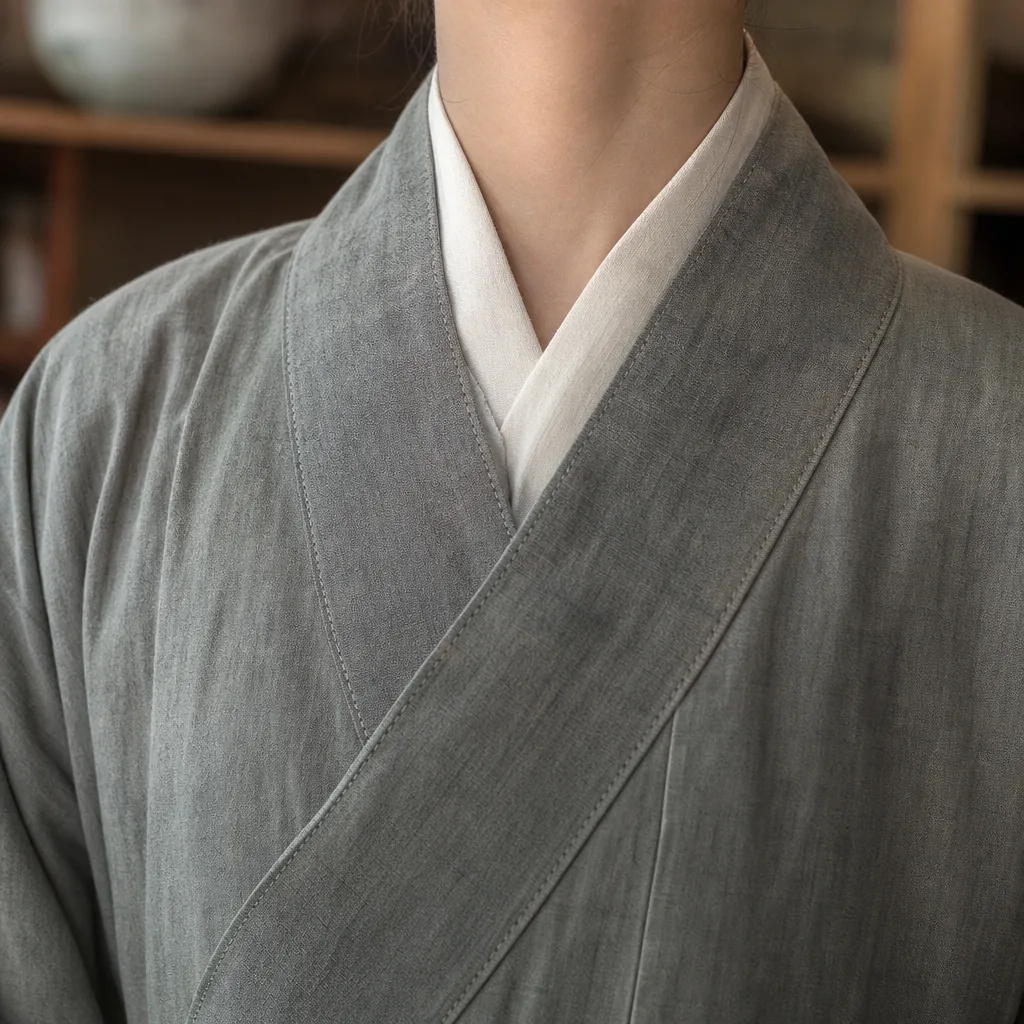
I remember especially the way he asked me to study the collar. Many people look at historical dress only through outline, but the collar is often where the inner discipline of a garment is most exposed. In many Ming garments, the treatment of the neck and opening is decisively clear. It sits close to the neck without turning stiff. Master Gu ran his finger down the edge of the collar and told me that once the line is messy, the person comes apart before anything else. It sounded like advice about tailoring, yet it also sounded like a sentence about Ming aesthetics. It disliked shapeless softness, but it also disliked theatrical exaggeration. What it wanted was a form of dignity able to gather itself inward.
If you have already read the site’s article on Chinese Language Basics, you may understand why I keep returning to the word proportion. In China, many judgments about daily life eventually return to boundaries and appropriateness. Ming clothing worked in the same way. It was not simply designed to make someone look wealthy. It reminded others that this person knew how to appear in the world, where the body should be restrained, and where it could unfold naturally.
Sleeves, Drape, and the Air Around a Walking Body
What finally made me addicted to Ming clothing was the sleeves. Not because they were large, but because their largeness was so controlled. Master Gu asked me to stand by the doorway and watch a young man leave after fitting a garment. His steps were not fast, and the sleeves did not fly theatrically the way stage costumes do. Yet each time he moved his arm, the end of the sleeve arrived half a beat later than the hand. That half beat was captivating. It gave every movement an aftertaste, and it revealed the weight of the fabric itself. At a glance you knew this was not close-cut working wear, not clothing meant for lunging immediately into labor. It was a style of dress that asked movement not to fragment and not to hurry.
Some writing treats historical clothing as if it had hierarchy but no body. I believe that less and less. Social rank certainly mattered, but clothing touched the body before it touched the idea of rank. If the sleeve opening is gathered too tightly, a person looks constrained while lifting a cup. If it is left too loose, the whole frame loses structure. If the hem is too light, it floats while standing. If it is too heavy, it drags while walking. What makes Ming clothing worth looking at, again and again, is this intelligence of exact adjustment. It did not erase the body. It allowed the body to retain breath inside ritual order.
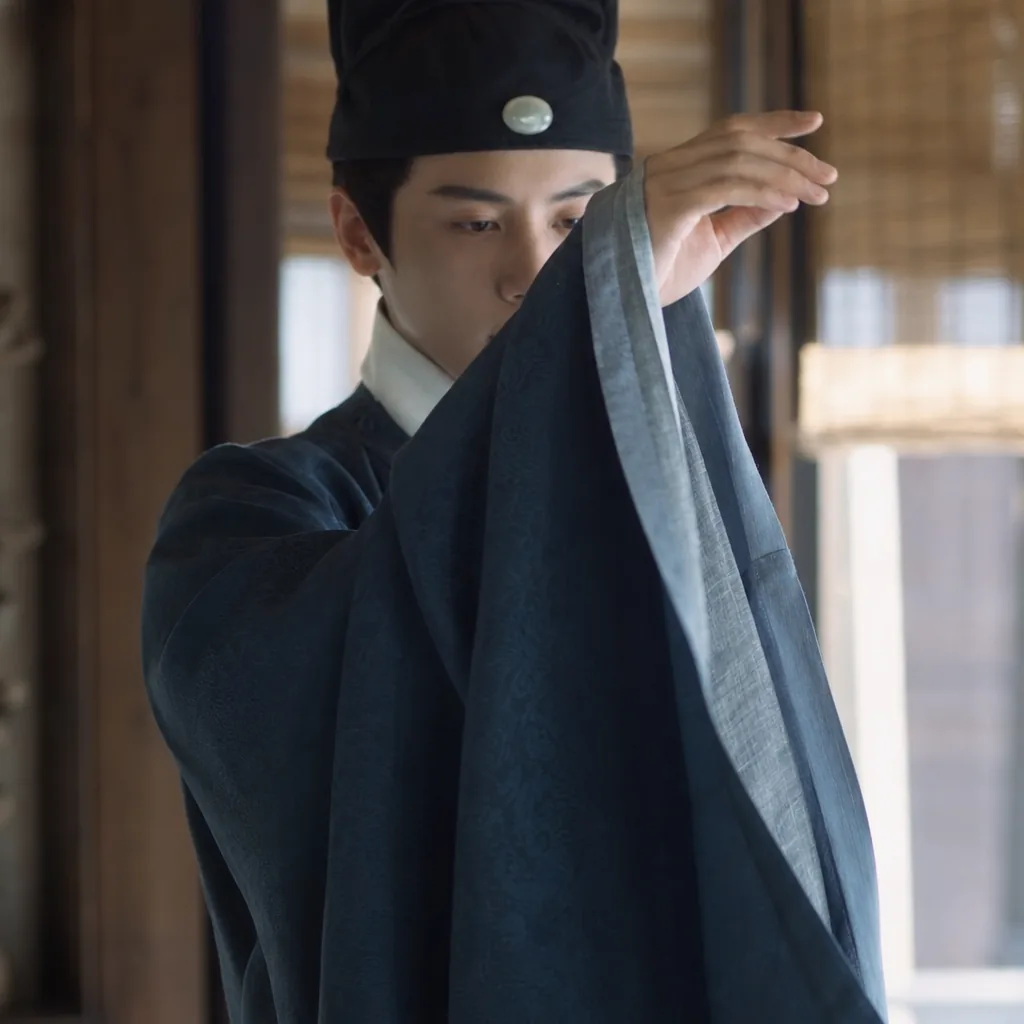
There is one moment I still remember. A woman who had come from a household of officials to deliver fabric samples stood waiting while Master Gu wrote down measurements. She was not posing. She simply rested her hands lightly before her body, and the sleeves fell naturally while a quiet center line appeared between the front panels and lower skirt. Outside, a shoulder pole knocked sharply as someone passed in the street. Inside, the room remained steady. That was the first moment I understood that clothing does not merely decorate a person into a certain look. It can push a person’s calmness outward. This is where many Ming garments are truly remarkable: before you speak, the clothes have already expressed half your sense of measure.
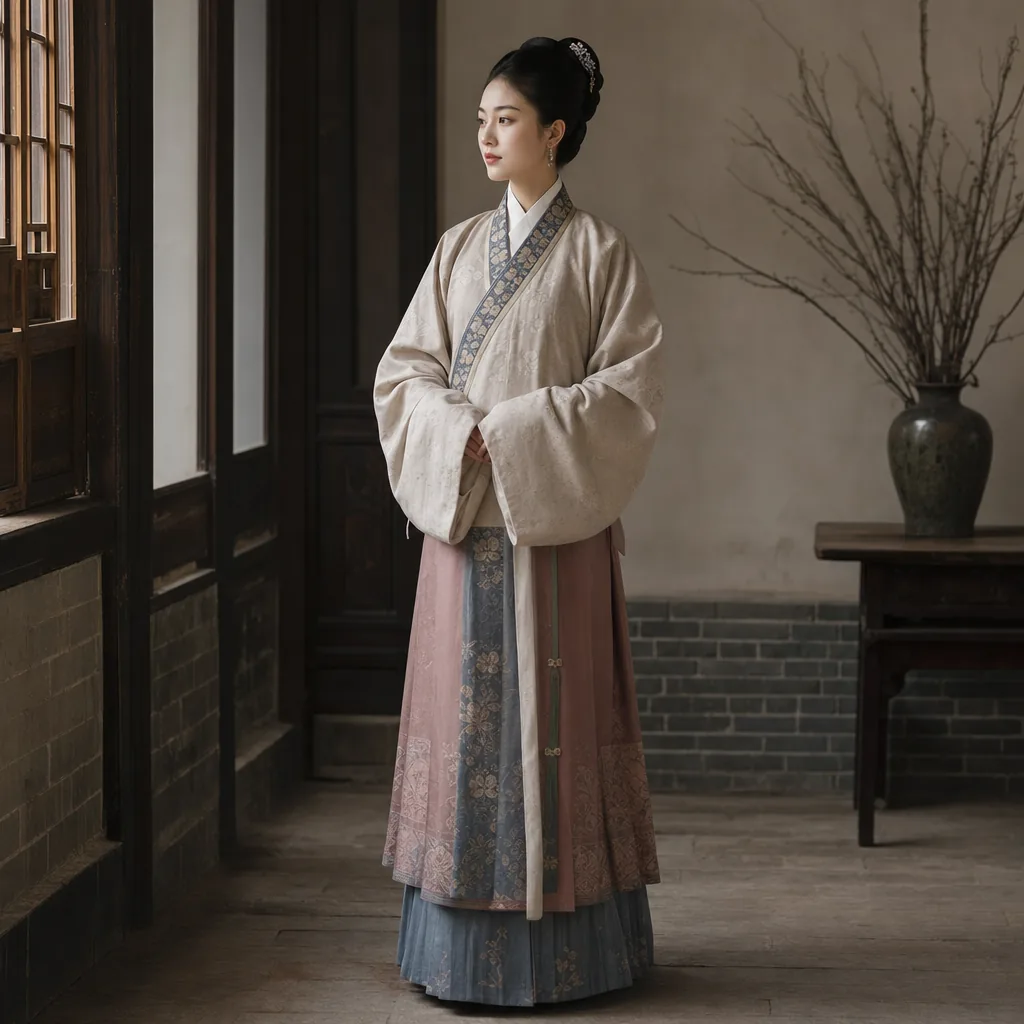
Why It Keeps Making Me Think of Chinese Architecture
When I later stepped out of the tailor’s shop and saw rain still dropping from the eaves opposite, I suddenly understood why I liked this clothing so much. It gave me the same feeling I later had when observing traditional Chinese architecture. Eaves, columns, door frames, and raised bases all gather space inward and stabilize its center of gravity. The collars, lapels, sleeves, and hems of Ming clothing do something very similar, except that the object is no longer a building but a body. If you are drawn to this sensation of structure before decoration, you might also enjoy the site’s pieces on older Chinese domestic order, such as the Song daily-life topic. They are all, in the end, talking about the same principle: what remains worth looking at usually gets the structure right first.
I do not mean that everyone wearing Ming clothing would suddenly appear noble. That is not my point. My point is simpler: this style of dress forces a person to rethink stance, pace, and gesture. It asks you not to hurry. It asks you to keep a certain courtesy toward your own body and the space around it. As someone from outside China, I find it hard not to be moved by that idea. In many places, modern clothing is responsible only for convenience. Here, clothing could still teach a person how to appear, how to be seen, and how to compose oneself into someone not easily made shallow.
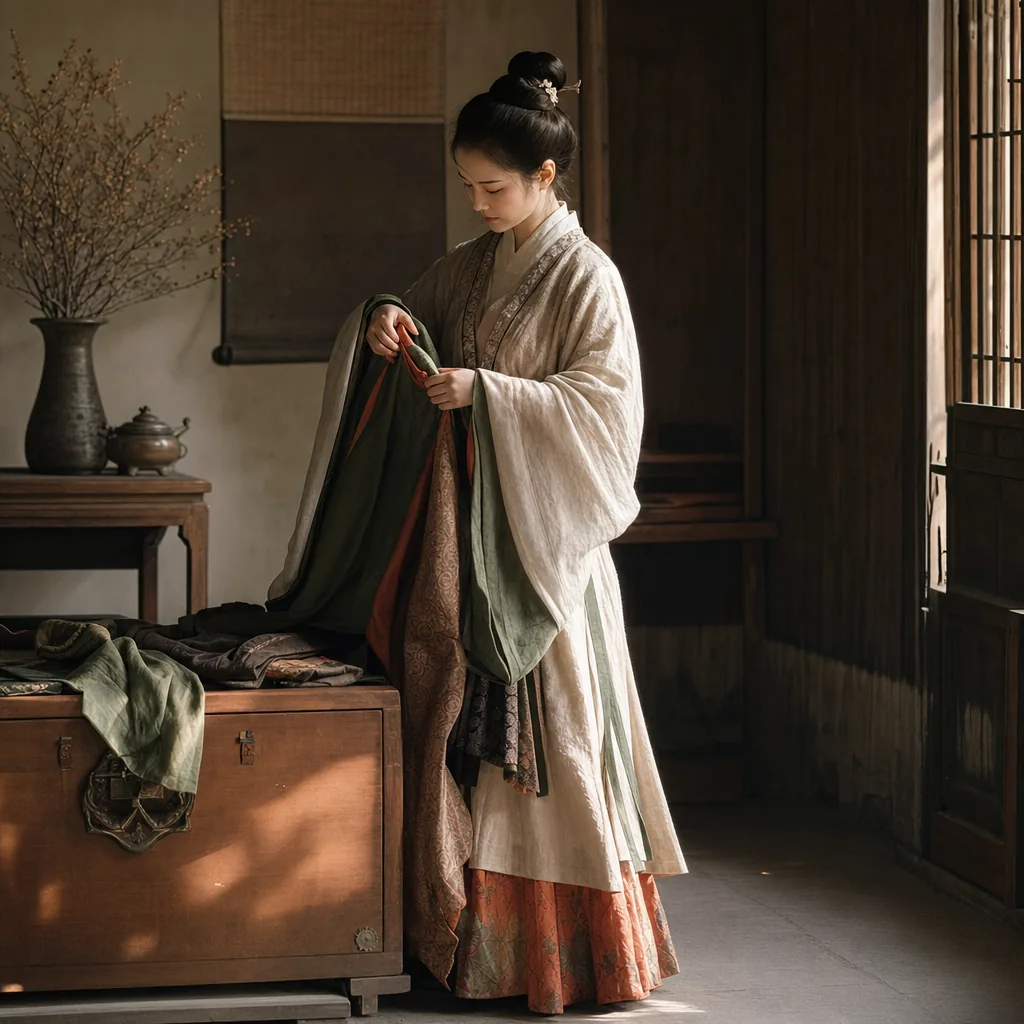
So if you ask me what matters most in Ming clothing, I would not answer color first, and I would not answer embroidery first. I would tell you to watch how a person stands. Then watch how the collar line falls, how the sleeve arrives half a beat late, and how the fabric settles before the knees and ankles. In the end you realize that what Ming dress truly preserved was not only taste, but a whole judgment about bodily order. When I left that day, Master Gu was standing at the doorway shaking smooth a slightly damp hem. The motion was gentle. It looked as though he were caring for a garment, but also for a way of standing that many people have already forgotten.