Маленький столик у входа в фучжоускую лавку рыбных шариков научил меня есть не спеша
On the day I arrived in Fuzhou, the rain never quite fell; it simply hung in the air. The pavement outside Sanfang Qixiang shone with dampness, scooters slipped past the lane mouths, and bicycle bells appeared suddenly from very close by. I had only wanted a hot bowl of soup before deciding where to go next, but the starred restaurants on the map blurred together until a small fish ball shop without a loud sign held me in place. A low table stood outside the door, its wooden surface marked by old grain and pale rings left by bowls. When I sat down, the owner was lifting fish balls from the kitchen pot, and the water moved with a quiet simmer, as if the city itself preferred to speak slowly.
The table could hold only one soup bowl, a saucer of vinegar, and my phone. There was no flattering light for photographs, no arranged background, just a plastic stool, a faded price board on the doorframe, and neighbors buying takeaway. When my bowl arrived, the fish balls floated in clear broth, white without brightness, round without performance. A little scallion and pepper scented the steam, which fogged my glasses and made me put the phone down. In that moment I realized that if I hurried to record it, the first sip would be delayed; if I hurried to judge it, the bowl would become much thinner than it was.
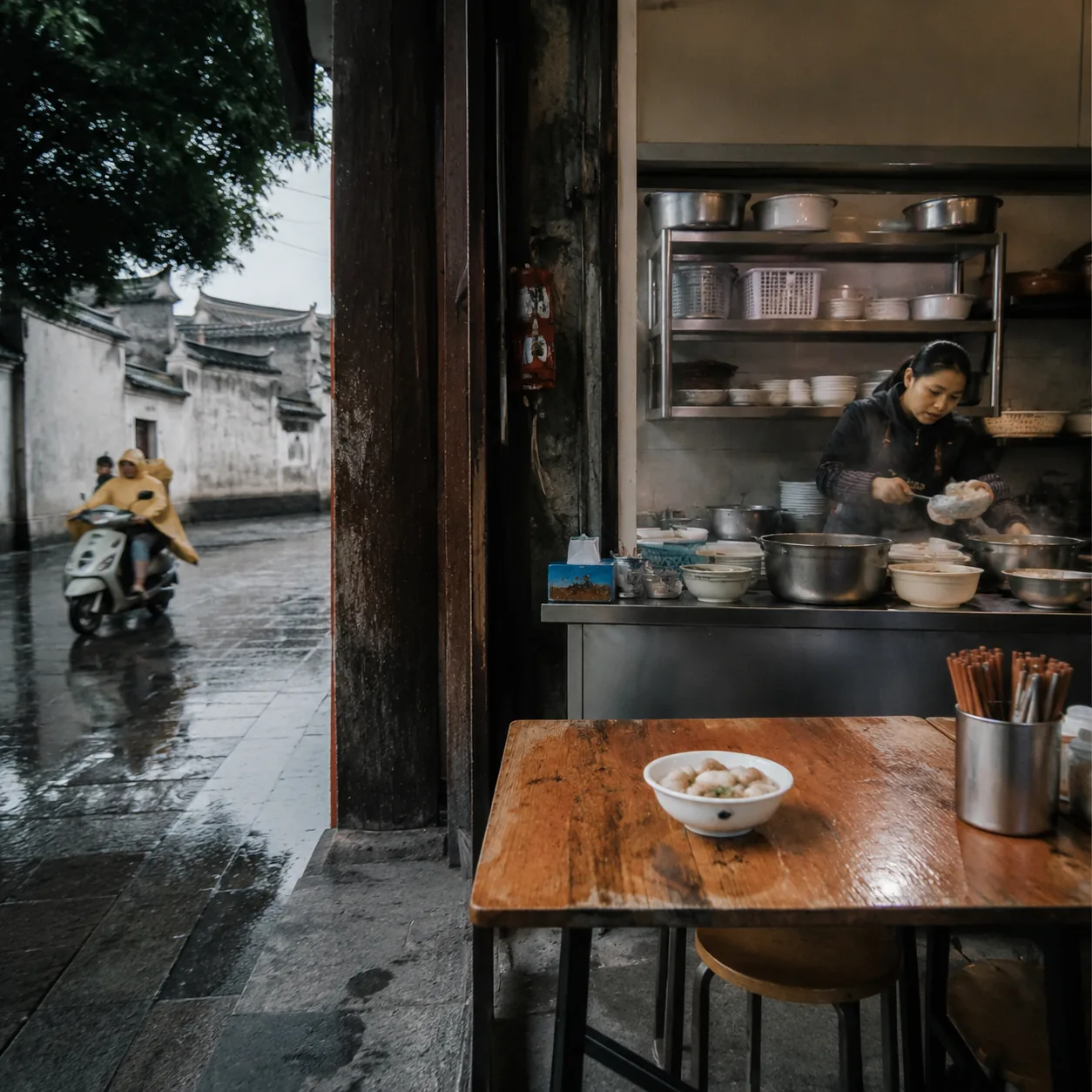
I took a sip of broth first. It was not rich in a way that seized the tongue at once; instead, it held seafood, pork filling, and the breath of the pot in a light hand. When I bit into a fish ball, the outside bounced gently, and the filling inside released a little juice, neither too salty nor openly sweet. Beside me, an auntie with a vegetable basket finished a small bowl while standing. As she paid, she asked whether there would be bianrou wontons tomorrow. The owner answered without raising her voice: yes, come early. Their exchange sounded like a daily thread that would continue without me, and I was only borrowing a few minutes inside it.
What travel often overlooks is how a city arranges the appetite of ordinary people. Fuzhou fish balls do not place ceremony at the front the way some famous dishes do. They are more like a greeting from an alley: sit down first, then let the flavor arrive gradually. The little shop did not rush anyone, and its turnover did not depend on exaggerated bustle. Some people left as soon as they finished, some cooled their bowls by the doorway, and some bought uncooked fish balls to take home. Everyone seemed to know what they wanted without turning a meal into a grand discovery.
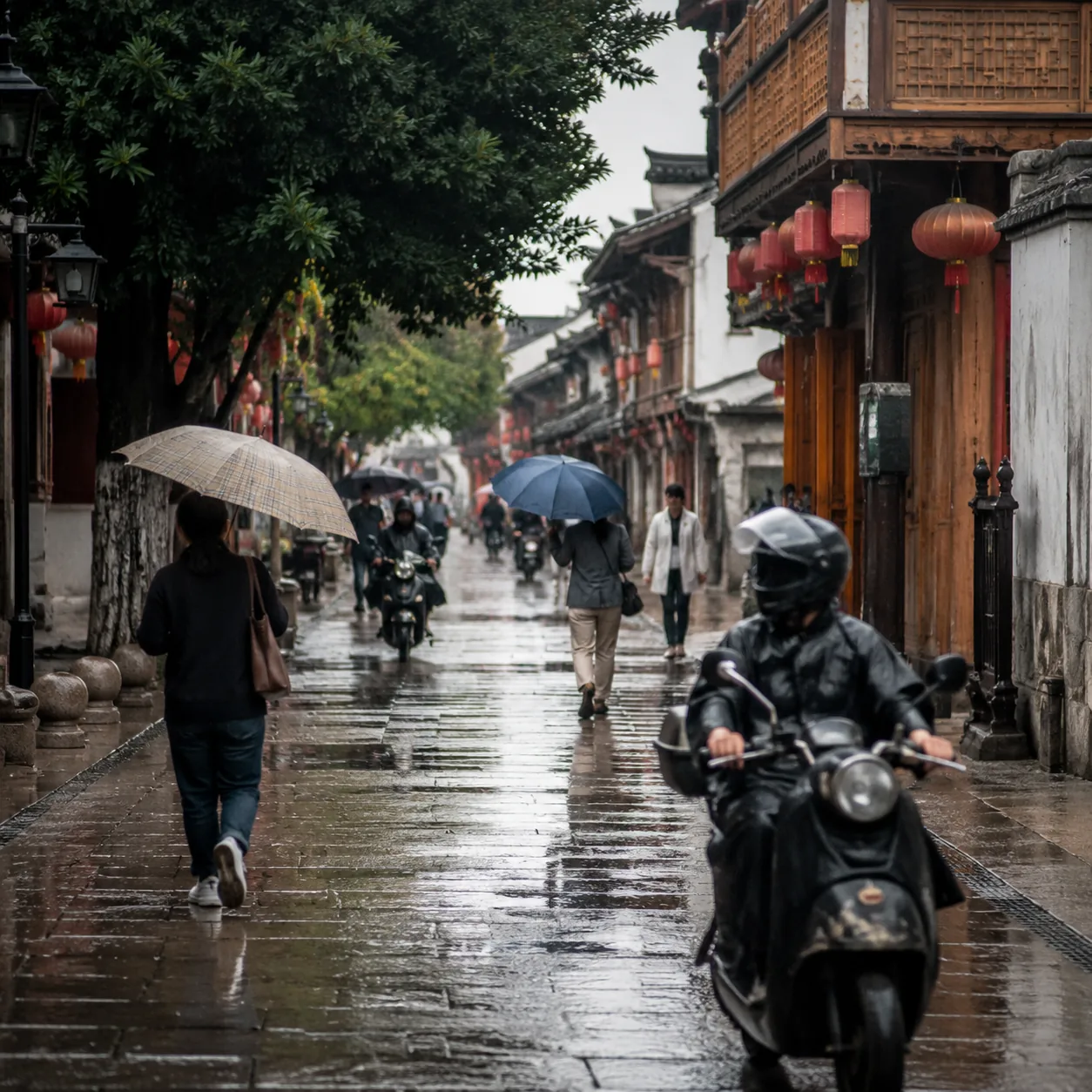
I had planned a tight route for myself: old streets in the morning, the river in the afternoon, another recommended restaurant by evening. But that little table cut time into finer pieces. I watched the owner place empty bowls into a plastic basin, watched raindrops finally land on scooter seats, and watched a student set a backpack by his feet while answering messages between bites. Eating slowly was not about appearing poetic. It was about giving these details a chance to be noticed. Many places do not present themselves directly; they turn a side of themselves toward you only after you stop.
I dipped the second fish ball in a little vinegar. The sourness lifted the richness of the filling, then quickly stepped back. A breeze passed the table, bending the steam above the broth, and someone inside called for an extra order of yanpi. Fuzhou dialect rose and fell around me. I could not understand the content, but I could hear its rhythm: short phrases, pauses, answers, like a pot lid being lifted and settled again. The intimacy of an unfamiliar city does not always come from comprehension. Sometimes it comes from admitting you do not understand and still remaining quietly present.
That doorway table also made me reconsider the scale of “delicious.” Not every bite has to astonish, and not every shop has to be written into legend. Much good food is simply dependable: the soup is hot enough, the fish balls are fresh enough, the owner remembers regulars’ preferences, the vinegar bottle is not empty, and even on a rainy day people are willing to wait by the door. Dependable flavor does not shout, but it relaxes you. It lets a traveler step back from hunting highlights and return to the body’s basics: hungry, seated, sipping, biting, swallowing slowly.
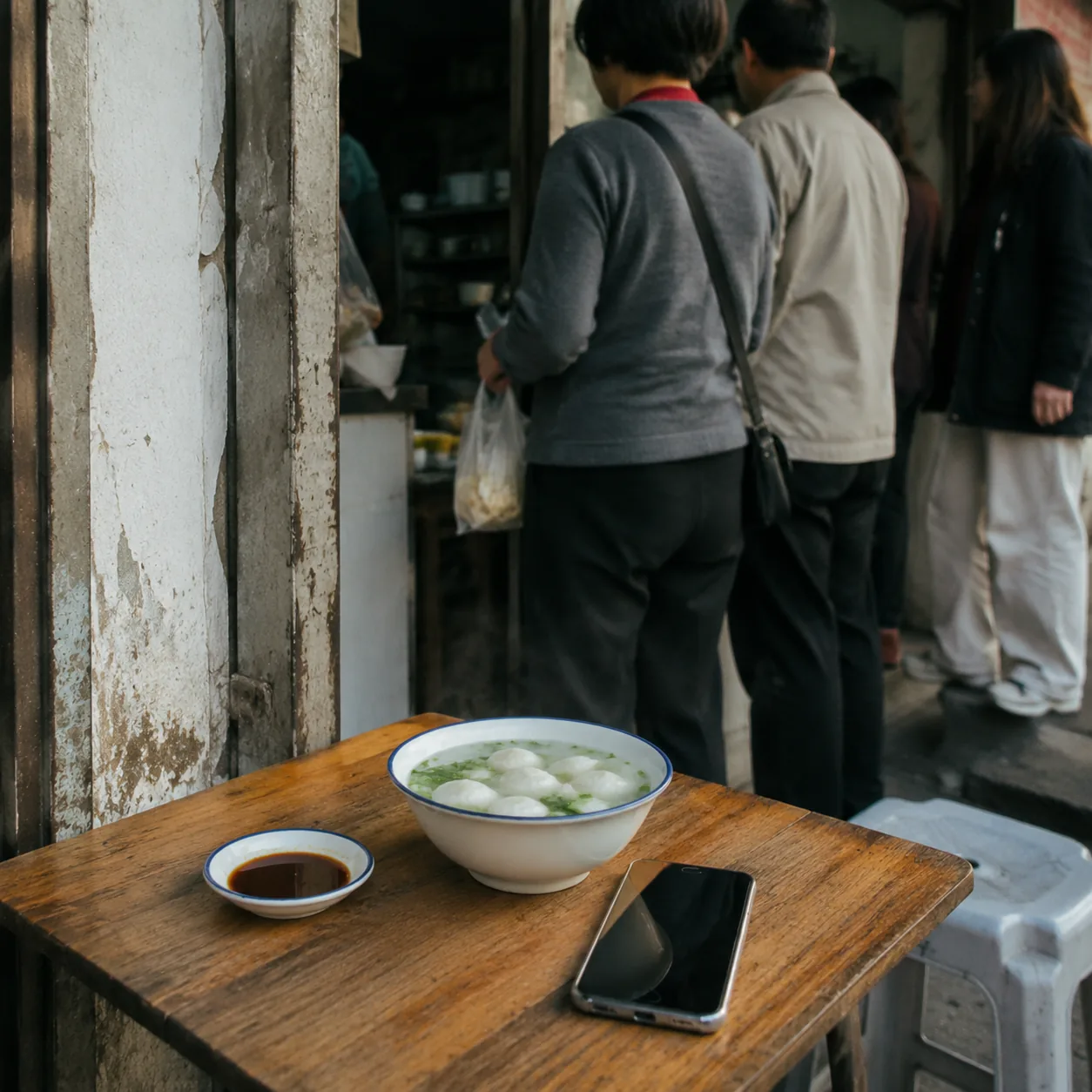
Halfway through the bowl, an uncle at the next table asked whether it was my first time in Fuzhou. I nodded. He did not list a string of must-see places. He only said that some fish balls here are lighter, some fresher and sweeter, and you need to eat at several shops before sensing the difference. After saying this, he lowered his head to his soup again, as if he had not offered advice but pushed a small handful of keys toward me. I suddenly understood that local recommendations often avoid finality. They do not give you the only answer; they open a door crack so you can smell what is inside.
I drank the last sips of soup slowly. A little pepper rested at the bottom of the bowl, warming the tip of my tongue. My phone lit up several times, reminding me of the next attraction’s opening hours, but I did not stand immediately. The rain softened the street noise, a spatula touched the edge of a basin inside, and the fluorescent tube by the door hummed. That kind of moment does not fit neatly into the phrase “dining experience.” It is more like a loosened rope, widening a schedule that had been pulled tight. Sometimes travel does not require more locations; it requires a place where your senses return.
Before leaving, I carried the bowl back inside. The owner said I could leave it there, but I still set it beside the basin. She smiled briefly and turned back to work. The smile did not have the complete curve of trained hospitality; it was simply one person’s easy response to another. I walked back into the lane with the aftertaste of clear broth still in my mouth, and my steps felt lighter than when I arrived. Fuzhou did not become completely legible, but it gained one coordinate where I could rest: a small table, a bowl of fish balls, and a rain that had not hurried to finish.
In the following days, I ate at better-known shops, took neater photographs, and walked more complete neighborhoods. Yet when I think of Fuzhou, that table still rises first. It reminds me that the charm of a small food shop is not only in the food itself, but also in its permission to set aside tourist efficiency for a while. You do not have to prove that you ate correctly, and you do not have to summarize the flavor beautifully. If you take one serious sip while the soup is still hot and bite into a fish ball while it still has its spring, you have already honored the meal.
So what I remember is not a perfect conclusion about flavor, but a posture for eating: shoulders loosened, bowl drawn closer, steam allowed to rise before the tongue decides. This slowness is not luxurious; it simply opens time that an itinerary has flattened. The small table outside the Fuzhou fish ball shop did not teach me how to become a more expert eater. It only helped me understand that in a damp and gentle city, eating slowly can also be a way of arriving.