Я научился этикету самовывоза заказов в Китае — не тому, какую фразу сказать, а тому, чтобы сначала не перекрывать чужой поток
The first time I felt especially clumsy while picking up takeout in China was on a restaurant floor connected to an office-and-mall complex in Guangzhou. It was lunchtime and crowded. Half the people in front of the counter were dining in, and the other half were waiting for delivery or self-pickup. Delivery riders’ insulated boxes lined the door, and order numbers were being called out in waves. I was only there to collect a coffee and a sandwich, yet because I did not know where to stand, when to say the last four digits of my phone number, or whether I should show the order screen first, I hesitated at the counter several times. I did get my food in the end, but when I looked back, the most awkward part was not the language. It was the fact that I had been like a temporary stone caught in the middle of the workflow.
Later I slowly realized that many takeout-pickup scenes in China have their own invisible order. You do not necessarily rush to the counter and immediately announce your details. First you look to see whether the shop has a designated pickup area, whether there is a sign saying something like “delivery/self-pickup wait here,” and whether the staff are currently handling dine-in ordering, bagging, or checking a long queue of orders. Especially during lunch rush, the most polite first move is often not speaking first, but standing in the correct place first. If you stand somewhere that does not block traffic and yet remains visible, staff will usually look up naturally when it is your turn and ask, “Pickup?” or “Last four digits?” I came to understand more and more that the people who seem smooth in China are often not the ones who speak best. They are the ones who read the scene first. It felt very similar to the rhythm I had learned in noodle shops and stations, and it made me agree even more with the idea that natural help-seeking often works better than perfect phrasing.
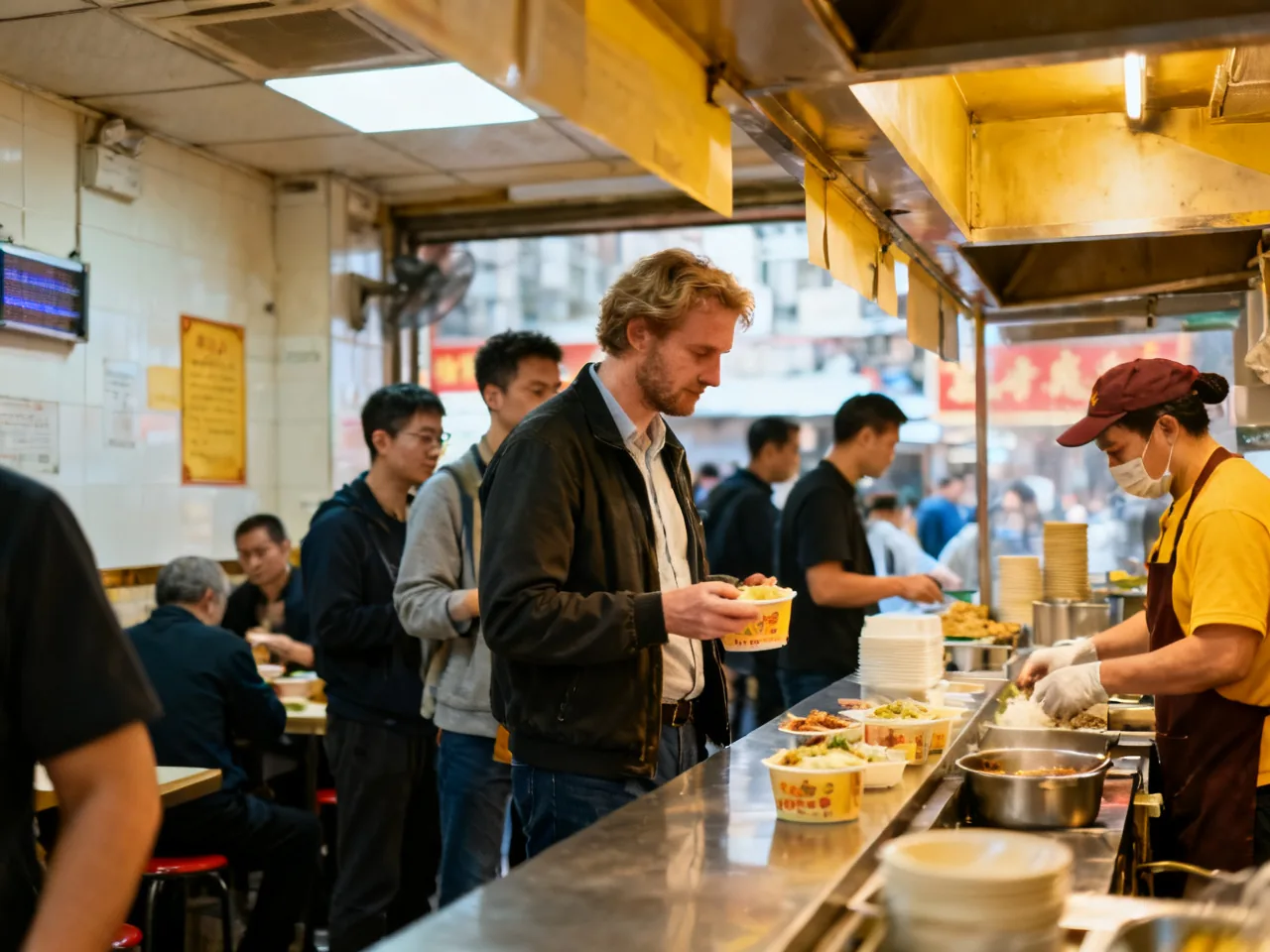
Now when I go to pick up takeout, my first step is always to scan the traffic flow. Are delivery riders waiting by the door? Are packed bags already arranged by number nearby? Are customers forming one line, or separating into dine-in and pickup streams? If the space is small, I make an even bigger effort not to press myself against the counter, because that makes it harder for staff to hand things over and harder for other people to pass. Once in Hangzhou, I went to collect a salad at a light-meal shop and noticed that the two office workers ahead of me simply stood to one side and reported their last digits only when the staff had a moment. I copied them, and the whole process went smoothly. The staff showed no impatience at all. They just glanced at my phone order and handed me the bag. That was the moment I truly understood that politeness in this setting is not about saying “excuse me” in a perfect way. It is about whether you help the system keep moving.
I also learned one very practical habit: prepare your information before approaching the counter. I used to wait until it was my turn and then frantically open the mini-program, find the order page, and raise the screen brightness while the staff and everyone behind me waited. Later I corrected that. As soon as I reach the shop entrance, I prepare the pickup code, the last four digits of the phone number, or the order page, and I also remove one earbud. That way, when the staff look at me, I can provide the information immediately instead of reorganizing myself at the busiest possible moment. This kind of advance preparation feels very similar to what I learned in Chinese high-speed rail stations about keeping the things you may need to show in the easiest-access position, and it helped me appreciate even more how important it is to integrate the workflow with your own physical sequence. Chinese urban rhythm is fast, but it does not reject people who move a little slowly. It rejects people who abruptly break the whole flow.
There was another point I understood only later: once you get the food, do not stay planted in the same spot checking everything for too long. Many foreigners, including my earlier self, instinctively stop at the counter to confirm whether there is a straw, whether utensils are included, or whether anything is missing. Of course checking matters. But if you block the front position, the next person cannot step in. Now I usually take the order first, move two steps aside, and then check the contents or settle the coffee in my hand. If something is really missing, I turn back briefly and ask. This action is so small it almost feels unworthy of mention, yet it fits perfectly with that common Chinese daily understanding of clearing the main channel first. I came to agree more and more with the idea of building security and smoothness on small practical points, because in takeout pickup, those tiny points are often what decide whether the experience feels easy.
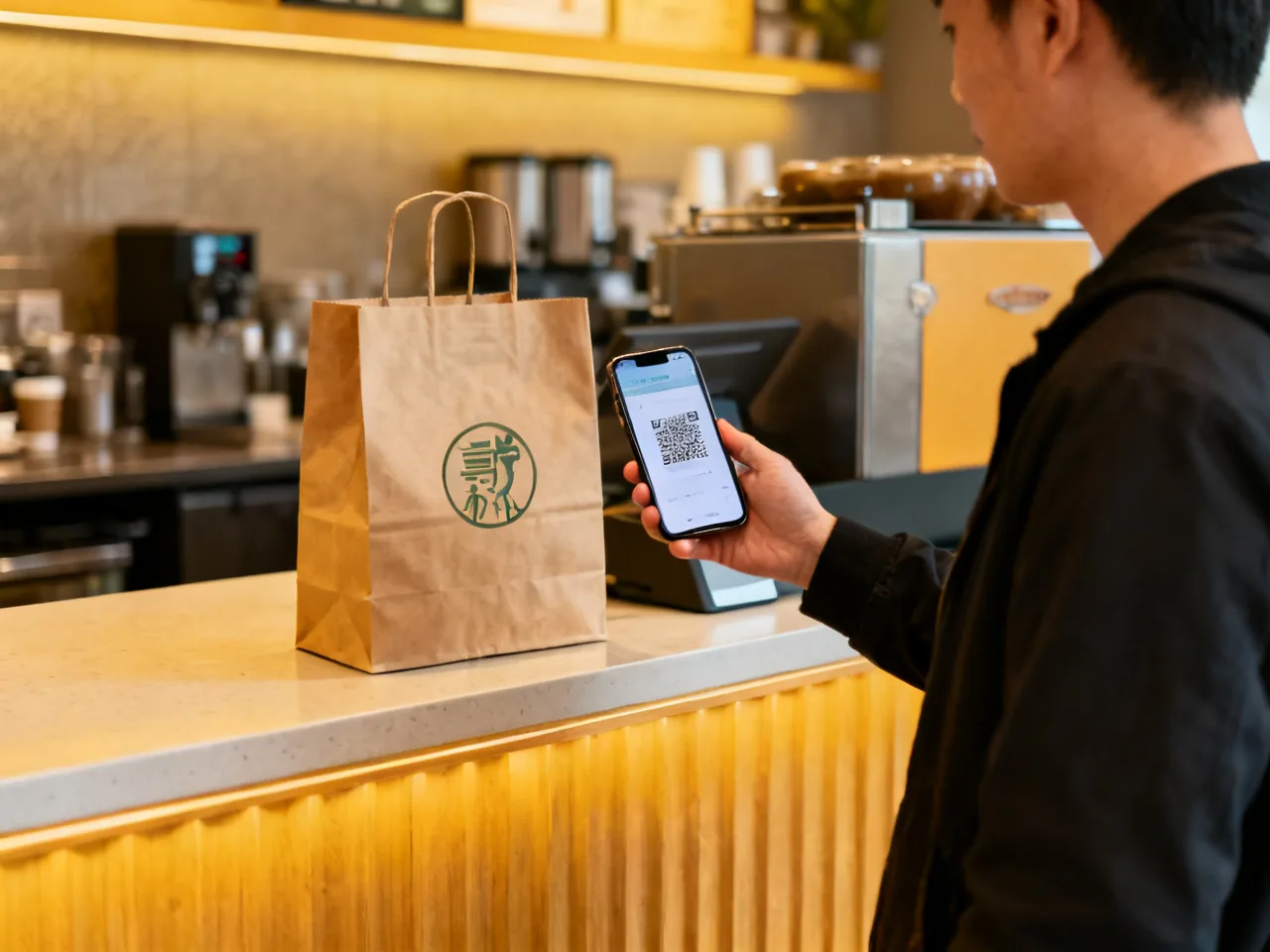
Looking back now, learning takeout pickup etiquette in China really was not about memorizing one ideal phrase. It was about finally understanding a deeper rule: do not let yourself become an obstacle inside the workflow. Stand in the right place first, prepare your information first, step aside first after receiving the food, and only then do your checking. These all sound trivial, but once they connect together, you suddenly find yourself moving much more like the practiced local office workers around you—not because you sound more like them, but because you can finally move with the same urban rhythm.