На ночном рынке в Сиане я научился относиться к неудачной оплате как к части процесса.
I used to treat payment failure as an embarrassing interruption. Especially when traveling abroad, if my phone slowed for even a second at checkout, if a card failed, or if the signal froze, I would tense up immediately, as if the whole line were waiting for me to fail. But in a Xi’an night market, I saw it differently for the first time. That evening near the Muslim Quarter, the air was warm, smoke from grilled meat rolled above the lane, cumin mixed with the sweet smell of preserved garlic, and every stall moved with a quick but familiar rhythm. The owner took money, gave change, and handed over bags almost in one motion. I was holding a bottle of Ice Peak and trying to buy another snack when my payment code suddenly refused to load.
The older version of me would probably have panicked immediately and tried to prove that I could fix everything at once. That usually meant tapping too fast, confusing myself more, and making everyone else wait. But that night, for some reason, I stayed calmer. Maybe after spending more time in China, I had started to realize that many daily situations were far less hostile than I had imagined. So I stepped slightly to the side, let the next person go first, and used a Chinese sentence I had saved in advance: “Please wait a moment, my network is a little slow.” The stall owner looked up, nodded once, and continued with the next customer without any visible impatience. Standing there for those few seconds, I truly understood why turning payment backup into a daily habit matters so much, and I also remembered the logic in getting the rhythm smooth before making more judgments. It applies not only to routes, but also to checkout.
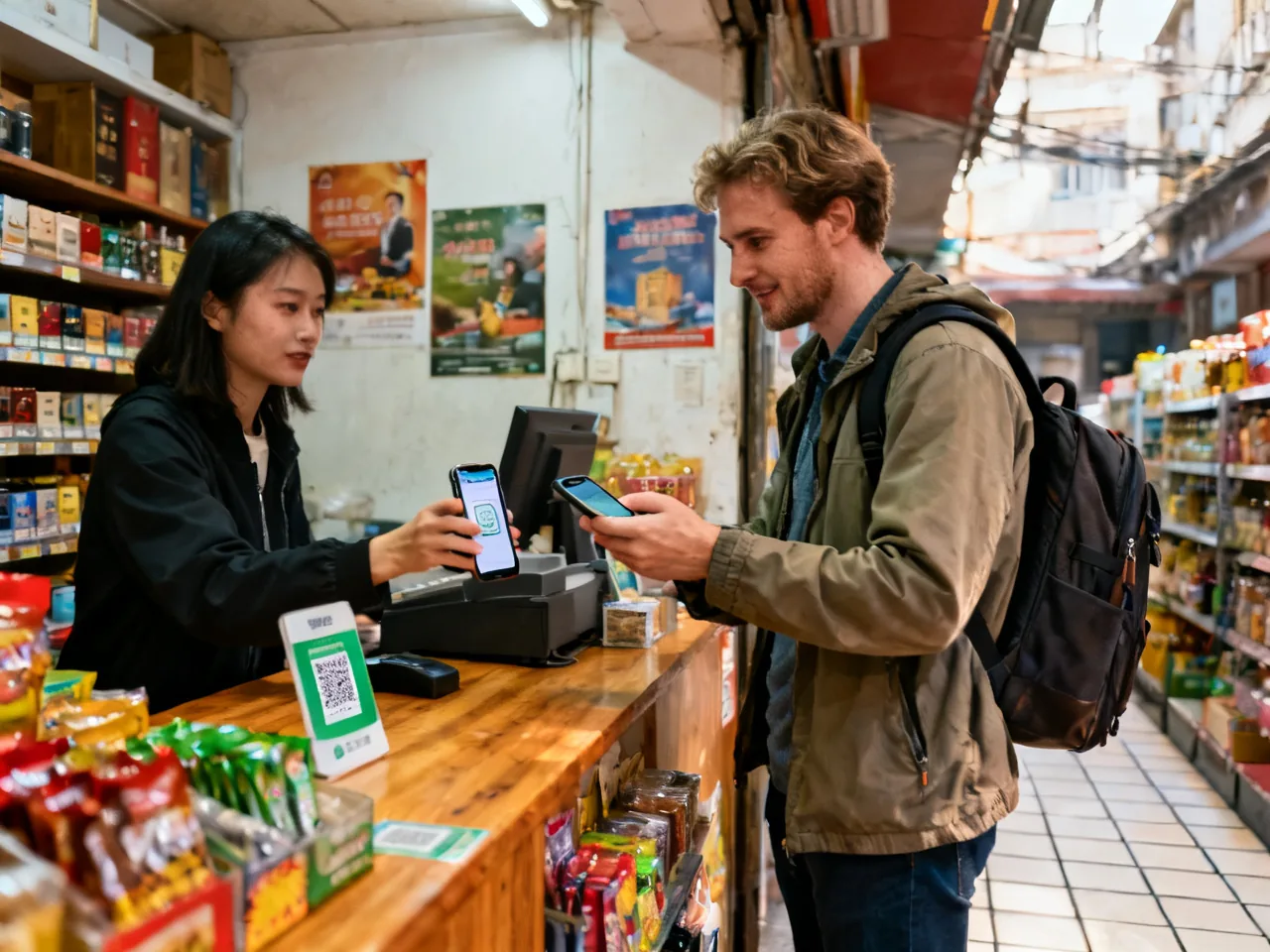
I shifted to my second plan quickly. First close and reopen the payment page. If it is still slow, switch to another payment entry. If that still fails, prepare cash or a physical card. And if the scene is too busy, buy only the one thing you want most instead of solving every problem at the same stall. These actions sound ordinary, but ordinary steps are often what turn a foreigner’s night-market experience in China from a stressful exam into a manageable part of daily life. Many people describe Chinese mobile payment as if it were a high barrier that must be mastered instantly. I increasingly feel that it is more like an environmental rule you can learn gradually. Once you know you have backups, your mind stops scattering.
After that night, I began preparing on three levels. The first level is technical: check battery, signal, and where the usual payment page is before going out. The second is linguistic: save short sentences such as “The network is slow,” “I will try another method,” and “Could you wait a moment?” in my notes. The third is mental: accept that a payment problem does not mean I am stupid. It only means the conditions at that moment require a switch. I later used the same method in other cities too. The signal slowed in a noodle shop in Hangzhou, screen brightness was too low in a convenience store in Shanghai, and a bill-splitting page froze once in a Chengdu hot pot restaurant. But because I no longer treated such moments as humiliation, they became much easier to handle.
One later moment made this even clearer. Again in Xi’an, I was buying water near the city wall when payment slowed down once more. A local girl in front of me saw me staring at my screen and simply said, “Raise the brightness first.” I did, and the code scanned immediately. That tiny suggestion stayed with me because it showed that help in many Chinese daily scenes is not dramatic kindness. It is practical, brief, real-time correction. If you are willing to receive that kind of help, many situations that once felt embarrassing become lighter. It also strengthened my belief in building safety through details. Payment belongs to that layer of detail too.
If payment lag makes you nervous on Chinese streets, I now have a few very concrete suggestions. First, do not wait until you are at the counter to open the code. Prepare the page earlier. Second, keep your screen bright enough, especially in night markets where lighting is uneven. Third, keep a second payment method and a small amount of cash instead of locking yourself into one system. Fourth, if something fails, step aside first rather than blocking the payment point. Fifth, prepare a few short Chinese phrases in advance. Even brief language lowers pressure dramatically. Sixth, do not try to test every payment function at the busiest stall. Finish the most important purchase first. Mature travel does not mean never having problems. It means knowing how to switch as soon as a problem appears.
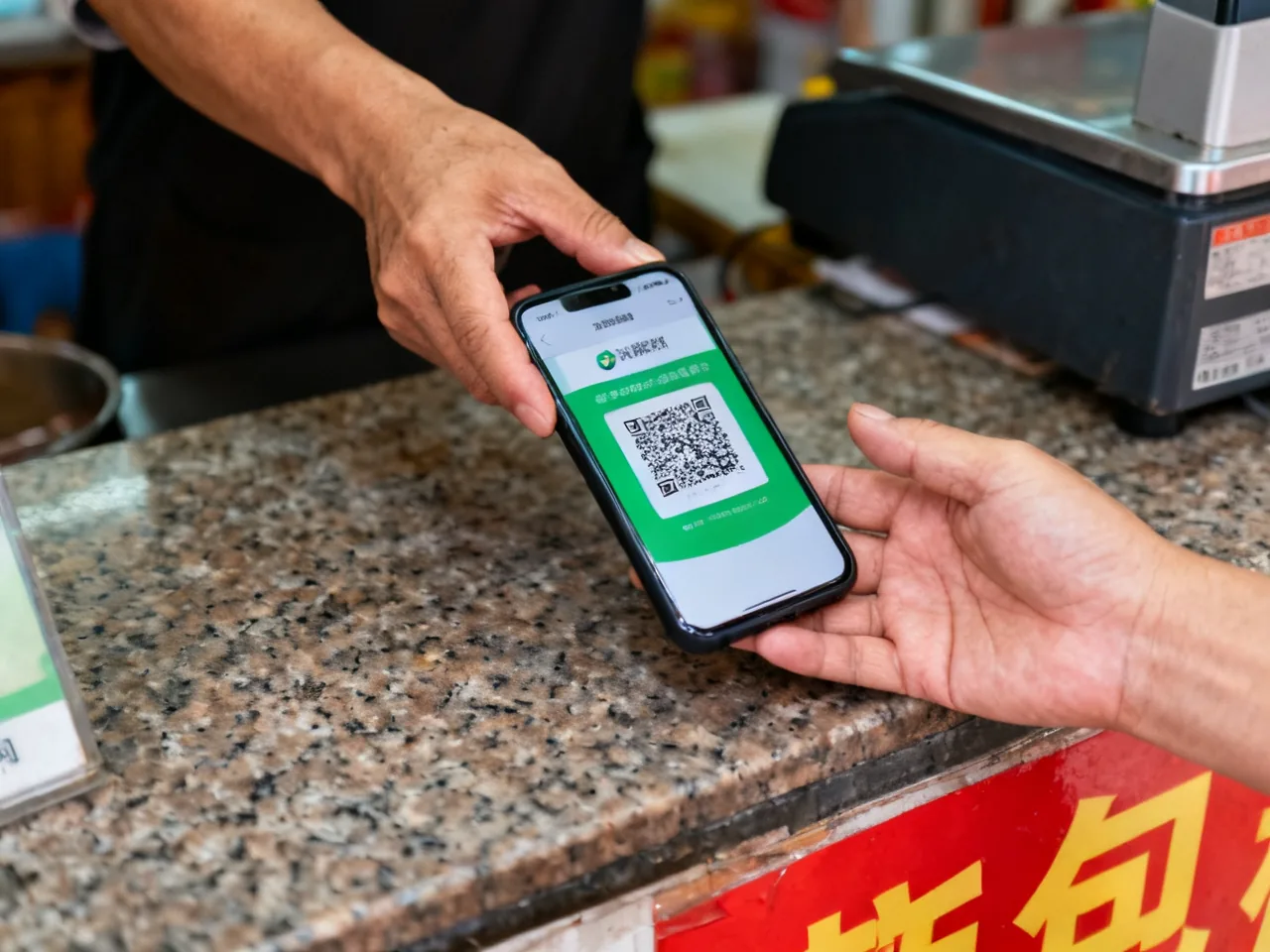
When I stepped back into the market lane with my snack in hand, I could still feel a little sweat from the tension on my palm. Around me were stall owners calling out to customers, and the lights made the row of signs glow brightly. I suddenly felt that what I had learned in Xi’an was not merely a payment trick. It was a steadier judgment: in a high-frequency QR-code environment like China, payment failure is not the interruption of the story. It is only a small bend in a process that can be handled gently. Once I accepted that, the night market stopped feeling like a test waiting for me to embarrass myself. It became a daily order that I was slowly learning to cooperate with.