После того как я сохранил фото документов в телефоне, в очередях я стал гораздо меньше паниковать
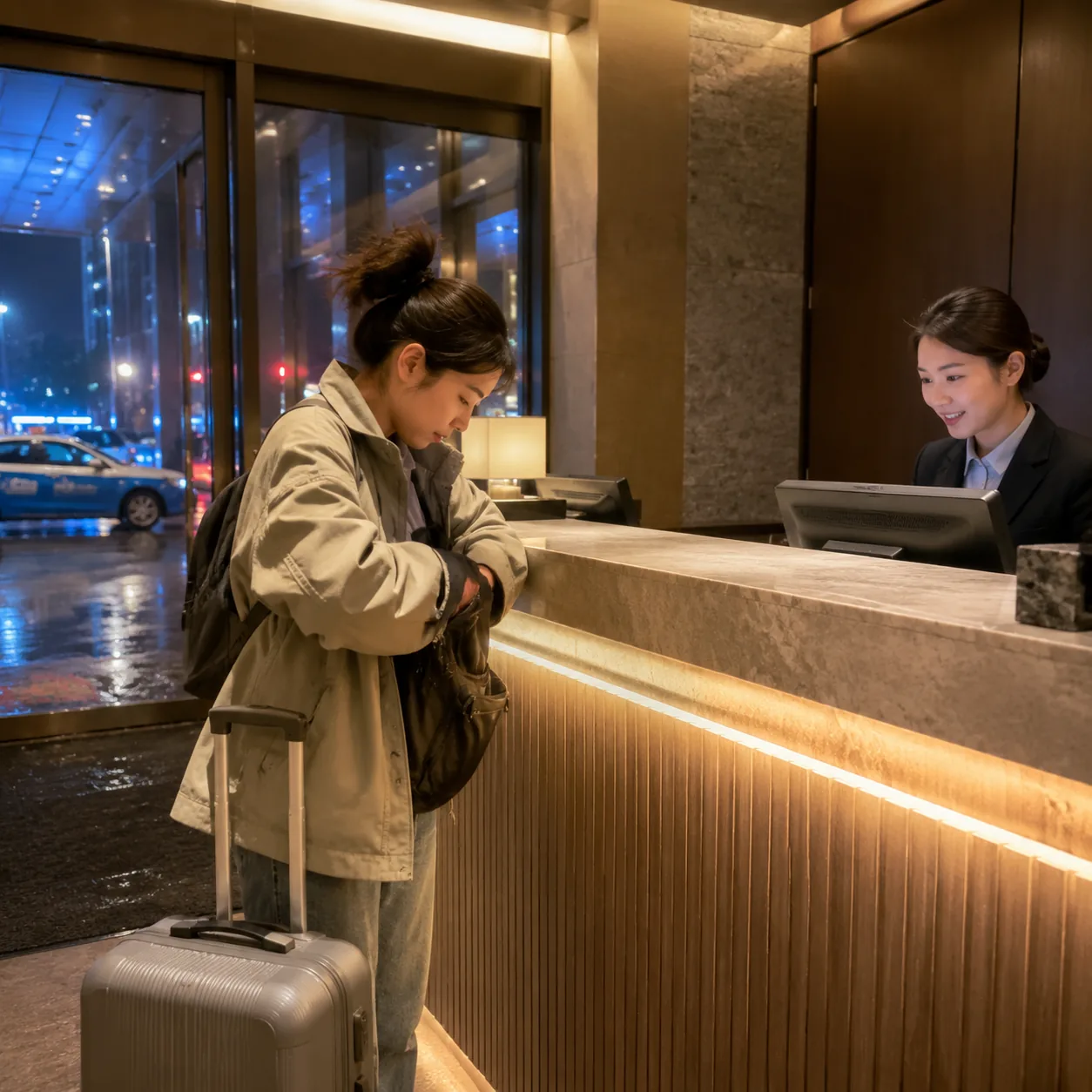
At 9:20 on the evening of November 6, 2025, I stood at the front desk of a hotel near Hangzhou East Railway Station, dragging a gray suitcase while rain dripped from the tip of my umbrella onto the black mat by the door. The lobby lights were bright, and taxis kept stopping outside the glass doors, their tires making short sounds as they passed through puddles. I had just arrived from Nanjing by high-speed rail, my mind still full of carriage announcements and platform crowds, and I assumed check-in would mean giving my name, handing over my passport, and receiving a room card. When it was my turn, the receptionist smiled and asked for my booking number and passport. I checked my coat pocket, then the inner pocket of my backpack. I found the passport, but the order kept slipping between chat messages and emails on my phone. Two business travelers behind me spoke quietly about a meeting the next day, and my fingers moved faster with each swipe. The receptionist did not rush me. She simply reminded me that if I saved my passport page and booking screenshot on my phone in advance, queues would feel much less stressful.
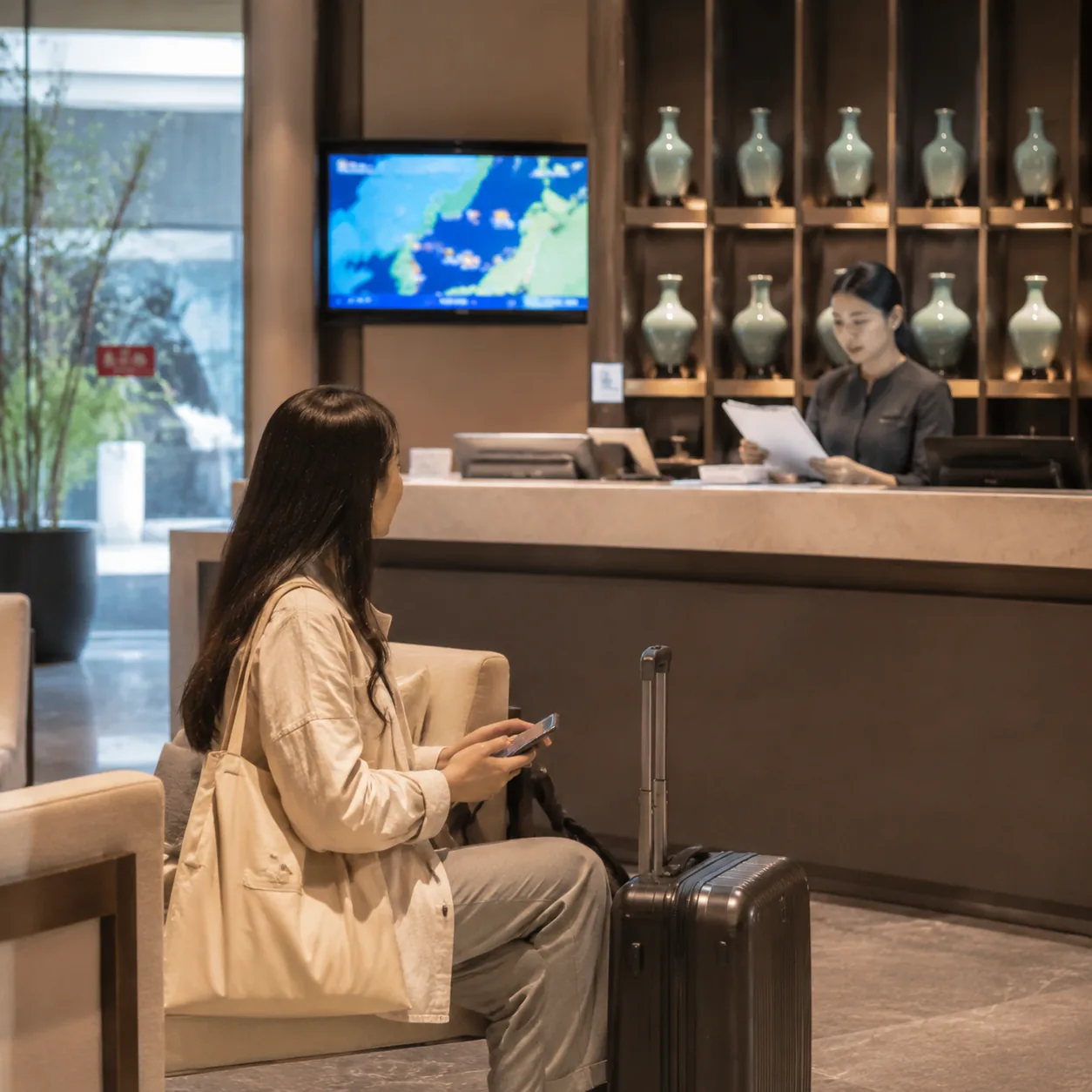
Her words embarrassed me a little, because this was not my first trip and not my first hotel stay in China, yet I had still scattered important information across different apps. She asked me to sit on the sofa nearby and return when I found the order. The lobby carried a faint tea fragrance, a row of celadon-colored vases stood against the wall, and the television was showing the weather forecast. Once I sat down, I realized my panic did not come from the process being complicated, but from my information being unprepared. My passport was in my bag, the hotel confirmation email was in my inbox, the payment record was on another platform, and the address screenshot sent by a friend was in a messaging app. Everything existed, but none of it could appear immediately when needed. The most stressful moments in travel often do not come from difficult rules. They come when the line is moving, others are waiting, and you cannot find the image you should have saved long before.
It took me four minutes to find the hotel order. When I returned to the desk, the receptionist helped check my name and passport number, then reminded me to photograph and save the check-in registration page. She said some foreign guests put their passports in the room safe and only remembered the next day at a scenic site or railway station that they needed document information. Others had no mobile data and could not open their bookings at the last minute. She suggested creating a travel document folder in my phone album and separating photos of my passport information page, visa page, hotel booking, train tickets, scenic reservations, and emergency contacts. Her tone was like someone describing a simple household chore, not criticizing me, but the advice was practical. After receiving my room card, I did not go upstairs immediately. I stood in a corner of the lobby and organized the information. Those ten-plus minutes turned out to matter more than I expected.
I first photographed my passport information page under the desk lamp, making sure no reflection covered the numbers. Then I photographed the visa page and zoomed in to check the entry stamp. Next, I downloaded the hotel booking from my email, saved a screenshot of the high-speed rail ticket to Shaoxing for the next day, and captured the scenic-site reservation page as well. I renamed each image, even though phone albums do not always display file names, and arranged them in order: passport, visa, hotel, train ticket, entrance ticket, address, emergency contact. I also marked the most frequently used images as favorites so I would not have to search through landscape photos. While I did this, the rain continued outside, and the receptionist began checking in another guest. I heard her ask again, “Please show your document,” and felt a little calmer, because I knew that next time, when it was my turn, I would not be starting from nothing.
At 7:50 the next morning, I truly felt the value of that organizing effort at the entrance of Hangzhou East Railway Station. The queue before security was long, and the morning rush carried a low-voiced urgency as coffee cups, laptop bags, suitcases, and children’s schoolbags all moved forward together. I needed to confirm the train number with my Chinese friend traveling with me. When she asked for my seat number, I did not search through messages. I simply opened the train ticket screenshot in my favorites. At the station entrance, I still had to use my original passport, because document verification cannot be replaced by a photo, but the screenshot on my phone helped me confirm the train number, ticket gate, and time in advance, avoiding a back-and-forth search in front of the big display board. My passport was in the outer pocket, my train information was on the first screen of my phone, and with every step forward in the queue, I knew what to take out next.
The station staff checked my passport, then looked at the ticket record in the system and let me through the manual channel. Her movements were quick: her fingers tapped the keyboard a few times, and her eyes moved between my passport and the screen. While waiting, I noticed a foreign traveler showing a photo of his passport to a staff member, assuming that would be enough for entry. The staff member patiently explained that the original document was required. That scene reminded me that saving document photos is not meant to replace documents, but to support the process. Photos can help you fill in forms, check numbers, find orders, and explain situations to hotel or scenic-area staff, but wherever identity verification is required, the original document remains central. Once I understood this, I had more accurate expectations for the folder on my phone. It was not a universal key; it was a well-organized reminder list.
After arriving in Shaoxing, we first went to the hotel to store our luggage. The front desk area was small, with a pot of pothos beside the counter and photos of local water towns on the wall. Because it was not yet check-in time, the staff needed to register my passport information and booking number. I opened my album, showed her the hotel booking screenshot first, then handed over my original passport. After checking it, she told me to photograph the luggage storage tag so it would be easier to show when returning in the afternoon. I did as she said and placed the storage tag photo in that day’s album. The action was tiny, but when I returned in the rain that afternoon, it saved me from searching my bag again. The staff saw the photo and quickly found my suitcase, smiling as she said many people casually put storage tags into pockets and only later discover they do not know where they are.
In the late morning, we went to a former residence scenic area, and the reservation verification zone at the entrance was busier than I had expected. The stone road shone after being washed by the previous night’s rain, and two dark blue sun umbrellas stood before the ticket booth as visitors queued beneath them, phone screens lighting up one after another. My Chinese friend passed quickly using an ID card, while I went to the manual window. The staff member asked for the phone number used for reservation and my passport number. Instead of flipping through the passport page in a hurry, I first opened the document photo to check the number, then handed her the original document. She reminded me not to omit letters or digits when entering a passport number, especially because zero and the letter O can be confused. I zoomed in on the photo and checked it myself. The whole process took less than a minute, and the people behind me barely paused.
As we walked to a small bridge inside the scenic area, I remembered several awkward queueing moments from past trips. Once at a hotel in Beijing, I had packed my passport at the bottom of my suitcase and had to crouch on the lobby floor pulling out clothes when my turn came. Another time at a station in Guangzhou, I forgot which platform I had used to buy the ticket and stood at the manual window repeatedly searching keywords. Once at a museum in Chengdu, I had taken so many screenshots that the reservation code I needed was buried among photos of menus and a cat café from the day before. None of these experiences was serious on its own, but each made me clumsy during a few minutes in line. Public service procedures in China are often very efficient, and precisely because they are efficient, you need to present the necessary information quickly when your turn arrives. Preparation is not about looking professional; it is about matching the rhythm of the place.
At lunch, the restaurant staff led us to a window seat. Outside, black-awning boats moved slowly along the water, and the oars pushed circular ripples across the surface. While waiting for dishes, I continued organizing my phone, marking screenshots used that day and moving the afternoon train ticket and hotel check-in information to the front. My friend laughed and said I looked as if I were organizing office files. I replied that if you do not organize travel documents, anxiety will organize them for you. She nodded and told me she also kept photos of the front and back of her ID card, medical insurance card, frequently used addresses, and family phone numbers on her phone, but she protected important document images with a password. Only then did I realize that convenience and security must be considered together. Saving document photos on a phone does not mean leaving them casually in a public album or chat history. It is better to use a hidden album, encrypted folder, or at least a strong screen lock.
When we returned to the hotel in the afternoon for formal check-in, the front desk had changed to an older male staff member. He asked whether I had stored luggage that morning. I directly opened the storage tag photo, and he quickly retrieved the registration form from the cabinet. Then he asked to see my original passport again and confirmed the number of nights and departure date. I showed him the order screenshot, and he noticed that the breakfast count displayed in the system did not match the note on my platform booking, so he called the back office to confirm. Without the screenshot in hand, I might have assumed I remembered wrong. A few minutes later, he gave me the missing breakfast voucher and reminded me to save the hotel phone number printed on the room card sleeve, in case I got lost at night and needed to call the front desk. I photographed the sleeve and saved the hotel address as well.
That day taught me that order screenshots are not only backups for oneself; sometimes they are also evidence for communication. When languages do not fully overlap, a clear screenshot can reduce much explanation. It shows the date, room type, ticket type, number of people, price, and notes more directly than my imperfect Chinese or a staff member’s limited English repeated several times. Of course, screenshots have limits. If a platform order has been canceled, an old screenshot cannot prove it is still valid. If a dynamic code is required, a static screenshot may not be enough. If there is a payment dispute, platform records are still needed. But in most queueing and checking situations, a screenshot at least allows both sides to begin from the same page of information. That shared page matters because it turns communication from guessing into checking.
In the evening we walked along Cangqiao Straight Street. Lanterns lit up along the road, the scent of fermented rice drifted from small shops, and the stone pavement held a shallow gleam of water. I did not open my phone often, but because I knew the important information was organized, I could pay more attention to the life around me. A shopkeeper selling yellow-rice-wine popsicles asked where I came from. After I answered, he smiled and said foreign visitors in Shaoxing are often not most afraid of failing to find attractions, but of failing to find what they just saved. I wrote that sentence down. Many travel troubles do not come from lacking information, but from having too much information scattered in too many places. A phone is supposed to be a tool. If unorganized, it becomes another maze; if organized, it is like a quiet little drawer that opens exactly when needed.
Back at the hotel, I adjusted the method again. The top level would hold only what I needed that day, expired orders would move to an archive album, passport and visa photos would stay in an encrypted location and not be shown casually, commonly used screenshots would remain in original quality rather than compressed in messaging apps, important numbers would be written on paper and kept in my wallet in case my phone died, and before going out I would confirm that the original document was in my bag because photos cannot replace originals. The checklist looks detailed, but actually doing it takes only a few minutes. It did not take ease away from travel; it returned ease to travel. The next morning when I checked out, the receptionist asked for my room number. I gave it and quickly showed the order, and the process felt as smooth as inserting a key into a familiar lock.
If friends ask me what foreign visitors should prepare in advance for queueing in China, I would say it is not one universal Chinese sentence or one universal app, but a folder that can be opened within ten seconds. It should contain a photo of the passport information page, a visa or entry record photo, hotel booking screenshots, train or flight information, scenic-site reservations, frequently used addresses, and emergency contacts. Each item should be clear, complete, and easy to find, while privacy and phone security must also be considered. At a hotel, it saves you from searching email. At a station, it helps confirm the train. At a scenic area, it helps check the number. When system differences appear, it helps staff understand your situation. It cannot solve every problem, but it can stop most small problems from growing.
I still get nervous in queues, especially in unfamiliar cities, on rainy days, or when my phone battery is low. But now that nervousness has boundaries, because I know which album to open first, which document to take out first, and which screenshot to show the staff first. Feeling less panicked in line does not mean I have become capable of everything. It means I have arranged in advance the things that easily become chaotic. The bright lights of the Hangzhou hotel front desk that night, the crowds at the Shaoxing station, and the phone screens glowing beneath umbrellas at the scenic-area entrance all seemed to remind me that calm travel is not an inborn personality trait. It is built from one small preparation after another. Those clear document photos and order screenshots on my phone will not make a trip glamorous, but they will make it less awkward.
On the day I left Shaoxing, I saw a young mother crouching beside a suitcase in the station waiting hall, helping her child search for a document in a schoolbag. The child held a water bottle and looked a little anxious. A staff member bent down and reminded her that she could open the order number first and look for the document slowly. The mother nodded and opened her phone album, where a train ticket screenshot was clearly already saved, and the queue did not stop for long. Watching this, I suddenly felt that what I had learned over those two days was not merely a travel technique but a way of cooperating with public space. Preparing your own information reduces pressure on staff and respects the people waiting behind you. When each person moves a little more smoothly, the whole line becomes steadier.
Looking back now, the change did not begin at a spectacular attraction. It began at a hotel front desk on a rainy night. A staff member gently reminded me to save document photos and order screenshots; after I did so, the station, hotel, scenic area, and restaurant the next day all contained fewer moments of panic. Of course my travel memories include waterways, lanterns, bridge openings, and the fragrance of yellow rice wine, but I also remember the small folder in my phone album. It was like a pocket I carried with me, holding my identity, route, and temporary sense of security. For a foreigner traveling in China, that security is not dramatic, but it is real: when your turn comes, you know what to open, what to hand over, what to confirm, and then you can return your attention to the city itself.