Я думал, что шоу в исторических костюмах будет сплошь «ретро», пока не увидел, как современный макияж и причёски озарили всю сцену
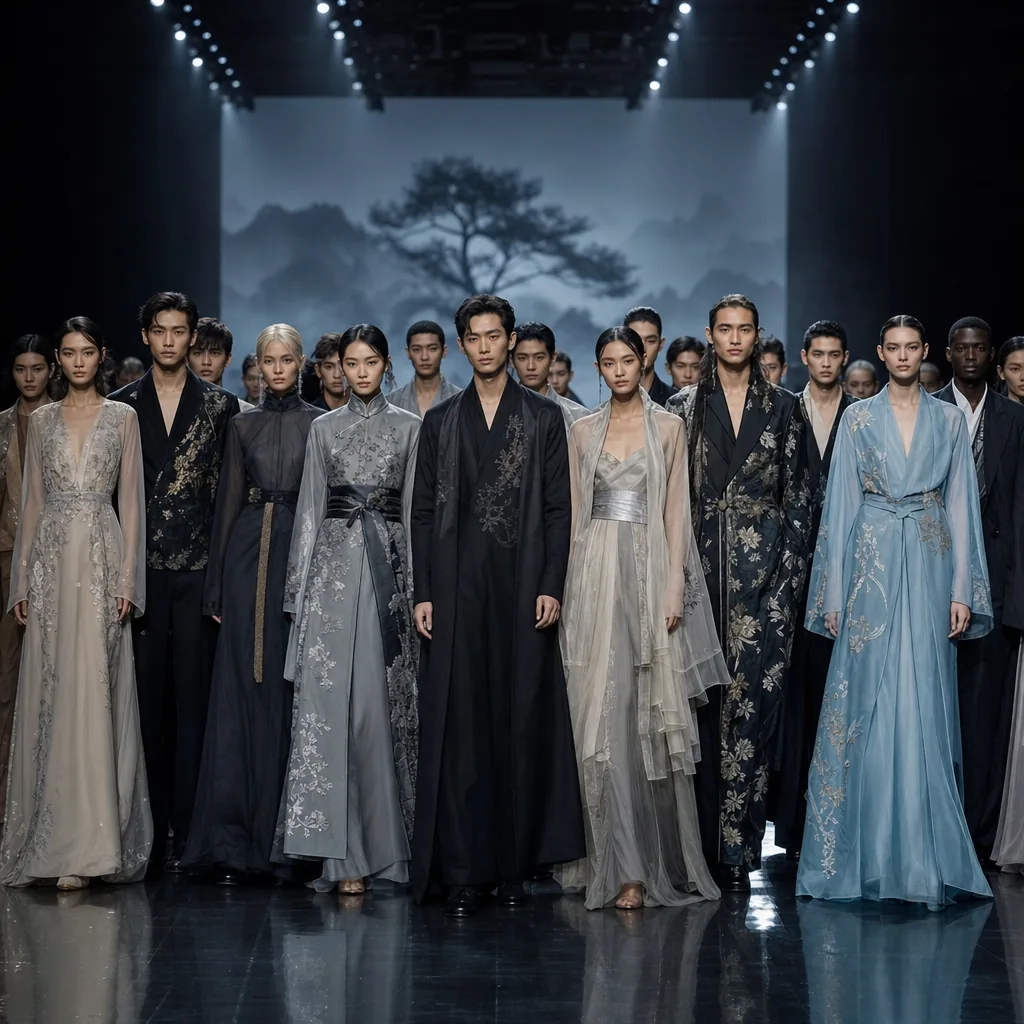
The instant the lights dimmed, the air in the venue seemed to thin first. Not because it became silent, but because everyone’s attention drew inward toward the runway. At the far end there had only been a narrow line of cool light. Then the first model stepped out, and the whole room came alive at once. The garments clearly carried ancient Chinese silhouettes—collar lines, sleeves, tied waists, floating drapes—but the face was not old-fashioned at all. The eyeliner was sharp, the skin looked luminous, and the hairstyle did not try to reconstruct a painting strand by strand. Instead, it connected the crisp discipline of a modern runway with the flowing structure of classical Chinese clothing. In that moment I knew this was no longer the sort of thing I used to imagine when people said ancient-style dress. It was something more current, more electric, more alive under contemporary light.
I used to misunderstand this whole ancient-modern runway style. I assumed it might easily become awkward: either the costume would turn too theatrical, like a publicity image from a historical drama, or the modern makeup would come down too hard and bury the character of the clothes entirely. But this show was the first time I truly understood what strong ancient-modern styling can do. Its power lies precisely in not crossing the line. The garments preserve the most moving qualities of old Chinese dress—the lines, the drape, the rhythm of cloth—while contemporary hair and makeup bring the face, neck, shoulders, and gait into today’s visual language. The two sides do not fight each other. They make each other’s outlines sharper.
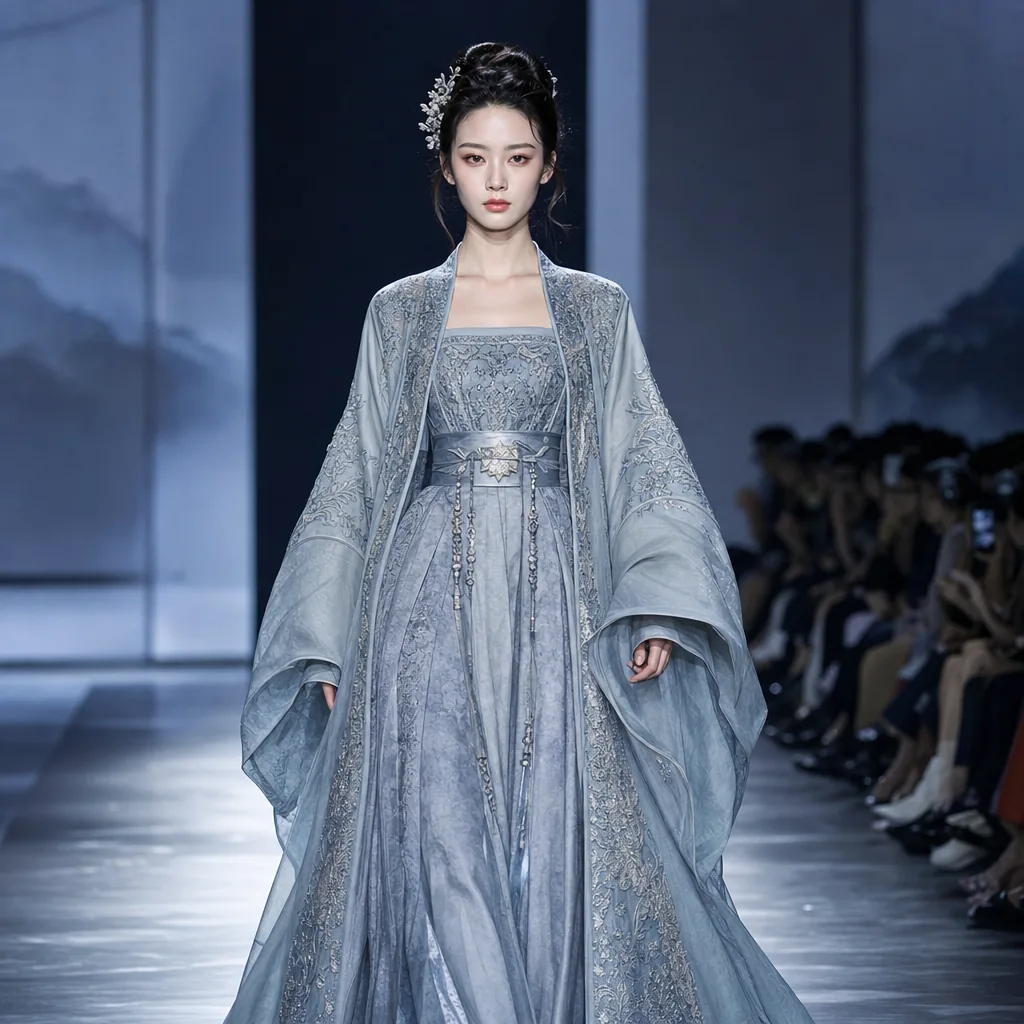
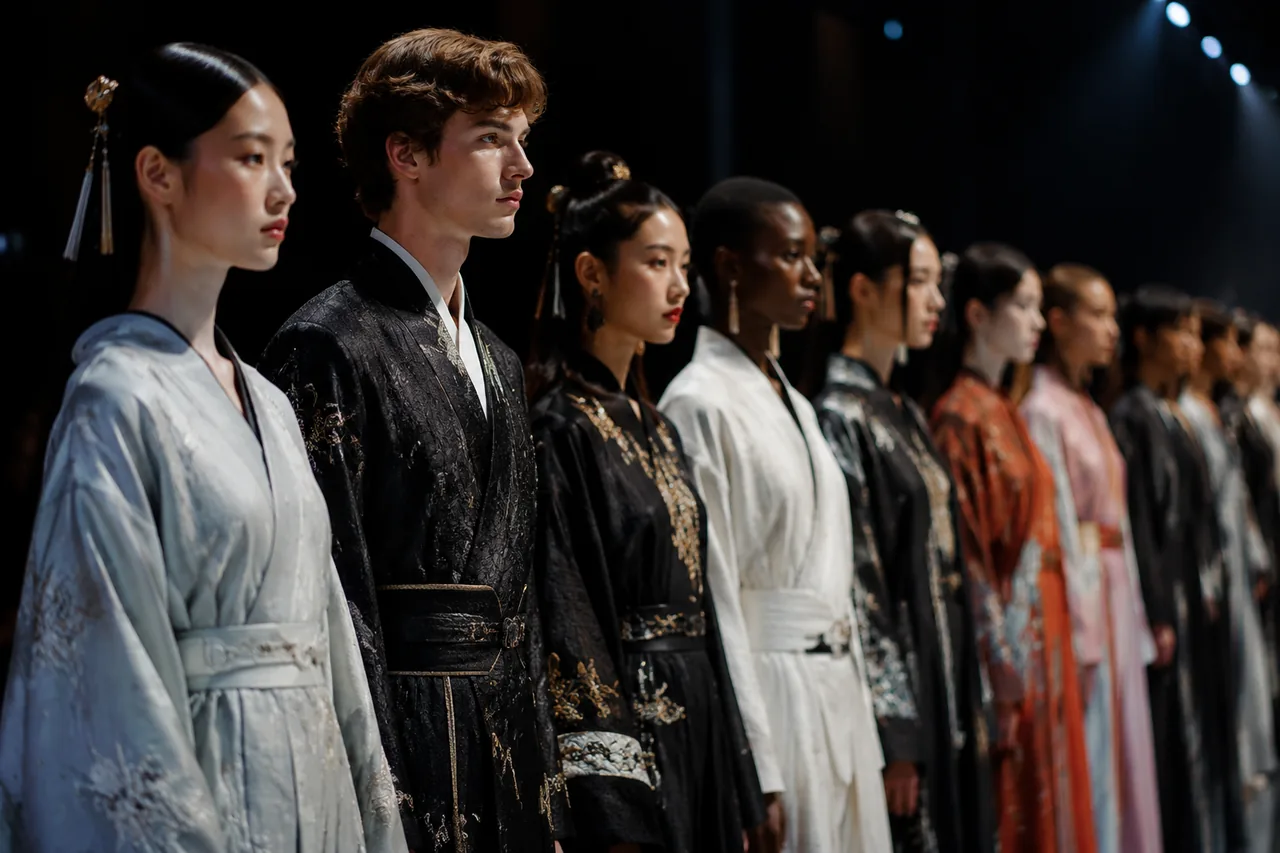
What surprised me most was the diversity of the models. The runway did not present only one kind of East Asian face, nor was it filled only with long-haired women. That evening you could see tall Asian female models, sharply structured European male models, short hair, slicked-back wet hair, faces defined by graphic eye makeup, and others left almost bare and luminous. Yet once the ancient-style silhouettes came onto the body, these differences in race, face shape, and gendered presence were all gathered by the logic of the clothes into a different kind of unity. No one was flattened into sameness. Instead, the contrast itself began producing a new shared atmosphere.
What Feels Current Is Not Pure Reconstruction, but the Ability to Step into Today
If you still think Chinese ancient-style fashion is a niche interest, you are already a little behind the moment. It is becoming more and more popular not because everyone suddenly wants historical reconstruction, but because it fits today’s visual world unusually well. Under runway lighting, wide sleeves, long hems, floating drapes, standing collars, and crossed collars often deliver more camera power than many conventional gowns. When the model turns, the edge of the fabric speaks first. When a person pauses for half a second, the whole body seems to receive a new architectural frame from the clothes. Contemporary fashion fears weak outlines, and outline is exactly what historical Chinese dress does not lack.
That is also why contemporary hair and makeup are so important. If the garments already have multiple layers of visual rhythm, the face cannot dissolve into softness. Strong runway teams understand this well. That is why you see highly contemporary skin finishing, precise sculpting of bone structure, sharply controlled hairlines, and even the cool facial discipline more often associated with international couture presentations. Once that happens, ancient-style clothing is no longer misread as something that can only be soft, ethereal, or gentle. It can also become sharp, composed, powerful, and at times even faintly futuristic.
Women, Men, and Many Races Can All Bring New Force to Ancient Dress
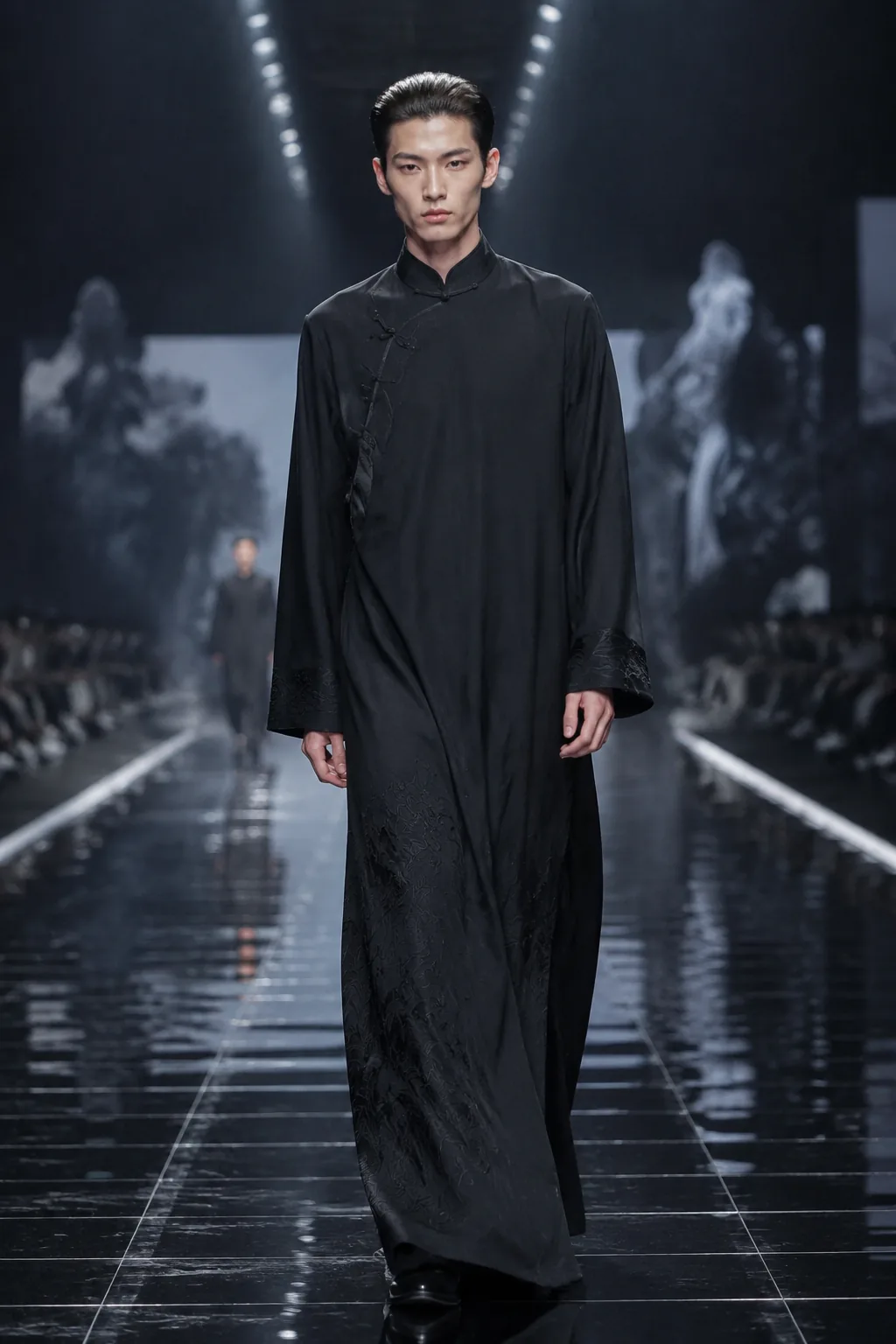
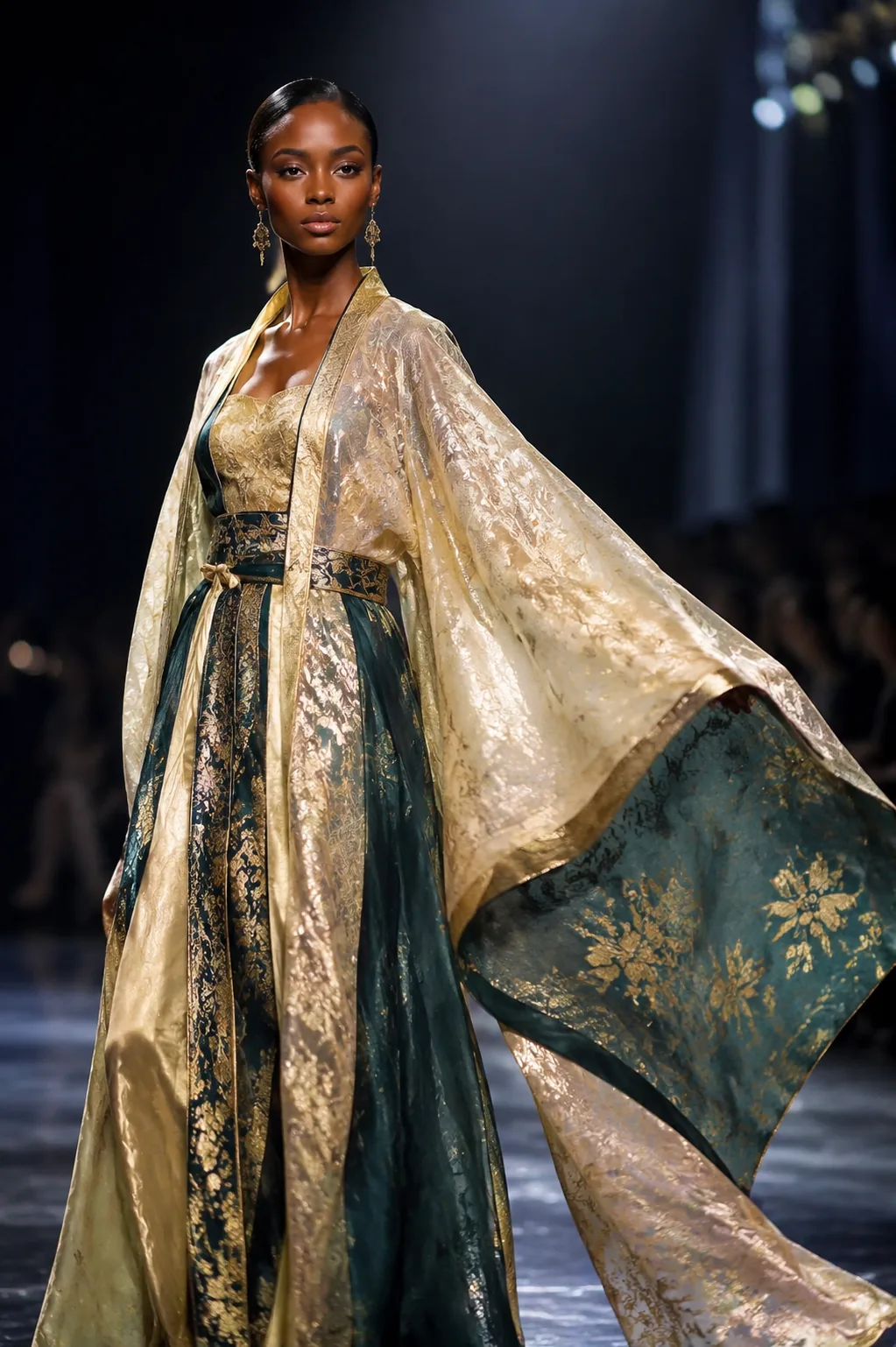
When I used to look at ancient-style fashion, I often felt trapped by a single standard of beauty, as though only one face, one body shape, and one hairstyle could properly carry the mood of such clothing. This show completely broke that idea apart. One male model with level shoulders and a steady walk stepped into a modified long robe and suddenly seemed to embody the vertical force inside traditional dress itself. Another female model with deeper skin tone wore pale gold over dark ink-green, and the contrast of fabric under the lights made the layering feel even clearer. Several mixed-race faces also appeared with minimal contemporary beauty styling, and instead of weakening the ancient garments, they pulled them into a much more international way of being seen.
This also reveals something important. The charm of Chinese ancient dress does not depend solely on making a person resemble someone from the past. Its deeper power lies in the fact that its lines, structure, use of empty space, and movement of cloth already contain a strong fashion language. As long as a runway team understands what to preserve and what to update, people from different cultural backgrounds can all participate without the result feeling disrespectful. On the contrary, it helps more viewers realize for the first time that Chinese clothing is not merely a display object of traditional culture. It can be a truly living aesthetic system in the present.
The Most Magnetic Moment Is Not the Costume Alone, but the Instant It Is Relit by the Present
Near the end of the show, the music dropped lower and the lighting turned colder. The final looks moved from jade white and ink black into metallic gray-blue with a stronger futuristic edge. At that moment I realized why this ancient-modern fashion language captivates so many people. It is not asking anyone to return to the past. It is saying that beauty inherited from the past can shine again through today’s eyes, today’s faces, and today’s gait. You do not need to live in an ancient era to deserve those lines. And you do not need to shut off everything modern in order to show respect to tradition.
If you have only scrolled past scattered ancient-style editorial images on social platforms, you may not feel this yet. But once you stand at an actual runway and watch traditional silhouettes reorganized by modern light, makeup, hair, and body language, the whole way of seeing begins to change. You stop asking only whether something looks ancient enough. Instead, you begin asking why this silhouette works so well on a runway, why a certain ethnicity makes the look feel even more dimensional, and why a face suddenly starts to resemble an international campaign image once the styling turns contemporary. When those questions multiply, it means ancient dress has already moved beyond retro curiosity and entered real fashion discussion.
When I left the venue, some models were still touching up their makeup by the backstage door. One was smoothing out a sleeve that had loosened, another was looking down at runway footage on a phone. That scene said everything. Ancient dress had not been placed on a pedestal. It was being used, adjusted, re-photographed, and redefined. As I walked out, I was no longer thinking first about which dynasty each look might echo. I was thinking about something else entirely. If Chinese ancient dress keeps collaborating with modern runway language like this, it may become one of the most recognizable and internationally visible forms of East Asian fashion in the next few years.