Внезапный дождь научил меня в Китае видеть в пространстве под навесом временное общественное место
The first time I truly felt the unspoken logic of standing under the eaves in China was not at any famous old building, but on an ordinary afternoon. The sky had only been gray. A fruit shop still had watermelons stacked outside, electric scooters were still passing by, and nobody looked especially alarmed. Then within ten minutes the rain crashed down, first in heavy drops on the pavement, and suddenly the whole street sped up in sync. I ran too, and ended up squeezed with several strangers beneath the narrow awning outside a small shop. In that moment, I realized that taking shelter from rain in China is not only an individual act. It often becomes a small temporary public order all by itself.
Under that awning were all kinds of people: a delivery rider holding a takeout bag, an auntie returning from the market with cilantro sticking out of a plastic bag, a student with a backpack, and a foreigner like me who clearly did not know where to place himself. What interested me most was that no one truly gave instructions, yet everyone kept adjusting position little by little. Someone gave the innermost spot to the person holding a child. Someone tilted an umbrella inward so water would not shake onto another person’s trouser legs. Someone who was already settled still moved half a step aside when another rain-soaked stranger rushed in. The process was quiet, but not cold. In a few seconds, it twisted a group of unrelated people into a tiny collective capable of sharing shelter.
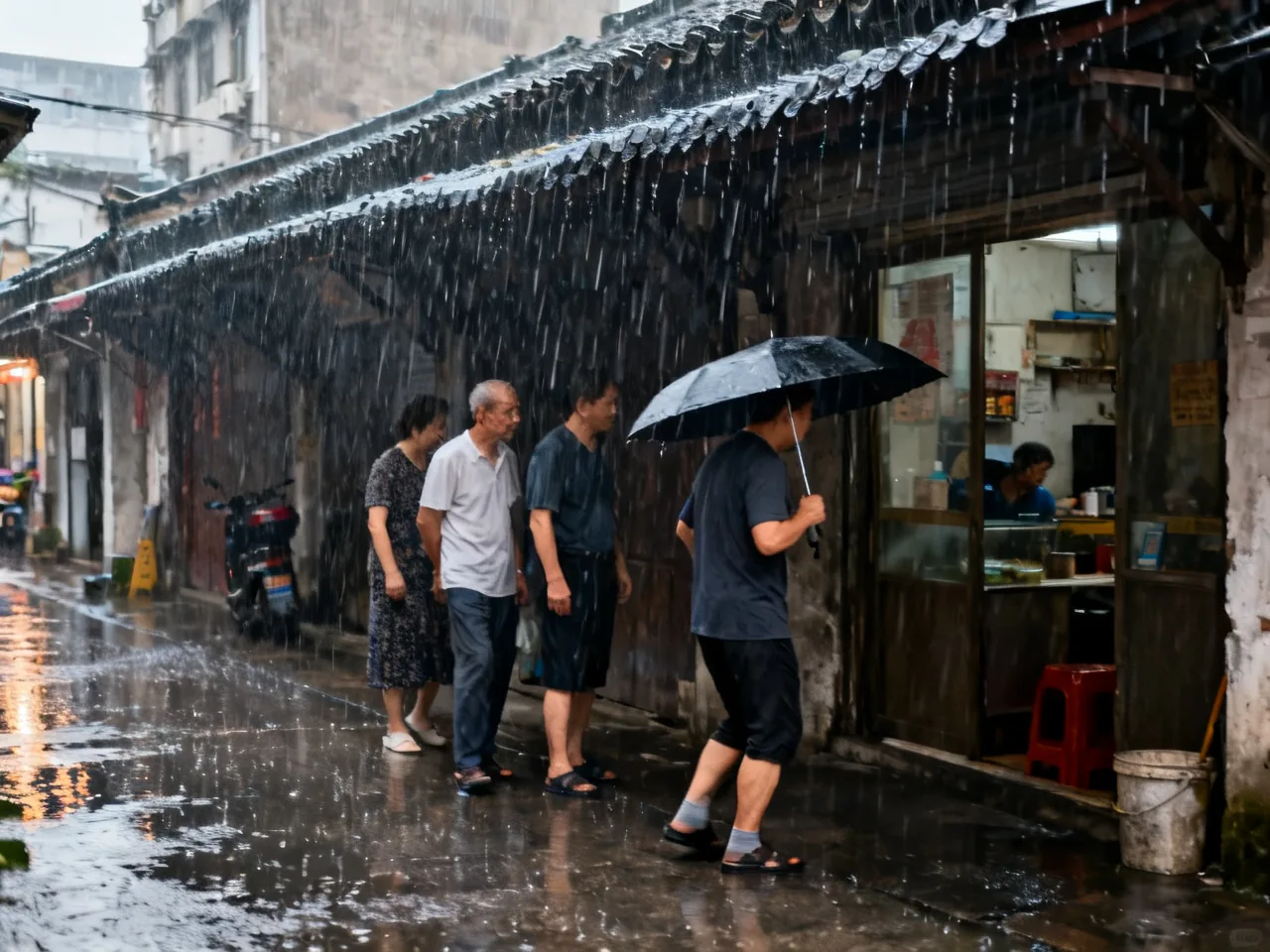
Later I slowly understood that the rules beneath the eaves are a little like the rules of queueing: they are unwritten, yet very stable. You cannot think only about whether you personally have room to stand. You also have to keep noticing whether someone else needs that drier corner more than you do. You cannot treat your umbrella as an endlessly expandable private border, because in that moment umbrellas and bags both need to shrink to make room for shared space. For foreigners, this kind of scene is especially worth observing because it carries little pressure while showing very directly how everyday coordination works in Chinese cities. People do not suddenly become intimate. They first place everyone into a state that is roughly comfortable and roughly dignified.
While it was raining, the shop owner casually dragged a stack of cardboard boxes farther inside, freeing a thin extra strip of standing room. Someone joked that the rain had arrived fast. Another person replied that if it kept going for five more minutes, the intersection would definitely flood. Then everyone went quiet again, each watching the curtain of rain. Nobody insisted on conversation, but nobody made the atmosphere stiff either. I was standing on the outer edge with the tips of my shoes already wet when the auntie beside me glanced at me, shifted inward slightly, and said, “Stand a bit more inside, or your trousers will get soaked.” It was an ordinary sentence, yet it relaxed me immediately because it was not performative warmth. It was a very lived-in kind of inclusion.
This experience later helped me understand that much of the gentler warmth in China does not necessarily appear in grand moments. It often hides inside short episodes of shared response like this one. You do not need to know anyone first. You do not need to express yourself perfectly. You do not even need to say much. As long as you are willing to shift half a step, close your umbrella a little, and make a bit of room for someone else, you have already entered that temporary set of rules. That is also why I came to believe even more strongly in observing the small tacit habits of public space before deciding how to join them, because often what truly helps you understand everyday China is not a grand explanation, but a standing position during a rainstorm.
When the rain lightened, people gradually dispersed. Some reopened umbrellas, some checked their phones to decide whether to continue on, and the delivery rider rushed out first, his tires cutting through a patch of shallow water. The auntie lifted her vegetables and left as well, leaving only a few drops mingled on the ground. I stayed under the awning for half a minute longer on purpose, watching the little space that had just been crowded return to being an ordinary storefront. I felt a faint but real tenderness. I had once thought taking shelter from rain was only a matter of waiting awkwardly for the weather to pass. Later I understood that it can also be a quiet lesson in city life, teaching you how to share one temporary boundary with strangers.
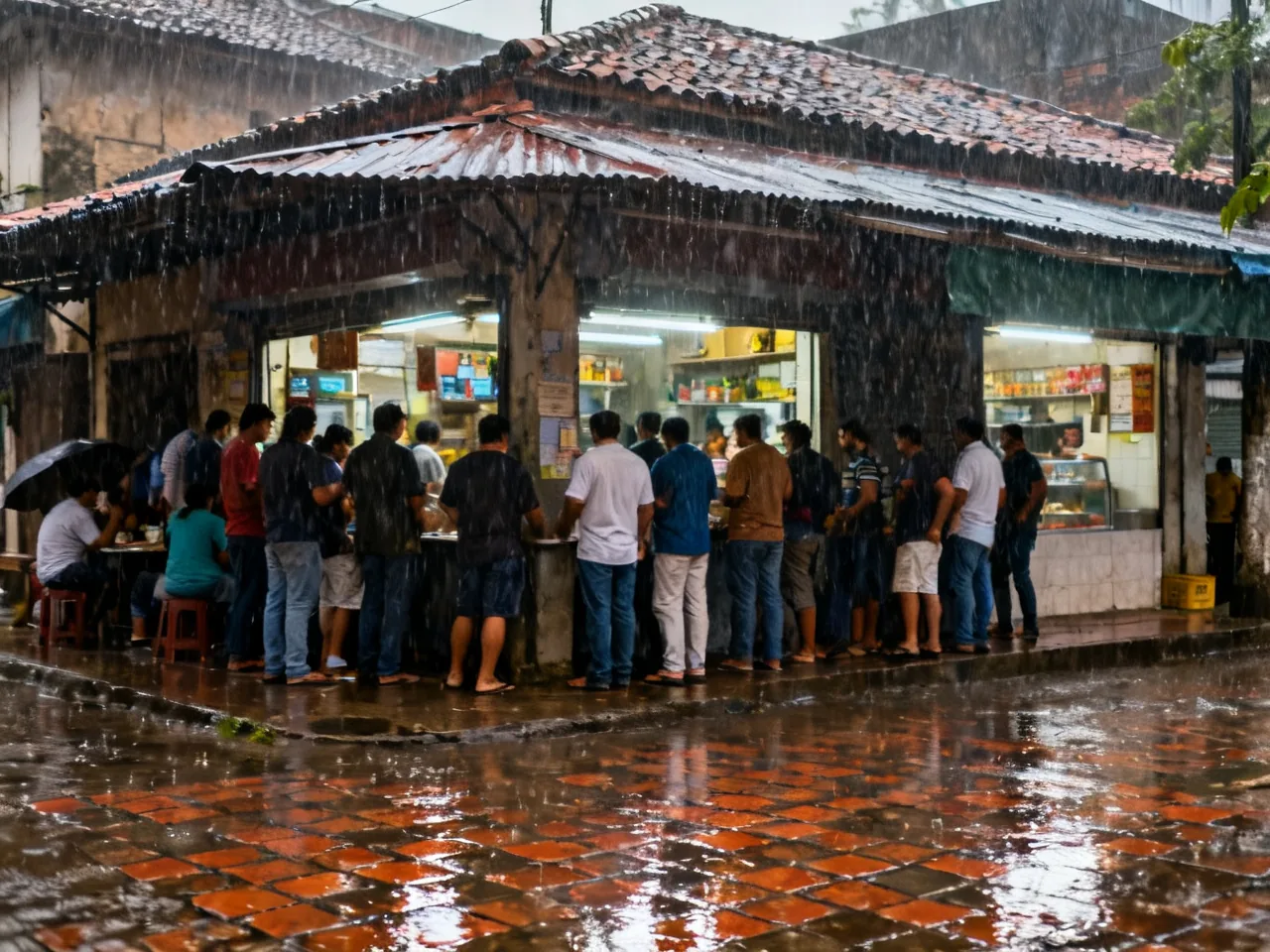
If someone asks me now where to best observe how strangers in China quickly form tacit coordination, I would very likely say: look beneath the eaves when it starts raining. There are no formal rules there and nobody explains the procedure, yet in a very short time you can watch yielding, folding, reminding, and accommodating appear naturally. For me, this brief and concrete cooperation is more convincing than many abstract cultural explanations. It is not China explained to you. It is everyday China that you can feel the moment you step into it.