中国の古い団地の物干しロープの下で私が学んだのは、まず天気を見ること、そしてご近所のリズムを先に読むことだった
The first time I truly paid attention to the laundry lines in an old Chinese residential compound was on an afternoon when the wind suddenly rose. The courtyard was not large. Several old apartment buildings enclosed a semi-open patch of space. In places the paint on the walls had begun to lift. Electric scooters with winter windshields were parked downstairs, and a few small stools sat under the trees. Long clotheslines stretched from windows on the first floor across the yard to the other side, holding sheets, shirts, towels, and school uniforms with rows of clips. In the wind they slapped lightly and rhythmically against the air. Laundry poles extended from balconies too, carrying dark trousers and plaid pajamas. Sunlight made the wet edges of the fabric glow. The air smelled of detergent and of sun-warmed concrete. I had always assumed that hanging laundry was merely a private domestic detail, the kind of small routine that begins and ends behind someone else’s door.
But after living in that kind of old compound, I realized that hanging laundry is far more public than I had imagined. That does not mean people comment on what you wash. It means that the moment clothes go outside, they enter a shared zone shaped by weather, space, and neighborhood awareness. Which side gets sunlight first, what kind of wind blows into the yard, what time in the afternoon clouds usually gather, which balconies collect dampness more easily, which line sits too close to a tree and catches dust—none of these things can be managed entirely behind a closed door. What interested me even more was that people in the courtyard seemed naturally sensitive to all these changes. Someone taking out the trash would glance up at the sky without thinking. Someone passing beneath the lines would automatically walk around the dripping edge of a shirt. Someone sitting quietly trimming vegetables would somehow still seem to be listening to the wind on behalf of the whole yard.
I understood this fully the day I nearly let a whole load of freshly washed clothes get soaked. The noon sun had been excellent, and with the sky looking bright and open, I hung up all my T-shirts and sheets outside. As I clipped each one into place, I even felt a small satisfaction, as if I were finally beginning to live locally in a real way. But later the wind shifted. The leaves in the courtyard turned over, and a gray-white layer began pressing in above the roofline where the sky had been clear. I was still upstairs moving slowly through other chores when a voice suddenly rose from below: “It’s going to rain—hurry and bring your clothes in!” I leaned out and saw an auntie from the neighboring building standing at her window looking into the courtyard, several pieces of laundry already gathered in her hands. I practically ran downstairs and managed to pull in my sheet and clothes just before the first drops began to fall. That was when I understood that in a courtyard like this, changes in the weather are never only one person’s concern, and even collecting laundry often does not depend solely on noticing it yourself first.
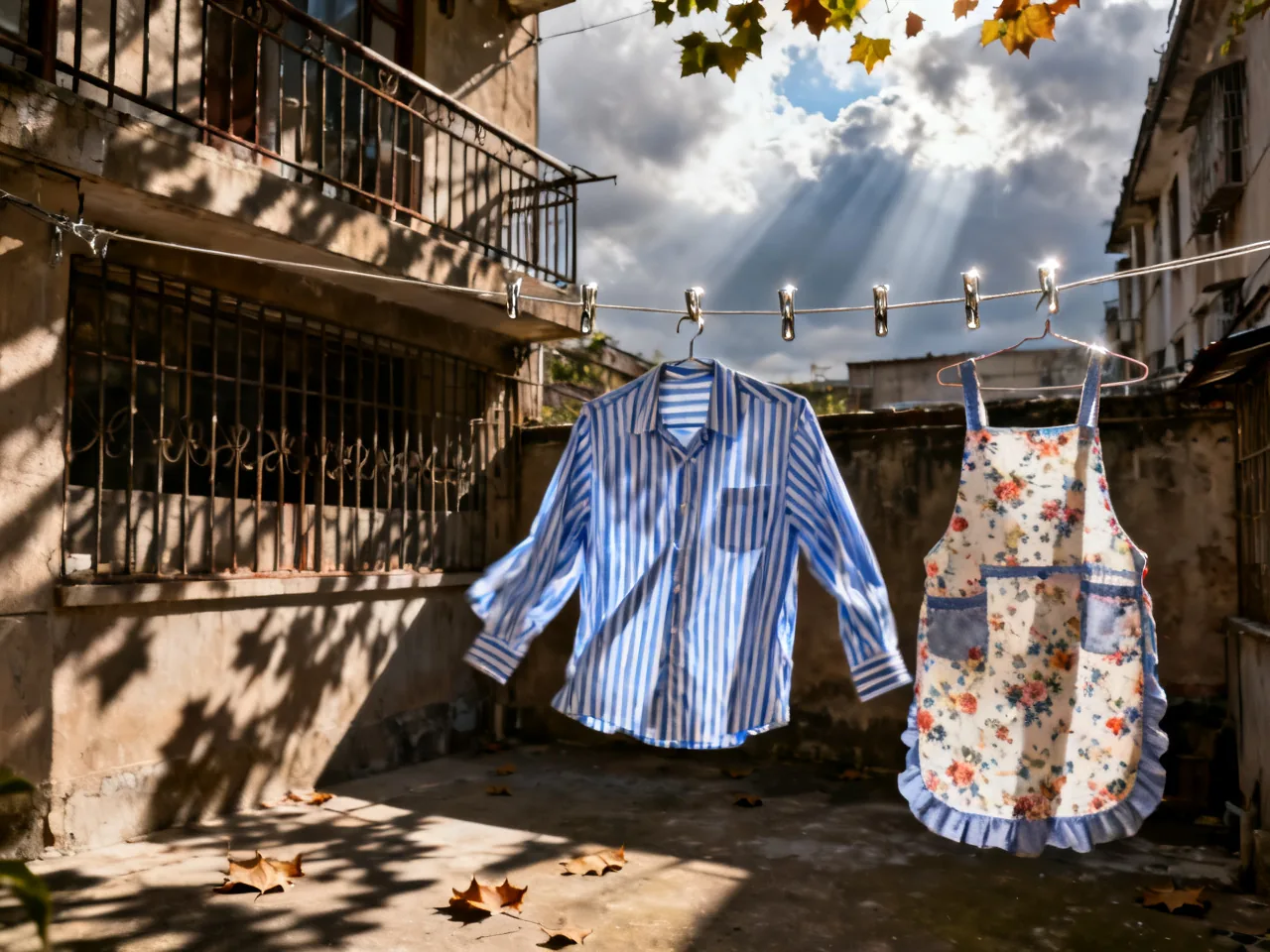
The auntie later added casually, “When this kind of wind starts, the weather can turn within ten minutes.” She said it so naturally that it did not feel like instruction at all, just an ordinary fact that anyone who had lived there long enough would know. But to me it felt like a highly specific lesson in Chinese residential life. I had relied mostly on weather apps before, assuming that seeing “cloudy” or “20 percent chance of rain” on my phone was enough. But life in an old compound taught me that weather does not always arrive first as numbers or icons. Often it appears first in the strength of movement on a laundry line, first in the frequency with which the auntie across the building leans out to look, first in the small synchronized sounds of several households sliding their balcony windows shut. People who have lived there for years seem to remember the local wind and clouds with their bodies.
I also gradually noticed that hanging laundry here followed an invisible neighborhood rhythm. Once the sun came out in the morning, clothes of different colors began appearing one after another in the courtyard, like daily life itself hung up in pieces. Some people prefer to wash early and fill the lines before noon. Some do it in the afternoon, using the final stretch of wind before evening. And once the weather grows unstable, the act of collecting laundry spreads from household to household like ripples. One person starts bringing things in, another calls down from upstairs, someone else hands out a bamboo pole to an elderly family member. All of this made me feel that being neighbors does not always require sitting down for long conversations. Sometimes it exists simply through these repeated small actions by which people know when to remind one another and when to lend a hand.
This also corrected a very common misunderstanding of mine. I used to think hanging laundry was simply a private choice, at most reflecting whose detergent smelled better or who was more diligent. But in many old residential compounds in China, it is also a form of adaptation to a shared micro-environment. You need to know when drying clothes might block a path people often use, when dripping water might fall onto the windowsill below, when the wind is strong enough to require firmer clips, and when the sky changes quickly enough that delay is a bad idea. No one holds a meeting to explain these rules, yet everyone practices them day after day. To an outsider, the first thing visible may be only clothes moving in the wind. But if you watch for long enough, you realize that what is really being aired out is not just laundry. It is a whole body of experience about living in shared space.
Later, when I hung up my own laundry again, I no longer relied only on the weather icon on my phone. I would first open the window to feel the wind, look to see whether other households had already taken down heavier sheets, and listen to whether the leaves sounded more urgent than usual. If I noticed the auntie next door starting to collect her laundry at noon, I would almost immediately check my own balcony too. Strangely, this did not make me feel controlled by neighborhood rhythm. It made me feel that I was finally moving in sync with the place. Before, I had merely been living there. Now I was beginning to read its weather, and little by little, its people as well.
Following the same way of reading a scene, [中国生活里的天气感] and 在中国社区里慢慢找到节奏 also reinforce this habit from other angles.
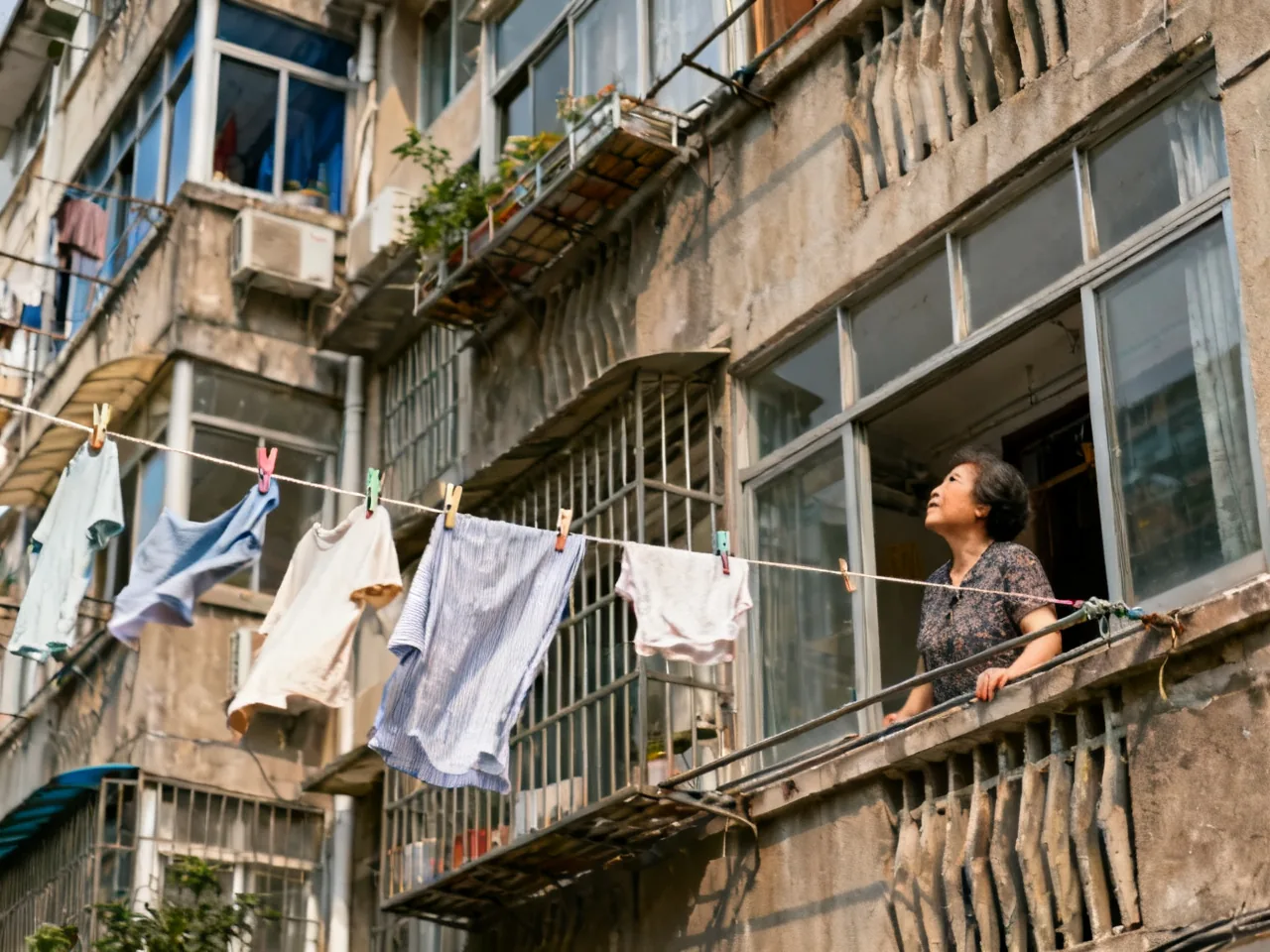
Now, if someone asks me what kind of everyday knowledge is easiest to underestimate in an old Chinese residential compound, I would probably say it is the quiet understanding beneath the laundry lines about weather and neighbors. It looks too ordinary to deserve special attention. But precisely because it is ordinary, it reveals a very real kind of residential experience: life cannot be organized only behind your own closed door. You also have to learn to cast your attention slightly outward—to the sky, to other people, to the direction of the wind. The auntie who warned me to bring in my clothes did not do anything dramatic, yet that one shout fixed something in my memory. In many older communities in China, what we call neighborliness does not always appear as warm chatter or obvious friendliness. More often, it appears when rain is coming and someone is willing to see it for you a few minutes earlier.