南京の朝食屋台の前の行列が、私に初めて都市の朝を理解させてくれた
On my first morning in Nanjing, I did not rush to the city wall or hurry toward a museum. The sky was still gray-blue, the plane trees looked half awake under the lamps, and steam had already risen from a breakfast stall. What stopped me was not the signboard but the line: office workers, scooter riders, grandparents, students, and parents all standing with a calm sense of placement, as if the morning had assigned each person a quiet role.
It was a modest stall selling duck-oil sesame pastries and hot soy milk. The couple running it had a rhythm of their own: he turned the trays and watched the heat, while she took payment, packed orders, and gently reminded newcomers not to block the neighboring doorway. The line was not intimidating, but it never disappeared. People near the front prepared coins or phones in advance, and those who received their food stepped aside quickly. Order in a city was not printed on a notice; it was rehearsed through small gestures.
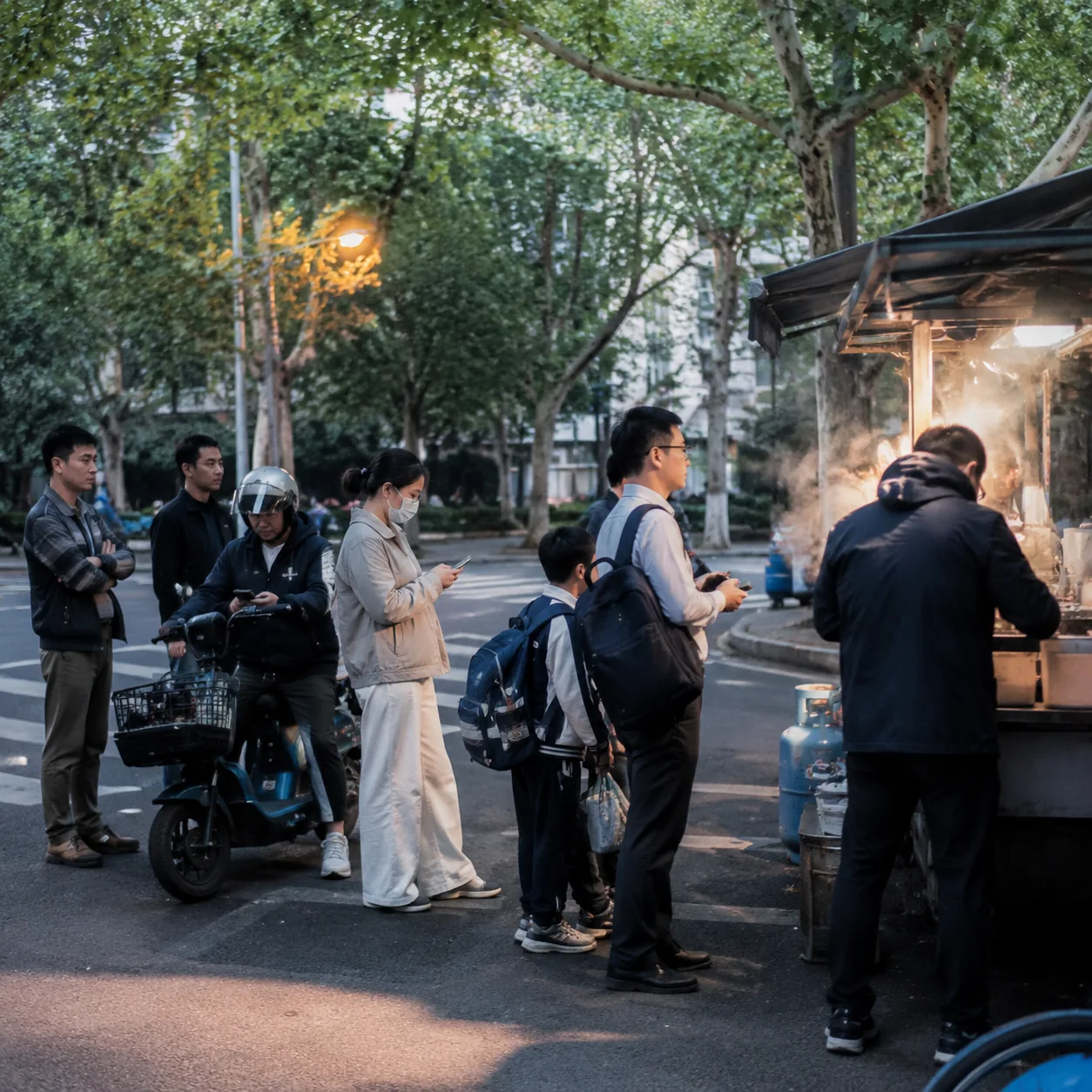
I had assumed that breakfast on a trip was only fuel: eat, leave, and choose whatever was cheap, fast, and close to the hotel. That morning changed the scale of my attention. A few minutes in front of a stall explained the city better than many viewpoints. Who was impatient, who waited, who made room, who carried away an extra order for someone familiar—none of this came with commentary, yet it revealed the density of local life. Nanjing’s morning opened not through monuments, but through hot pastry, soy milk, and a line that kept moving.
The most revealing part of the queue was its silence. People did not turn waiting into complaint. A young man in a shirt checked his watch twice but did not push. A woman stepped back a little when an older customer needed more time to take the bag. A delivery rider answered a call with a soft “almost there” and lowered his voice. The restraint did not feel cold; it felt like a way of giving space. The sidewalk was narrow, yet the city seemed wider because people observed a shared margin.
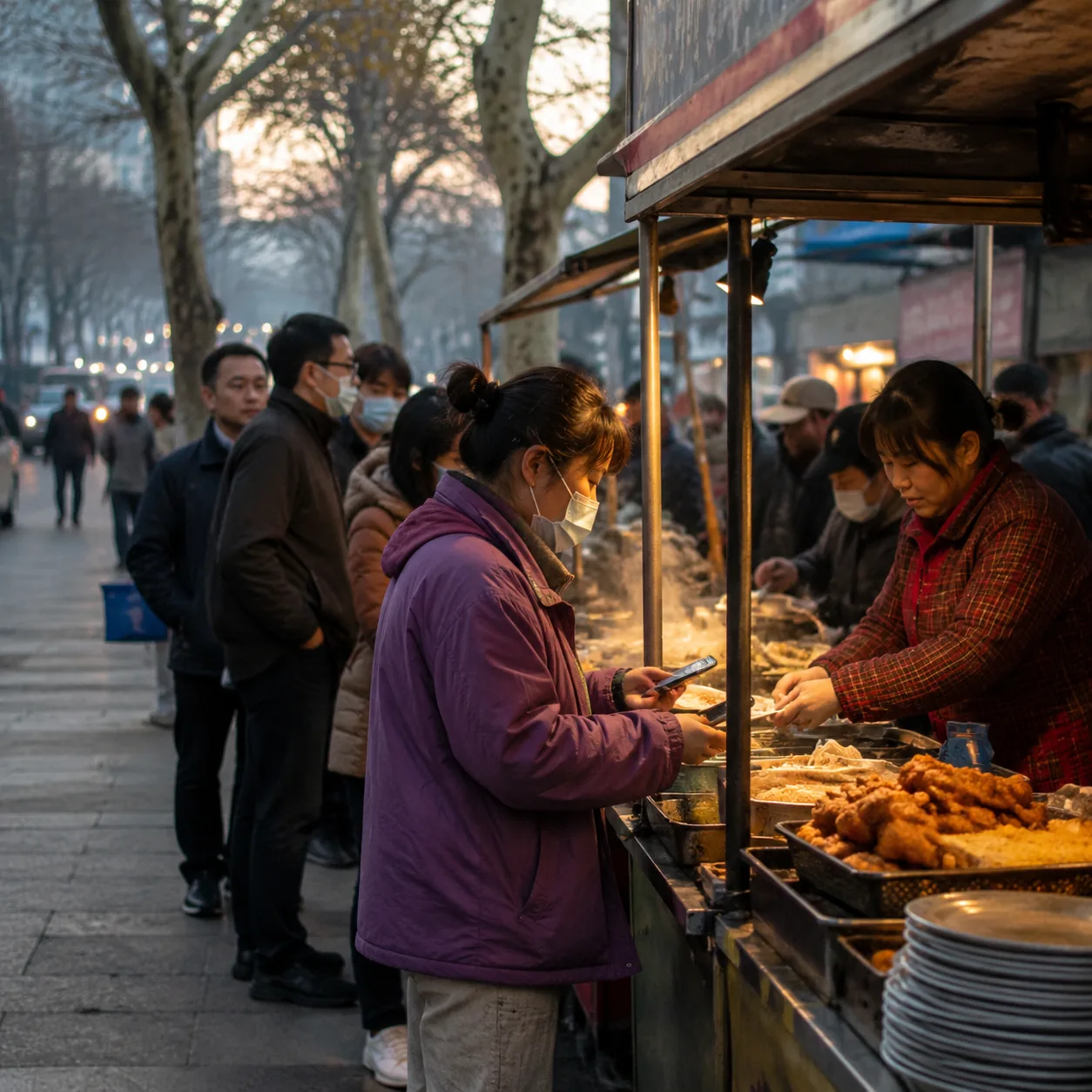
Standing at the back, I began to learn the rules of the line. Watch what others ordered before deciding whether to add a marinated egg. Open the payment page before reaching the counter. Do not inspect the bag in front of the stall; move toward the tree and organize there. Travelers often enter a city with location-based questions: where to eat, where to take photos, what is worth seeing. Yet a city often answers first with rhythm rather than address. If you observe for half a beat, you avoid many awkward intrusions.
When my turn came, I ordered one duck-oil pastry and a cup of soy milk. The vendor did not ask where I was from or comment on my hesitation. She slipped the pastry into a paper bag and said simply, “Careful, it’s hot.” The sentence was ordinary, but it made me feel temporarily admitted into the morning’s cycle: line up, order, pay, step aside, eat while walking. Travel does not always need special treatment. Sometimes the privilege is completing a daily local action without disrupting it.
I ate while walking and understood why many people bought two or three. The pastry shattered easily at the edges, the duck oil carried a gentle richness, and the heat seeped through the paper bag. The soy milk was not overly sweet; it simply settled the stomach. These foods did not exist to astonish visitors. They prepared people for work, school, errands, and movement. Their appeal was not dramatic. It came from being timely, reliable, and present every day.
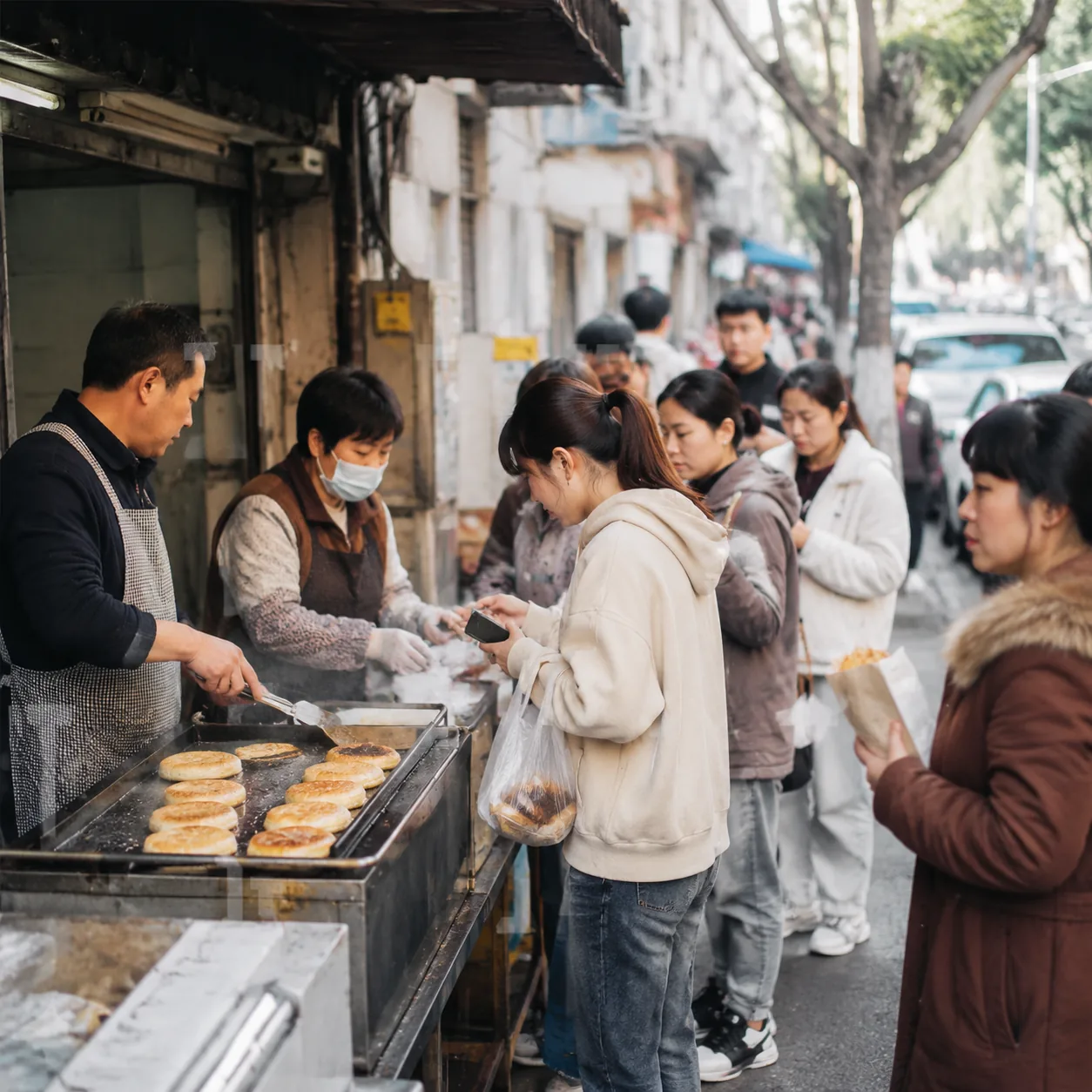
I walked the street again and realized the stall was not an isolated scene. A shoe-repair shop had just lifted its shutter, a fruit store was setting out the first basket of oranges, and someone at the bus stop split a pastry in half for a companion. Morning unfolded like a map, and the stall was one node on it. It connected home kitchens, commute routes, school gates, and office elevators. A person’s breakfast path often traced the radius of that person’s urban life.
That experience changed how I arranged the rest of my time in Nanjing. I stopped filling every early hour with attractions and left room for purposeless street watching. Confucius Temple could wait, Xuanwu Lake could wait until the sun rose higher, and Laomendong did not need to be reached before the shops opened. Watching a street wake up often helped me understand the later landmarks with more gentleness. Sights displayed the city’s memory; breakfast showed how the city kept functioning.
If you want to read Nanjing through breakfast, I would not begin only with the most famous shop names. Choose a commuting street near your lodging, go out a little early, and watch from a place that does not block traffic for ten minutes. Notice how fast the line moves, how the vendor handles regulars and newcomers, and how many steps food takes from pan to paper bag. Once you know you will not get in the way, join the queue. The breakfast may not carry a ranking-list glow, but it will hold the temperature of the neighborhood beneath your feet.
I also learned to treat queues differently. On trips, we often consider a line a cost to avoid, shorten, or replace. In Nanjing that morning, the line itself became the content. It showed how a city distributes patience, preserves dignity in limited space, and allows strangers to share an unwritten process. Waiting is not always empty time. Sometimes it is an open-air classroom where you begin to hear the low register of a city.
After noon, Nanjing shows a more familiar travel face: tickets, restaurant numbers, metro transfers, souvenirs, and photo spots. Those things matter, but they often organize the city into consumable fragments. A breakfast stall in the morning is different. It has not yet begun to perform, and it does not care very much whether you understand it. You have to lower your posture to see it. For me, that line was a key, not to a hidden attraction, but to a method of observing the city.
Before leaving Nanjing, I returned to the stall once more. The people in line had changed, but the rhythm was almost the same. The vendor still reminded customers not to stand too far out, pastries still came one by one from the oven, and steam still clung to the soy-milk container. I did not take many photos. I kept the feeling of standing at the back: an outsider does not need to explain or possess a city immediately. Line up once, adjust your movements to the right speed, and many forms of understanding will rise slowly through the steam.