初めて一人で中国の銀行に入って、窓口より先に番号札を取ると覚えた
The first time I walked alone into a Chinese bank branch, I made a mistake that now feels almost textbook: I assumed the most efficient way to handle a task was to go straight to the counter. It was a hot afternoon outside. The moment I pushed through the glass doors, I was hit by air conditioning, number announcements, leather chairs, and a sense of order that felt formal without being tense. The lobby was quieter than I had expected. A few people were seated waiting for their turn; some looked at their phones, others held forms on their knees. As a foreigner, I had one simple thought in my head: I only needed to do a small banking task, so the fastest thing must be to find an open window and ask directly. I had taken only a couple of steps toward the counter when the lobby manager stopped me very politely.
She did not sound impatient at all. In fact, she looked like someone who had seen this exact mistake many times before. She smiled, pointed toward a machine near the entrance, and said I needed to take a number first. I followed her gesture and finally noticed the ticket machine I had completely ignored on the way in. There were clear options on it for different types of services. I felt slightly embarrassed, because in many situations I was used to, walking up to a counter and asking directly would be seen as proactive. Here, however, the truly effective move was to enter the process first. That was when I began to understand that in many formal spaces in China, taking a number and placing yourself into the system matters more than launching into your explanation immediately.
I walked over to the machine and read everything carefully. The interface was not especially complicated, but I still slowed down instinctively, worried I might press the wrong option. It was the same feeling I had in many machine-based or process-heavy situations when I first came to China: not total inability, but the fear of looking clumsy in a rhythm everyone else seemed to know already. Fortunately, the lobby manager came over, asked what I needed, and helped me confirm which option to choose. I pressed the button, and the machine printed a small ticket with a number and service category on it. Holding that slip in my hand gave me an unexpectedly solid feeling. Until that moment, I had been the person barging in. With that ticket, I became someone properly waiting within the system.
The next step was interesting too. She did not tell me to remain standing near the counter. Instead, she gestured toward the seating area and asked me to sit and wait there. At first I thought standing might be more convenient. If I heard my number, I could just move immediately. But once I actually sat down and watched the lobby operate, I realized the arrangement was not designed to make people passively wait. It was designed so that people would not keep interrupting one another. There was no anxious line of customers craning their necks near the counters. The staff did not have to keep answering, “Is it my turn?” or “Can I do this here?” Everyone took a number, sat down, watched the screen or listened for the announcement, and stood up only when called. For me as an outsider, that sense of order felt both unfamiliar and quietly instructive.
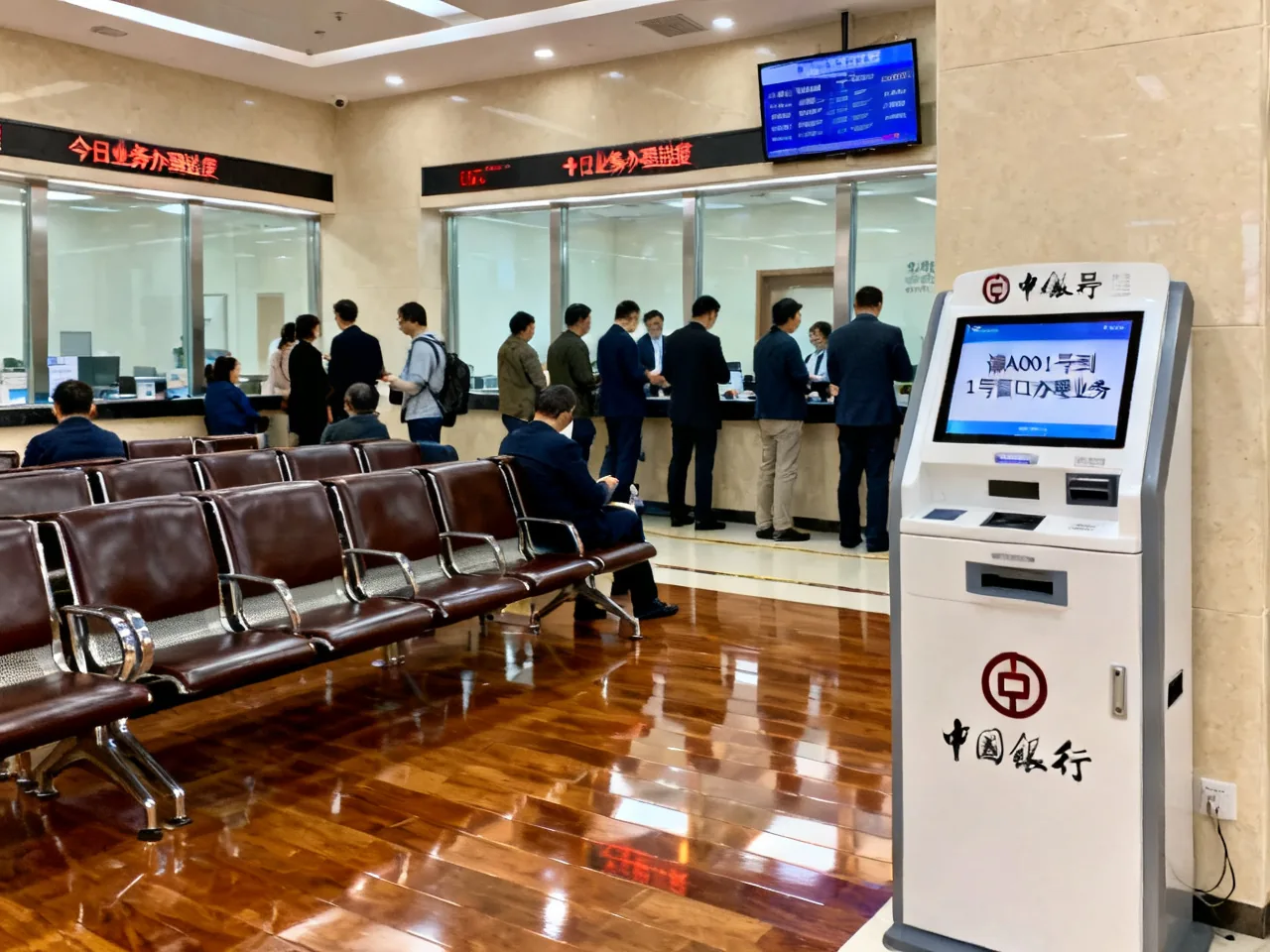
[Image 1: The bank lobby’s ticket machine and waiting area, with leather seats, an electronic display, and the number-taking kiosk in one frame.]
Once I sat down, I started observing the people around me. A young man came in, took a number without hesitation, sat down, and pulled out his phone. An older woman filled out a form first, then returned to her seat. An elderly man walked slowly toward the machine, and the lobby manager immediately stepped in to help. The whole lobby was not noisy, but it also did not feel stiff. What struck me most was that the machine did not make the service colder. In a way, it made human help more precise. Because the early steps were absorbed by the process, the staff did not have to spend all their energy repeating the same instructions over and over. They could save their attention for people who actually needed guidance, like me on my first visit, or like older customers unfamiliar with the interface. In that moment, I realized the ticket machine was not replacing human interaction. It was filtering out chaos before it could spread.
When my number was called, the announcement played and the screen lit up at the same time. I stood immediately, worried I might lose a second by reacting too slowly. At the counter, I handed over my ticket and identification, and I actually felt calmer than I had when I first entered. By that point, many uncertainties had already been removed. I did not have to worry whether I was standing in the wrong place, guessing which counter was free, or accidentally interrupting someone else’s turn. The process had already handled the parts that usually make me tense: queuing, categorization, and sequence. Once I was there, all I had to do was answer the staff member’s questions. The whole thing went more smoothly than I had expected. What really saved time was not my original urge to rush toward the counter; it was that small printed ticket.
Later, when I told a friend about the experience, he joked that I had treated the bank like a wet market. I laughed, because he was not entirely wrong. When I first came to China, I often equated being proactive with speaking first, pushing forward first, and getting physically closer to the service point. But many formal institutions in China taught me the opposite lesson: the clearer the procedure, the less you need to prove your urgency by rushing. First take a number. Then find a seat. Then wait until the system calls you. That is not passivity. It is cooperation with a shared order. Once you understand that layer, you become much more relaxed. You no longer have to keep guessing whether now is the moment to go ask someone something. You simply follow the rhythm the space has already been designed to provide.
I even started applying this lesson elsewhere. Whether I am entering a government service hall, waiting at certain hospital counters, or approaching the entrance of a popular restaurant, I now instinctively look for the “entry process” first: do I scan something, take a number, or register somewhere? This is very different from my old instincts. I used to think machines and procedures only made things more complicated, especially for foreigners who were more likely to make mistakes. But after living in China for a while, I have increasingly felt that these small, slightly mechanical steps often reduce both language pressure and social pressure for me. As long as I enter the process first, I do not have to explain everything immediately, quickly, and perfectly. I also do not risk blurting out the wrong thing at the counter because I am nervous.
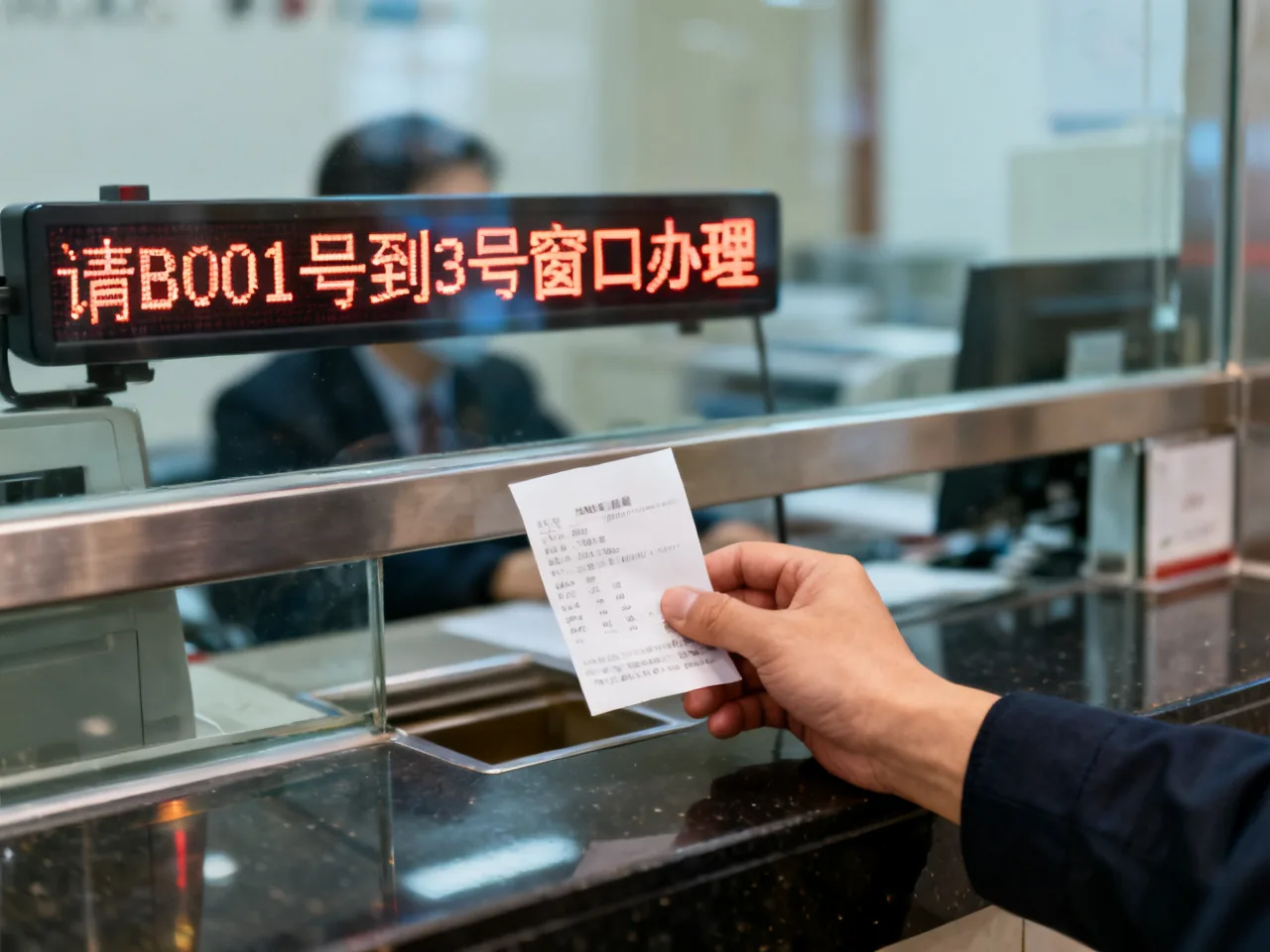
[Image 2: A close view of the service window and number ticket, with the printed slip in hand and the electronic call screen visible in the background.]