広州の一番すごいところは、自分が街を歩いているのか、それとももう一食の中に座り込んでいるのか、うまく言えないことだ
Many travel articles about cities can easily be divided into two halves: what to see by day and what to eat by night, one section for attractions and another for food. Guangzhou’s biggest difference is that this division quickly stops working. The deeper one goes into the streets, the clearer it becomes that food is not an annotation beside the route. It is one of the route’s central materials. The way people pause under arcade streets, the way smells expand near markets, the way teahouse voices slow the morning, and the way late-night stalls gather the day back in—these are not just dining details. They are part of Guangzhou’s urban grammar.
If foreign creators film Guangzhou simply as a place where everything tastes good, then they have caught only the shallowest layer. What makes a city stand firmly is not good food by itself, but how those eating habits reshape the traveler’s understanding of space. The street changes once one sits down. Crowd movement changes once one stands at a doorway eating and watching. Even the sense of time changes when one waits for a bowl of soup or a basket of dim sum. Guangzhou is powerful because eating and walking keep modifying one another instead of waiting politely in sequence.
When a City Stops Being Merely Edible and Becomes Readable
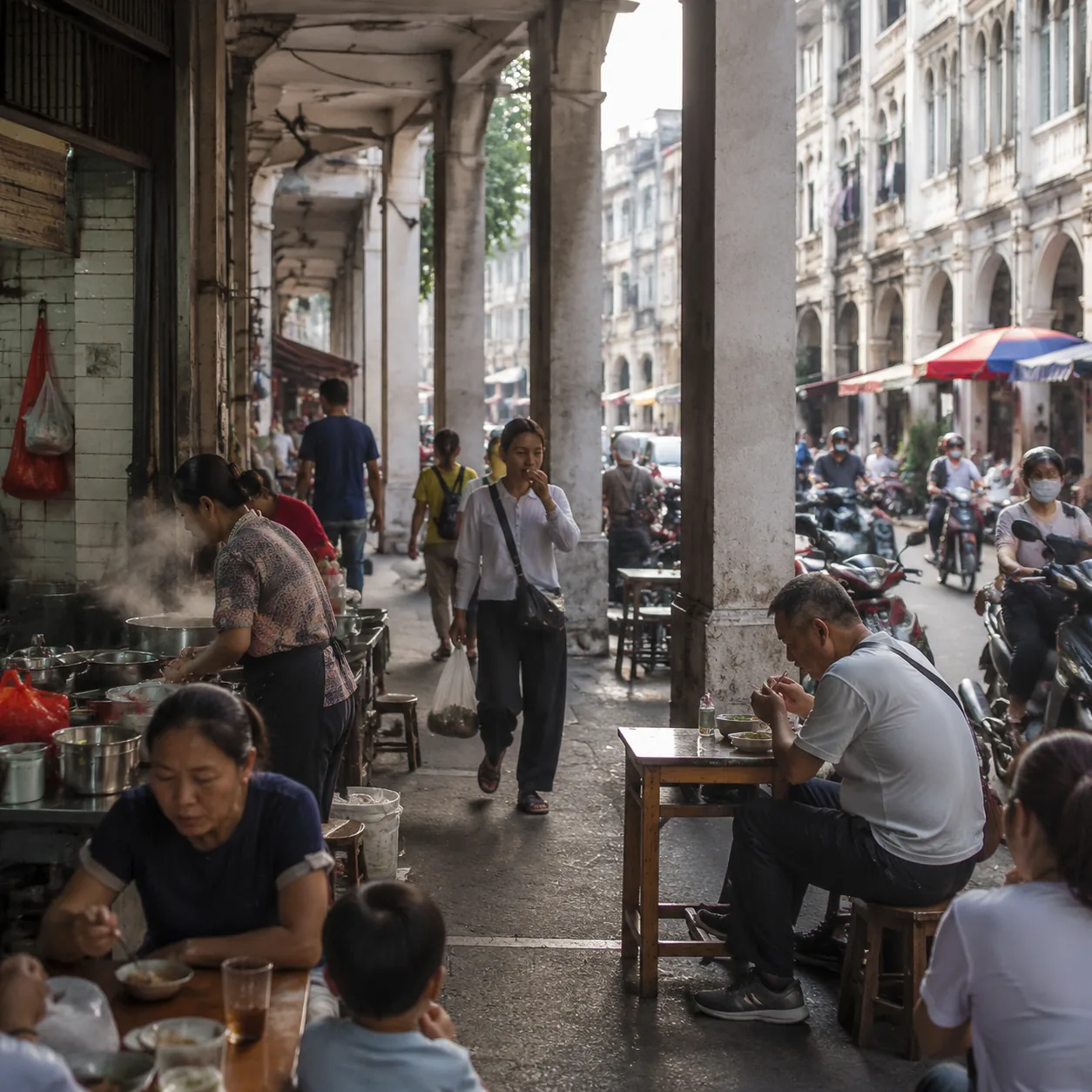
What makes Guangzhou interesting is that it does not allow taste to remain isolated. Flavor certainly stays in memory, but what settles even deeper is that one remembers flavor together with the street, the weather, the humidity, the tabletop, the noise, and the speed of passersby. That means the traveler is not remembering a meal in isolation. They are remembering a meal completed under a specific urban condition. If foreign creators capture this linkage, Travel Notes’s job is not to add longer lists of dishes. It is to explain how a city becomes readable through eating.
This readability matters especially for first-time visitors to China. Many newcomers are most afraid of failing to read density, failing to read order, and failing to understand why people stop in one place or bunch up in another. Guangzhou often softens these fears through one meal, one teahouse, or one turn beneath an arcade. One first learns the rhythm at the table, and only afterward becomes able to follow the rhythm of the street.
Guangzhou’s Route Value Often Lies Not in a Single Peak, but in Constant Reconnection
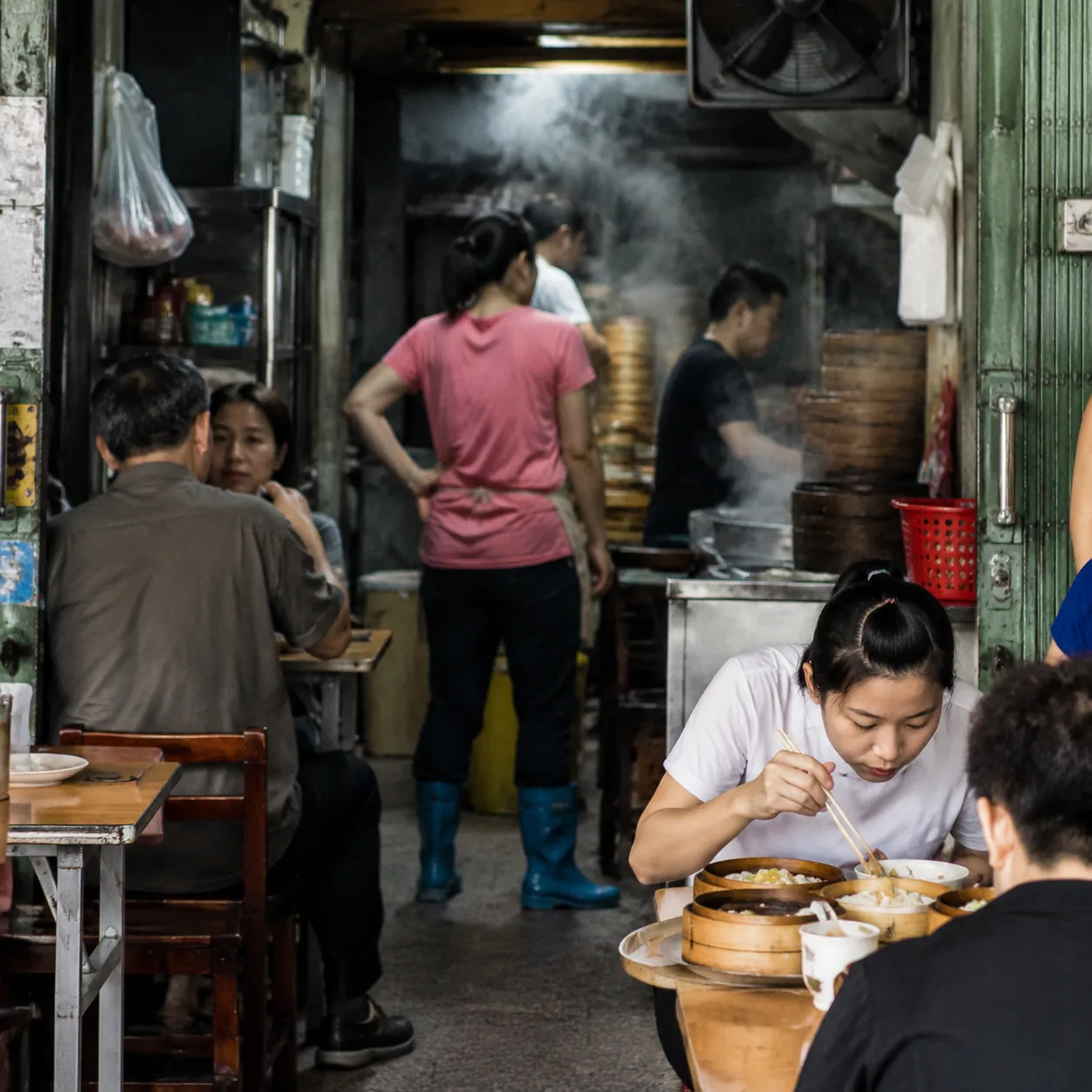
Many cities offer one obvious peak: the best skyline, the loudest landmark, or the most photographable point. Guangzhou does not work entirely that way. Its real strength is the natural reconnection of one segment to the next. The route does not break after a meal, nor does it go empty after a walk. Streets from the daytime echo again at night, and the morning tea atmosphere quietly predicts the noon crowd to come. For the traveler, that means Guangzhou does not require constant searching for the next more worthy stop. It says something else instead: if you keep moving with patience, the line will keep extending itself.
That is exactly why Guangzhou is especially suited to a retrospective format. When reviewing a city, the most important task is not to list separately what tasted best and what looked best. It is to look back and ask what prevented the day from falling apart. In Guangzhou, the answer is rarely one single point. It is more often a chain of small reconnections. Because they are not dramatic, they are easy to underestimate. Because they are constant, they are what make the route hold together.
What Often Remains in the End Is Not Only What One Ate, but the Feeling of Understanding a Little More of How the City Works
Many travel experiences eventually collapse into a list of items. Guangzhou more often leaves behind another kind of memory: I understand a little more of how it moves. I know when to sit first and when to continue to the next street. I know when not to search immediately for the most famous bite, but to watch first how the street organizes people on its own. I know that some cities must be entered through grand views, while Guangzhou asks to be entered through the ordinary places that keep receiving the traveler layer after layer. Once that understanding grows, affection for Guangzhou stops being only a matter of taste and becomes a steadier form of trust.
What Best Suits Retrospective Writing Is Not Which Bite Was Greatest, but Which Pause Was Most Correct
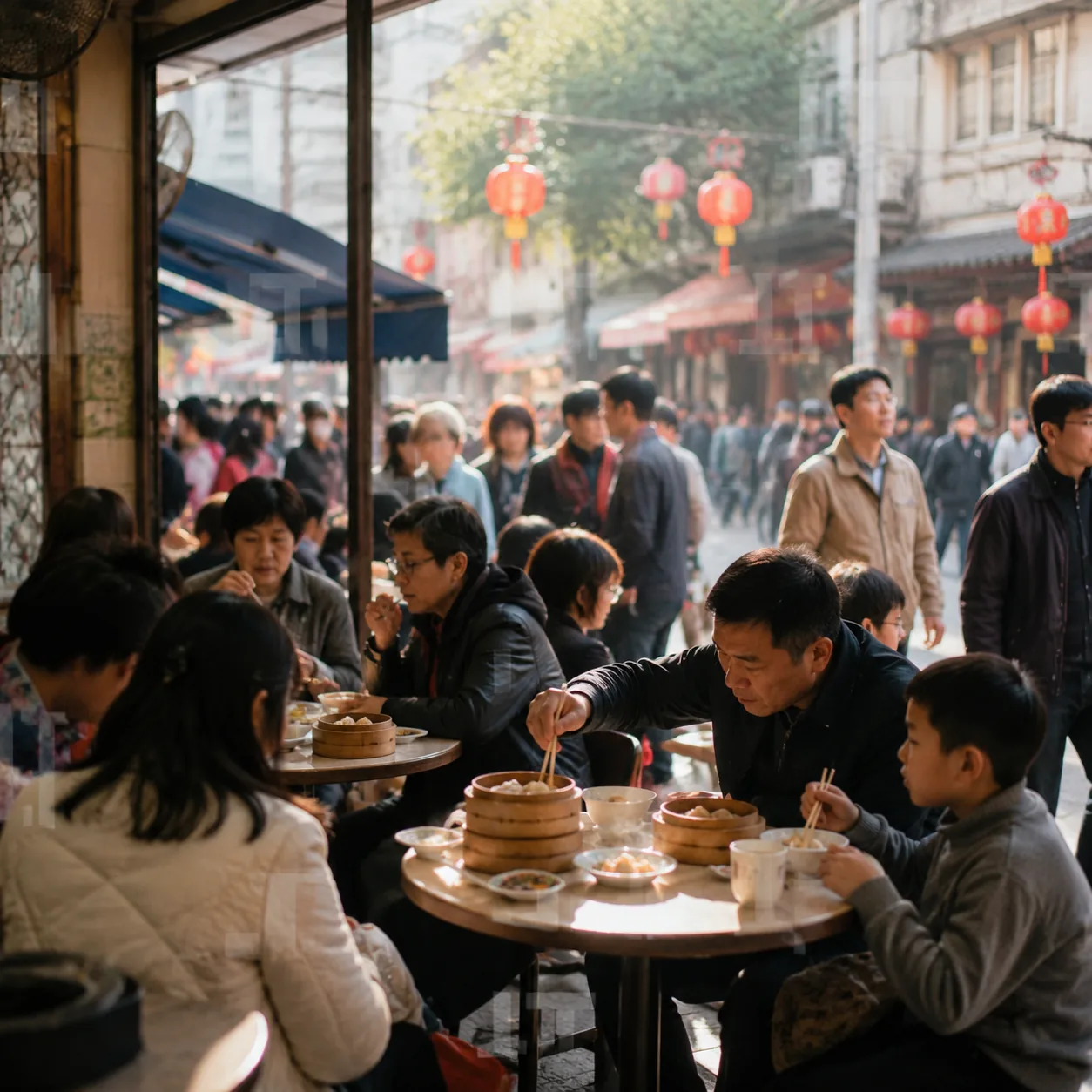
If Guangzhou is written as a retrospective, what deserves the strongest second look is often not which restaurant was the most famous, but which pause during the day mattered most. Perhaps one morning tea service steadied the entire first half of the day. Perhaps one hot bowl pulled the irritation out of the afternoon. Perhaps one late-night meal suddenly connected all the streets, lights, and crowd rhythms that came before it. For an ordinary reader, this judgment about the right pause is more valuable than a list of a hundred restaurant names, because it does not determine one meal alone. It determines whether the whole city begins to feel smoother underfoot.
What Guangzhou May Finally Teach Is Not Only How to Eat, but How to Steady Oneself Inside a Busy City
What Guangzhou may teach in the end is not only how to eat, but how to steady oneself inside a busy city. Many first-time visitors to China fear the moment when a large city rushes toward them all at once. Guangzhou’s strength is that although it is busy, it breaks that busyness into small pieces the traveler can catch through one meal after another, one arcade stretch after another, and one ordinary street after another. One does not need to defeat the city immediately. One only needs to find the first moment to sit down, the first moment to read the crowd, and the first moment to realize that the city is using food to lead the route forward. Once that happens, Guangzhou stops being only a famous food city and becomes a city the traveler has begun to read.