中国を特撮映画のように撮るクリエイターたちの真髄は、衝撃の間に余白を残すことにある
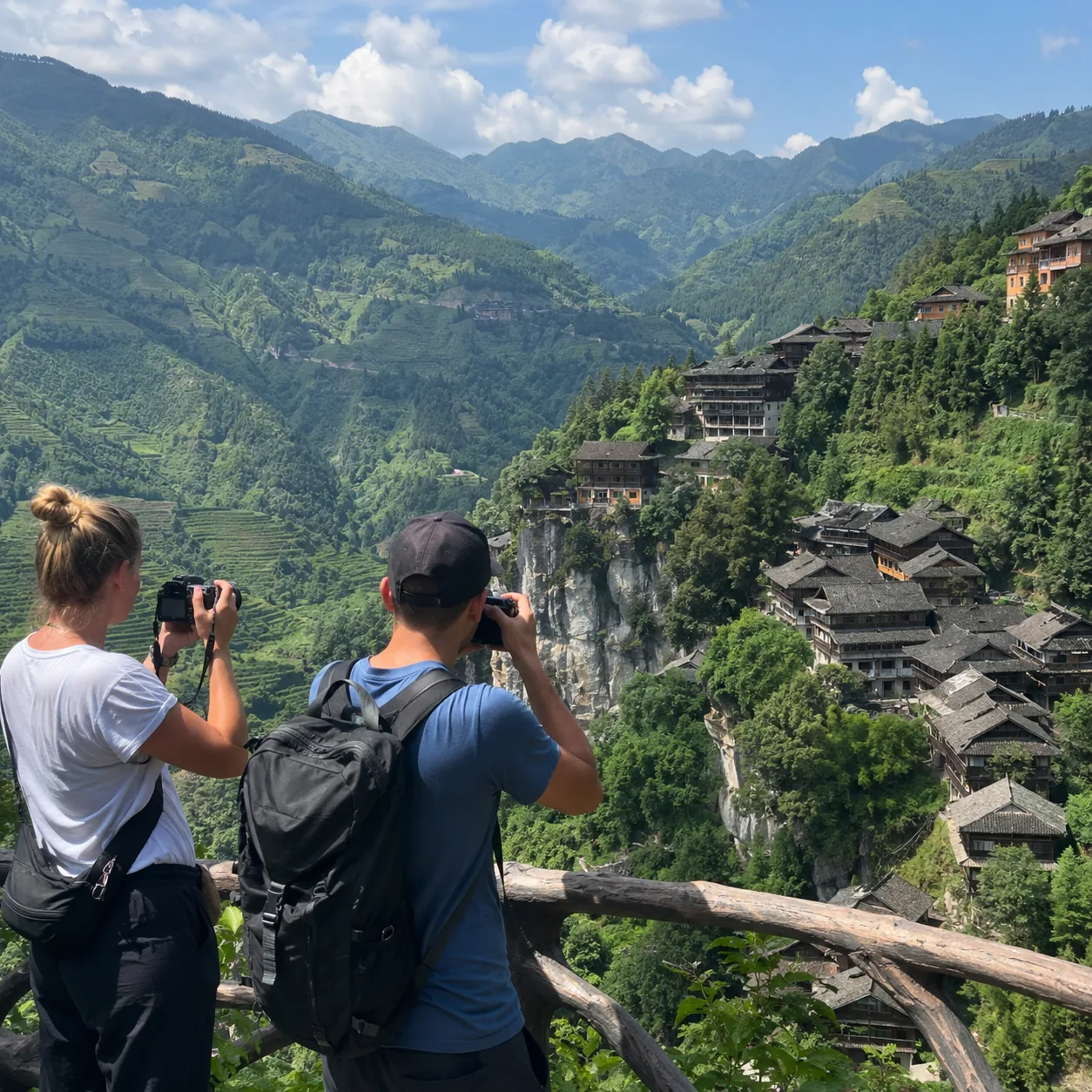
In recent years, when major foreign travel channels like Kara and Nate—known for testing dramatic places around the world—turn their cameras toward China, the clips most often extracted and reshared are the scenes that look almost artificial: fairy-tale villages, suspended mountain landscapes, adrenaline-heavy viewpoints, and spaces that seem unreal at first glance. But if their public China video is read as a full route rather than a string of high-energy edits, what becomes worth studying is not the wonders alone. It is the way those wonders are arranged into a trip that keeps escalating while still knowing when to breathe.
If Travel Notes merely repeats that “they found China unbelievable,” the value remains limited. The real value lies in extracting route logic from that public material: why they did not compress every explosive scene into the same block of time, why some places work better as the route’s dramatic peaks, and why others function more like emotional and physical buffers. For readers preparing to come to China, that kind of breakdown is far more useful than simple amazement.
Why a Kara and Nate Style Video Works So Well for China Route Analysis
The public title alone already shows how Kara and Nate tend to handle China: not by digging deeply into one city, but by compressing several places that look almost unreal into the same narrative journey. This structure goes viral because viewers keep asking whether the next stop can become even more surprising. Yet it becomes useful for China travel analysis precisely because China works extremely well with this layered escalation—from mountains and water to villages, spatial experiences, and even modes of rest, each stop can lift the emotional register slightly above the previous one.
The benefit of this route design is that it avoids flattening China into a broad tourist platter. It helps viewers realize that China is not merely a country with many attractions, but one where different categories of landscape carry different narrative functions. Some places deliver the first visual jolt. Some stretch the viewer’s disbelief even further. Others arrive precisely when the emotional line is close to overfilling and provide an unexpected release. The better a creator is at cutting journeys, the more clearly this pattern appears.
What They Truly Bring to Life Is Not Just Wonder, but Escalation
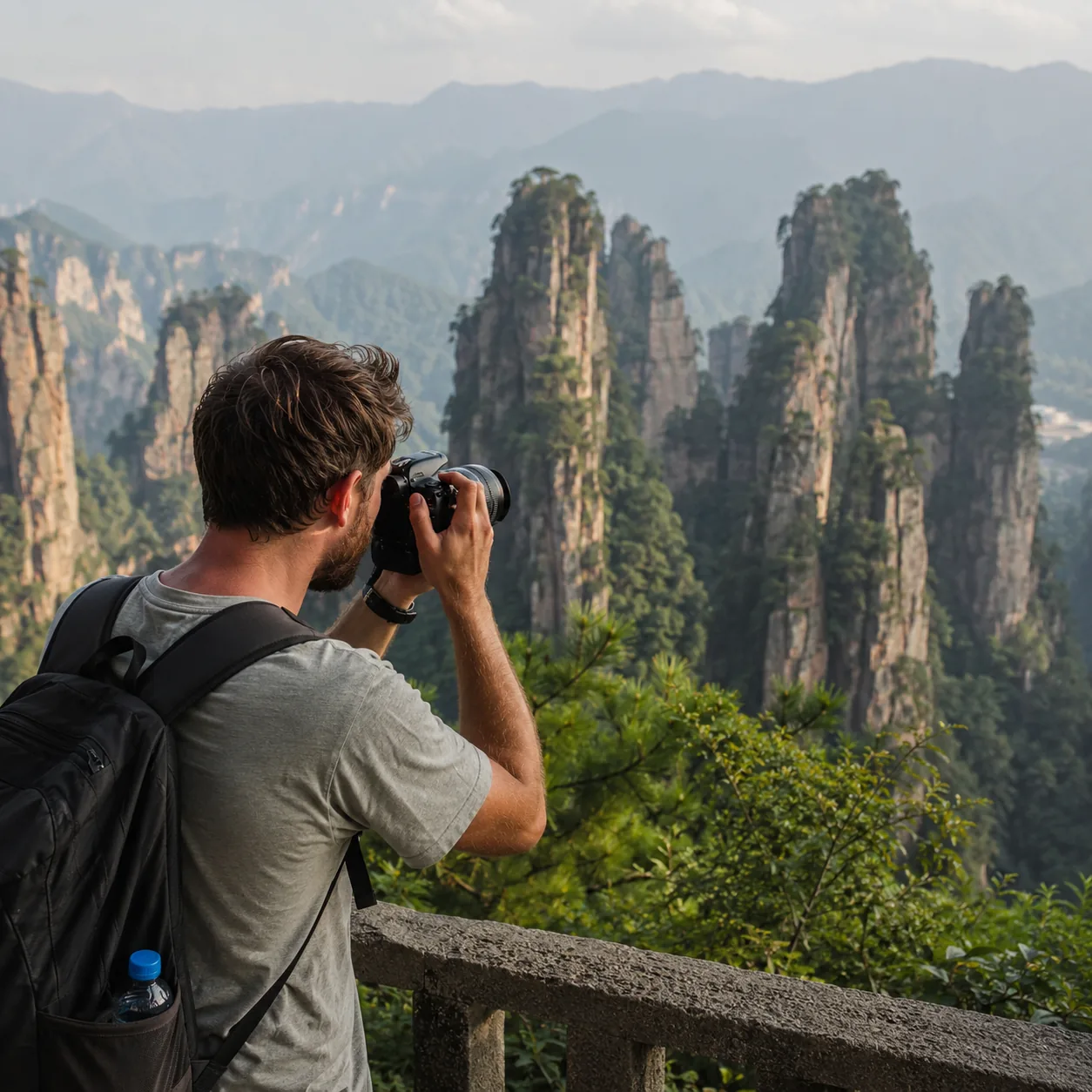
For this kind of video, the crucial element is not fame but sequence. Once viewers have seen one place dramatic enough on its own, attention fades quickly if the next stop is merely the same spectacle in another outfit. But when the next stop changes the texture, scale, bodily sensation, or spatial logic, the audience keeps moving with the route. China suits this structure unusually well because a single line can switch rapidly between mountain verticality, moving water, village stillness, and the engineered thrill of scenic infrastructure.
From a third-person reporting angle, this matters more than the fact that “they praised China.” It tells Travel Notes something operational: the best way to convert these places into a guide is not to list them all in one breath, but to explain what belongs first, what belongs second, and what should serve as a recovery point in the line. China’s strength is not always absolute dominance at the single-site level. Very often, its strength becomes larger after the route is connected.
The Layer Viewers Most Easily Miss Is Whether the Body Can Survive the Line
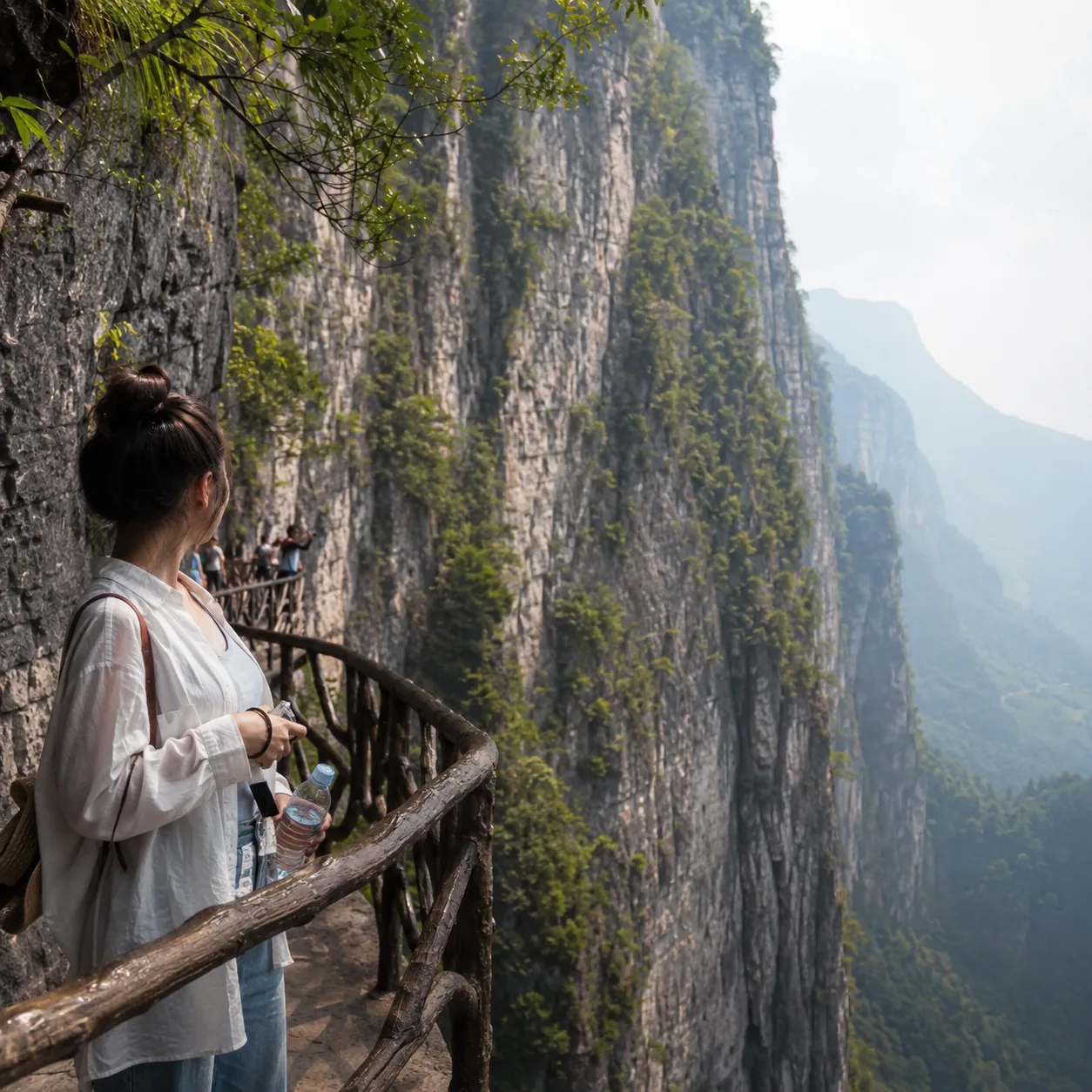
Major foreign creator videos come with one natural advantage and one natural risk. Their advantage is the ability to turn travel into a chain of peaks. Their risk is that viewers may assume they should reproduce that intensity exactly. But in a country like China, where wonder density can be unusually high, compressing every peak too tightly causes the body to fail first and judgment to weaken soon after. From a site-operations perspective, this is the layer the writer most wants to add back in: which sites deserve one full day by themselves, which require a half-day buffer, and which experience-heavy activities should never share an afternoon with long transfers.
So if a foreign creator video is to be turned into something genuinely useful for Travel Notes, the key is not to repeat the list of places they visited. The key is to explain why the line itself works. That usually includes changing landscape types, changing movement styles, and changing emotional tempo. Only then does the article read like reporting and become a guide once it touches the ground.
The Most Interesting Next Step for This Kind of China Wonder Route
What the writer most hopes to see next is not simply another foreign creator finding an even more unreal-looking place in China. It is a more mature handling of China wonder routes—one that includes pauses as well as surprise, walking as well as wide views, transfers and dinner as well as spectacle. What actually moves a viewer from passive fascination to wanting to book a trip is not one second of visual shock. It is the sense that the whole line looks walkable and worth walking.
If public creator content continues to move in this direction, its value for Travel Notes will only grow. The site can naturally build two levels of content on top of it: one that explains why a foreign creator’s China route went viral, and another that shows ordinary travelers how to walk the same logic more steadily. The first level catches attention. The second level converts that attention into real travel judgment.
Public Source Notes
- Kara and Nate, “We Visited Unbelievable Places in China (that actually exist)”
Public source used:
- Kara and Nate, “We Visited Unbelievable Places in China (that actually exist)”
- Only a very limited amount of public cover imagery is used for explanatory reporting, not for wholesale reproduction.