どうやって自分を“半分中国人”に鍛え上げたか——行列、道聞きから食卓のリズムまでの溶け込みノート
Lead
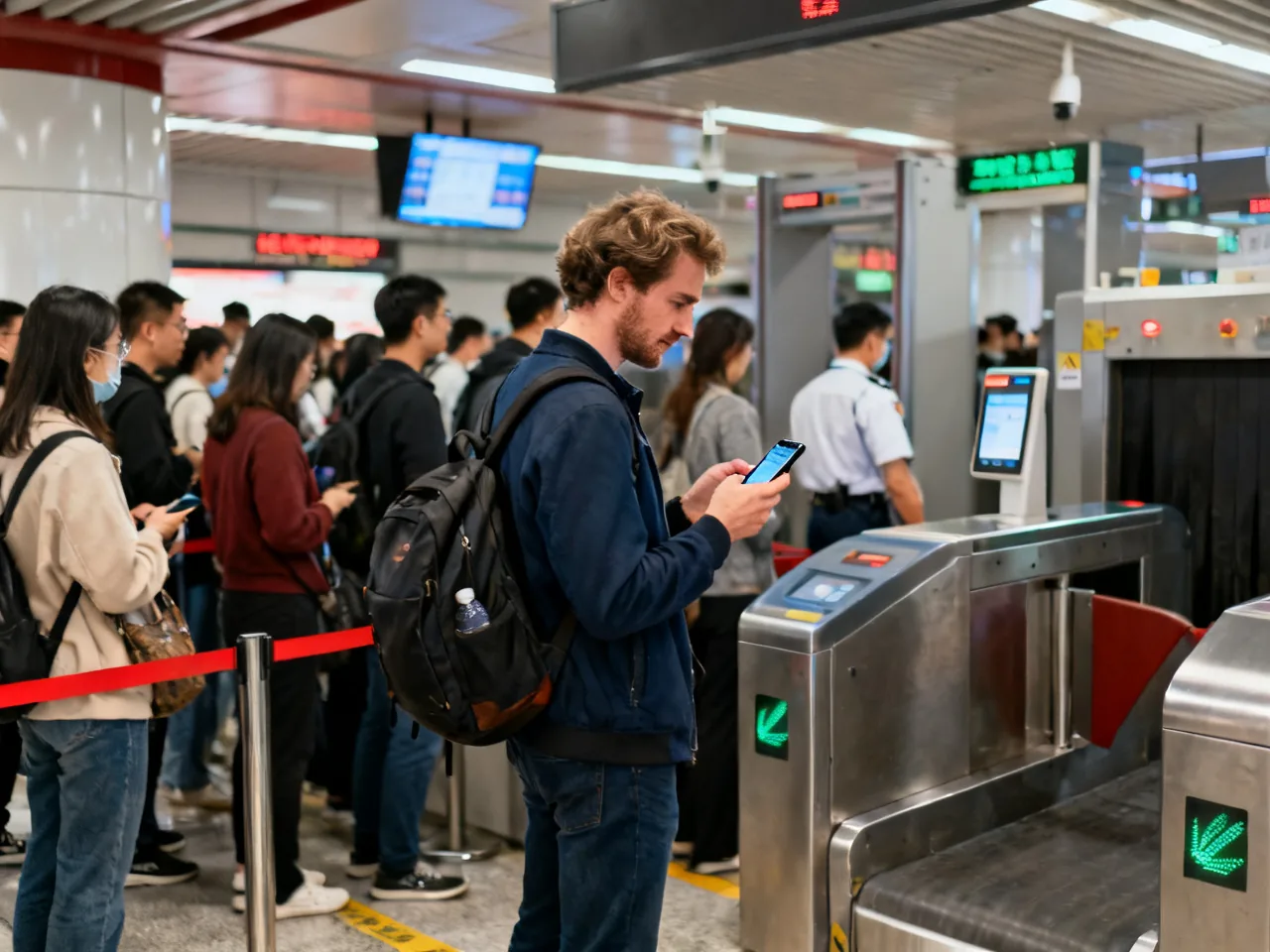
It was 7:40 on a Tuesday morning, and I was standing in front of the security check at a Shanghai metro station, phone in my left hand, backpack on one shoulder, water bottle stuck in the side pocket. The people behind me had already shifted forward by half a step in that smooth, wordless way city commuters do. When I first arrived in China, I thought “blending in” was mainly about language. If I could say hello, thank you, and how much, I thought I had crossed the threshold. Later I realized what made me look less like a visitor was not vocabulary. It was rhythm. My body had to learn when to step aside, when to move forward, when to let others finish, and when not to refuse kindness too quickly.
Of course I am still visibly foreign. People can tell the moment I turn my face or open my mouth. But at some point I noticed something had changed: I no longer froze at the entrance of breakfast shops, no longer blocked people on platforms, and no longer rushed to say “no, no, you first” at every table. The change was subtle but real. And the safety I began to feel in China did not come from slogans or grand narratives. It came from order, boundaries, and the tiny daily acts of mutual coordination.
If you also think that “fitting into China” mainly means speaking a bit of Chinese, I want to offer my own learning log as a counterexample: often, learning to observe matters more than learning to perform. For high-frequency transport scenes, I had already learned from 外国人在中国用高铁. And when it came to understanding commuter rhythm, I kept thinking about the idea in 中国城市通勤怎么选: do not move against the flow unless you have to. This article is the version of those principles that finally entered my muscles.
Lesson One: Learn to Read a Queue Before Trying to Perform Good Queueing
The first mistake I made during morning rush hour in China was not cutting in line. It was hesitating. I stopped for one second at the entrance to confirm where security was, where the scan gate was, and which direction I should go. The crowd behind me simply flowed around me like water. Nobody yelled. Nobody scolded me. But I instantly felt like a stone placed in the wrong part of a stream.
Later, during a three-week period when I had to go to the same office district every day, I began leaving ten minutes early on purpose just to observe. Where did the guard usually stand? Did people take out their phones before security or after it? Did they keep backpacks on or take them down in advance? I slowly realized that queues in many Chinese cities look fast not because people are frantic, but because most people already know the next move.
So I gave myself my first practice action: when there are still three people in front of me, prepare the item I’ll need next. It sounds tiny, but the effect was dramatic. Brighten the code on my phone before I reach the scanner. Don’t fumble with a zipper only when I am at the machine. Hold the bottle securely. After passing the gate, take two extra steps forward instead of stopping there. The goal is not to look professional. The goal is not to borrow time from other people’s rhythm.
Lesson Two: Boundaries in Public Space Are Often Written in Footsteps and Pauses
In the European cities where I used to live, I was used to walking while daydreaming, speeding up and slowing down without much consequence. But in Chinese megacities—especially in transfer corridors, escalator exits, and shopping mall entrances—boundary awareness is a form of collective tacit agreement. You can be slow, but be slow at the side. You can stop, but stop where you do not interrupt the current.
Once at Hangzhou East Railway Station, I stopped the moment I stepped off an escalator because I hadn’t fully heard a voice message from a friend. A middle-aged woman behind me did not bump into me. She simply said softly, “A little forward, please.” In that moment I understood something: a lot of order in China is not maintained by dramatic confrontation, but by shared expectations—that exits should clear quickly, entrances should flow smoothly, and corners should remain visible.
That led to my second practice action: whenever I need to stop, I first move my body aside, and only then look down. In other words, step to the edge before checking the map, answering messages, or untangling earphones. This tiny habit saved me many times. It did more than prevent obstruction. It reduced panic. Once you are at the edge, your mind also shifts from “the crowd is pushing me” to “I have room to assess.”
Lesson Three: Asking Directions Is Not Only About the Route, but About Where to Place Yourself
When I first came to China, my way of asking for directions was thorough and ineffective. I would step in front of someone and say a whole paragraph: “Hello, excuse me, how should I get to this address, should I take which metro line and transfer at which station?” The other person would either freeze for a second or start gesturing so much that I became more confused with every sentence.
Eventually I learned to split the question into two layers. The first layer asks only the smallest possible thing: “Which side is the metro entrance?” “Should I go left or right?” “Is this platform for People’s Square?” First orient the body, then complete the route. Chinese cities carry too much information at once—maps, signs, crowds, levels, exits. If you demand the entire answer at the beginning, you often end up more overwhelmed.
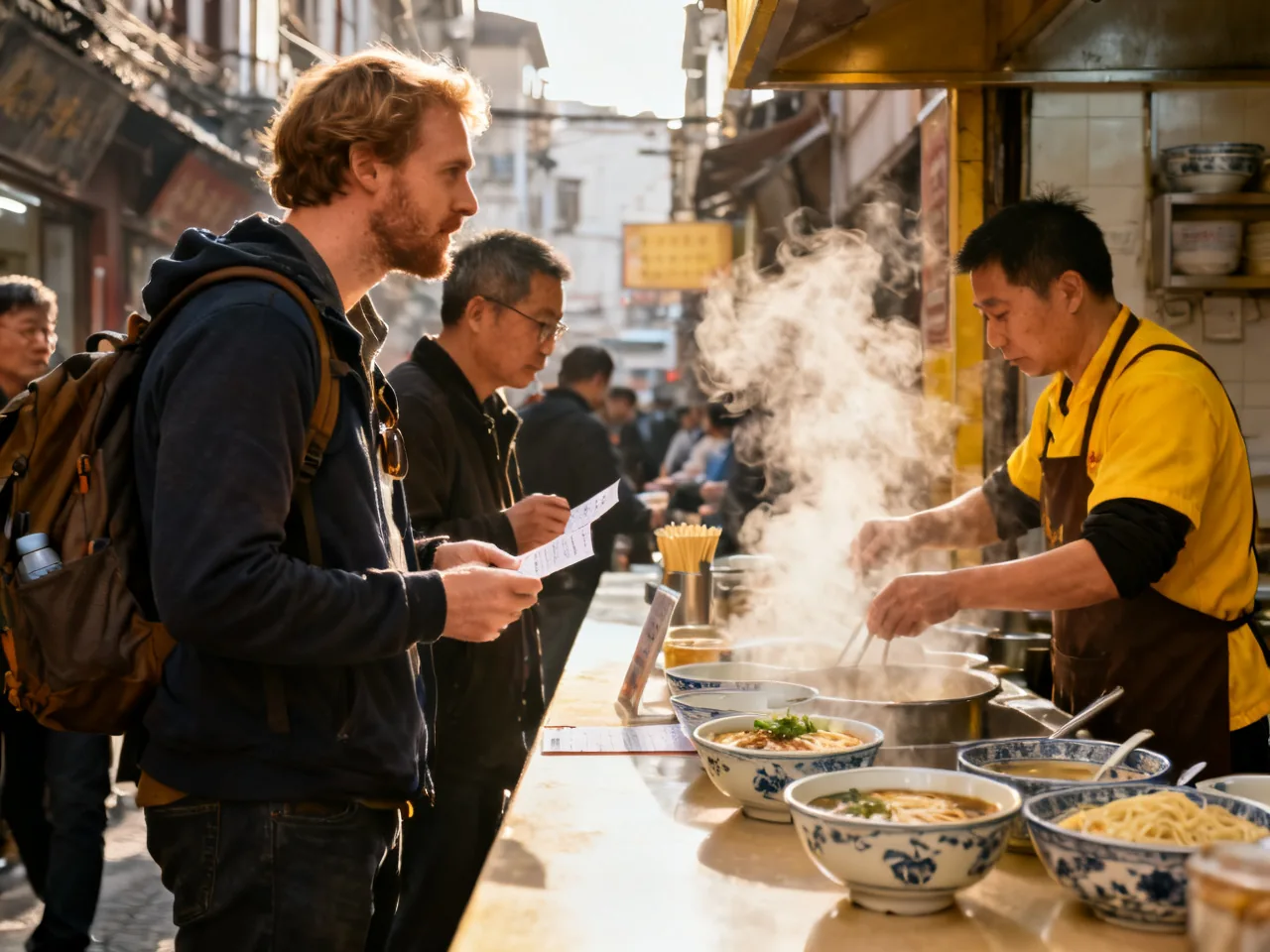
I used this method smoothly for the first time at a noodle shop near Nanjing Road. Five or six people were lining up at the entrance, and I didn’t know whether to order first or find a seat first. In the past I would have stood there too long, trying to decode the whole system. This time I asked only one sentence: “Auntie, should I scan first or sit first?” Without even looking up, she answered, “Order first, get a number, then sit.” I followed the steps, and three minutes later I was holding a bowl of scallion oil noodles. The victory came not from speaking sophisticated Chinese, but from asking a short, precise question that did not burden anyone.
Lesson Four: At the Table, Rhythm Is Not About Winning or Losing, but Coordination
If the metro and the streets taught me public order, the dinner table taught me nuance in personal space. At first, whenever I ate at a Chinese friend’s home, I worried about being “taken care of too much.” If someone put food in my bowl, I waved my hands. If someone said, “Have a little more,” I immediately said no. If someone poured tea for me, I rushed to grab the pot, as if that would prove I was independent.
Later, after one meal, a friend told me, “You can decline, but don’t decline too fast. A lot of the time it’s not pressure. It’s the first gesture of welcome.” That sentence changed everything. Certain actions at a Chinese table do not necessarily mean you must accept everything. Often they are the opening grammar of the relationship itself. You can take one bite. You can say, “Thank you, I’ll try a little first.” You can explain later that you are actually full. But if every gesture bounces back immediately, people feel you still haven’t sat down emotionally.
This also made me rethink many details mentioned in 中国人为什么这么在意面子. “Face” is not only about dramatic social rules. Often it simply means, “Let me offer dignity and goodwill first; please don’t make that difficult to land.” Once I understood that, I relaxed a lot more at the table.
Lesson Five: Safety Often Comes from Predictable Small Moves
People often ask me why life in China started to feel increasingly smooth. My answer is not just that “things are convenient.” What truly gave me peace was predictability. In many scenes, people already shared a common sequence: prepare before entering the station, watch how the person in front orders, let people exit the elevator first, receive goodwill at the table before stating your boundary.
This predictability gives foreigners a powerful sense of safety. Not because you are required to become identical to everyone else, but because once you understand the rules, you eliminate huge amounts of unnecessary guessing. It felt similar to the first time I truly became comfortable with mobile payment. Before that, every payment scene made me tense. Once I understood the sequence, my whole body relaxed. That change matches the principle in 来华支付第一课: master the basic scenarios before chasing efficiency.
The Five Small Integration Moves I Practiced
Prepare the Next Step When Three People Remain
This works for security checks, ticket gates, ordering, paying, and collecting food. If there are three people ahead of me, I start preparing the code, checking the menu, and deciding my order or payment method.
If I Need to Stop, I Step Aside First
Studying navigation in the middle of a corridor was one of the first bad habits I had to break. The side is not retreat. It is space—for others and for myself.
Ask the Smallest Useful Question
Instead of unloading the entire confusion at once, I first confirm direction, entrance, or sequence, and only then move forward.
Don’t Reject Kindness Too Fast
At the table, when someone holds a door, or when a shop clerk explains patiently, I first receive the gesture with a thank you before deciding whether I need more.
Watch One Full Round Before Acting
If the scene is unfamiliar—a canteen, a hospital counter, a self-service machine, or a tea shop—I watch one full cycle of the person ahead of me. That is usually faster than guessing alone.
Ending: I Did Not Become Chinese, but I Learned to Cooperate with Daily Life in China
A Few Recurring Situations That Confirmed the Lesson for Me
There are also several tiny recurring situations that kept confirming the same lesson for me: integration is not loudly declaring “I understand China now,” but no longer getting stuck in details again and again. For example, when buying coffee under an office building at noon, I first check whether the ordering counter and pickup counter are separate. Outside a shopping mall restroom, I first identify where the actual end of the queue is instead of standing vaguely near the door. At a convenience store checkout, I think ahead about whether I need a bag or whether I want the food heated. These are tiny things, but they can shift a person from flustered to steady.
I even noticed that once these movements became familiar, my interactions with other people became gentler too. Security guards no longer needed to remind me where to place my bag. Shop clerks did not need to repeat the process. The people behind me in line no longer had to flow around my hesitation. In a way, integration is not about “making people like me.” It is about reducing the extra cost that public space has to pay for my confusion. That sounds humble, but it is one of the forms of maturity I value most.
I still make mistakes now. I still take the wrong exit in complicated metro stations. I still miss subtle table cues. I still fumble for a QR code when I am in a hurry. But unlike my first months here, I no longer interpret those moments as proof that I do not belong. I see them instead as part of learning a sophisticated form of urban cooperation.
Calling myself “half-local” is of course a joke. My passport has not changed. My upbringing has not changed. My accent certainly has not changed. What changed is that I began to understand when to move faster, when to yield, when to observe first, and when to receive kindness before analyzing it. Many people think integration is a threshold you cross once. I now believe it is a set of small actions you repeat every day. The longer you practice them, the lighter strangeness becomes—and the more naturally safety arrives.
If you have just arrived in China, try starting tomorrow morning: prepare before entering, step aside before stopping, ask the smallest useful question, and do not reject hospitality too quickly at the table. You do not need to look local overnight. You only need to learn to read the rhythm here. Once you can read it, many doors begin to open on their own.