私が初めてQRコード決済を「気楽な習慣」にした話
When I first traveled alone in China for a full week, the thing that made me nervous was not ordering food or changing metro lines. It was the few seconds before every payment. Standing at a convenience-store counter, I kept worrying that my phone had no signal, the screen was too dim, the payment code would not open, or a line would form behind me while I was still searching through apps. For many foreigners, payment looks like a technical action on the surface, but in practice it is part of daily safety. Once a bottle of water, a simple breakfast, or a small transport purchase can be completed smoothly, the city stops feeling like a place where I am about to fail a test and starts feeling like a place I can gradually live in.
I really learned this in a completely ordinary convenience store in Shanghai. It was drizzling outside. I had just come out of the metro, my shoes were damp, and my umbrella was still dripping. When my turn came, I raised my screen brightness, kept the payment page ready, and only then placed my items on the counter. The cashier did not rush me. She simply moved the scanner slightly forward. I suddenly understood that many payment scenes in China feel fast not because people are trying to pressure you, but because everyone is already moving inside a shared rhythm. As long as I do not leave preparation to the last second, I do not actually look especially clumsy. Later, when I read more reflections about adapting to daily life in China, I found the same logic again in pieces like how small actions help you integrate into everyday Chinese life and ways foreigners build real safety in China for the first time.
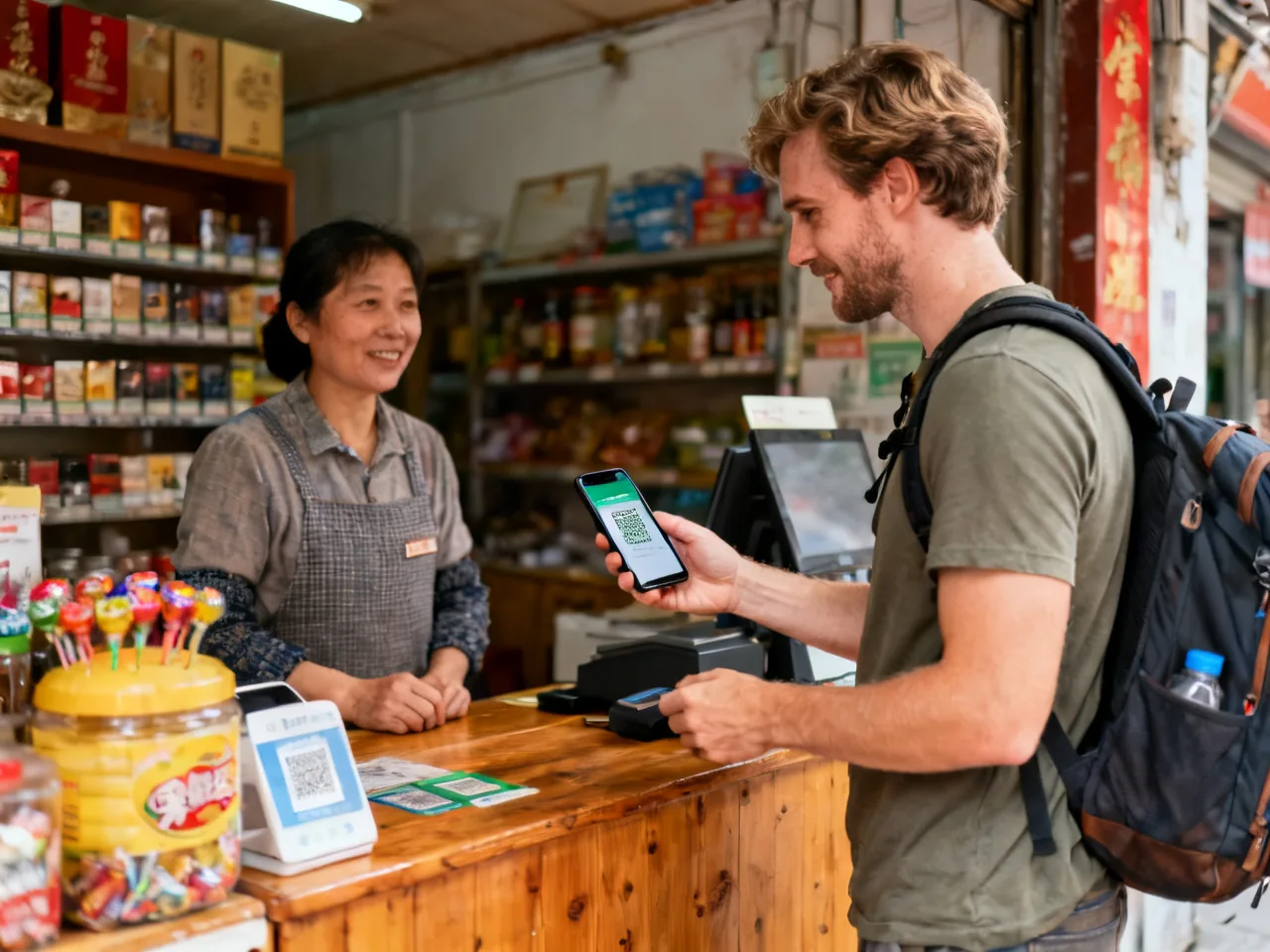
Later I realized that payment confidence directly affects how willing I am to enter smaller, more local spaces. When I had just arrived in China, I preferred large malls because the lighting was bright, the counters were standardized, and I assumed the chance of making mistakes was lower. Only after I became comfortable with QR payment did I start entering tiny noodle shops near residential blocks, fruit stands beside wet markets, and convenience stores on quiet side streets outside scenic areas. Those places did not suddenly become easier. What changed was that I knew how to keep myself calm in repeated small payments. For foreigners, the feeling of integration is often not some grand cultural idea. It lives in ordinary moments: can I buy water, tickets, or breakfast naturally, and can I complete a string of tiny actions without panic?
Once, in a neighborhood noodle shop in Hangzhou, my phone signal suddenly slowed down right when I was about to pay, and the page kept loading for several seconds. The earlier version of me would have panicked immediately and become more confused the faster I tried to move. That time, I simply stepped aside, let the local customer behind me pay first, and told the owner I needed ten seconds. He nodded and said it was fine. I still completed the payment smoothly in the end, but the more important change was internal: for the first time, I did not treat myself as a source of trouble when something went wrong. The feeling was close to what is described in how foreigners learn to ask for help naturally in China: real adaptation is not about never making mistakes, but about knowing how to stay steady when something does go wrong.
Later I summarized a few plain but very useful payment habits for friends visiting China for the first time. First, check battery and connection before entering a shop, especially after a long train ride, a flight, or a full day of walking; do not wait until the counter to discover you have three percent left. Second, keep your main payment page easy to open instead of digging through layers of apps in front of the cashier. Third, raise your screen brightness in daylight or under strong indoor lighting because scanners read faster that way. Fourth, if something genuinely gets stuck, let other people go first rather than freezing in place. Fifth, keep hotel addresses, ticket screenshots, and backup options saved in advance, because travel safety is often built from these backup moves.
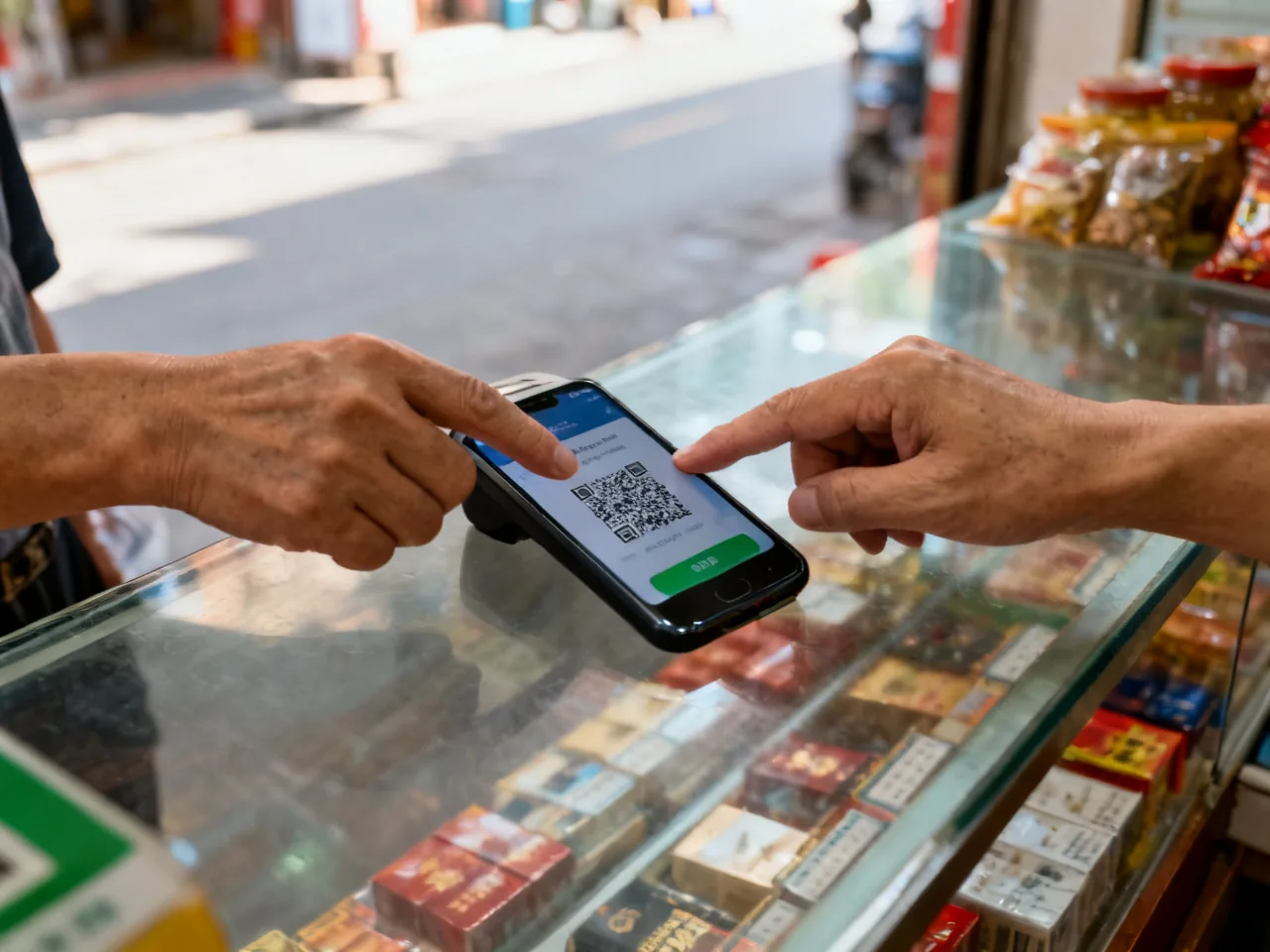
Now if someone asks me which life skill is most worth learning quickly in China, I may not answer Chinese first, and I may not answer navigation first. I often say: turn payment into a low-stress bodily habit. Stand at a counter without panic. See a QR code without fumbling. Know what to do when the connection is slow. Know that being a foreigner does not mean you are automatically delaying everyone else. That calm is concrete, and it spreads outward. You become more willing to change routes, enter unfamiliar small shops, or buy yourself a hot drink and something to eat late at night. For me, real adaptation is not “I am now as fast as a local.” It is “when ordinary problems happen, I already know a steady way to solve them.” That matters more than speed, and it gives me more peace than surface-level fluency ever could.