モバイル決済が失敗した後、私は自分のために3つの代替案を用意した
The first time I truly realized that mobile payment could fail was inside a tiny neighborhood pharmacy in Shanghai. It was early evening, my throat hurt a little, and the rain had just stopped, leaving plane tree leaves dripping along the road. I carried a box of lozenges and a mild cold remedy to the counter, opened my phone as I had done many times during the previous days, and scanned the payment code beside the register. The screen spun once, then again, and finally showed a line that made my stomach tighten: payment failed, please try again later.
The pharmacy was small, and an auntie behind me was waiting to buy bandages. When the clerk saw me freeze, she did not hurry me. She simply held the receipt on the counter and said softly, “It’s okay, try again.” I nodded, but my palms had already started sweating. For a foreign visitor new to China, mobile payment can become so smooth that you forget it still depends on network signal, bank systems, app verification, and identity settings all working together. It feels as easy as air, until the air suddenly stops moving.
I scanned again, and it failed again. I switched to the English interface to check the reason, but the message was vague. It might have been a foreign card limit, a network delay, or temporary risk control from the app. The hardest part at that moment was not the medicine bill of a little over twenty yuan. It was the queue, the language gap, my sore throat, and the embarrassment of wondering whether I was blocking other people. I wanted to explain everything immediately, but the more anxious I became, the less complete my sentences sounded, so I turned the phone toward the clerk.
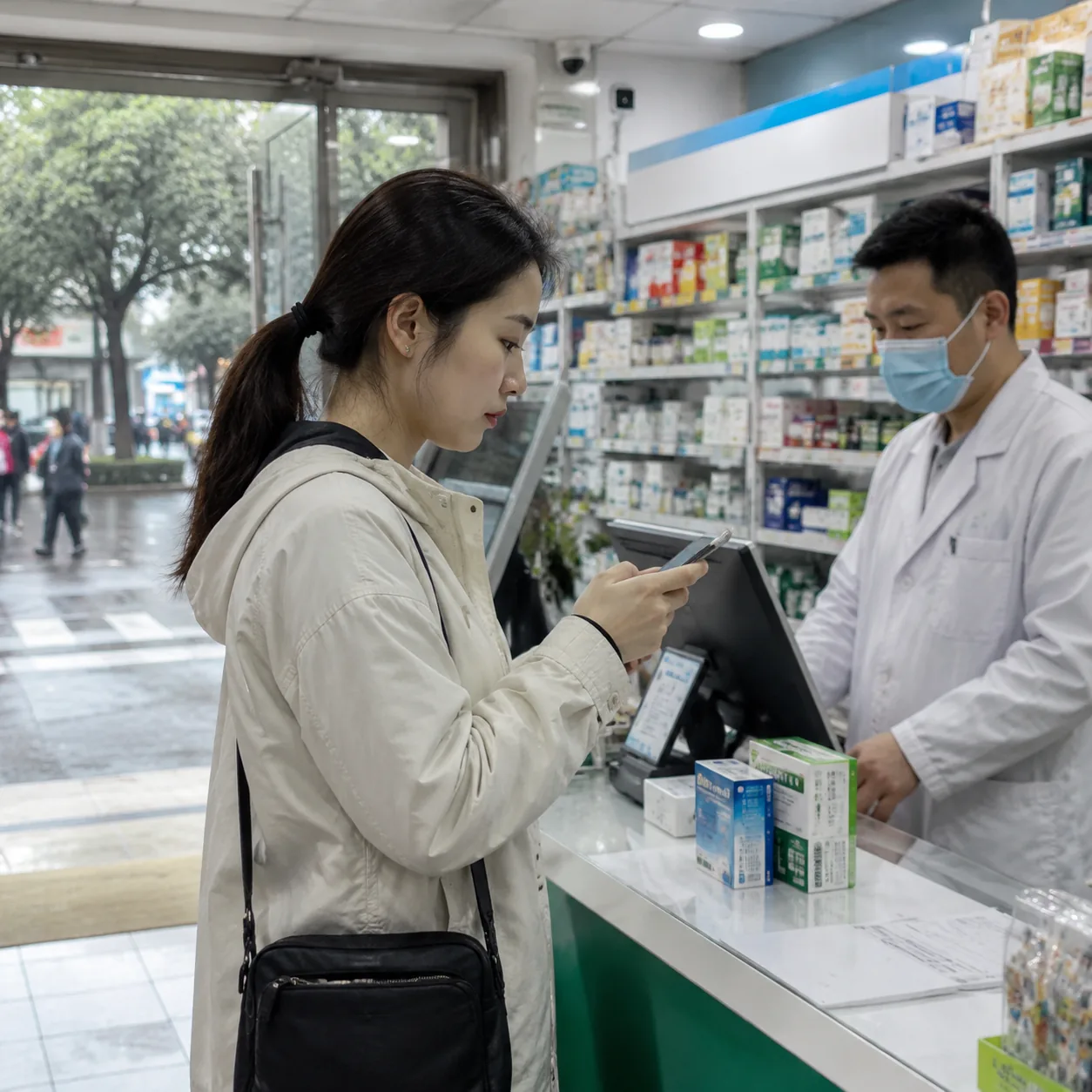
She looked at the screen without irritation and pointed to a small stool nearby. “Sit for a moment,” she said. The auntie behind me did not complain either; she said something I did not fully understand, but her tone was kind. The clerk helped her check out first, then came back and asked whether I had another payment app. Only then did I remember that I had linked the same bank card to another app, although I had never actually used it in China. That was how my first backup plan was born in this small embarrassment: do not depend on only one payment entrance.
When I opened the second app, I realized that my preparation had not been thorough. Whether it could pay depended on whether my identity information was complete, whether the bank card had been verified, whether there was a daily limit, and whether my phone number could receive a code. Fortunately, I had already completed most of the setup earlier; I simply had not placed the app on my home screen or tested it with a small purchase. I spent a few minutes logging in again, the clerk confirmed the amount for me, and the medicine bill finally went through with the second app.
When I stepped out of the pharmacy, I did not leave immediately. I stood under the eaves and wrote two things into my notes: first, test both payment apps in advance, not for the first time at the cashier counter; second, try to connect the two apps to different funding sources, such as a foreign card and a travel card, or at least confirm that the same card works in both apps. This note may sound technical, but it is really about emotional safety while traveling. The clearer your backup route is, the less likely a small failure becomes a crisis.

My second backup plan formed the next morning. After hearing the pharmacy story, my friend told me not to think only about “another app,” but also to keep a physical card ready for offline attempts. We went to a convenience store together to buy water, and he asked me to observe the cashier area: some shops displayed several payment signs, some had card terminals, and some did not. Mobile payment is extremely common in China, but “extremely common” does not mean every situation accepts only one method. Especially at hotels, stations, larger pharmacies, or mall service desks, a physical card can sometimes become a stable substitute.
I used to keep my bank card in a hidden layer of my luggage, thinking it was safe and convenient. My friend reminded me that if the card was in the hotel room or buried deep inside a suitcase, it did not truly count as a backup plan. A backup plan must be reachable when you are standing at a counter, beside a taxi, or near a station window. So I placed one useful card in a small bag close to my body, but not in the same pocket as my passport and all my cash. That way, even if one pouch was temporarily misplaced, another safety layer remained.
This was later tested at a small shop beside a metro station. That afternoon I bought a bottle of water and a pack of tissues, but my phone signal suddenly weakened, and the payment page would not load. The owner saw me lifting my phone near the doorway and smiled. “The signal here is sometimes bad,” he said. I tried my second app first, but it still would not open. Then I asked whether he could take a card. He shook his head and said the shop was too small and had no terminal. That scene taught me that the second plan is not universal. It gives you one more choice, not a guarantee that every tiny shop can accept it.
For that reason, the third backup plan became even more important: a small amount of cash and reachable help contacts. My friend had already reminded me that carrying a little cash in China was not old-fashioned. It was like carrying an umbrella: ideally unused, but not something to lack completely. I began keeping around one hundred yuan in small notes and coins separately. I did not treat it as my main payment method, but I also did not bury it too deeply. At the small shop that day, I took out a note, the owner gave change naturally, and the whole process took less than half a minute.
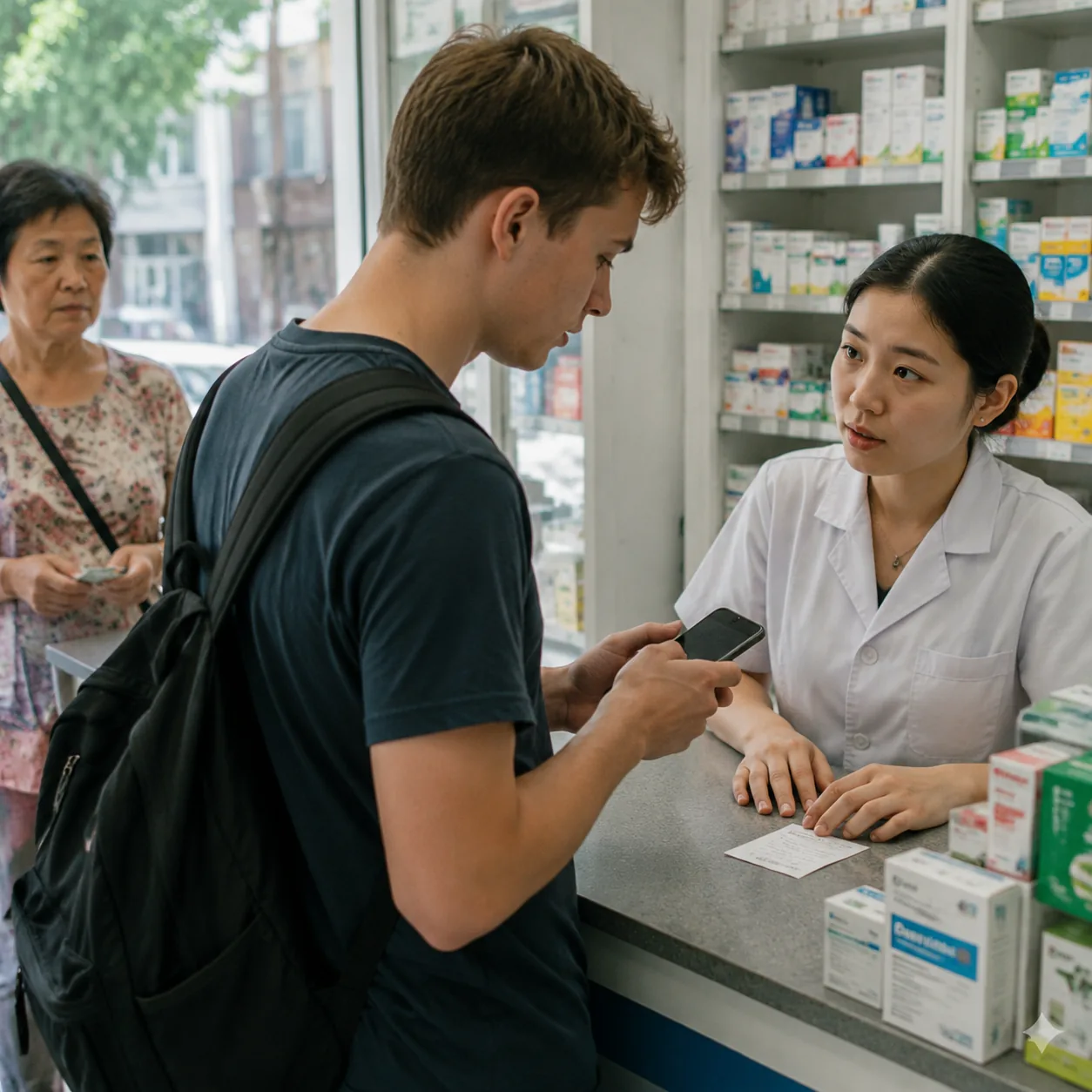
Cash solved that small purchase, but it did not solve every situation. What made me add “help contact” to the third plan was a later taxi experience. One night I returned to my hotel after dinner with friends. When the taxi arrived, the driver’s payment code reflected the interior light, and I failed to scan it several times. My phone again warned that the network was unstable. I only had a larger cash note left, and the driver did not have enough change. The car was stopped at the hotel entrance, another vehicle was waiting behind us, and I could feel myself getting tense again.
This time I was much calmer than in the pharmacy. I first told the driver, “Sorry, I’m having a payment problem. Please wait a moment.” Then I showed him the screenshot of my hotel address so he knew I really stayed there and was not avoiding payment. Next, I messaged the friend I had just eaten with and asked what I should do. He called back quickly and asked me to hand the phone to the driver. After speaking with him in Chinese, he suggested that I go to the hotel front desk to break the larger note; if that failed, he could transfer the fare to the driver first, and I could repay him later.
The hotel front desk helped too. After hearing the situation, the staff member did not treat it as a nuisance. She asked how much the fare was and helped me change the large note into smaller bills. The driver accepted the cash, nodded, and even reminded me to check my phone signal before taking a taxi at night. I felt a little embarrassed while thanking everyone, but I no longer had that first “everything is ruined” feeling. This time I knew the sequence: explain the situation, show identity or destination context, contact a friend, and ask nearby staff for help.
After that, I organized the three backup plans more clearly. The first was a “second payment entrance”: another app, completed verification, one small test payment, and the icon placed somewhere easy to find. The second was a “physical card entrance”: carry one usable card, know where it is more likely to work, and accept that small shops may not take it. The third was a “low-tech entrance”: a little cash, hotel front desks or station service counters, and a friend or local contact who can answer promptly. These plans are not about looking overly cautious. They are about making sure there is still a path when failure happens.
I also learned to give myself a calm procedure. When payment fails, do not scan repeatedly in panic, because that only makes the app, the merchant, and yourself more confused. First check whether the amount is correct, then whether the network is working, then switch to the second app. If that still fails, politely tell the clerk, “My payment failed; I’ll try another way,” and take out a card or cash. If the situation involves a taxi, station, or hotel, ask staff or a contact to help communicate as soon as possible. The earlier you explain, the easier it is for others to help and the fewer misunderstandings arise.
The most important sense of safety here comes from being calm rather than pretending to be strong. Do not move to a dark corner just because you feel embarrassed, and do not spread your wallet, passport, and phone across a counter. If you need to log in again, stand somewhere bright and public but not blocking traffic. If you need to call for help, briefly explain where you are, how much you owe, and who the other person is. If you need cash, take out only the amount needed. Travel safety is not always a dramatic event. Sometimes it means protecting your rhythm and belongings during a small payment failure.
That pharmacy later became one of the places I remembered most clearly in Shanghai. Not because the medicine was special, but because it showed me a very practical kind of kindness in China travel: the clerk did not treat my failed payment as a problem, the person in line did not treat my pause as an offense, and my friend did not laugh at my nervousness. Their help did not cancel the importance of preparation. Instead, it made me understand that the more people are willing to help, the more I should do my own part first.
Now, before I go out, I spend thirty seconds checking my phone: whether both payment apps open, whether the network works, whether my card and small cash are in their fixed places, and whether my hotel address and friend’s contact are easy to find. It sounds like a tiny habit, but it has made stations, pharmacies, small shops, and taxis much easier for me. A failed mobile payment does not mean a failed trip. It simply reminds me that convenience has boundaries, and the most reliable way to travel is to carry both convenience and backup plans with you.