От Дали до Лицзяна в Юньнани: неспешные пять дней и четыре ночи у озера Эрхай
Erhai Lake in May — the wind breaks the surface into scattered silver.
I stood on the rooftop of a guesthouse in Shuanglang Ancient Town, watching clouds still clinging to Cangshan Mountain across the water, thinking: this trip was worth it. Many travelers bundle Dali and Lijiang into a “Yunnan checklist,” rushing through in three days. But give it five, and the route becomes something else entirely.
Arrive in Dali: Skip the Old Town Rush
From Kunming, the high-speed train to Dali North Station takes about two hours. From there, take a Didi straight to Shuanglang — don’t head to Dali Old Town yet. Save it for the next afternoon when crowds thin out.
Shuanglang is a small town on the eastern shore of Erhai Lake. A decade ago it was a backpacker secret; it’s more commercial now, but the lakeside at dusk is still quiet. Find a guesthouse with a lake view, drop your bags, walk the shore, watch the sunset.
Where to Stay: Guesthouses in Shuanglang average ¥150–300/night. Book a lake-view room in advance on Fliggy or similar platforms.
Cycling Erhai, or Doing Nothing at All
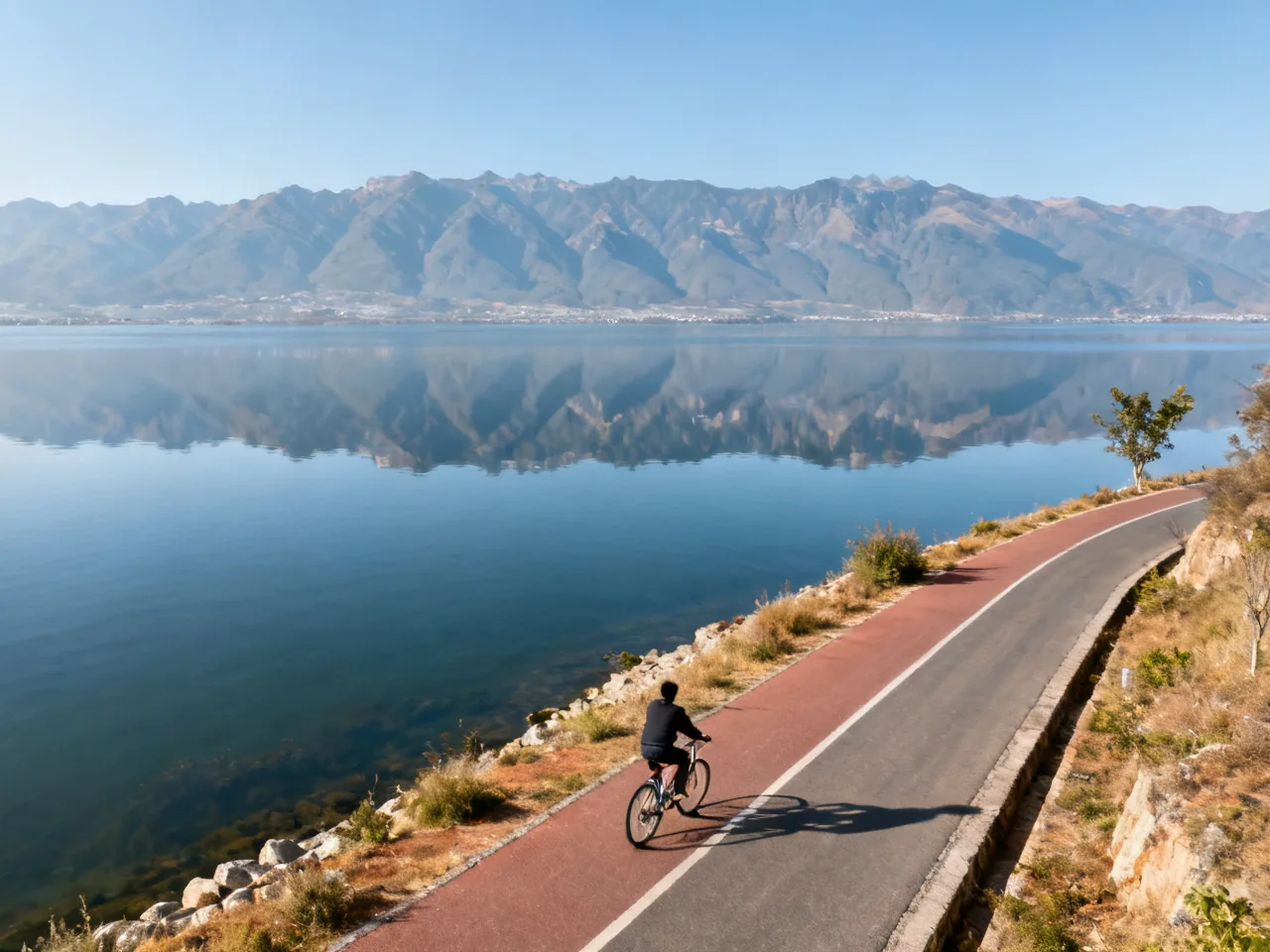
The full Erhai loop is about 130km. Most people do half — roughly 60–70km — starting from Shuanglang, heading south along the east shore toward Xiaguan, then looping back or continuing to Dali Old Town.
Bike rentals are everywhere in Shuanglang: e-bikes ¥50–80/day, regular bikes ¥30–50. Key stops along the way include Caicun Pier, Haishe Park, and Erhai Park.
Honest take: if you’re not a cycling enthusiast, the full loop is exhausting, and some stretches run close to the highway with unremarkable scenery. My suggestion — ride to Caicun Pier, take a boat to Nanzhao Fengqing Island for a loop, then head to Dali Old Town in the afternoon and find a Yunnan restaurant on Renmin Road for dinner.
Dali Old Town: Beyond Renmin Road
Dali Old Town’s Renmin Road is the commercial strip — tie-dye, silver jewelry, coffee, high tourist density. But a few lanes inside the old town are worth seeking out:
- Huguo Road: The local wet market. Go before 7am to see real Dali daily life.
- Yu’er Road: Quieter, with a few handmade leather goods shops run by artisans who relocated to Dali from elsewhere in China.
- Chongsheng Temple Three Pagodas: ¥75 entry, opens at 8am — arrive at opening to beat tour groups.
In the afternoon, head to Xizhou Ancient Town, about 18km from Dali Old Town (¥30 by taxi). Xizhou has some of the best-preserved Bai ethnic architecture in the region, with far less commercial noise than Dali Old Town. Xizhou Baba (a local flatbread) costs ¥5–8 and is sold everywhere in town — genuinely local, not tourist food.
Dali to Lijiang: 40 Minutes by Train
The high-speed train from Dali North to Lijiang takes about 40 minutes, second class around ¥60. Leave in the morning, arrive in the afternoon, and walk Lijiang Old Town before the evening crowds arrive.
The heart of Lijiang Old Town is Sifang Square, with several main streets radiating outward. Many travelers complain about Lijiang’s commercialization — fair point. But step away from the main streets toward Baisha Ancient Town (about 10km out) or Shuhe Ancient Town (about 4km), and the atmosphere shifts completely.
Shuhe is noticeably quieter than Lijiang Old Town, with a few old shops doing traditional Naxi leather work and a small river running through the center. Dinner in Shuhe costs about a third less than in Lijiang Old Town, and the crowds are thinner.

Jade Dragon Snow Mountain, or Just Head Home
Jade Dragon Snow Mountain is Lijiang’s most famous attraction: ¥105 entry plus cable car (large gondola ¥230), total around ¥350–400. The summit sits at 4,506m — altitude sickness varies wildly between individuals. Some feel nothing; others get splitting headaches. Advice: no alcohol the night before, eat a proper breakfast before heading up.
If the snow mountain doesn’t appeal, Day 5 can simply be a travel day — fly home from Lijiang Airport (direct flights to Beijing, Shanghai, Guangzhou, roughly ¥500–800 in low season) or take the train back via Kunming.
Practical Notes
Best Time: Spring (March–May) and autumn (September–November) are ideal. July–August is rainy season — Erhai water levels are high but skies are often overcast, and Jade Dragon Snow Mountain visibility suffers.
Budget Reference:
Accommodation: ¥150–400/night × 4 nights = ¥600–1,600 Transport (trains + taxis + bike rental): ~¥300–500 Food: ~¥100–150/day × 5 days = ¥500–750 Entrance fees: ~¥400–600 Total: ~¥1,800–3,450 per person (flights not included)
For other route ideas, check out the 7-day Gannan itinerary or Top 5 Scenic High-Speed Rail Routes for inspiration on connecting destinations by train. Traveling with older parents? 7 Days in China with Aging Parents has pacing tips worth reading.