Инге: боевые барабаны и расписные лица на улицах Чаошаня
The Day I Was Stopped by Drums on a Puning Street
I stumbled upon Yingge Dance on the afternoon of the third day of Chinese New Year.
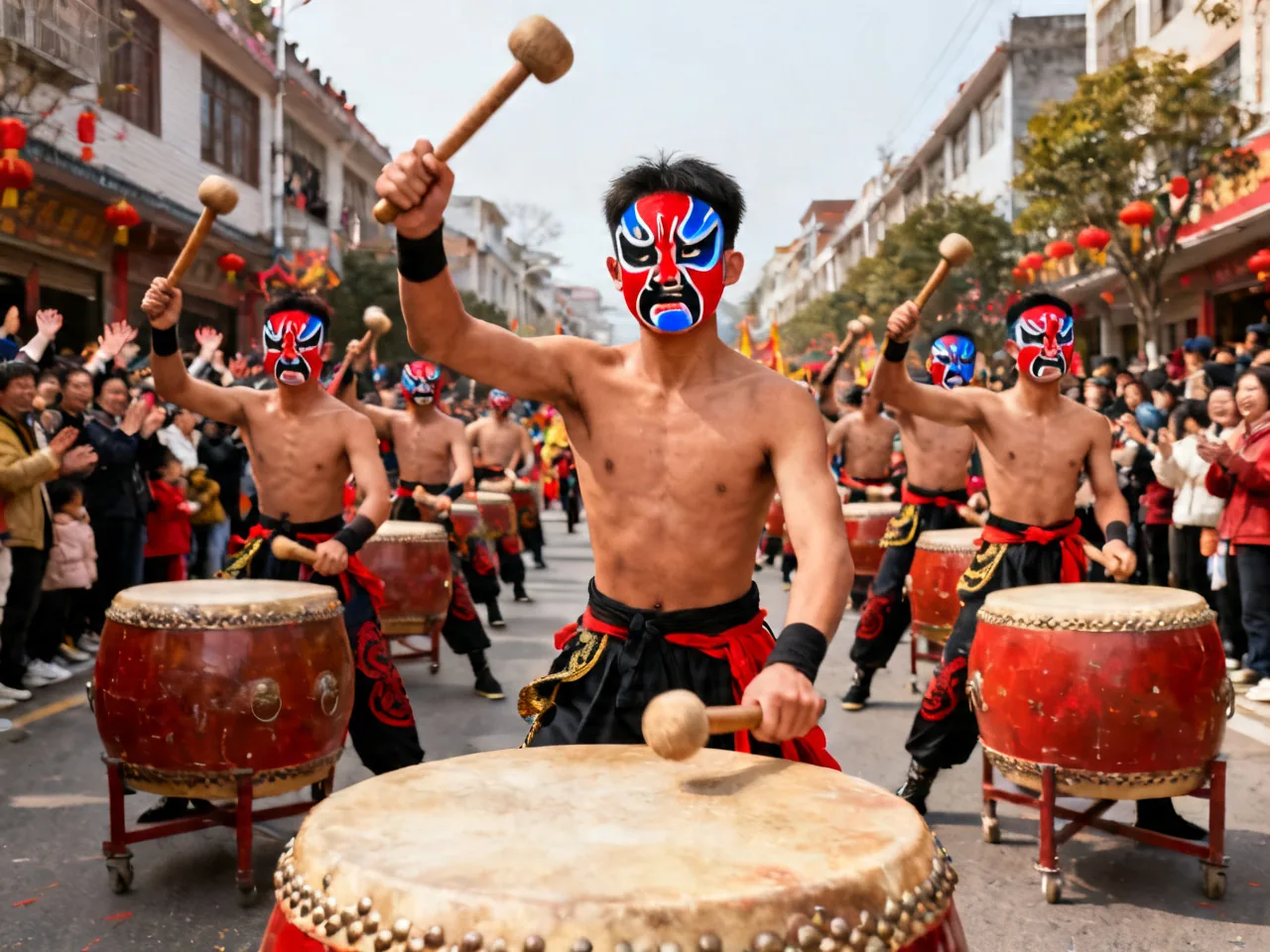
Not in a theater, not on TV, but in a narrow alley in Puning’s Nanshan Village — barely wide enough for two motorbikes. The drums hit first, vibrating through my chest, followed by the sharp crack of wooden sticks — “ka-ka-ka-ka” — like a hundred blades unsheathing at once. Before I could process what was happening, a troupe of face-painted men surged through the alley entrance.
That moment, I understood why some call Yingge Dance “China’s war dance.”
Water Margin Heroes Still “Fighting” on Chaoshan Streets, 300 Years Later
The story of Yingge Dance begins with Water Margin.
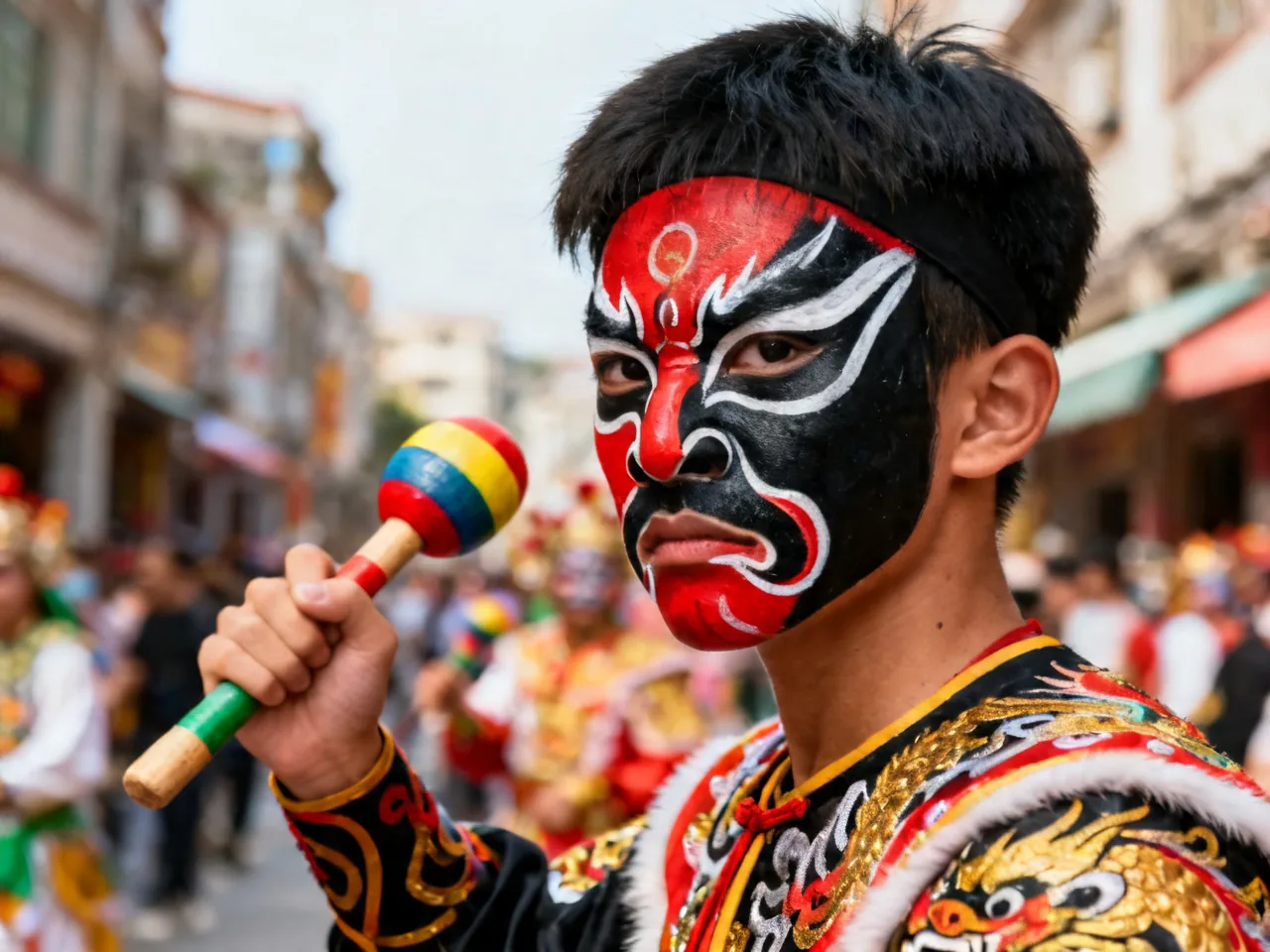
Legend has it that during the Ming Dynasty, folk artists in Chaoshan choreographed the raid on Daming Prefecture from the novel into a dance. The 108 outlaws became painted faces — Li Kui’s black face fierce and wild, Guan Sheng’s red face loyal and righteous, Shi Qian’s monkey face nimble and sly — each character with its own color and personality. Over 300 years have passed. The face paint hasn’t changed a single stroke, though the dancers have been replaced generation after generation.
In 2006, Yingge Dance was inscribed on China’s first National Intangible Cultural Heritage list. By late 2024, it was submitted for UNESCO’s Representative List of the Intangible Cultural Heritage of Humanity. A village dance, standing before the world’s judges.
Fast, Slow, Medium — One Dance, Three Temperaments
“To watch Yingge, first tell fast from slow. Fast is like going to war; slow is like performing opera.” — An old master in Puning’s Nanshan Village told me this.
Fast Yingge is Puning’s signature. Rapid tempo, dense drumbeats, thirty-six or seventy-two performers in double-dragon formation, wooden sticks flying up and down, footwork fierce and powerful. Watching fast Yingge, you’ll clench your fists without realizing it — there’s a primal, blood-pumping force to it.
Slow Yingge belongs to Chaoyang. Movements are expansive, postures refined — more like performing a martial opera. The slow Yingge troupes of Chaoyang’s Ximen Village and Guiyu Town carry the flavor of traditional theater in every gesture; even a turn has its own grammar.
There’s also medium Yingge, blending the best of both — neither rushed nor languid. But honestly, most people watching for the first time are stunned by the fast style.
2024: How Did Yingge Dance Suddenly Go Viral?
During the 2024 Spring Festival, Yingge Dance videos exploded on Douyin (Chinese TikTok).
The Puning Nanshan Yingge Troupe’s performance videos racked up over 100 million views; the #YinggeDance hashtag accumulated billions of plays. Then a Puning troupe flew to London’s Chinatown and struck up their war drums on foreign streets. Stunned British onlookers watched — they’d probably never seen anything like it: dozens of face-painted young men wielding wooden sticks in London rain, drums so loud the pigeons on Charing Cross Road scattered.
Later, Yingge troupes toured Bangkok, Kuala Lumpur, and Singapore. The 2025 CCTV Spring Festival Gala featured it too. But what surprised me most was the emergence of all-female Yingge troupes — breaking centuries of “only men dance Yingge” tradition. The women painted their faces, swung their sticks, and were every bit as fierce and captivating.
Where to See It? When to Go?
For the most authentic Yingge Dance, go to Chaoshan.
Chinese New Year (1st to 15th of the Lunar New Year) is prime time. Puning’s Nanshan and Guolong villages, Chaoyang’s Ximen Village and Guiyu Town — these villages have Yingge troupes parading almost daily during Spring Festival. No tickets needed, no reservations required — just stand by the roadside, and the drums will find you.
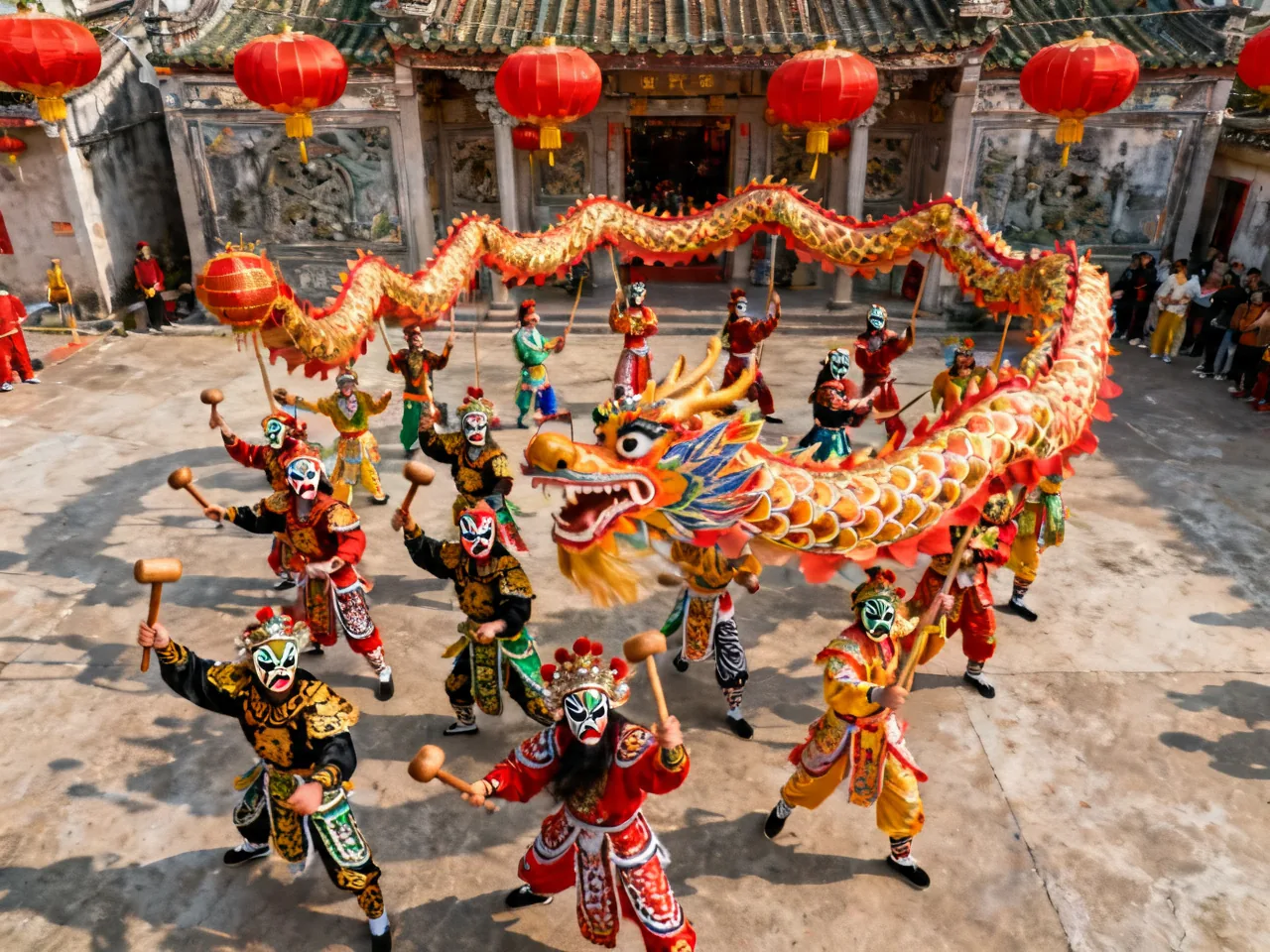
The Lantern Festival is the liveliest day. Every village sends out their troupe; sometimes several troupes meet on the same street, competing against each other, drums rising wave after wave. Locals call this “dueling Yingge” — more thrilling than any stage performance.
If you miss Spring Festival, don’t lose heart. Temple fairs, the Hungry Ghost Festival, even local deity birthday celebrations might feature Yingge. Since 2024, big cities like Guangzhou and Shenzhen have started inviting troupes to perform during holidays — the atmosphere isn’t quite like the villages, but at least you won’t have to trek to eastern Guangdong.
Standing in the Drums, You Forget You’re a Tourist
Su Shi once wrote, “The great river flows east, its waves washing away the heroes of a thousand ages.” The Water Margin outlaws in Yingge Dance are heroes washed by three hundred years of time — except they haven’t been washed away. They dance fiercer with each generation.
After watching that Yingge performance in Nanshan Village, my ears rang for an entire afternoon. But the ringing wasn’t annoying — it felt like my body was savoring the vibrations. An old Chaoshan uncle next to me saw my dazed expression and said with a smile in Mandarin: “Young man, come back next year. First to fifteenth, every day.”
I think I will.
Related Reads
- Spring Bloom Map: China’s Most Beautiful Flower Fields
- Summer Escapes: Plateaus & Islands
- Huangshan Sea of Clouds & Welcome Pine: Beautiful in All Seasons
- Best Autumn Foliage Spots in China
- 10-Day East China Five-City Loop