Как смотреть сычуаньскую оперу в Чэнду и не попасть в ловушку — все секреты здесь
Many visitors in Chengdu treat Sichuan opera as a casual evening add-on. The complaints tend to sound the same: the pacing feels hard to follow, the seats are farther than expected, and only the few seconds of face-changing remain memorable while the rest passes in a blur. The problem is usually not the opera itself. It is that people buy it like a generic stage product instead of entering it as a local theatrical form.
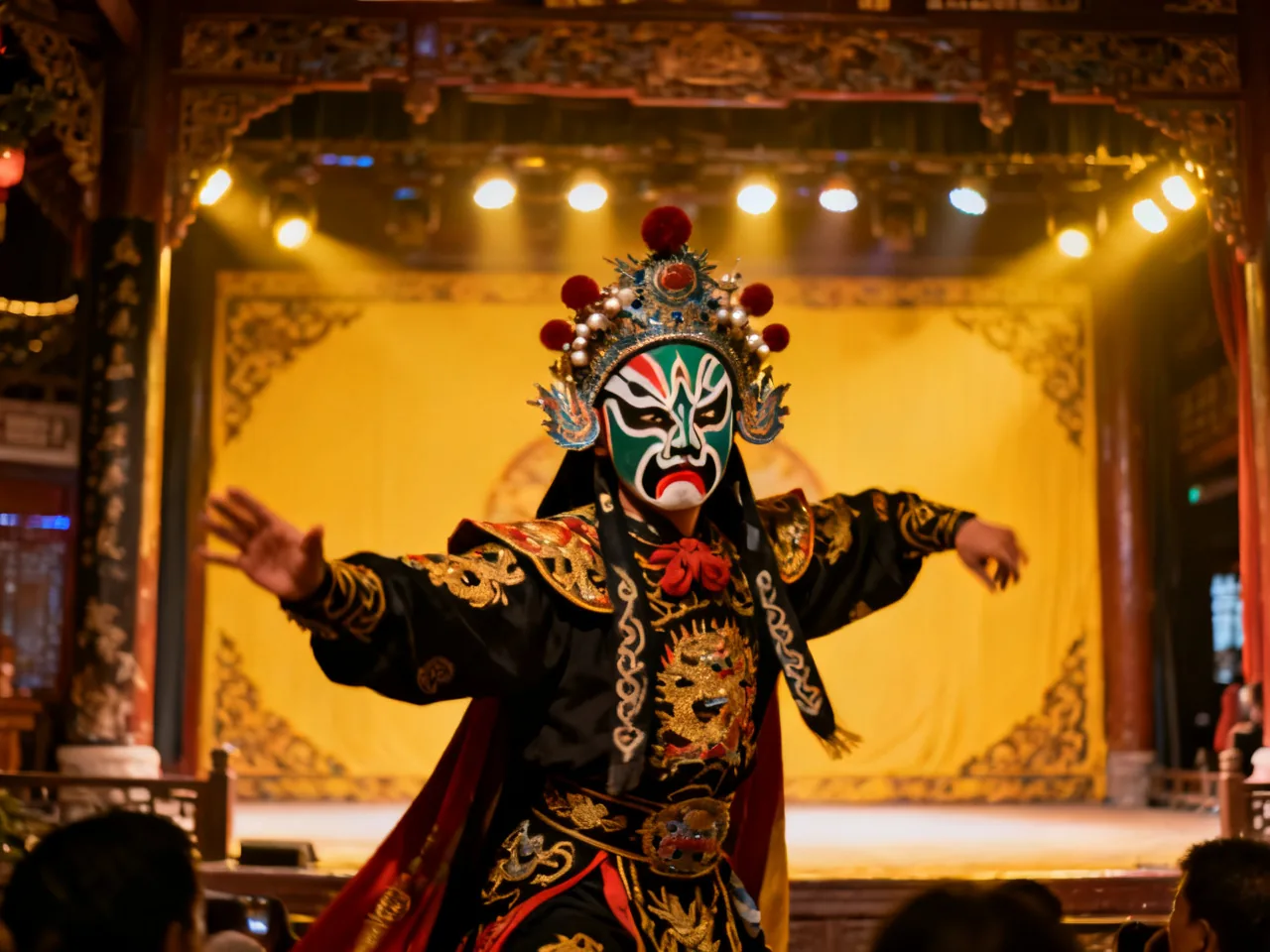
Before asking which venue is the most famous, ask what you actually want. If your main goal is to watch face-changing from close range, then seat distance, show length, and stage visibility matter most. If you are also curious about percussion, vocal style, fire-spitting, and the wider package of folk stage tricks, then the evening should be treated as a cultural experience rather than a hunt for the shortest viral moment.
Choose the Experience Before the Ticket
Some performances in Chengdu are structured for quick tourist comprehension, with frequent transitions and densely packed highlights. Others feel more like older-style opera houses, where you hear the crowd react, tea cups touch saucers, and the percussion build before performers appear. The first type is easier to understand quickly. The second is easier to remember. Neither is automatically better, but you need to know which one you are paying for.
For a first visit, I strongly advise against choosing the cheapest edge seats. Many of the rewarding details in Sichuan opera depend on distance: eye movement, sleeve work, mask transitions, and the stops and starts of body control. From too far away, all of that collapses into a vague sense that something skillful happened on stage. If the budget allows one upgrade, let it be a seat where you can actually see.
The Most Useful Time Is the Half Hour Before the Show
The move that saves the most disappointment is not only choosing the ticket well, but arriving about half an hour early. That window lets you confirm your stage angle, settle into the room, and read what kind of show it is. Are there many tea tables? How much explanation from a host? Are the viewers mainly locals, out-of-town families, or packaged tour groups? You can quickly adjust your expectations once the room tells you what it wants to be.
Another point people often miss: do not place all your attention on face-changing alone. One of the pleasures of Sichuan opera lies in the build-up between the famous highlights. The rise and drop of percussion, the pauses in spoken lines, and the way performers release movement into space all help those few seconds of spectacle land properly. If you watch only for the payoff, it feels short. If you understand the setup, the whole performance gains shape.
Do Not Judge It Too Fast After the Show
When people leave the theater, their first reaction is often something like, “It felt shorter than expected,” or “It was different from what I imagined.” That is normal. For many foreign visitors, the first encounter with Sichuan opera comes not through a full traditional repertory piece, but through a compressed performance format. It is still worth seeing, as long as you know what it is: a doorway, not the entire house.
If you want to keep exploring Chengdu cultural experiences after this, continue with another Chengdu culture article and a guide to traditional performance experiences in China. The most reliable trick is surprisingly plain: set expectations first, sit close enough to see, and bring your attention back from the viral moment to the full performance.