Карта весеннего цветения: самые красивые цветочные поля Китая
Spring in China isn’t one season — it’s a three-month flower show rolling from south to north. Guangzhou’s kapok trees bloom in February; Beijing’s magnolias don’t open until April.
February: The South Blooms First
Luoping Rapeseed Flowers (Yunnan) — China’s earliest and largest rapeseed sea. Mid-February to March, 200,000 mu of rapeseed blooms simultaneously across the Luoping basin, golden yellow filling the entire valley, karst peaks poking through the flower sea. Jinjifeng (Golden Rooster Peak Cluster) is the best viewpoint — from above, flower fields look like golden waves surrounding conical peaks. Luositian (Snail Field) is another classic photo spot, terraced fields layered with rapeseed, looking like a giant spiral from the air.
Getting there: HSR from Kunming to Luoping ~1.5 hours. Free entry (Jinjifeng viewing platform ¥20).
March: Peach Blossoms & Cherry Blossoms
Nyingchi Peach Blossoms (Tibet) — Peach blossoms at 2,900m elevation. Mid-March to early April, wild peach trees along the Yarlung Tsangpo River burst into bloom, pink flower seas backed by snow mountains — Namcha Barwa (7,782m) often reveals itself during peach blossom season. Gala Peach Blossom Village is the most popular spot, but Suosong Village (facing Namcha Barwa) is more stunning. The Nyingchi Peach Blossom Festival is usually held in late March.
Wuhan Cherry Blossoms — Wuhan University’s cherry blossom avenue is China’s most famous cherry viewing spot. Mid-March to early April, 1,000+ cherry trees bloom simultaneously; falling petals look like snow. Advance reservation required (free but crowd-controlled). East Lake Cherry Garden is larger (10,000+ trees) and doesn’t require reservations.
April: Peak Bloom
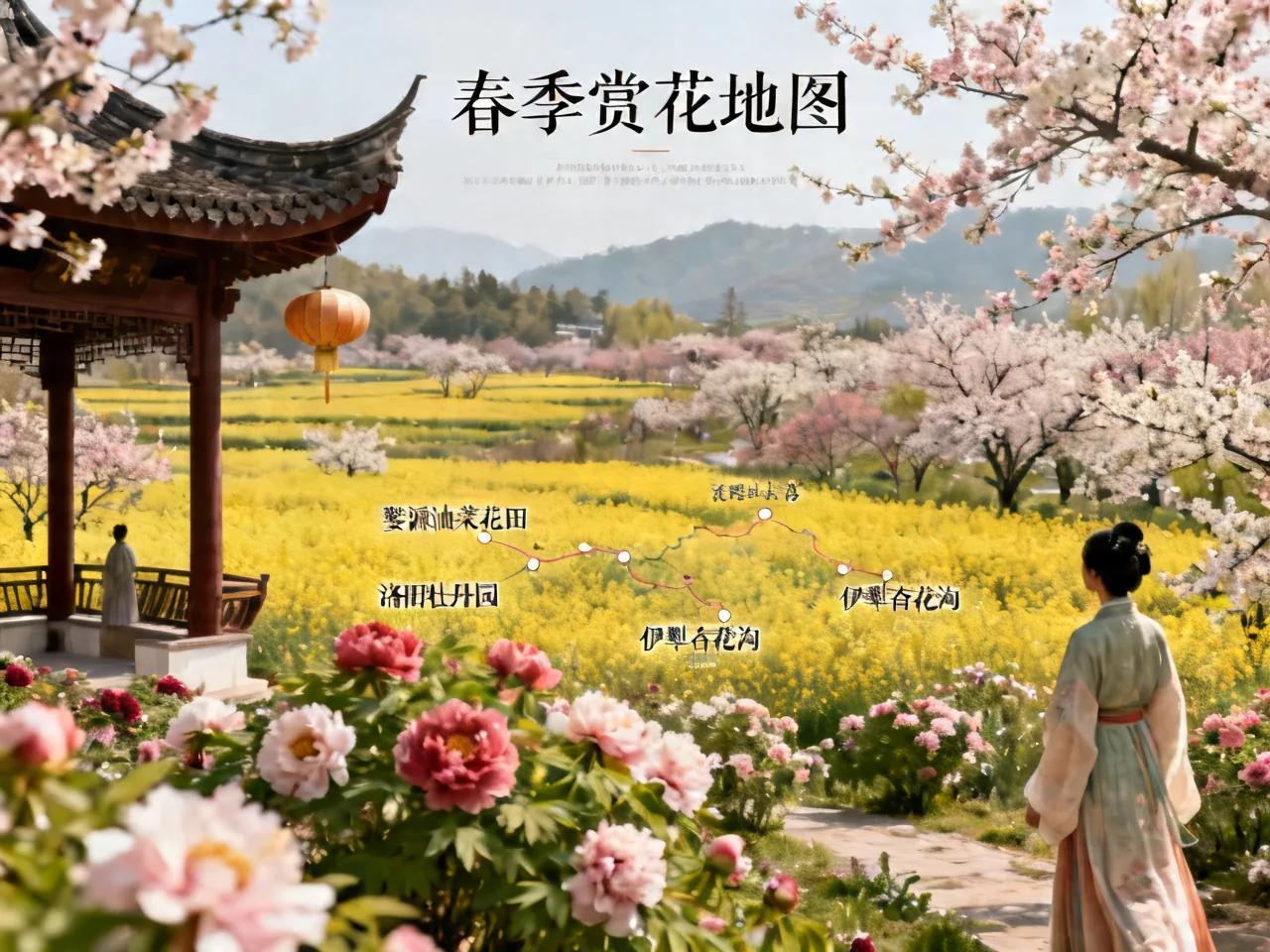
Luoyang Peonies — “Only the peony is truly the national beauty; when it blooms, the capital stirs.” Luoyang has grown peonies for 1,500 years; the April Peony Culture Festival is a citywide event. China National Flower Garden (¥40) and Wangcheng Park (¥40) are the two largest peony gardens, with 1,000+ varieties. Luoyang peonies are special for their enormous blooms (up to 20cm diameter), ranging from pure white to deep purple.
Wuyuan Rapeseed (Jiangxi) — Unlike Luoping, Wuyuan’s rapeseed pairs with Hui-style architecture — white-walled, black-tiled villages surrounded by golden fields, bridges and streams running through flower seas. Huangling (¥120 including cable car) is the classic — terraced rapeseed fields layered up the hillside, plus the village’s autumn-drying tradition (though you won’t see it in spring, the architecture alone is beautiful). Jiangling is another must-visit viewpoint.
May: Highland Blooms
Ili Apricot Valley (Xinjiang) — A medieval-era wild apricot forest, 30,000+ mu, China’s largest. Late April to early May, hillside apricots bloom into pink cloud seas against green meadows and distant snow mountains — like an oil painting. But the bloom is extremely short (~one week), requiring luck with timing.
Bijie Hundred-Mile Azalea (Guizhou) — The world’s largest natural azalea belt, stretching 50+ km. Late March to May, mountainsides of azaleas gradient from white to deep red, like a colorful carpet draped over the hills. Ticket ¥150.
Practical Tips
Bloom tracking: Follow each scenic area’s official WeChat account — bloom forecasts are more accurate than travel guides. Blooms are heavily weather-dependent; confirming one week ahead is most reliable.
Accommodation: Bloom season is peak season. Popular spots (Wuyuan, Nyingchi) double their prices — book two weeks ahead.
Bottom Line
China’s spring is a season of chasing blooms — from February rapeseed to May azaleas, there’s always a flower sea waiting for you.
Related Reads
- Summer Escapes: Plateaus & Islands
- Huangshan Sea of Clouds & Welcome Pine: Beautiful in All Seasons
- Best Autumn Foliage Spots in China
- Complete Guide to Winter Ice & Snow Tourism
- 10-Day East China Five-City Loop