Одно утро с миской рисовой лапши в Чанше научило меня не гнаться только за «фирменными» блюдами
Before arriving in Changsha, I had made a very standard food list for myself: stinky tofu, crayfish, sugar-oil rice cakes, and the famous local milk tea. Each item seemed like an answer already tested by countless visitors. I thought the city’s flavor would begin with loud names, preferably with a queue, a signboard, and the excited tone people use when recommending something popular. But the first meal that truly made me remember Changsha was not in a night market or outside a famous shop. It was on an ordinary morning, inside a narrow rice noodle place.
I woke earlier than planned that day. A faint mist hung outside the hotel window, and the road was damp, as if the excitement of the previous night had been rinsed away. I had meant to visit a breakfast shop saved online for a long time, but the route required two transfers. While hesitating at the intersection, I noticed a rice noodle shop across the street with several tables already occupied. Its sign was modest, steam drifted from the doorway, and the owner cleared bowls while chatting with regulars. I decided to take a look, telling myself that breakfast did not have to feel like completing an assignment.
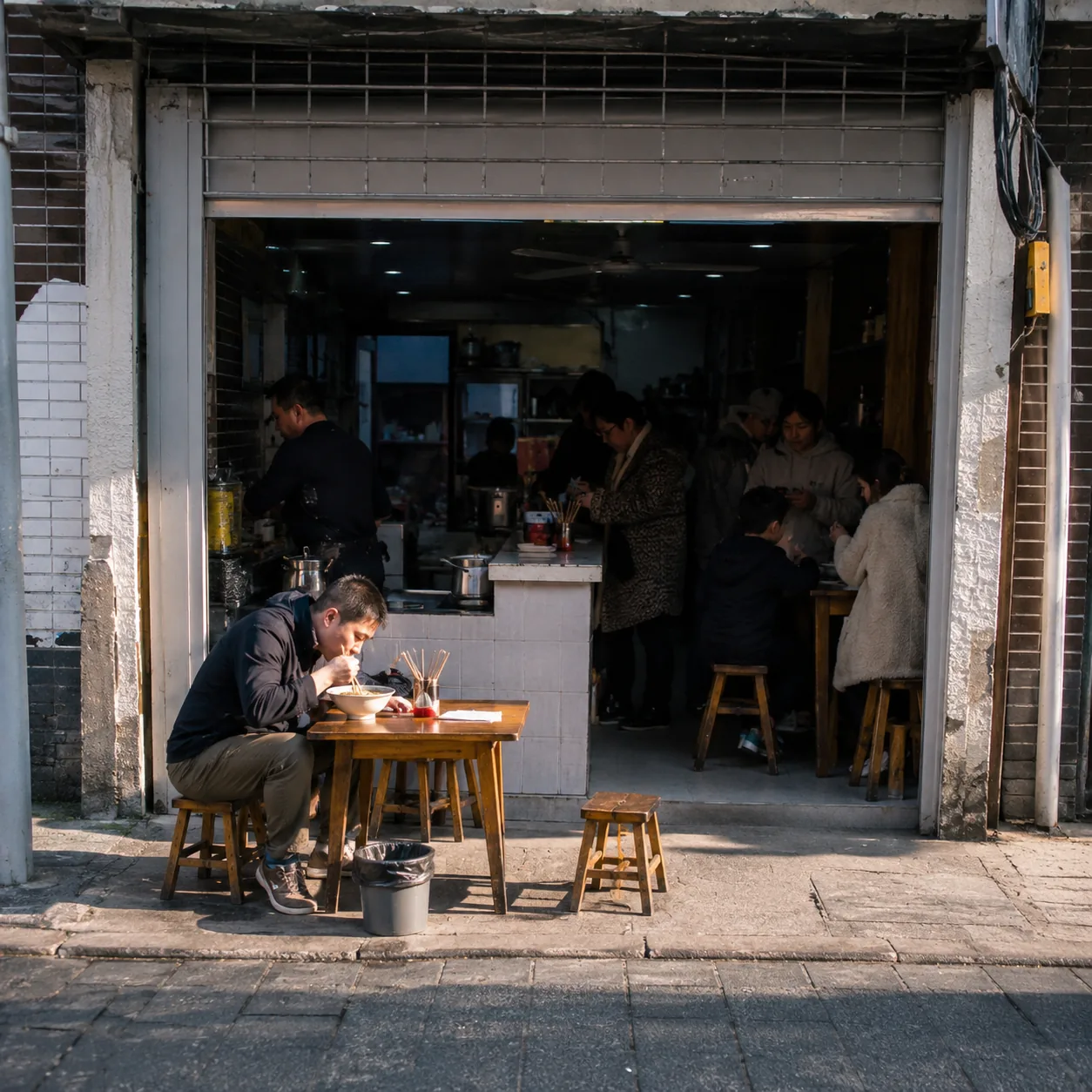
The menu was not complicated. A few lines on the wall listed shredded pork noodles, original-broth noodles, sour-spicy noodles, and extra toppings. I stared for a while and still did not know what to order. The owner asked if I was from out of town. I nodded. She did not recommend the most expensive option or insist that first-time visitors must try a certain bowl. She only said that mornings were better with something lighter: original broth with shredded pork, chili added by myself. I followed her suggestion, paid, and sat at a small table by the wall. The uncle beside me was halfway through his bowl, lifting noodles with a slight turn of his chopsticks so they curled up with the soup.
When the bowl arrived, my first reaction was that it looked too plain. White rice noodles lay in the bowl with a few strips of pork, some chopped scallion, and a thin shine of oil on the broth. It was not the kind of food that makes a dramatic entrance in travel videos. There were no exaggerated colors and no mountain of toppings. I tasted the soup first. It was clearer than I expected, warm with bone broth and the soft fragrance of rice. Then, following the owner’s advice, I added a spoonful of chopped chili and a little pickled long bean, and the bowl slowly woke up.
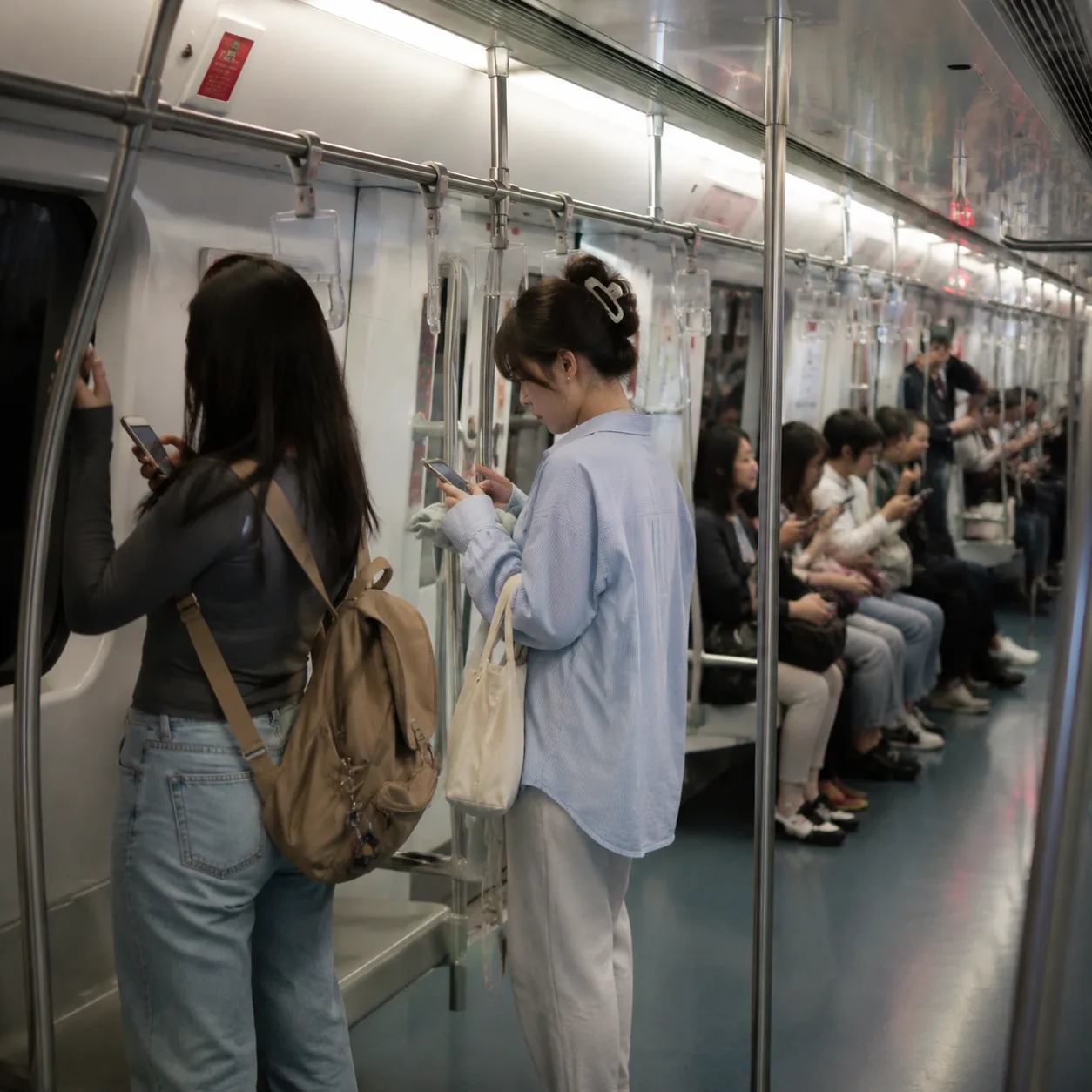
The most interesting part was that Changsha’s heat did not rush to prove itself in this breakfast bowl. It did not push me into sweating at the first bite. It hid in the soup, the toppings, and the salty fragrance of the pickled beans, building upward mouthful by mouthful. I had assumed that Changsha’s flavor had to be fierce to feel representative. This bowl taught me that local taste can also begin with restraint. The clear broth gave space to the noodles. The chili woke up the morning. The pickled beans made it hard to put the chopsticks down. None of them stole the spotlight, yet together they made the bowl complete.
While eating, I watched the rhythm of the shop. Regulars entered without reading the menu and simply asked for the usual. Office workers kept bags on their knees, finished in a few minutes, and left. Two students shared a small plate of vegetables while discussing class. The owner remembered who disliked scallions, who wanted extra pickles, and whose noodles should be softer. Her movements were quick like running water, but not coldly efficient. They carried the ease built by long familiarity. For a tourist, this was a random shop. For nearby people, it might be the switch that turned on many mornings.
At that moment, I realized how easily I had been led by signature dishes. Signature dishes matter; they condense reputation and help outsiders enter a city quickly. But if I look only at them, travel becomes a chase after labels: arrive somewhere, eat the required thing, take a photo, check the box. That is not necessarily wrong, but it can make me miss the looser parts of a city. This bowl of rice noodles in Changsha did not ask me to be excited or to prove that I had been there. It simply let me begin the day the way a local day might begin: with a bowl of hot soup.
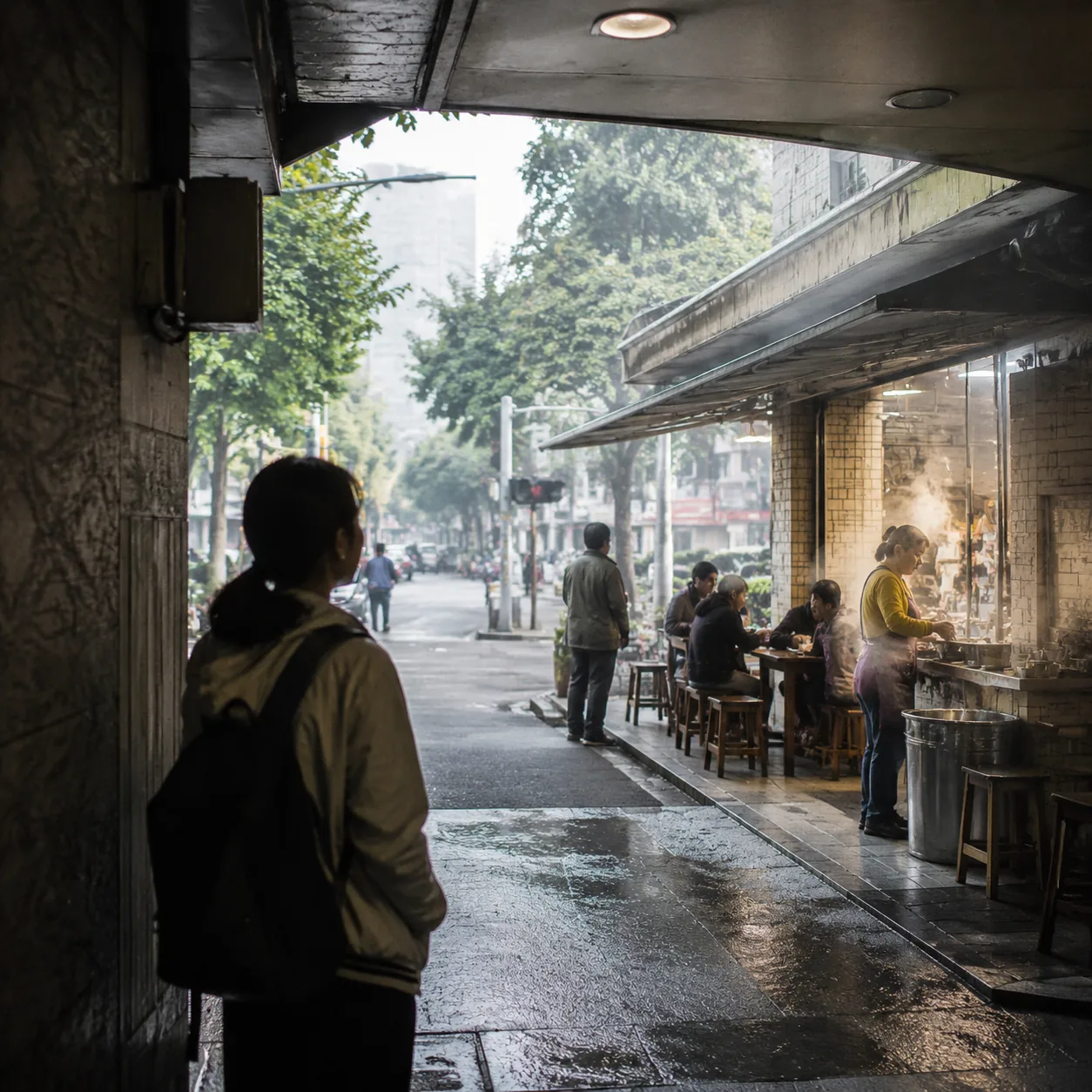
By the second half of the bowl, the soup had grown richer. The noodles had absorbed the chili and pickled bean flavors, and the shredded pork no longer felt like a minor detail. I began to understand why the owner had told me to add chili myself. Every morning is different. Some people are in a hurry. Some stomachs are not awake yet. Some need a sharp spoonful of heat, while others only want warm broth. Leaving the chili on the table and letting customers decide felt more considerate than fixing the taste in advance. It did not force the city’s personality into my mouth; it allowed me to approach it at my own speed.
When I left the noodle shop, two or three people were waiting at the door. The sun had come out, electric scooters multiplied on the street, and steam rose from stacks of breakfast baskets. The popular breakfast place I had planned to visit was still in my saved list, but I suddenly felt less hurried about it. Not because it was unworthy, but because I had received a reminder: the things that help you understand a city are not always the most advertised ones. Sometimes an unobtrusive shop, a casual suggestion, and a spoonful of chili added by your own hand bring you closer to everyday life.
Later, I did eat the famous things in Changsha. The stinky tofu was crisp outside and soft inside. The crayfish was lively and best shared with friends. The sweet drinks really did soften the heat. They were all good, and they formed the city’s outward-facing side. Yet when I think back, I most often remember that morning bowl of noodles. It accepted me before I was ready to perform the role of a tourist. There was no queue strategy, no inflated expectation, and no pressure to love it. There was only a small table, a bowl of hot soup, and a flavor that unfolded slowly.
That breakfast changed the way I ate over the next few days. I began asking less often, “Which place is the most famous?” and more often, “What do you usually eat in the morning?” The answers were not always neat. Someone mentioned the noodle shop downstairs. Someone liked the buns near the office. Someone bought soy milk when in a rush. But these answers carried the temperature of daily life. They may not fit a ranking list, but they help a traveler land. If travel only chases signature dishes, it can keep standing in front of the city. A plain breakfast lets you sit inside the city’s morning.
So if I return to Changsha, I will still leave time for the famous flavors, but I will not hand my whole appetite to a list. I will walk a little farther in the morning, see which shop sends up steam earliest, listen for customers who speak to the owner like old acquaintances, and notice which tables turn over fastest. The shop may not have a striking sign, and the menu may be only a few lines. But it may tell me, through one bowl of noodles, how the city wakes up each day. For me, that matters more than completing a food assignment.
That bowl of rice noodles did not make me give up signature dishes. It simply changed the order. Enter through an ordinary meal first, then understand the famous excitement. Let the body adjust to the local morning before curiosity runs toward the night menu. Travel becomes a little slower this way, but the memories stay more real. A city does not live only in recommended shop names. It also lives in morning broth, the chili jar on the table, the tastes remembered by the owner, and a regular at the next table asking for the usual.