広東・広西10日間海陸ツアー
From the urban buzz of the Pearl River Delta to the turquoise coast of Beibu Gulf and the ink-wash landscapes of Guilin’s Li River — this route across Guangdong and Guangxi gives you ocean, karst peaks, and Lingnan culture in a single 10-day arc. Head west, and each stop brings a completely different world.
Why This Route
Most travelers treat Guangdong and Guangxi as separate trips, but Guangzhou to Beihai is just 6 hours by high-speed rail, and Beihai to Guilin only 4 hours more. String the two provinces together and you’ll find the distance between ocean and karst is far shorter than you’d imagine.
Plus, the food along this route is among China’s absolute best — from Cantonese morning dim sum to Beihai’s seafood, from Liuzhou’s snail noodles to Guilin’s beer fish. Honestly, the eating alone justifies the entire trip.
Days 1–2: Guangzhou
Guangzhou needs little introduction — this 2,000-year-old city is South China’s stomach. On your first morning, head straight to Guangzhou Restaurant or Dian Du De (¥80–120/person) and wake your taste buds with a proper Cantonese yum cha: har gow, phoenix claws, cheung fun, char siu bao — each a distillation of dim sum perfection.
In the afternoon, stroll Shamian Island (free) — Guangzhou’s former foreign concession, where French plane trees shade colonial European architecture. It’s perfect for a slow walk and photos. Come evening, grab a craft beer on Yanjiang Road by the Pearl River and watch Canton Tower (“Xiao Man Yao”) light up against the sunset.
On Day 2, visit Chen Clan Academy (¥10 admission) — the pinnacle of Lingnan architecture, with dazzling brick, stone, wood, and ceramic carvings crowding every roofline. Nearby Shangxiajiu Pedestrian Street is old Guangzhou distilled: a bowl of Liwan sampan congee or silky double-skin milk pudding will make you want to stay forever.
Day 3: Kaiping Diaolou
Take the high-speed train from Guangzhou South to Kaiping (about 1.5 hours, ¥60). Here you’ll find the UNESCO-listed Kaiping Diaolou — fortified watchtowers. A combined ticket (¥150) covers Zili Village, Li Garden, and Majianglong.
These towers were built in the early 20th century by overseas Chinese returning home; their styles blend Chinese, Romanesque, Gothic, and even Islamic elements. Walking into Zili Village, you’ll see dozens of diaolou standing among rice paddies, each telling a story of departure and homecoming. Sunlight through stained-glass windows casts kaleidoscopic patterns on century-old furniture — in that moment, you can feel both the prosperity and the loneliness of an emigrant hometown.
Days 4–5: Beihai
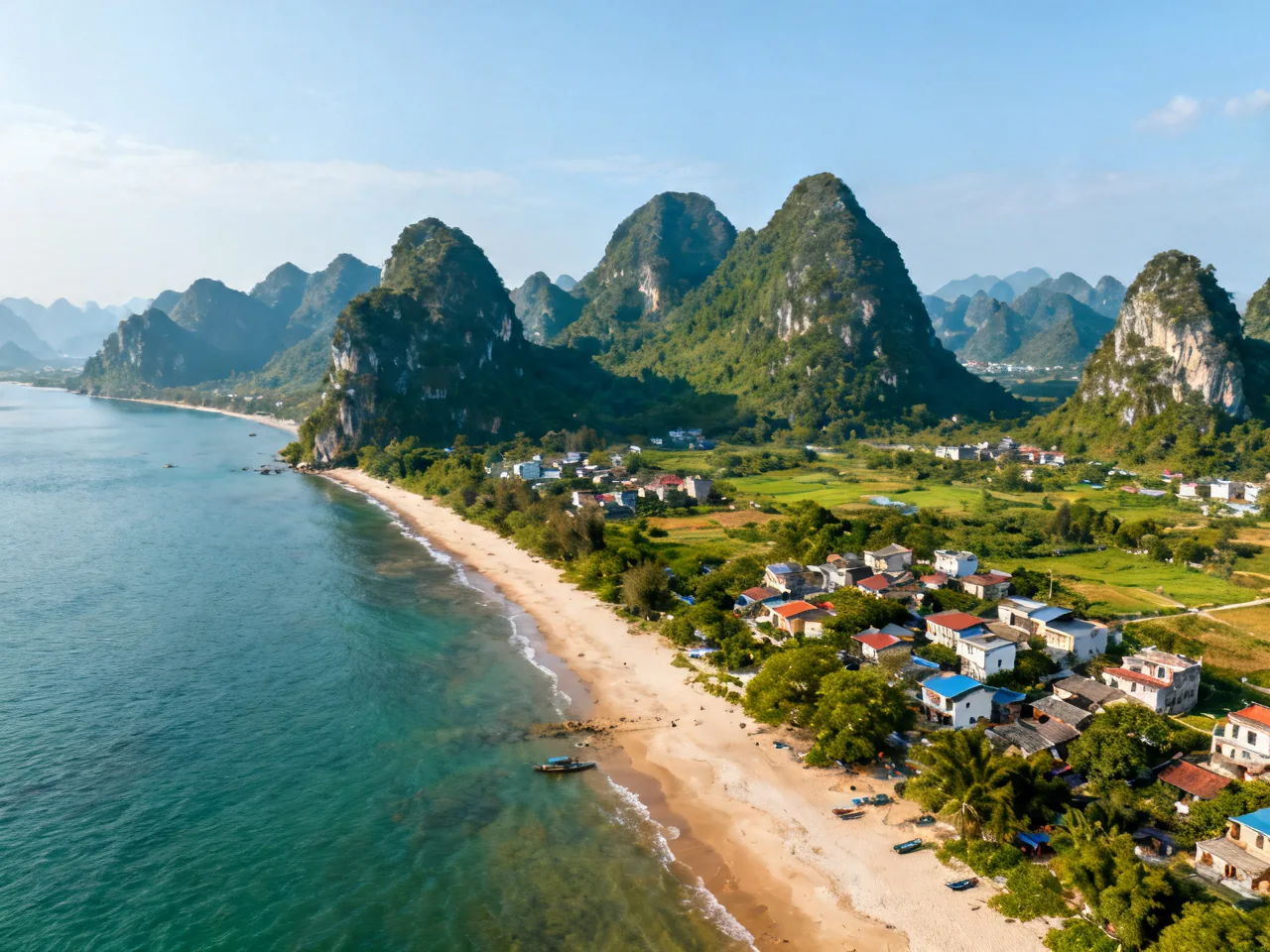
From Kaiping, take the train to Beihai (about 4 hours via Nanning transfer, ¥200). Beihai’s Silver Beach is one of China’s finest: sand as fine as flour, water clearer than Sanya. Silver Beach is free to enter.
Arrive at Silver Beach on Day 4 afternoon for swimming, then find an open-air seafood stall on Old Street (200 years old): flower crabs ¥40/jin, scallops ¥10 each, oysters ¥5 each, cooking fees extra — still at least half the price of Sanya. The arcade buildings along Old Street preserve a rich Lingnan flavor, especially atmospheric under evening lights.
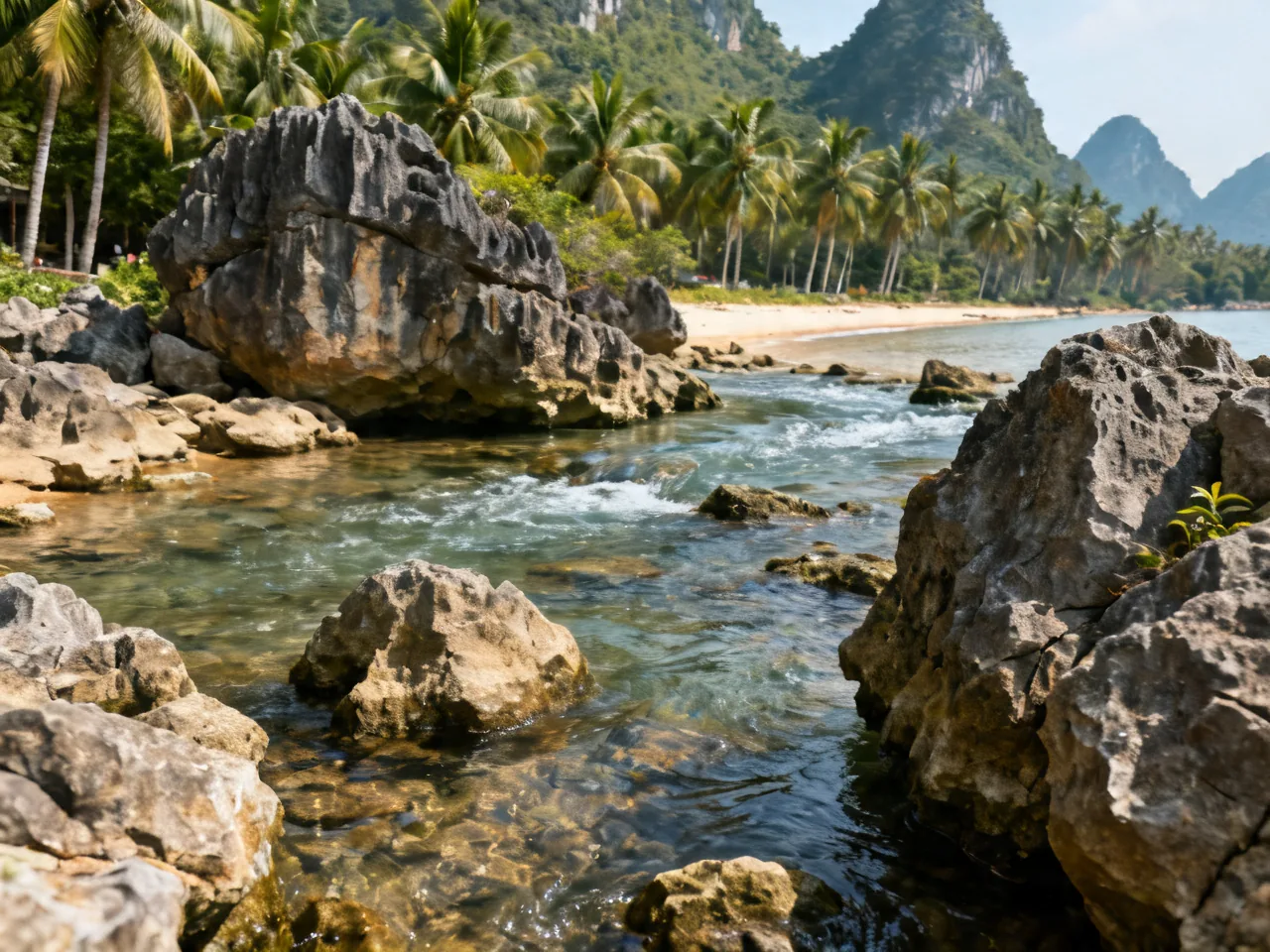
On Day 5, take the ferry to Weizhou Island (70-minute crossing, ¥150 one-way, ¥98 island entry). China’s youngest volcanic island offers the volcanic cliffs of Dishui Danping and the sea-eroded platforms of Wucai Beach. Rent an electric scooter (¥80/day) to circle the island.
Day 6: Nanning Stopover
Take the train from Beihai to Nanning (1.5 hours, ¥60). Nanning is a chronically underrated city. Zhongshan Road night market is the locals’ late-night canteen — grilled fish, laoyou noodles, rolled rice noodles, and suanye (pickled fruits) all showcase Guangxi flavors. Try Fuji Laoyou Noodles — a bowl is just ¥8, the sour bamboo shoot tang, chili heat, and minced pork umami colliding until you’re sweating and already wanting another round.
Afternoon options: Nanning Museum (free) for Zhuang ethnic culture, or a digestive stroll in Qingxiu Mountain Park (¥20 entry).
Days 7–8: Guilin & the Li River
Nanning to Guilin by HSR takes about 2.5 hours (¥130). Guilin is a city that breathes landscape painting — look up from any street and you’ll see solitary karst limestone pillars erupting from flat ground like giant stalagmites grown from the earth.
On Day 7 afternoon, visit Elephant Trunk Hill (¥55) and take the Two Rivers and Four Lakes night cruise (¥190). The reflections of Sun and Moon Twin Pagodas shimmer on the lake surface; the entire city center becomes a palace on water.
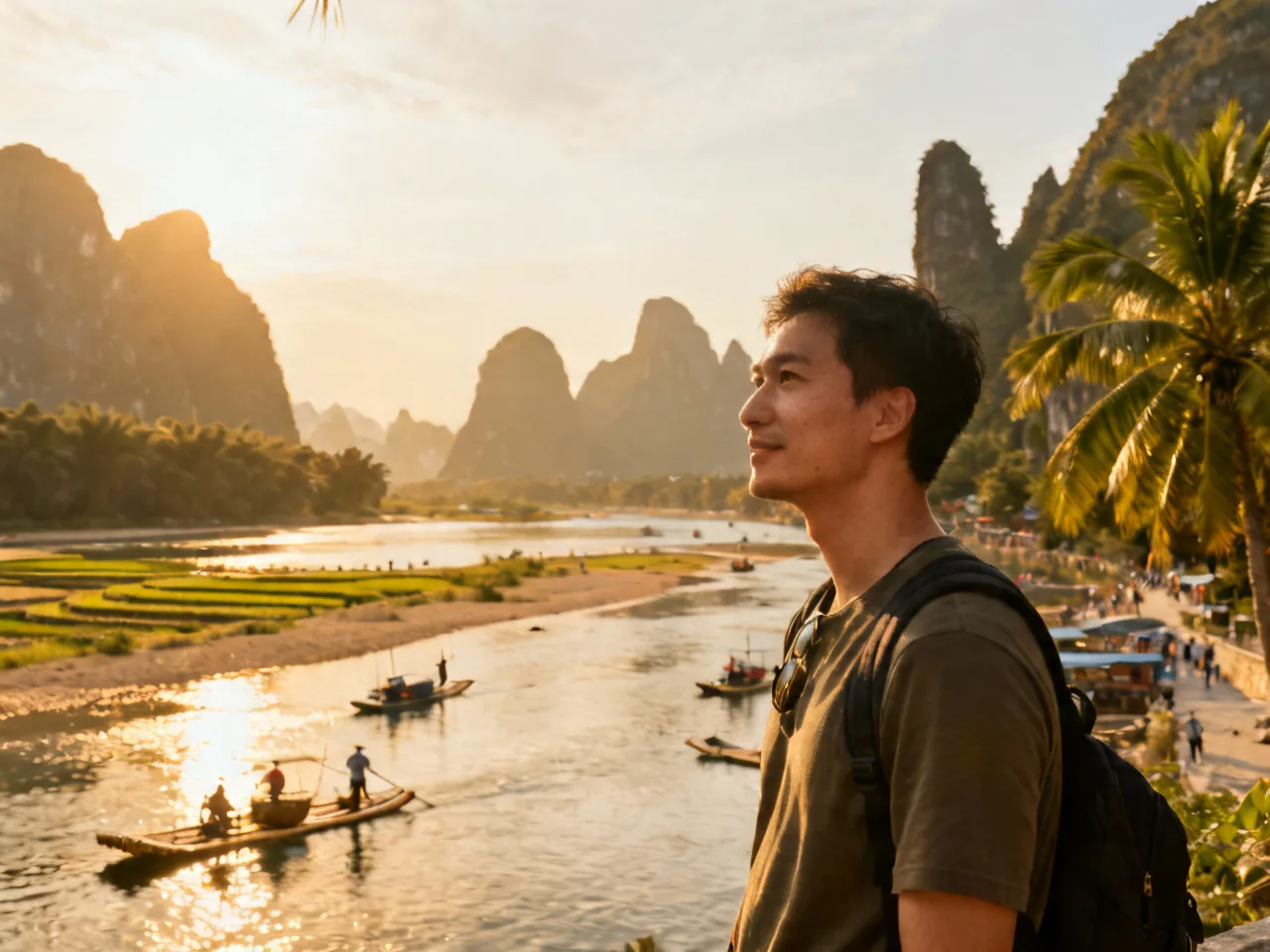
Day 8 is the showpiece — the Li River cruise. From Guilin’s Zhujiang Pier to Yangshuo, it’s about 4 hours (¥215/person). The karst peaks on both banks look like they’ve been painted stroke by stroke in pale ink. Bamboo rafts glide across the river’s surface; occasionally a fisherman poles along with cormorants perched beside him. This is the most primal, most profound definition of “mountain and water” in Chinese culture.
Day 9: Yangshuo
Yangshuo sits at the end of the Li River’s most scenic stretch and is a town built for slow living. In the morning, rent a bike (¥30/day) and ride the Ten-Mile Gallery, passing Butterfly Spring and the Big Banyan Tree. Afternoon, take a bamboo raft drift on the Yulong River (¥180/person, about 2 hours) — quieter and more pristine than the Li River.
In the evening, check out West Street — touristy, yes, but the lively mix of Chinese and international travelers still makes it fun. Try Dashifu Beer Fish (¥70/person): a fresh Li River carp braised in beer, tender meat in a rich sauce, devastating with white rice.
Day 10: Longji Rice Terraces
Charter a car from Yangshuo (about 3 hours) or bus from Guilin (2.5 hours, ¥40) to reach Longji Rice Terraces. Admission is ¥80. Zhuang and Yao villagers have farmed these terraces for generations — tier upon tier rising from valley floor to summit, like the earth’s own fingerprints.
Stay in Ping’an or Jinkeng Dazhai (¥200–350/night) and catch the terraces emerging through sea-of-clouds at dawn from the viewpoints. From Jinkeng, a cable car (¥60 one-way) whisks you to the highest platform.
Practical Tips
Climate: Both provinces are low-latitude and warm year-round. Best travel window: October to April, avoiding the June–September heat and typhoon season. Longji Terraces peak seasons: May–June (flooded paddies reflecting sky) and September–October (golden harvest).
Transport: The entire route is accessible by high-speed rail — no car needed. Book tickets in advance on 12306 or Ctrip. Beihai–Weizhou ferry tickets sell out fast in peak season; book at least 3 days ahead via the “Laiyouba” WeChat account.
Budget: Expect ¥5,000–8,000/person for the full 10 days (transport, accommodation, food, admissions), excluding flights. Seafood and rice noodles are absurdly good value — don’t worry about overspending on food.
Related Reads
- 10-Day East China Five-City Loop
- Lijiang Old Town: Naxi Culture & Snow Mountain Views
- Zhangjiajie Glass Bridge & Tianmen Mountain Guide
- Guilin Li River Scenic Tour Complete Guide
- Spring Bloom Map: China’s Most Beautiful Flower Fields