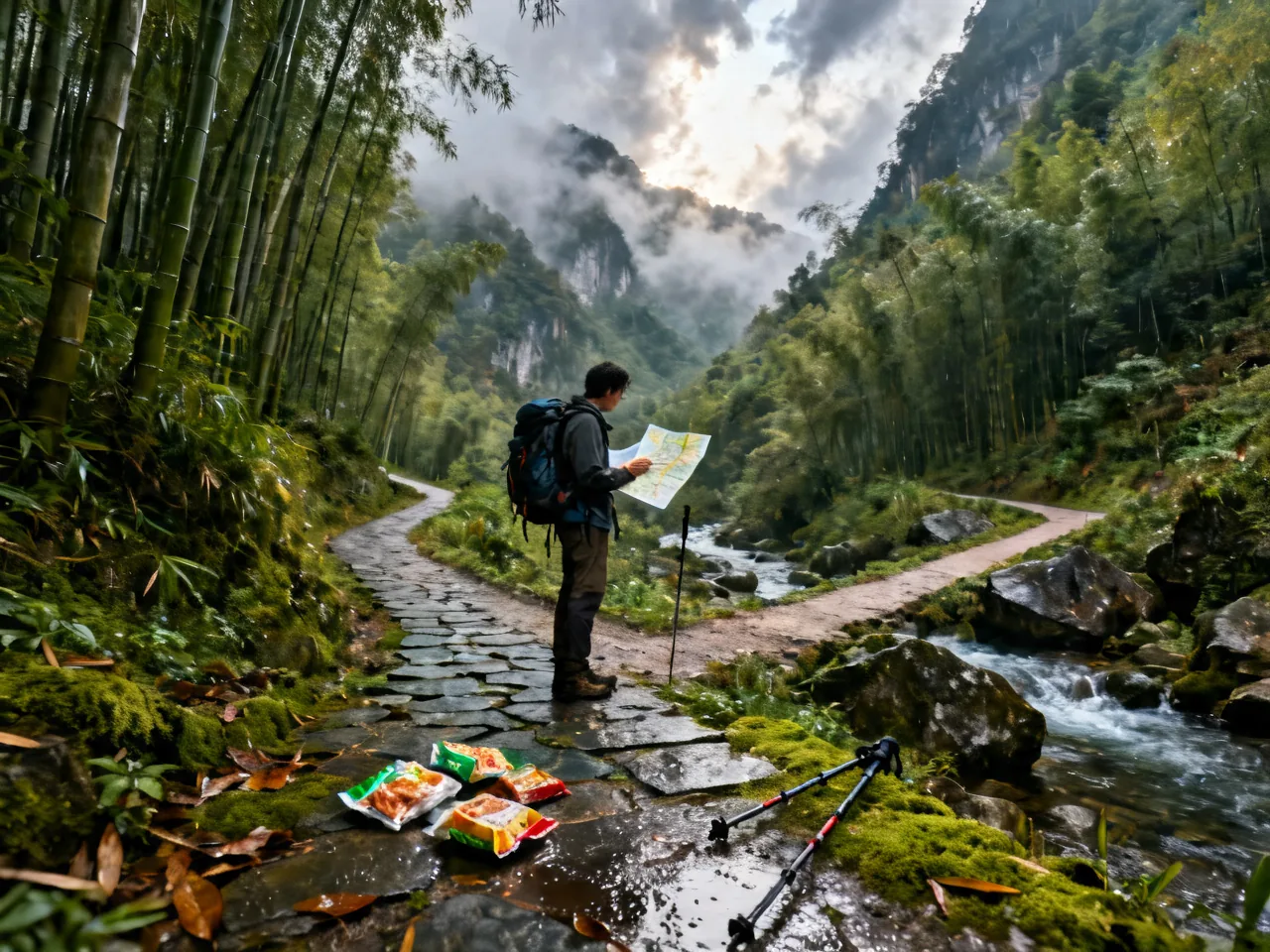
私は貴州の山で七日間道に迷った
Before Guizhou, my entire mental image of the province was Huangguoshu Waterfall. Then a friend tossed me one line: “Go there and you’ll see — Guizhou is the most hidden place in all of China.”
He was right. I spent seven days there, with spotty phone signal and a GPS that kept giving up on me, but I saw the quietest landscapes of my life.
First Stop: Zhenyuan — A Riverside Town Where Time Stands Still
Zhenyuan was my first stop. Less than two hours by high-speed rail from Guiyang, I stepped out of the station and froze at the stilted wooden houses lining both sides of the Wuyang River. This wasn’t one of those over-renovated “ancient towns” — people actually lived here, laundry hung from balconies, and old men fished by the water.
I walked along the river at night, under dim yellow streetlights, the flagstones gleaming from recent rain. A shop owner waved me in for a bowl of sour soup and told me tourists were getting fewer — “Young people all go to Fenghuang these days.” Their loss, I thought.
Practical info: Guiyang North to Zhenyuan by high-speed rail takes about 1 hour 40 minutes, second-class seat around ¥75. Zhenyuan’s old town is free to enter. Riverside guesthouses run ¥80-150 per night, rarely exceeding ¥200 even in peak season.
Miao Villages Beyond Xijiang
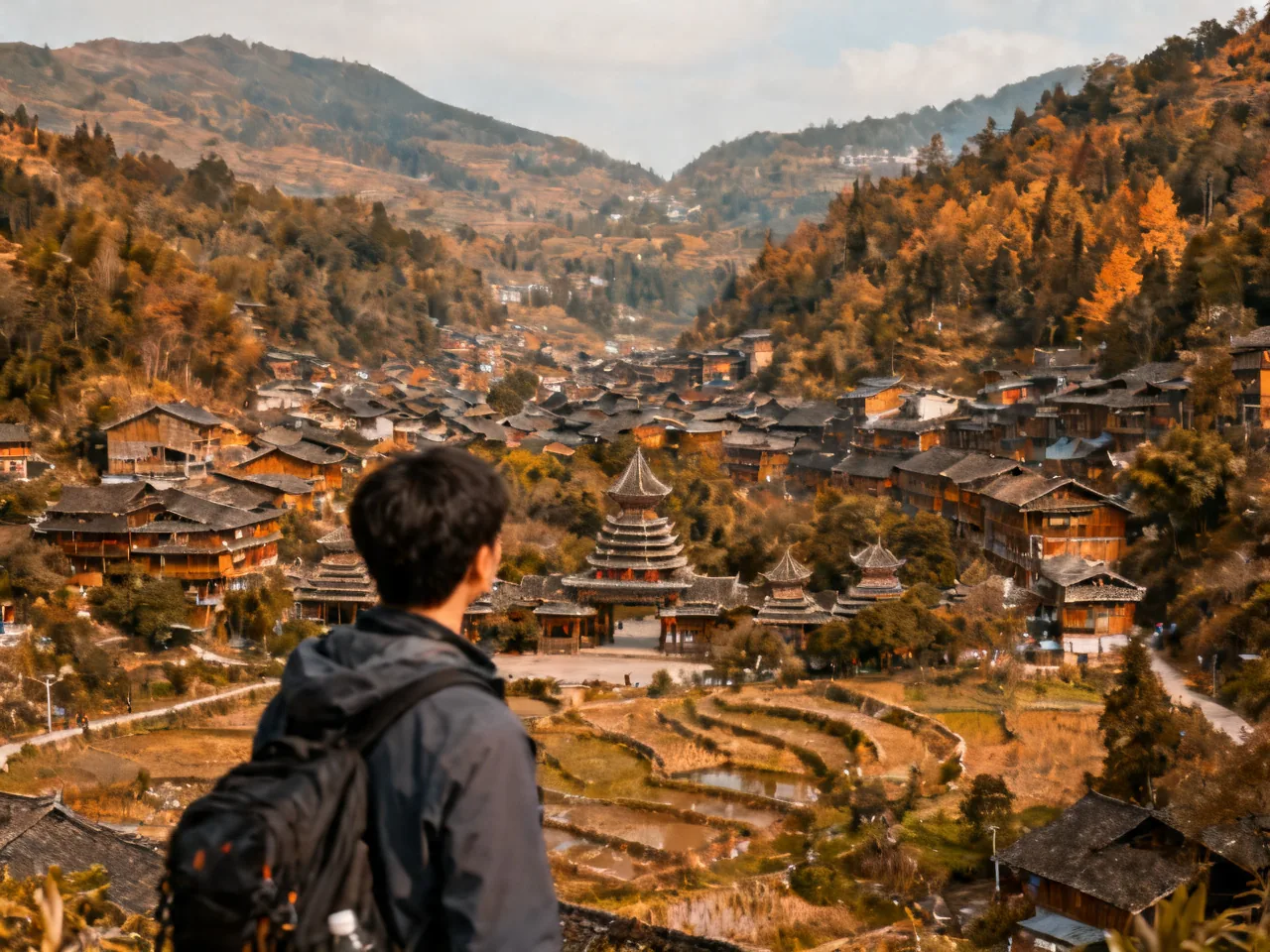
Every travel guide will send you to Xijiang Thousand Household Miao Village, and I went too — but honestly, it’s become too commercial. The wooden houses cascading down the hillside are genuinely spectacular, but the streets are filled with mass-produced silver jewelry and standardized sour fish soup.
A local pointed me toward Langde Upper Village instead. It was tiny, almost no tourists, and you had to walk along a path between rice paddies to get there. An elderly woman sat embroidering at her doorstep, saw me trudging past with my backpack, and said in halting Mandarin: “Sit.” So I did — spent the whole afternoon on her doorstep, watching her embroider half a butterfly.
That day I learned something: Miao embroidery patterns aren’t decoration — they’re history. They stitch migration routes and ancestral stories into their clothes, because the Miao had no written language. Their clothing is their book.
Libo’s Small Seven Arches: Water in Colors I Didn’t Know Existed
Heading south from southeastern Guizhou, I reached Libo. The water at Small Seven Arches scenic area — I don’t know how to describe it — not blue, not green, but something between jade and mint that I’ve never seen anywhere else.
The 68-tier cascading waterfall was the most pleasant walk I’ve ever taken. Water flowed over limestone in layer after layer, flanked by virgin forest on both sides, the air so humid it felt like stepping into a humidifier. I took off my shoes and waded in the shallows for half an hour — the water was cold enough to make my bones scream.
A heads-up: Small Seven Arches admission is ¥130, and there are shuttle buses inside the scenic area — buy the combo ticket (entry + bus). It gets insanely crowded in peak season. If you can choose, a weekday visit is ten times better. I went on a Thursday and had entire boardwalks to myself.
Jiabang Terraces: Quieter Than Yuanyang, Emptier Than Longji
Guizhou’s terraces aren’t as famous as Yunnan’s Yuanyang or Guangxi’s Longji, but Jiabang hit me the hardest. It’s a two-hour drive of winding mountain roads from Congjiang county seat — I nearly threw up three times in the car.
But once I arrived, I didn’t want to leave. At 5:30 in the morning, fog rolled up from the valley, and the terraces emerged layer by layer. A few wooden houses halfway up the mountain sent smoke curling from their chimneys. No viewing platforms, no railings, no loudspeakers — just me standing on a field ridge, listening to water cascading down from terrace to terrace.
p>
I stayed two nights in Jiabang, at a villager-run guesthouse — ¥60 per night, breakfast and dinner included. Breakfast was sticky rice with pickled vegetables; dinner featured paddy-field fish caught that very day. The host barely spoke Mandarin, but he used hand gestures to show me which path had the best sunrise view and which direction caught the best afternoon light for photos.
Things I Learned
After seven days, here’s what I took away about traveling in Guizhou — the stuff guidebooks don’t usually mention:
Don’t rely too heavily on GPS. Mountain areas have poor signal — both Google Maps and Amap have blind spots. On the road to Jiabang, my navigation vanished for 40 minutes straight. I survived entirely by asking locals. People in Guizhou’s mountains are genuinely kind — a guy on a motorcycle went out of his way to ride ahead and guide me for a stretch.
Sour soup is the soul of this place. Guizhou locals make sour soup with everything — fish, beef, pig trotters, tofu, even noodles. Red sour soup is fermented with tomatoes; white sour soup is fermented with rice water. I love both, but red is more approachable for first-timers. There’s an entire street of sour soup hotpot restaurants in Kaili — walk into any one and you’ll be fine.
Don’t rush the itinerary. The best of Guizhou hides in the places you “didn’t have time for.” I originally planned to finish in five days, but by day three I’d scrapped the whole schedule — because Jiabang deserved an extra day, and Zhenyuan’s night view deserved one more evening. If you only have three days, I’d suggest picking one area and staying deep, rather than trying to cross the entire province.
When my seven days were up, I sat in Guiyang Longdongbao Airport scrolling through my photos, and realized the best ones were all taken when I had no signal. Maybe that’s just what Guizhou is — you have to get lost first before you find the best views.
Related Reads
- 10-Day East China Five-City Loop
- Lijiang Old Town: Naxi Culture & Snow Mountain Views
- Zhangjiajie Glass Bridge & Tianmen Mountain Guide
- Guilin Li River Scenic Tour Complete Guide
- Spring Bloom Map: China’s Most Beautiful Flower Fields