中国の景勝地でシャトルバスの列に並んだとき、私は初めて「一番前に突進するより、まず日陰を探す」ことを学んだ
The first time I lined up for a scenic shuttle in China, I acted on a very instinctive and very tourist-like assumption: if I rushed to the very front, I could not possibly be making a mistake. It was a midsummer afternoon. As soon as I got out at the outer parking area of the scenic site, the heat hit me almost like a wall. The asphalt had gone pale under the sun. Loudspeakers near the mountain gate kept repeating shuttle instructions. The metal queue barriers flashed in the light, and the air smelled faintly of sunscreen, bottled water, and the leftover warmth of engines. There were many people, but the queue was not chaotic. It had been divided into several snaking lanes by railings, all inching forward slowly. I had a backpack on, sweat was already starting at my forehead, and my brain had narrowed to one simple idea: get to the very front as fast as possible, then I can board sooner and escape the sun sooner. Later I realized I had understood the whole situation in exactly the most exhausting way.
I instinctively pushed toward the lane nearest the front, choosing whichever section seemed physically closest to the boarding point. The problem was that the area closest to the front had absolutely no cover at all. The sun pressed straight down from above. The metal railings were hot enough that I did not want to touch them. The people ahead of me could only wait in place because the next shuttle had not yet arrived, and where I was standing there was no wind, no shade, and barely enough comfort even to shift my weight. In less than ten minutes, my scalp felt hot, I was drinking water too quickly, and I had that slightly stunned feeling that comes from too much sun too fast. Then a scenic-area staff member in uniform glanced at me and pointed behind me, saying, “You can line up over there. The shaded lane moves faster.” At first I almost did not understand him. My immediate internal reaction was disbelief: how could that be true when that side visibly looked farther from the front gate?
I followed the direction of his hand and finally noticed that another section of the queue was actually lined up beneath a row of trees. More importantly, it was not just “an extra line in the back.” It had been split off according to departure timing, boarding point, or temporary shuttle dispatching. Because I was new to the site, I had relied only on the crudest visual logic—that being closer to the gate meant faster, and being farther forward meant winning something—without realizing that the efficiency of Chinese scenic queues often depends less on your literal distance from the front rail and more on whether you understand the system the staff have arranged on the ground. Once I dragged my bag over into the shade, I felt as if my body had suddenly regained battery power. Within just a few minutes, I could feel the breeze again and my breathing stopped feeling strained.
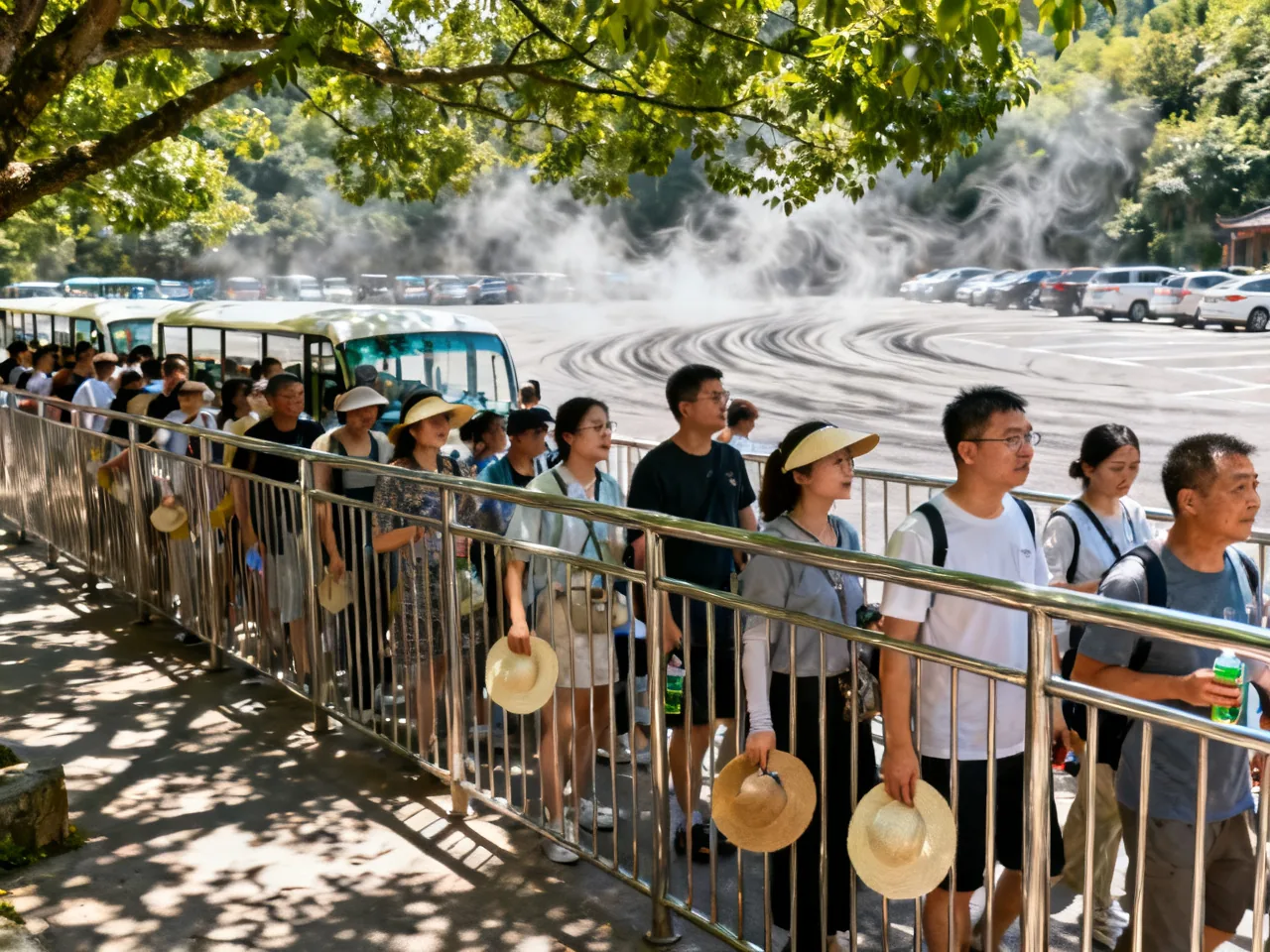
Once I was in the shaded lane, I finally started observing how other people were handling this kind of queue. Many local visitors were not in a rush to seize the sunniest and most front-facing positions at all. Instead, they first checked the signs, watched how the staff were directing the flow, and noticed which lane might look farther back but would actually release people at the same time once a shuttle door opened. Some people even asked a quick question first—“Does this side also go up the mountain?” or “Which lane is for the next bus?”—and only then settled into place. That difference struck me hard because it was so unlike my old assumption that queueing simply meant fighting to occupy the foremost position. Here, the real skill was not claiming a static spot but reading a dynamic process. If you understood the process, you could stand a little less aggressively and still move more efficiently. If you did not understand it, you could be pressed all the way to the front railing and still waste fifteen extra minutes roasting in the sun.
Later I also realized that a scenic shuttle queue resembles metro lines and escalator approaches in cities more than it first appears. On the surface, it looks like “everyone is waiting,” but the way people wait differs enormously. Some keep inching forward every few seconds, growing more irritated the whole time. Others first choose the position that costs their body the least, and then adjust calmly as the situation changes. In summer, the difference between those two methods becomes enormous. You may think you have gained three meters, when what you really purchased was twenty extra minutes of direct sunlight. Or you may think you stepped slightly backward, when what you actually gained was easier breathing, a clearer line of sight, and a steadier rhythm. For foreign visitors, this kind of judgment is easy to get wrong because we tend to imagine “queue efficiency” as a question of rank alone rather than one of spatial choice.
At another scenic area later on, I ran into a similar situation and this time I did not rush forward at all. I stood to one side and watched for half a minute first. Sure enough, the frontmost lane looked shorter, but it was exposed to the harshest angle of sunlight and its release rhythm was slower. Another lane under an overhang looked more winding, yet because the staff were funneling people there more actively, boarding was actually much faster. That time I barely suffered from the heat at all, and my mood was completely different. I suddenly understood that much of what separates a traveler who “knows how to move” from one who does not is not how many guidebook tips they memorized, but whether they can quickly identify on site which arrangement is actually friendliest to their body and time. Knowing how to queue is itself part of travel competence.
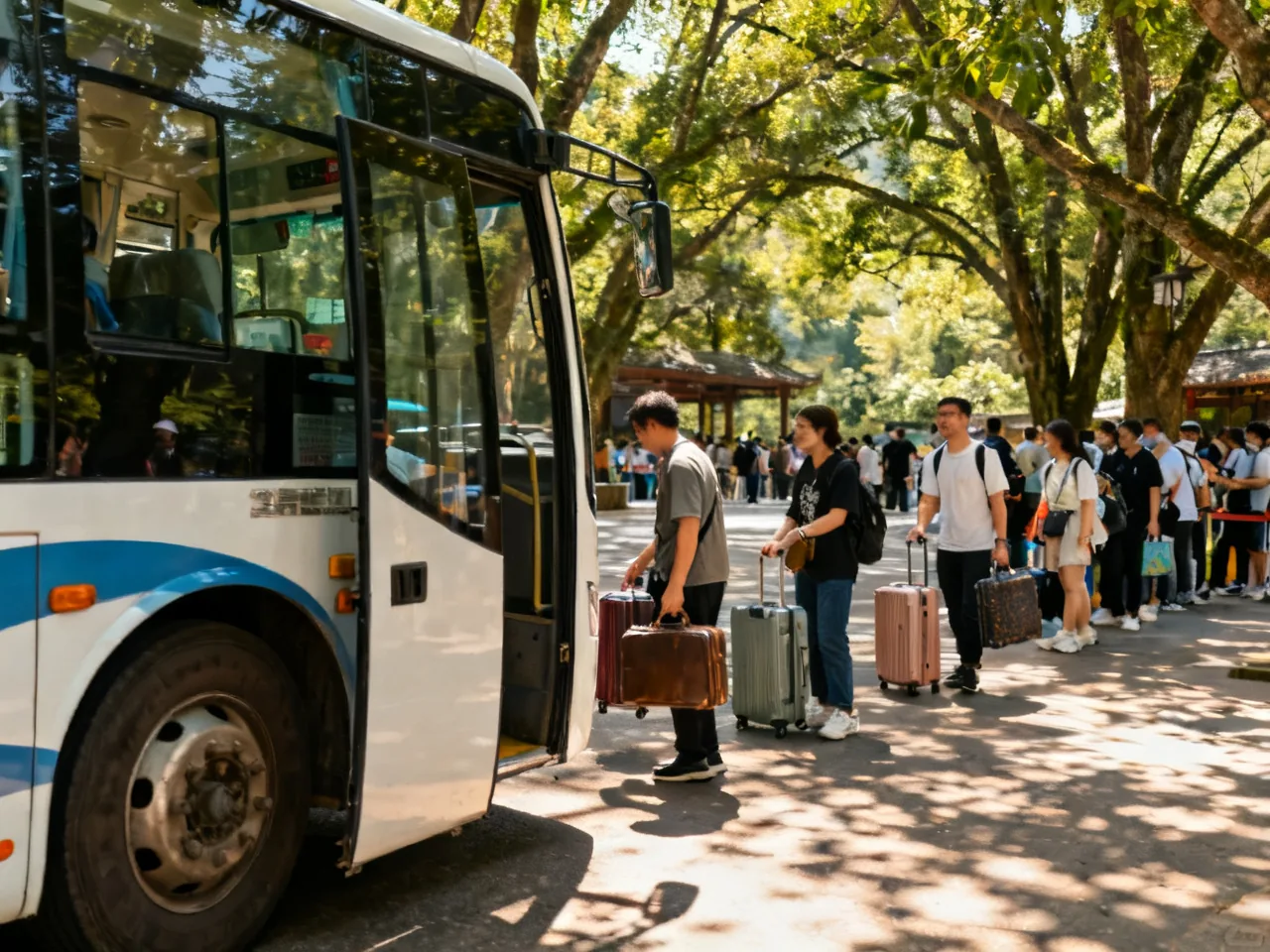
Now, if a friend newly traveling in China asks me what experience is easiest to overlook when taking scenic shuttle buses, I answer very directly: look for shade first, then understand the lane split, and do not lock your eyes on the very front from the beginning. In many popular Chinese scenic areas, crowd organization is already highly developed. What really determines whether you stay comfortable and whether you move quickly is often not whether you seized the first row, but whether you understood the route design and environmental conditions the staff were already showing you. For me, that moment in the blazing sun when one worker’s single sentence woke me up felt like a small turning point. What I learned was not laziness and not some clever shortcut. It was to stop misunderstanding “efficiency” as mindless forward charge. Very often in travel around China, the people who move most efficiently are not the most frantic ones. They are the ones who best understand the arrangement and know how to place themselves well inside it.