五月の蘇州、庭園に雨の糸が落ちるとき、私はひとりで予定を少し軽くすることを覚えた
A little after seven in the morning, I came out of the Suzhou metro station before the sky had fully brightened. Rain in May is not temperamental like summer rain. It falls in fine threads, as if someone had softly wiped moisture across the air. The stone pavement outside the exit was already wet, and my shoes made a faint clinging sound with every step. I had arranged an ambitious solo-travel checklist for myself: the Humble Administrator’s Garden, Pingjiang Road, Suzhou Museum, and the Twin Pagoda Market, even my lunch had been mentally booked. But the moment I nearly slipped on the thin reflective film of water at the garden entrance, I instinctively leaned back, and something in that determined urge to “efficiently finish everything today” loosened too.
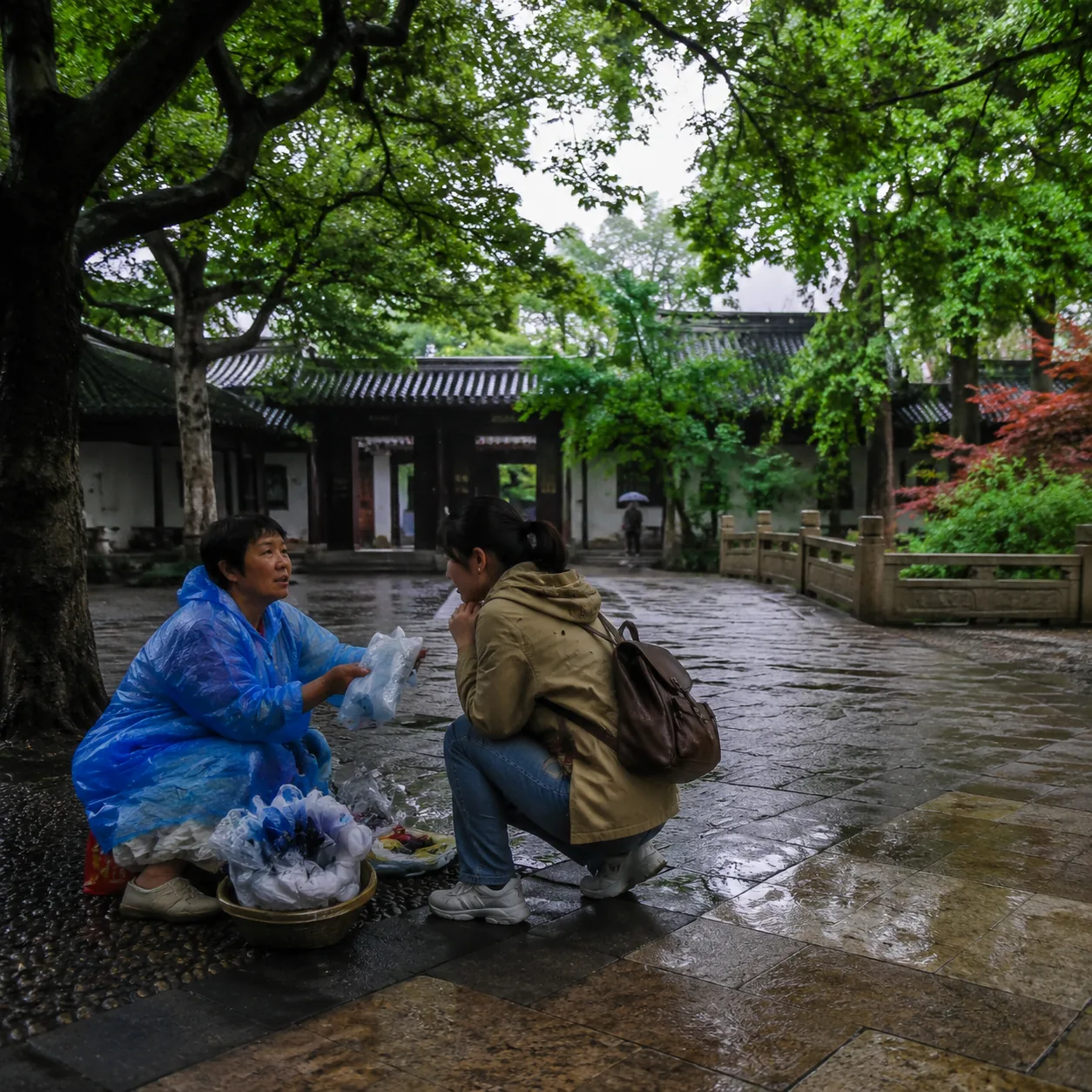
The woman selling disposable rain shoe covers by the gate saw me stumble and smiled up at me. “Don’t rush,” she said. “When it rains in Suzhou, it’s not for hurrying. It’s for collecting yourself.” Then she handed me a pack of shoe covers with the clean efficiency of someone who had already met countless people like me—tourists arriving with a fully loaded checklist. I stood under the eaves and pulled out my phone. My screen still held the tightly packed route I had planned, but what I heard now was no longer the ticking pressure of a schedule. It was the drip from the roof, the scrape of a cleaner’s mop in the distance, and the smell of fresh soy milk blending with damp wood. At that moment, I suddenly understood that if I still marched through the day the way I had planned, I might see everything and remember nothing.
When I entered the Humble Administrator’s Garden, the crowd was still manageable. The fine rain made the white walls look whiter and pressed the gray roof tiles into a deeper tone. Even the water in the pond seemed quieter than usual. The greatest gift of solo travel is that you can stop in any moment without having to explain yourself to anyone. I stood by the corridor for a long time, watching tiny raindrops break open and reseal the mat of floating duckweed, watching a girl in a pale trench coat tuck her umbrella handle into her elbow while taking a photo, and watching a local older man with graying hair stroll slowly out of a moon gate with his hands behind his back. Everyone seemed light, but it was not an empty lightness. It was the concentration of people each having their own private conversation with the rain.
I had originally worried that rainy weather would ruin my photos, but later I realized that Jiangnan’s spring rain in May was itself the best lens. Places that might look like mere scenic backdrops on a sunny day suddenly began to breathe. The surface of the water was no mirror—it carried texture. The lattice windows were no longer decorations, but filters drawing in wind and moisture together. Even the slightly rough anti-slip stone under my shoes made me more aware of each step. So often in travel we think we are chasing what looks beautiful, when what truly stays with us is the small but real feeling of having our bodies involved. Later I sat in a waterside pavilion, opened my phone, and for once did not rush to post anything. Instead, I deliberately left that morning open and gave it to idleness.
At noon I did not rush to the next stop as planned. Instead, I made my way slowly to Pingjiang Road. Shop doors along the street began opening one by one, and each wooden door released a mixture of old timber and hot food into the air. I ordered noodles in a small shop and sat by the window, watching people outside gather the points of their umbrellas and turn sideways to let others pass. That quiet, ordinary Chinese coordination moved me more than I expected. It reminded me that in many other cities, I had always tried to pack every minute full, afraid of missing something. But on this rainy day in Suzhou, what I truly learned was how to leave blanks in an itinerary. A blank is not waste. It is the space that lets a city come closer on its own. Later I drifted toward 我在苏州学会先找一条不费力的厕所路线, and ended up chatting with a shop owner about which alleys are best on rainy days. By evening, I found myself thinking of the unhurried rhythm described in 从高铁站到古镇,我终于不再慌:一条把换乘、寄存和吃饭都算进去的苏州落地路线, and realized that the tenderness of these cities often shares the same pace.
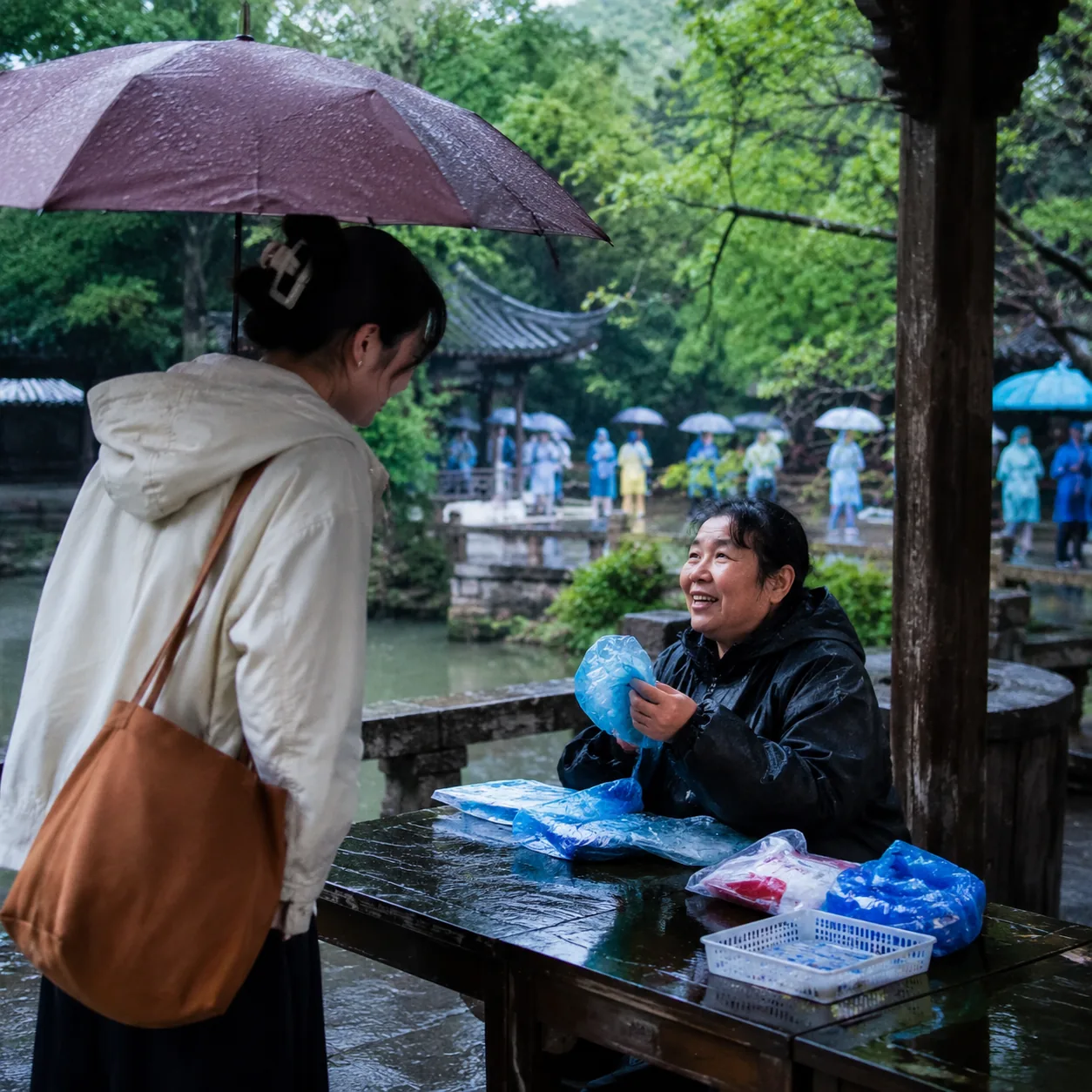
If you asked me what exactly I saw that day, I probably could not offer any grand answer. What stayed with me was the rustle of rain shoe covers brushing against my trousers, the circles raindrops drew over the pond, the white steam that fogged my glasses when a bowl of hot noodles arrived, and the small nod that same woman gave me when I passed the gate again before leaving. Jiangnan’s rain did not complete the trip for me. It simply pulled me, very gently, out of the posture of rushing, and let me walk a city into my heart at my own speed. On the way back to the hotel, I casually deleted two items from the next day’s itinerary. To my surprise, that made me happier than checking off any famous sight.