佛山の老街、あの雑貨屋の前の丸い灯が、通り一面を名刺よりありのままに照らしていた
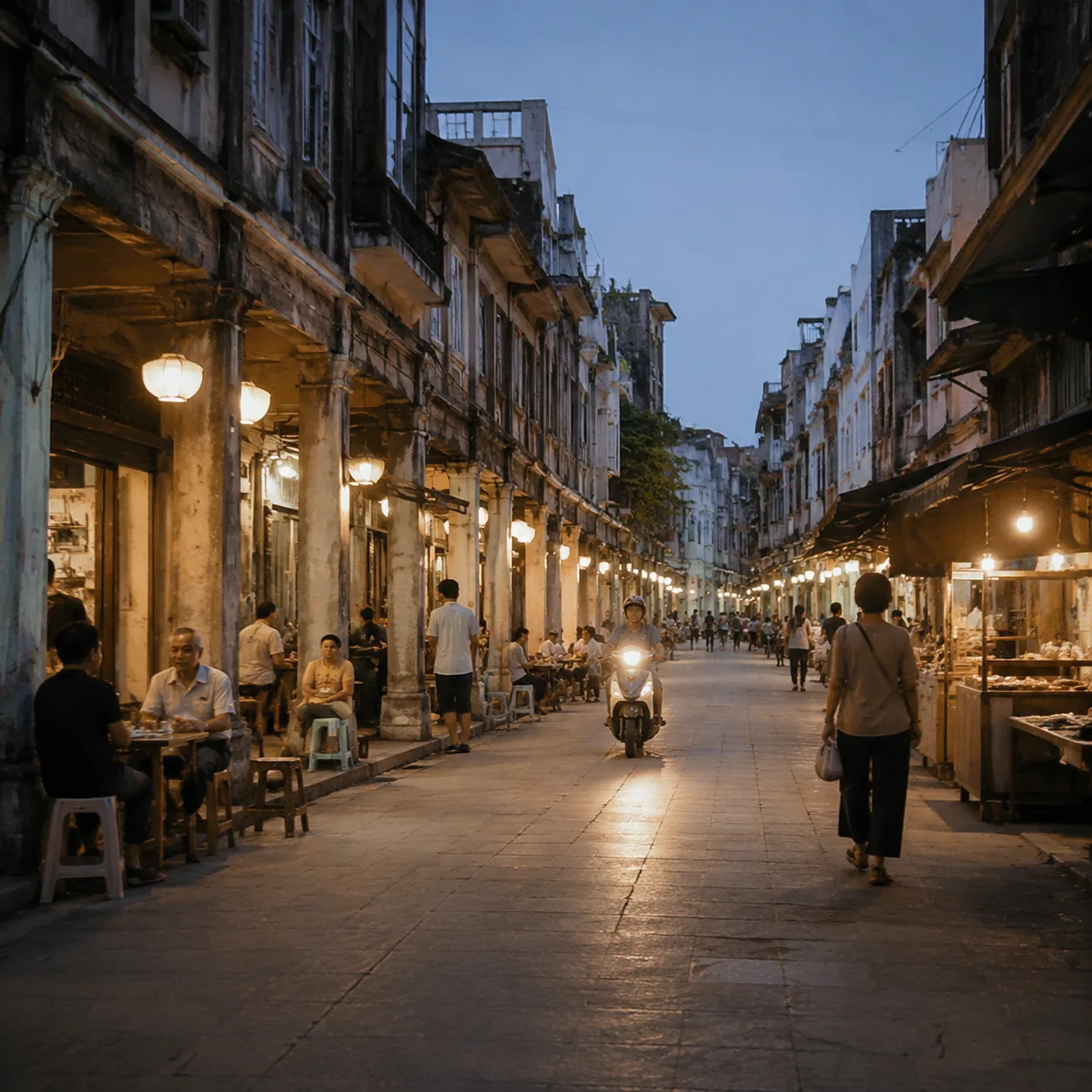
The old street lamps of Foshan are not the kind of brightness that pulls a person immediately into a photograph. I walked slowly away from the area near the Ancestral Temple at dusk, when the sky had not yet become fully dark and the lamps under the eaves were already lighting one by one. The arcade columns showed their old gray under the light, and faded shop names on the walls seemed to retreat from daytime into night without completely disappearing. Along the road were shops selling double-skin milk, a stall for shoe repair and key cutting, and tea stands with a few plastic stools at the entrance. Foshan is often remembered in the daytime through words like martial arts, lion dance, and ceramics. But after night settled over the old street, what I saw was not a grand calling card. I saw low lamps shining on people going home, on steam rising from pots, and on a street continuing its own life.
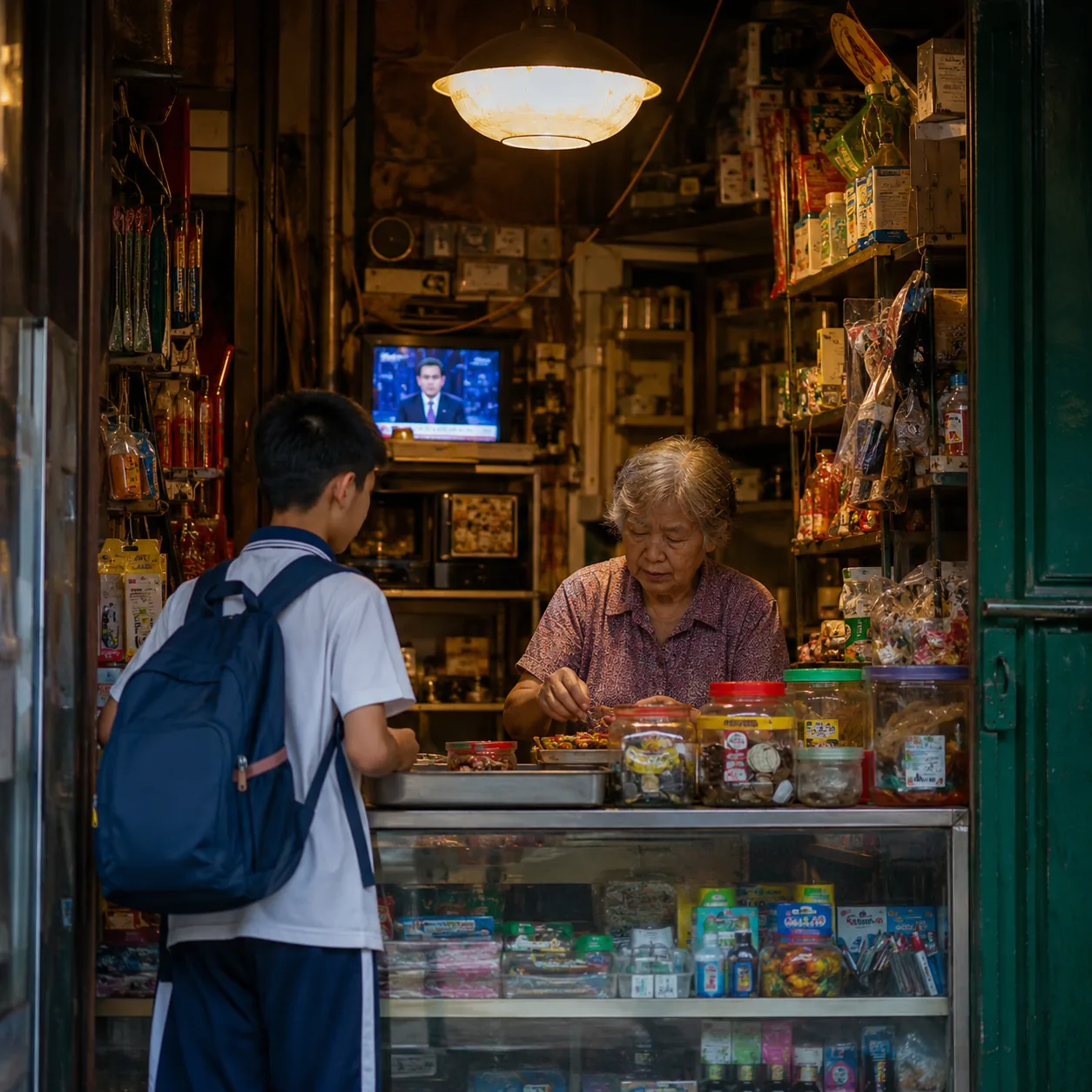
The first place where I stopped was the entrance of an old grocery shop. There was no elegant display inside. On the shelves were batteries, umbrellas, soap, sewing thread, herbal tea, and several packets of children’s snacks. A round lamp beneath the lintel gave off warm yellow light, with dust gathered on the edge of its shade, as if it had accompanied the shop through many humid seasons. The owner was an auntie with gray hair. She sat behind the counter, watching Cantonese news on television while sorting coins by size. A schoolboy ran in to buy an exercise book and called her “auntie-grandmother.” Without looking up, she already knew which kind he wanted. The lamp shining between them did not arrange itself like scenic lighting, yet it made a long familiarity very clear.
As I continued, the sounds of the old street became denser. A spatula touched a wok, an electric scooter bell rang briefly, elderly people greeted neighbors in Cantonese, and several visitors stood at a corner studying a map. Foshan’s old streets are good at placing different rhythms together: some people come especially to find polished angles in Lingnan Tiandi, some simply buy rice rolls after work, and some push strollers slowly around puddles. The light slid gently over these faces without judging who belonged here more. It illuminated a newly opened coffee shop and the old wooden door beside it that had been repaired for years; it illuminated young people lifting phones and elderly people placing vegetable baskets by their feet. If an old street had only nostalgia, it could easily become an exhibition. With this untidy daily life, it remained a street.
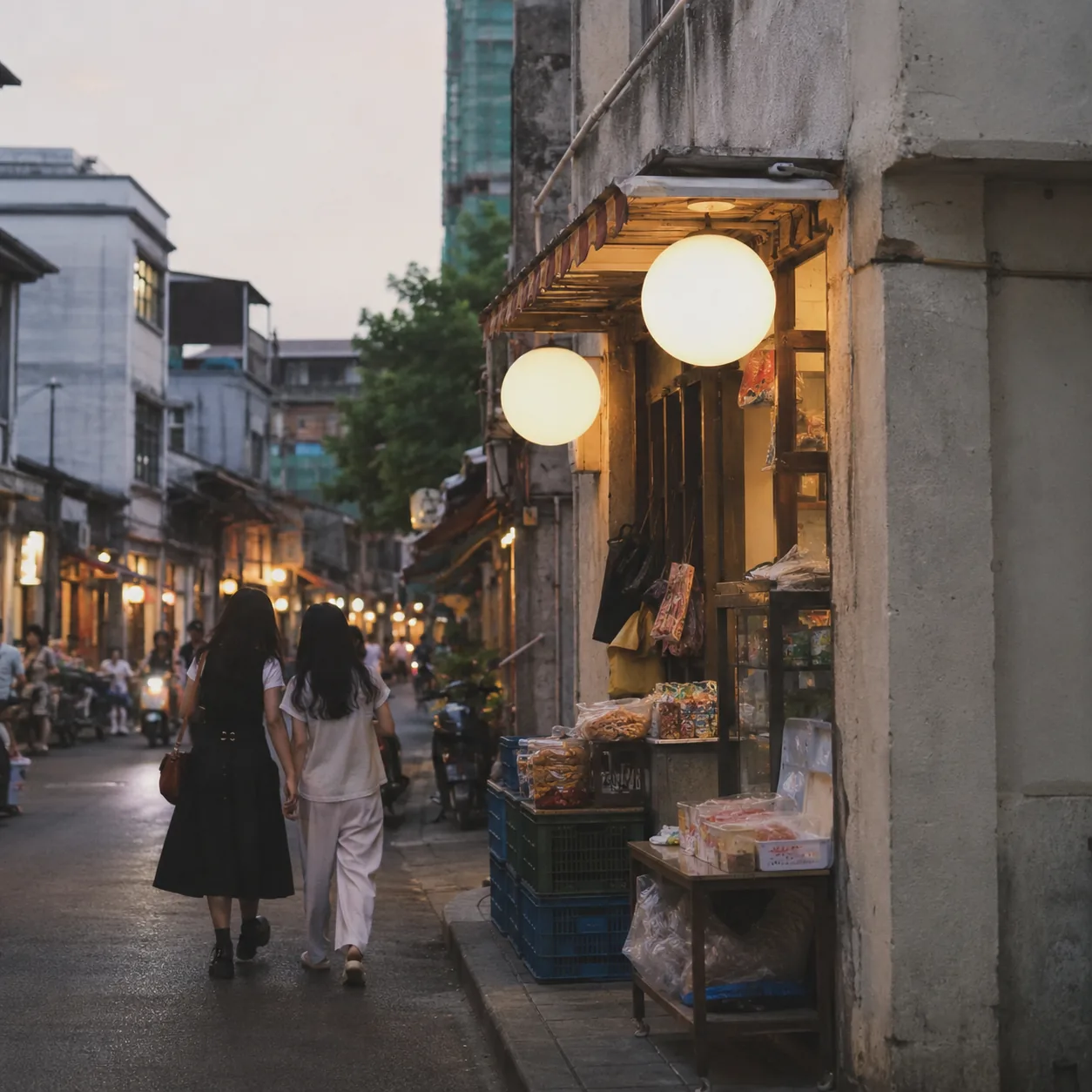
At one alley entrance, I saw a lamp hanging very low, illuminating only half a door and a small patch of brick ground in front of it. From inside came the sound of a wooden fish, and not far away someone was practicing lion-dance drumbeats. The rhythm was scattered at first, then gradually came together. Tradition in Foshan does not always stand at the center of a stage. It also hides inside such narrow doorways, inside wrists and footsteps repeating practice at night. A middle-aged man came out for a smoke with drumsticks tucked under his arm. Seeing me pause, he smiled and said they were only a community team and became lively only during festivals. I heard the word “only,” yet I felt it mattered. The most watchable parts of many cities are exactly these practices that “do not count” as performances.
When I reached a dessert shop, the white light inside was brighter than the street lamps. Several small tables were full, with double-skin milk, ginger milk curd, black sesame paste, and bowls of sweet soup still giving off steam. The owner carried bowls out with fingers as steady as if she had repeated the same motion countless times. Two young women beside me ate while discussing where to take photos the next day, while the elderly people at the next table cared only whether the sweet soup was hot enough. Foshan felt like this kind of juxtaposition to me: it can be sought by travelers, and it can also ignore travelers completely. Light spilled from the dessert shop onto the street, bringing out the smell of milk and ginger. Standing outside, I suddenly felt that what a lamp illuminates is not only objects, but also flavor and time.
As the night deepened, the sign lights on the main street became more noticeable, while the small lamps under old eaves seemed quieter. I turned into a side lane where several electric scooters were parked, children’s clothes hung along a wall, and someone upstairs closed a window with a soft sound from the frame. No visitors lingered there, and there was no background made for check-ins. A streetlamp turned the base of the wall a gentle yellow, and moisture from earlier rain remained in the brick seams. Walking in such a lane, I no longer wanted to know which scenic area it belonged to. I only wanted to make my steps lighter. Travel often makes people ask what is worth seeing. The lamps of Foshan’s old streets seemed to answer: places worth seeing do not always introduce themselves loudly.
When I returned to the lively area, I sat at a tea stall. The owner poured me a cup of hot tea in an ordinary glass with tiny scratches along the rim. At one nearby table people discussed factory orders; at another they talked about children’s exams. On the television, a Cantonese opera excerpt played at low volume, adding an older atmosphere to the room. The light from outside mixed with the light inside, and human shadows overlapped and separated on the wall. Foshan’s identity as a manufacturing city is often absent from travelers’ photographs, but it lives in these tea-stall conversations, in shoulders after work and voices that have settled lower. The old street lamps illuminated things that rarely enter guidebooks, reminding me that a city does not exist only by being visited.
Near the time I left, I passed the area around the Ancestral Temple again. The archway and courtyard walls looked dignified under carefully placed lighting, and visitors took their last photos at the entrance. That was beautiful too, of course. But what stayed in my mind more strongly was the dusty lamp at the grocery shop entrance, the white light inside the dessert shop, and the streetlamp along the wall base in the side lane. They had no grand posture, yet they let me see how Foshan kept breathing at night. Scenic spots tell me what a city wants outsiders to remember. Old street lamps tell me how it continues living when it is not being watched. For a traveler, the latter is rarer, because it is not an arranged answer, but a reality that allows you to stand beside it by chance.
After returning to my lodging, I could still see several blurred lights in the distance from the window. They were not as clear as lights in photographs, yet they made me feel that the day had not been entirely taken over by sights and routes. One lamp on an old street in Foshan taught me that being worth looking at does not necessarily come from buildings being old, stories being complete, or lighting being beautiful. It comes from life being willing to repeat itself in the same place for many years. Someone opens a door, someone closes a stall, someone practices drums, someone drinks tea, and someone hangs a child’s school uniform by the window. The lamps simply shine quietly, holding these gestures piece by piece. After a journey ends, what remains most easily is often not the brightest place, but the patch of light under which you suddenly slowed down.