In Wuhan I Learned to Read the Breakfast Rhythm Before Joining the Line
The first thing that truly woke me up in Wuhan was not an alarm clock and not the river breeze, but a breakfast line outside a small shop that kept shrinking and filling again. It was a little after seven in the morning, the air smelled of hot sesame noodles mixed with fried food, and the pavement still held some of the night’s dampness. I had originally wanted to grab something quickly, but the moment I stood in front of the shop, my whole attention shifted into judgment mode. Should I join this queue at all? Is this place worth the wait? Is the line moving fast? Are there seats inside? If I end up holding hot dry noodles and soy milk near the entrance, will I block other people? I used to think that lining up for breakfast was purely a food question. Wuhan taught me that for foreigners, it is also a combined judgment about route, energy, social etiquette, and rhythm.
I used to have a very common travel impulse: wherever I saw the biggest crowd, I pushed in, afraid of missing the “most correct local experience.” But after actually living in Chinese cities for several days at a time, I stopped trusting that reflex. A crowd sometimes means good food, sometimes efficiency, but it can also simply mean a tiny storefront, fast turnover, or a heavy concentration of office workers nearby. Wuhan breakfast is especially like that. Hot dry noodles, miànwō, fish soup noodles, and dòupí are absolutely worth trying, but if you rush into a long line right after leaving the metro, before you are fully awake, while carrying a bag and trying to organize yourself, the experience can quickly turn messy. I increasingly came to agree with the logic in integrating into daily life through small actions, and I often think of putting route and energy management first. Reading the rhythm before joining is the steadier choice.
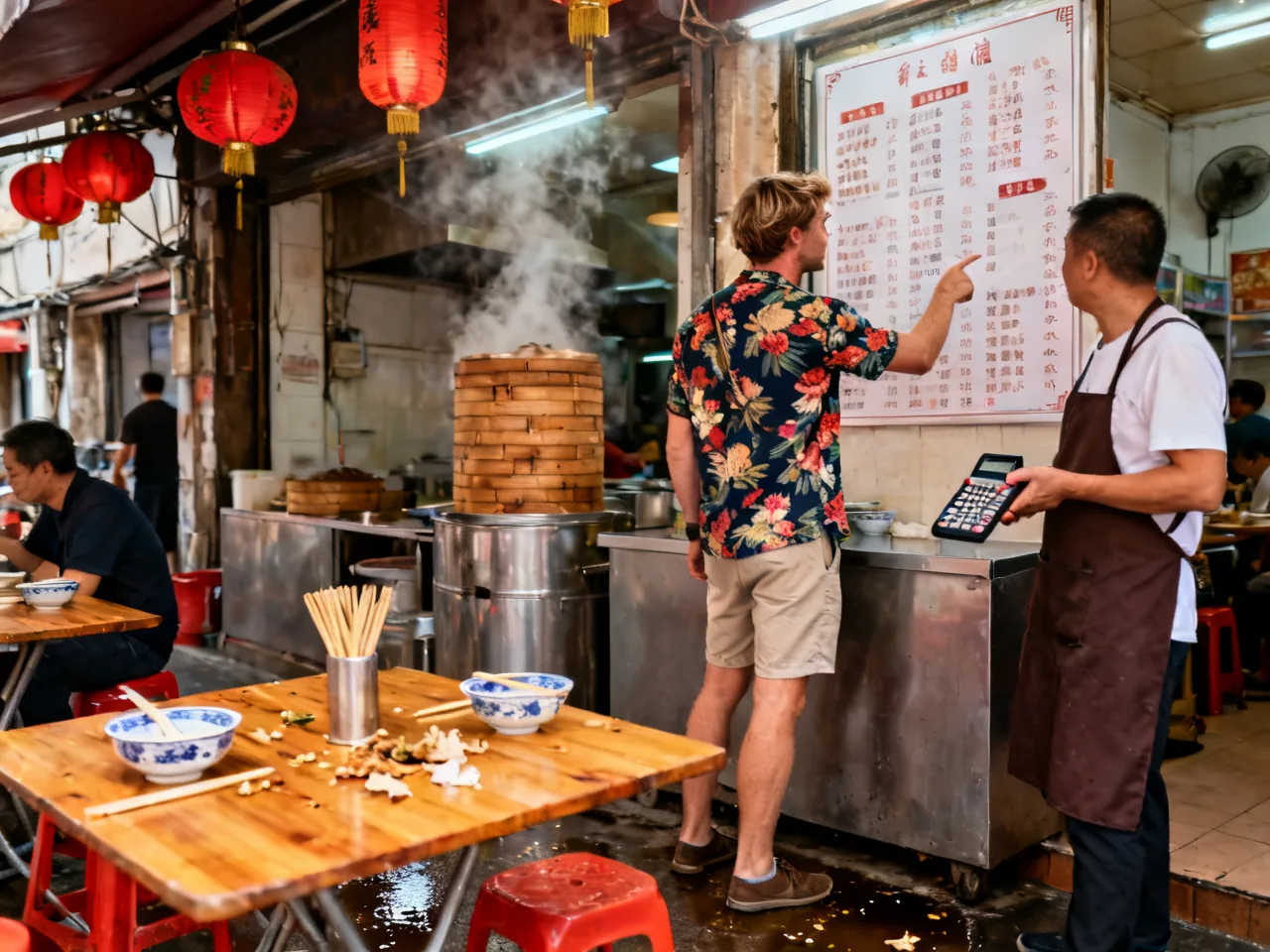
That morning I did not step into the longest queue immediately. I stood at the side of the road and watched for about a minute first. I noticed that some people bought food and left at once, some carried their bowls quickly toward a few small side tables, and some were clearly regulars who knew exactly what to take first and what to take second. What finally made me decide was not simply that the place was crowded. It was that the movement of the queue was clean. No one blocked the payment point with repeated questions, no one wandered around with a tray looking lost, and although the entrance was lively, everyone seemed to know their next move. For me, that sense of order is more reliable than any recommendation list. Especially in Chinese breakfast scenes, speed is often not pressure. It is a process that everyone else already understands. Once you read it first, it stops feeling intimidating.
Once I actually joined the line, I learned one small but extremely useful action: watch the order in which other people pick up trays, pay, and find a seat, then imitate it without rushing to perform that I already understand everything. Wuhan breakfast shops are not like many cafés where each step is explained clearly. They function more like a small system that assumes everyone already knows the rules. For locals, that is no problem. For first-time visitors, especially foreigners, the most common tension is fear of blocking others, speaking too slowly, or delaying a whole chain of people while paying. Once I nearly stood in the wrong place holding my bowl, and an older woman in front of me casually opened a little corner for me. In that moment I understood very clearly that adaptation often does not mean suddenly mastering a place. It means being willing to admit that you are still reading its rules.
Later I summarized a few very concrete breakfast judgments for myself. First, is the line actually moving forward rather than just stirring in place? Second, do people who finish eating leave smoothly? That reveals a lot about the space and turnover pressure. Third, is the payment area easy to understand? If every customer pauses for a long time there, I usually skip the place. Fourth, what condition am I personally in that day? If I am already tired, hungry, and overheated, I do not chase the hottest shop. I choose one with a clearer process. Fifth, are there nearby places where I can buy water, sit down briefly, or reorganize my bag? In Chinese cities, the most useful breakfast choice is rarely just the tastiest one. It is the one that lets you enter the next stage of the day smoothly afterward. This way of thinking connects naturally with learning to ask for help naturally and building steadiness through small actions in China.
Once, because I wanted to hurry toward Tanhualin, I chased a breakfast place that was supposedly extremely famous online. By the time I had been standing in line for more than twenty minutes, the sun was already up, there was nowhere to lean, and I was holding soy milk while growing increasingly irritated. By the time I finally ate, I was more tired than I had expected. After that, I accepted something very practical: not every meal is worth trading physical energy for reputation. Especially when traveling in China, the information density of the city is already high. If breakfast itself leaves you too strained, your judgment for the rest of the day often drops with it. What Wuhan taught me was not only how to mix hot dry noodles properly. It taught me how to preserve a little composure for myself inside a very efficient local rhythm.
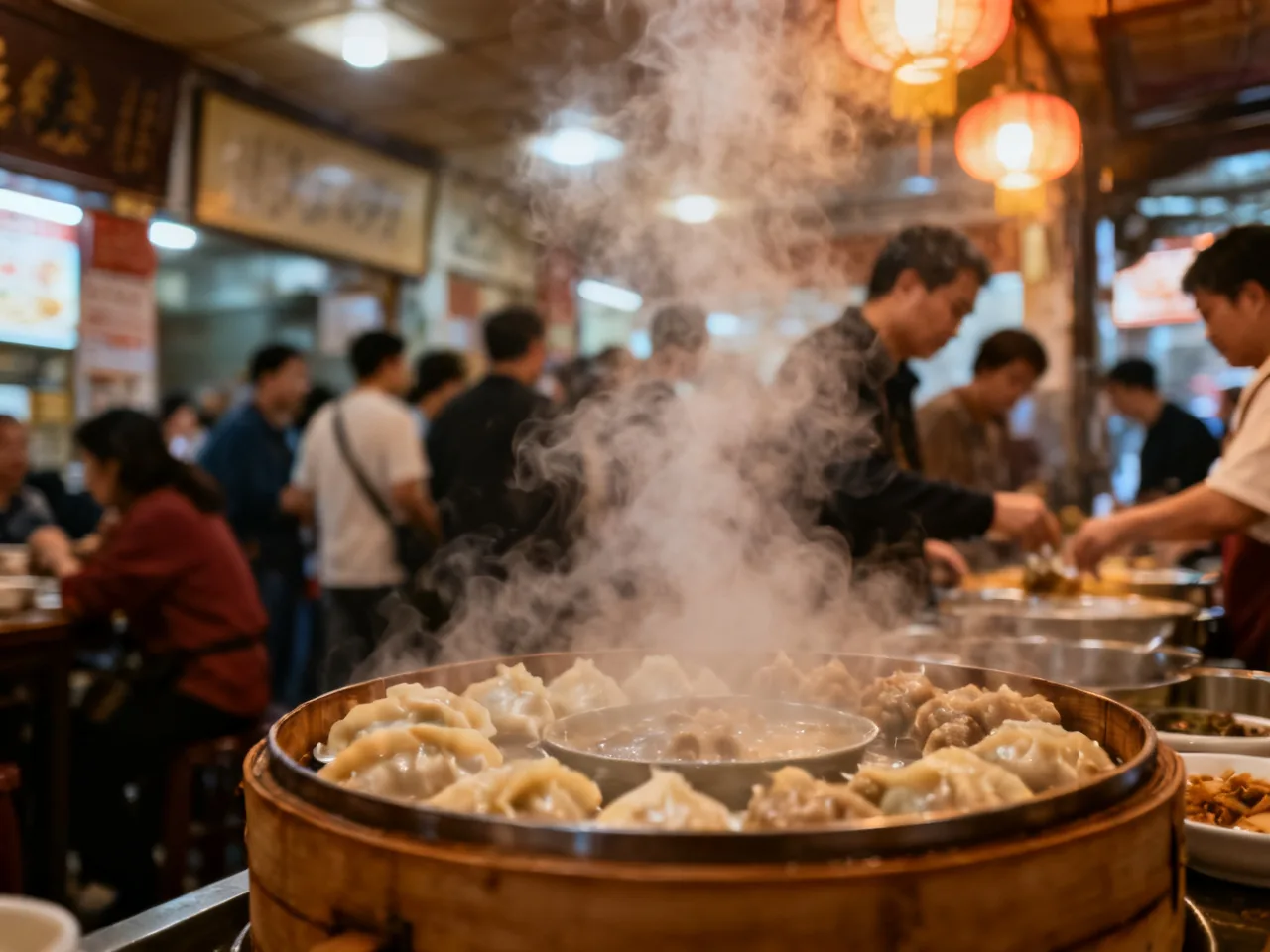
Later that morning I stood outside with a bowl of hot dry noodles at a very narrow little table. One person beside me was drinking soy milk, another was looking down at a phone, and someone else had already finished and was getting ready for work. The smell of sesame paste was thick, and when I mixed the noodles, the heat rose lightly into my face. I suddenly felt that what I would really remember was not whether this was the most famous shop. It was the fact that I had finally learned how to read the speed of a breakfast scene before entering it. For foreigners traveling in China, that ability is more useful than memorizing endless guide tips. Once you can read the rhythm of a queue, you can usually read much more of how the city itself is about to move.