In Nanning, What Often Soothes the Day Is Simply a Home-Style Dinner Table
An ordinary dinner in Nanning often begins before the sky has fully darkened. Leaves downstairs are wrapped in the humid heat of evening, and the air carries the sweetness of steamed rice, the fresh scent of greens entering a wok, the sharp aroma of sour bamboo shoots struck by hot oil, and the sounds of neighbors opening and closing doors, slippers brushing the corridor, and children calling people to eat. It is not a solemn banquet, with no plating or ceremony, and the table may be only a small square one set against a wall. Yet because it is ordinary, it comes closer to life itself: a bowl of soup, a plate of stir-fried vegetables, a saucer of dipping sauce, several pairs of chopsticks, and a few casual sentences bring the day back home from the outside world.
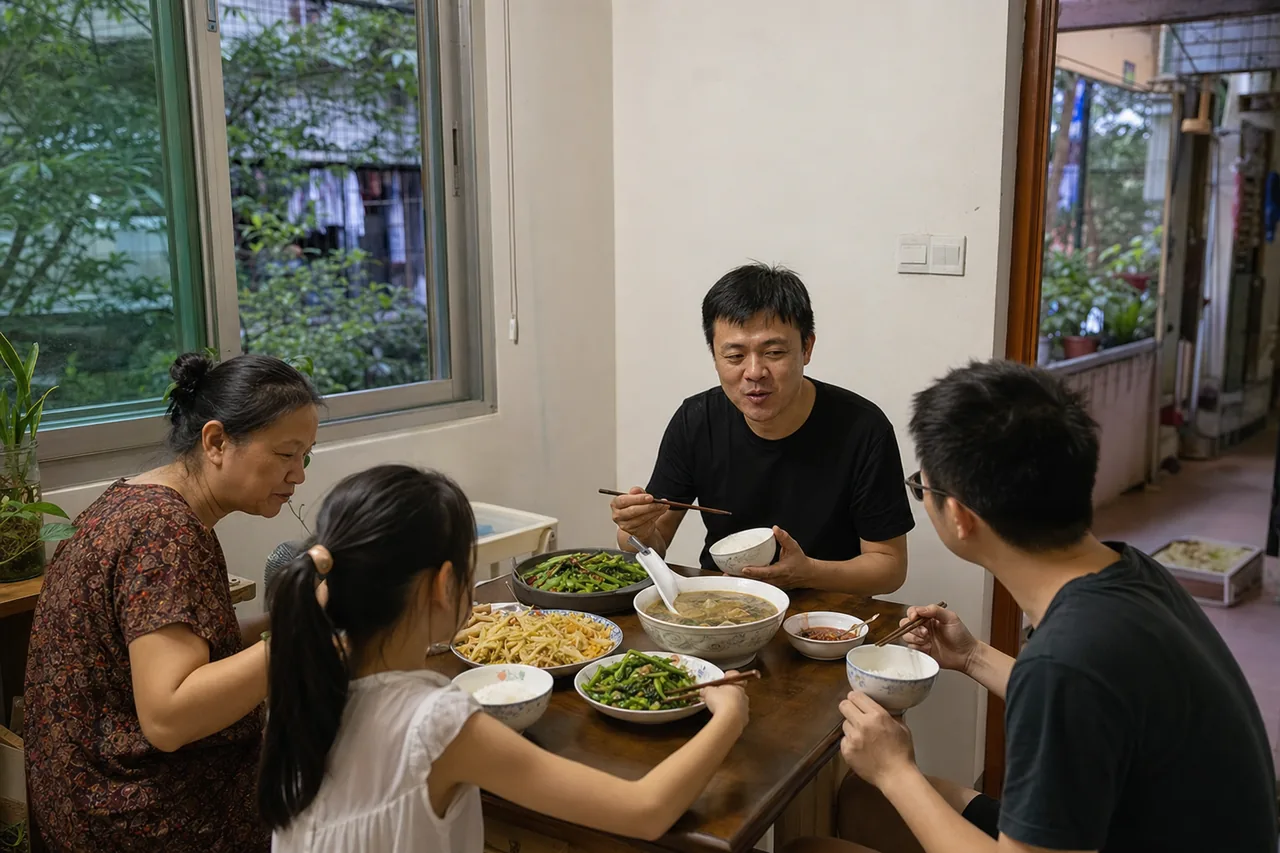
Dinner in Nanning has the looseness of a city on the edge of the tropics. People are not eager to turn every dish into a story, nor do they always care whether a dish name sounds impressive. Water spinach is washed and cut, minced garlic is fried until fragrant, and a few turns of the spatula bring it to the table. Fish slices enter soup, where the red of tomatoes and the scent of perilla spread together. Leftover rice can become a plate of wok-scented fried rice, sprinkled with scallions and paired with a spoonful of chili sauce. If the weather is too hot, cucumbers are sliced with vinegar, sugar, garlic, and a little bird’s-eye chili, their cool sourness pressing down the evening’s heaviness. The meal is not complicated, but it knows how to care for the body and the mood.
I sit in a small street-facing eatery and watch the owner push a plastic stool inward to make room for two new customers. The fan on the wall works hard but can only stir the heat into a more even layer. The tabletop shines from being wiped countless times, and the menu stuck to the wall has yellowed slightly from kitchen smoke. The next table orders laoyou rice noodles, and sour bamboo shoots, fermented black beans, chili, and garlic roll together in the wok, waking the stomach at once. Some people eat quickly, as if they must rush to the next shift of work. Some sip soup slowly, their fatigue softened by steam. Some prop phones against tissue boxes, eating while watching videos sent from home.
The value of an ordinary dinner often lies not in how excellent the food is, but in how it allows people to set down the posture of daytime. During the day, speech in an office must be precise, greetings in a shop must be warm, movements on a construction site must be efficient, and answers in school must be clear. At dinner, a person can briefly stop resembling a position and become a person again. One can say the day was too hot, complain that the bus was too crowded, ask a child how much homework is left, give the last piece of fish to a family member, or say nothing at all and simply finish the meal. Nanning’s dinner uses steam and flavor to remove a layer of shell from people.
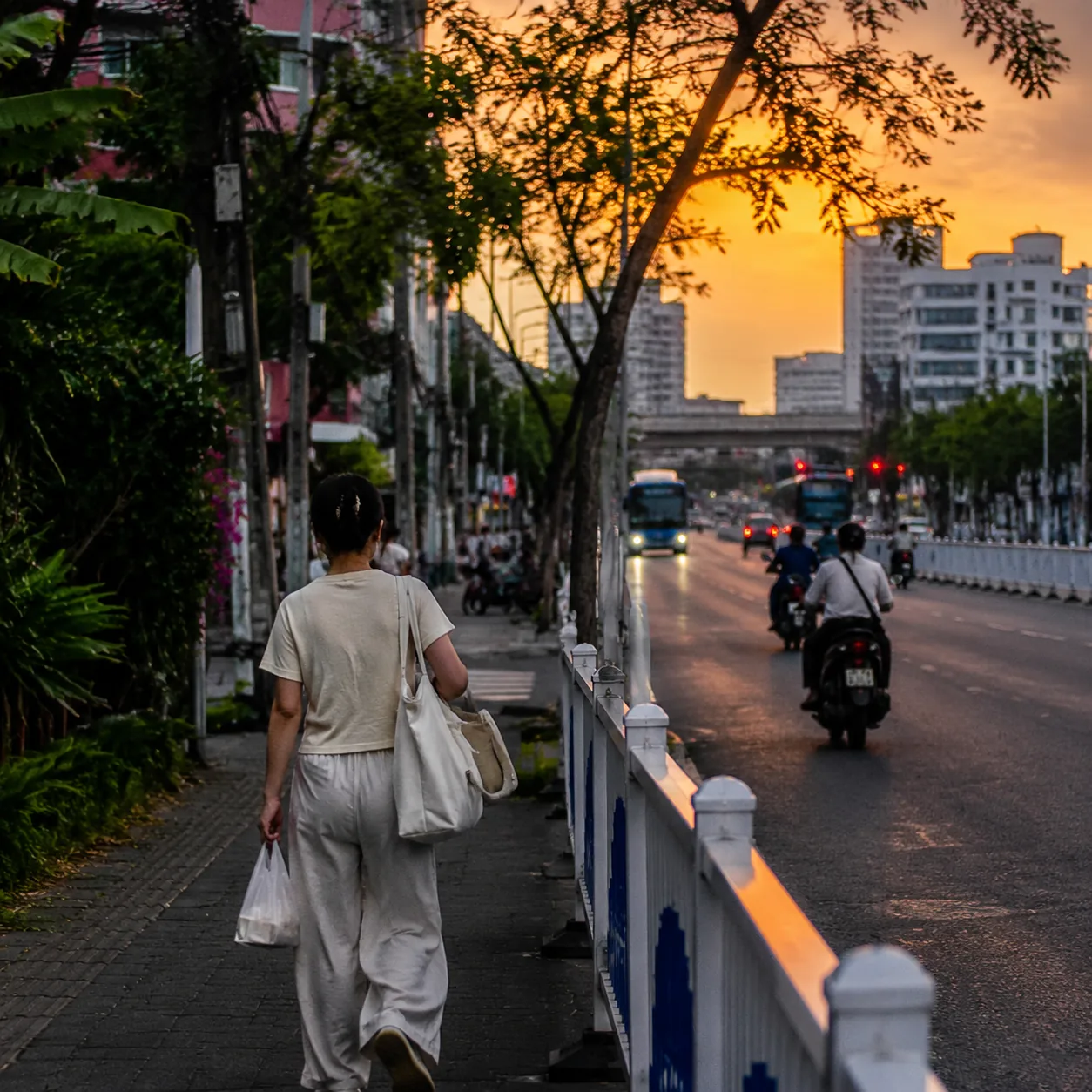
At home, dinner is even more like this. The kitchen may be small, bowls and pans arranged tightly, with newly bought green mangoes and a bag of rice noodles placed beside the stove. Someone washes vegetables, someone cuts scallions, and someone in the living room calls out to ask whether dinner is ready. Outside the window, electric scooters pass one after another, stalls downstairs begin to set up lights, and the sounds of the night market slowly rise. Soup bubbles in the pot, the rice cooker switches to warm, bowls and chopsticks are taken from the cabinet, and the day gains a place to land. Even if the dishes are only long beans with minced pork, winter melon soup, and a plate of fried eggs, they are enough to steady a home at night.
A little sourness and heat are almost always present in an ordinary Nanning dinner. The taste is unlike strong liquor in a northern winter and unlike the controlled seasoning of a refined restaurant. It is more direct, brighter, like cutting an opening through humid air. Sourness wakes people, heat makes them sweat, and once the sweat comes out, the body feels lighter. Many people have eaten this flavor since childhood and do not find it aggressive; they find it familiar. It is like the final tone of the local speech, like shade under a roadside banyan, like a cold bowl of mung bean dessert on a summer night. It is Nanning’s way of placing itself into dinner.
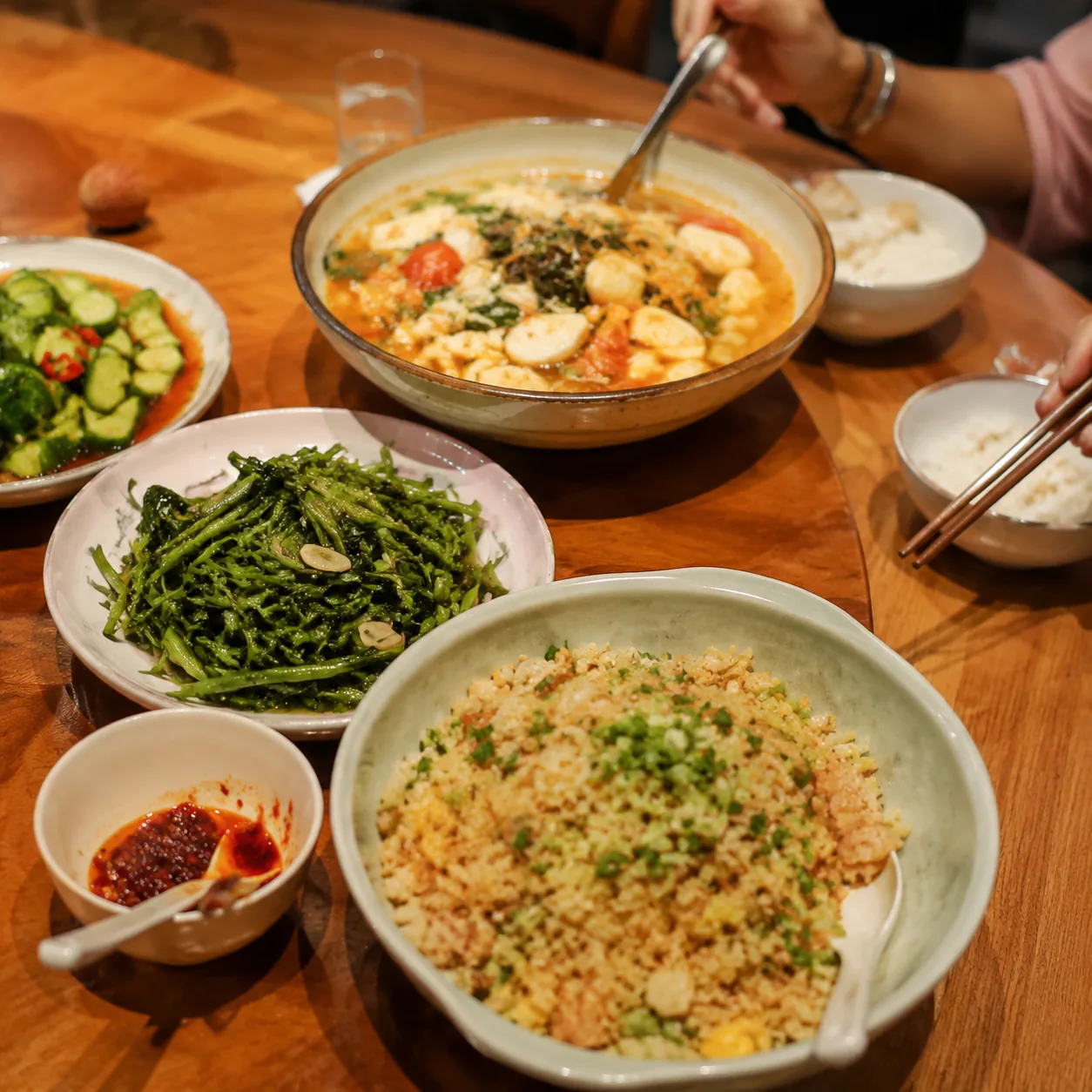
An ordinary dinner also records the relationships within a family. Who likes softer rice, who avoids cilantro, whose teeth are not good recently and needs fewer hard dishes, who has had a bad day and should be asked one more question—people who eat together for a long time know these things. The dinner table is sometimes lively and sometimes quiet, but quiet does not always mean distance. Nanning nights are hot, and people slow down as they eat. The sound of chopsticks touching bowl rims, a ladle serving soup, and motorcycles fading outside the window mix into a companionship that needs no explanation. Life is not always easy, but dinner places people back into relationship.
On the roadside, ordinary dinner is also connected to the city’s work rhythm. A security guard sits down after a shift change to eat a boxed meal, drinking soup before eating rice. A taxi driver parks where the car will not block traffic, hurriedly takes a few bites, then checks the phone for orders. A fruit stall owner lets a child do homework behind the stall while eating from a lunch box standing up. A delivery rider buys a bowl of noodles while waiting for an order, helmet placed near the feet, sweat covering the forehead. Everyone arranges dinner within their own gaps, as if fighting for a pause button inside the busy machine of the city.
I like the unexaggerated satisfaction in Nanning dinners. It does not require admiration, nor does it ask you to take photos as proof. As long as you sit down, pick up chopsticks, eat until your forehead sweats slightly, drink a mouthful of soup, and hear someone nearby speaking in a familiar accent, the city feels close. Ordinary does not mean poor. Ordinary means repeatable, something one can return to every day, a small steadiness available without reservation. Many grand forms of happiness are too far away, while the happiness of dinner is in the bowl, warm, fragrant, waiting for a hand to reach for it.
As night deepens, the dinner table is gradually cleared. Leftovers are packed into boxes, pots are soaked in water, bowls and chopsticks are stacked beside the sink, and the tabletop is wiped into a damp shine. Someone goes downstairs for a walk, someone leans on the sofa to watch television, someone continues homework, and someone divides tomorrow’s lunch in advance. The dinner seems to pass quickly, yet the fullness and steadiness it leaves continue into the night. This is what an ordinary Nanning dinner is like: unannounced but powerful, inexpensive but enough, not special but able to make people willing to return here day after day.
If I wanted to understand Nanning through one meal, I would not first choose the grandest banquet, but such an ordinary evening. Outside the window there is humid wind, downstairs there are stall lights, on the table there are dishes sour, spicy, fresh, and fragrant, and family members or unfamiliar diners sit around steam, each speaking of the day. The city’s character appears in these details: warm without posing, practical without being rough, busy yet still willing to pause for a bowl of soup. An ordinary dinner makes Nanning’s night approachable, and gently places every person returning home back in the middle of life.