During Luoyang Peony Season, I Learned to Divide Crowds by the Hour
My first impression of Luoyang’s peony season was not flowers, but time. Before arriving, I thought the plan was simple: choose the right park, catch the blooming period, hope for decent weather, and spring would present itself. Once I stood inside the crowd, I understood that blooming is natural, but viewing requires division. It is not enough to ask which day to go. You have to ask when to enter, when to leave, where to pause, and which stretch of crowd should be allowed to pass without you.
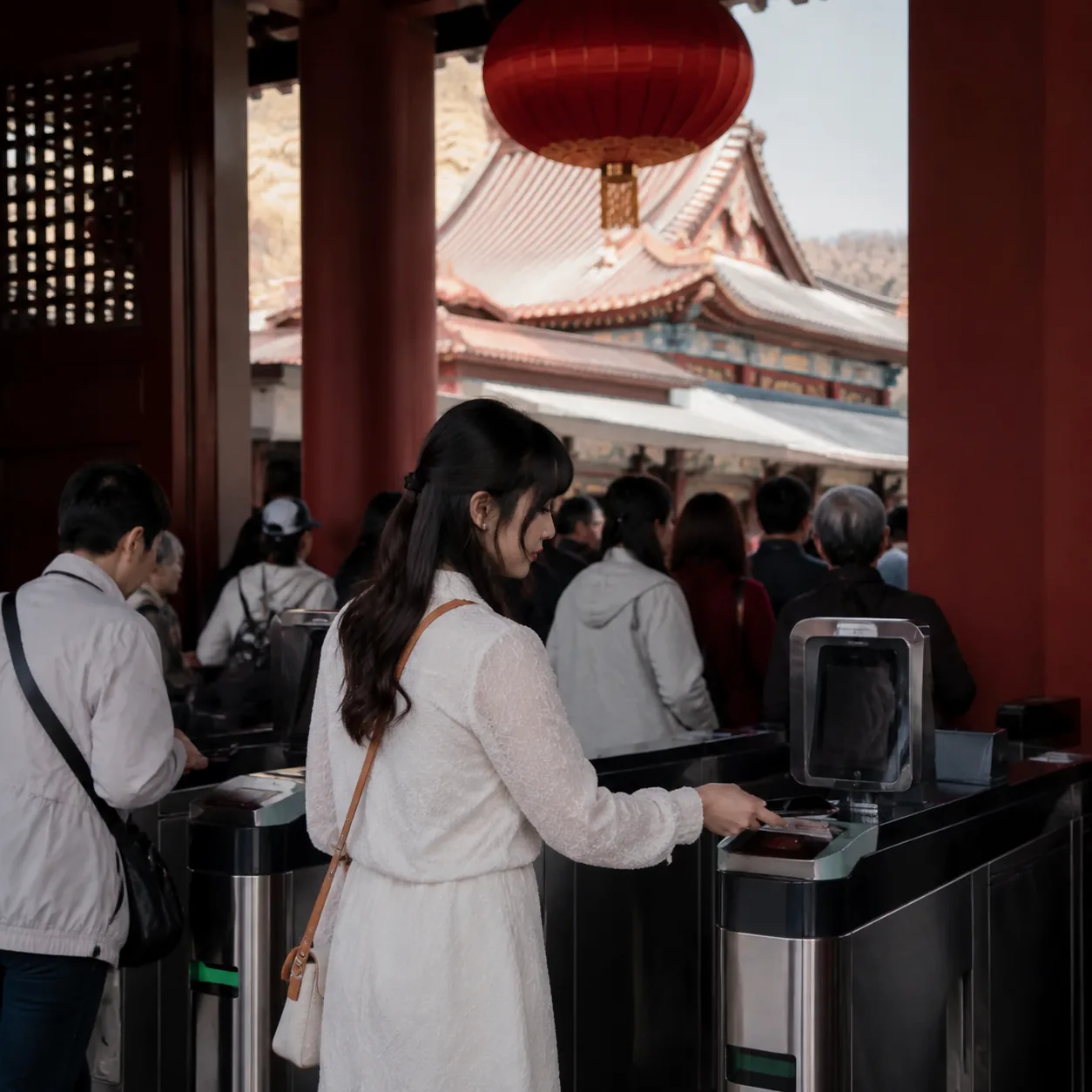
I packed the first day too tightly. In the morning I wanted to visit Wangcheng Park, at noon I planned to eat water banquet dishes in the old city, in the afternoon I hoped to see another peony garden, and at night I imagined walking near Yingtian Gate. On paper it flowed; in reality every segment stretched. Ticket checks, security lines, restrooms, vehicles, and paths blocked by photo-taking visitors were not failures in the itinerary. They were part of the season. Crowds do not stay only beside the flowers; they seep into transport, restaurants, intersections, and patience.
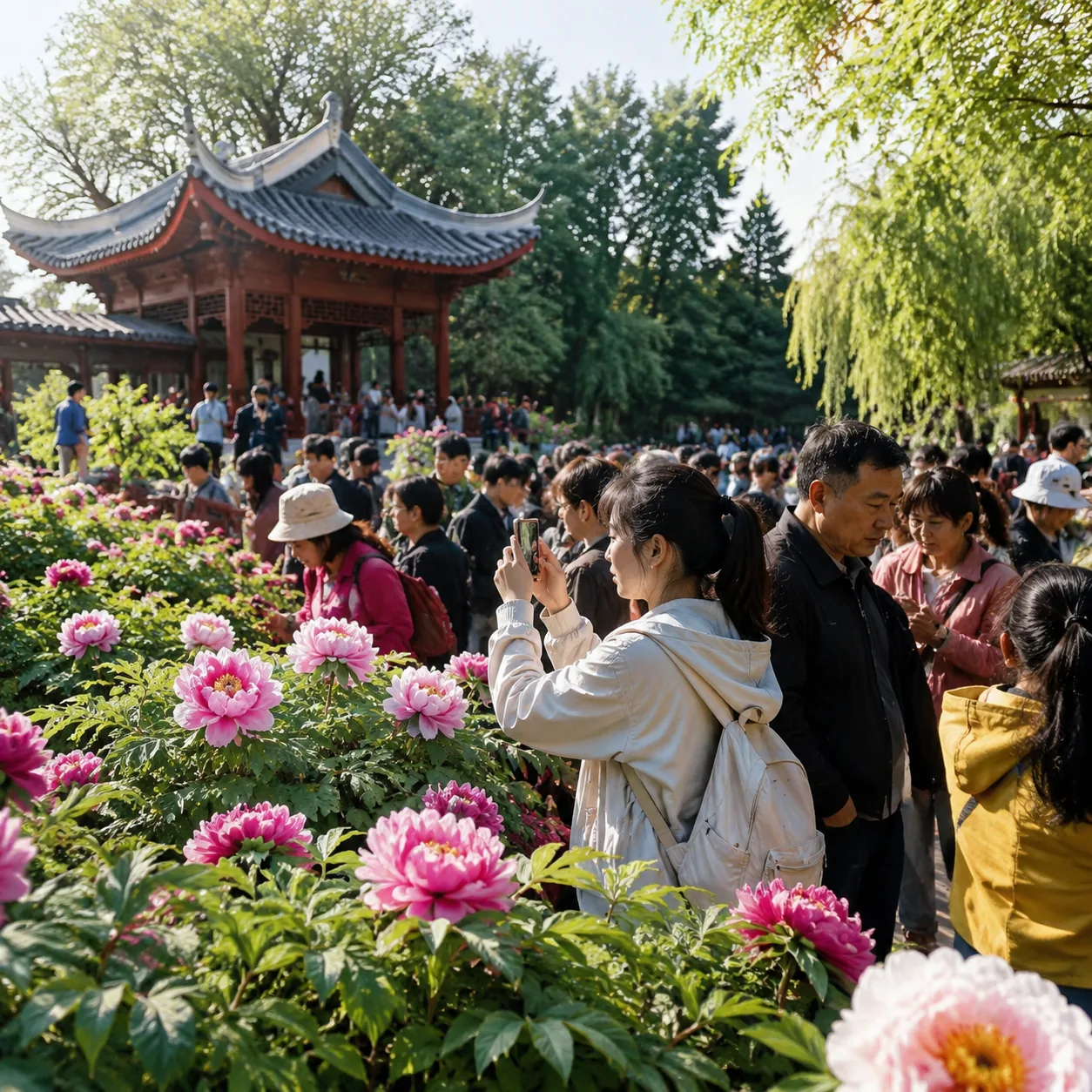
I later rewrote my itinerary from a list of attractions into a list of hours. Seven to nine in the morning belonged to entering the park and taking the first photographs. Nine to eleven belonged to crowded main paths and popular beds. Eleven to one was better for leaving the park, eating, or moving into quieter lanes. Two to four could be used for edge areas or indoor displays. Evening could return to gates, riversides, or places where lights began to rise. This division was not romantic, but it rescued my sense of Luoyang’s spring.
During peony season, arriving early is not about showing discipline; it is about preserving options. In the early morning, the park has not yet been filled with noise. Cleaners push carts, staff straighten barriers, and the first visitors walk more lightly. The flowers may not be at their brightest then, but the air is looser. You can approach a cluster slowly, circle to the side to see the shade beneath the leaves, or wait for a breeze to open the layers of petals instead of squeezing a photograph through gaps between other cameras.
After nine, the crowd begins to narrow the paths. Not everyone is rude; most people simply want what you want: to see flowers, take pictures, and carry home a short annual bloom. What becomes tiring is the number of directions at once. Someone walks against the flow for a better angle, someone stops mid-path to check a phone, someone arranges grandparents and children in front of a bed. At that hour, I stopped fighting for the famous spots. I treated the main path like a river, followed it, and waited for it to carry me to an edge where I could breathe.
Once I divided the excitement into hours, I became less anxious about missing things. I used to worry that failing to photograph the most famous bed or enter the busiest exhibition area meant losing a piece of travel evidence. In Luoyang, I watched a local elder sit on a bench and look for a long time at a half-open pink peony. He did not chase the celebrated specimen or move toward a louder backdrop. In that moment I understood that the value of the season is not measured only by variety or popularity. It can also be measured by the minutes you are willing to stay.
Noon is the time when I most recommend leaving the park. Not because the flowers are less beautiful, but because human rhythm becomes rougher. People are hungry, tired, sunlit, and the emotions around buying water or finding toilets can overwhelm the act of viewing. If you keep pressing yourself into the center of the park, it is easy to spend all the goodwill gathered during the morning. I chose to find a bowl of soup in the old city or sit in a small backstreet shop, letting my feet step out of the season’s speed. Rest is not a waste of bloom time; it preserves your senses for the afternoon.
In the afternoon, the method of viewing should change. The light is harder, petal edges show fatigue more easily, and people become more impatient. This period suits shade, explanatory signs, side paths, or shifting attention from broad flower seas to individual plants and details. I liked watching color deepen near the base and pale toward the edge. I liked seeing bees turn again and again inside one blossom. I liked noticing how workers gently supported branches that had bent down. Afternoon beauty is not in the first glance, but in the second glance that slows down.
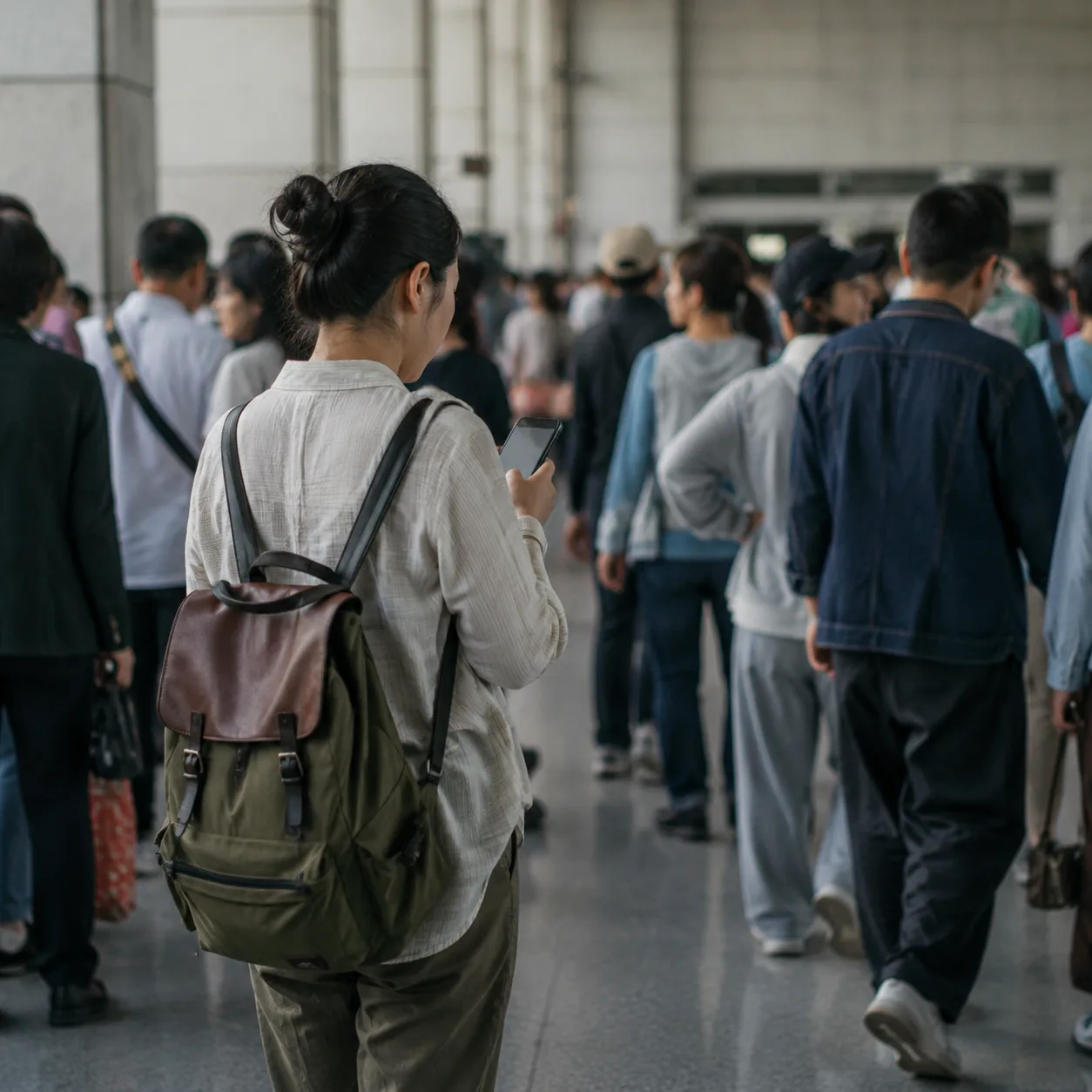
Transport also needs to be handled by the hour. Luoyang during peony season is not the Luoyang shown on an ordinary map. The same road changes difficulty at different times. A taxi may be easy in the morning, park exits may jam at noon, and main roads can fill again with people heading toward night views. I began moving slightly off the obvious transitions, such as leaving a popular area at 10:40 or starting again at 1:20. It did not work every time, but avoiding moments when everyone changes location at once made the day much lighter.
I also learned to leave room for ordinary stretches. Many people imagine peony season as a chain of high-density images: famous gardens, famous flowers, ancient-capital architecture, and night lights. But the body often recovers on an ordinary road between two lively places. There may be a cart selling drinks, a child running with a pinwheel, or a local resident cycling through gaps in the visitors. These places may not deserve a special check-in, yet they remind you that you are still in a real city, not merely inside a corridor pushed along by a festival.
My photography strategy became simpler too. In the early morning, photograph broader scenes with fewer people. Later in the morning, take one or two proof-of-visit portraits. At noon, put the phone away. In the afternoon, photograph details. At dusk, photograph the relationship between the city and the season. The benefit is that the phone no longer stays constantly in front of your eyes, and every approach to a flower bed does not become a fight for position. Photos matter, but it would be a pity to end the day with only similar petal close-ups and no memory of wind, sore feet, warm soup, or the spaces left after crowds thin.
Dusk is the most easily misunderstood time of Luoyang’s peony season. Some people think the flowers are finished and only night views remain; others are too tired from the day and abandon the second half. In fact, dusk is when the season can be placed back into the city rather than only inside plants. You can watch light fall on city walls near a gate, or walk along the river and see daytime noise turn into after-dinner strolling. At that hour, the goal is not to count more flowers, but to see how the ancient capital keeps spring after the lights come on.
If I were advising a first-time visitor to Luoyang’s peony season, I would be specific: do not force three gardens into one day; do not compete with peak-hour crowds at the most popular beds; carry water, but handle supplies away from the core area; leave enough time for lunch and sitting down; think through return transport early; allow yourself to look carefully at only a few places. The season is not an exam. No one requires you to answer every bloom.
Of course, even the best plan can be disrupted by weather and crowd flow. Flowers may lose energy after a windy night, a road may be temporarily controlled, and the restaurant you wanted may have a line outside. This is where hourly division helps. You do not have to overturn the whole day; you replace one segment. If the morning is too crowded, move careful viewing to an afternoon edge area. If lunch is impossible, change streets. If night views are packed, return to your lodging earlier. Flexibility is not randomness. It gives the day places to turn.
When I left Luoyang, what stayed with me was not one most successful photograph, but the feeling that I was no longer being pushed by excitement. The peonies were still grand, the visitors still numerous, and the city still bright with festival energy, but I had learned to divide everything into bearable hours. Morning for flowers, late morning for crowds, noon for the body, afternoon for details, dusk for the city. Seen this way, the liveliness did not disappear; it became approachable. Spring was no longer one overwhelming wave of noise, but a sequence of hours I could enter.