Chinese Tea Culture: From Gongfu Tea to Tea Plantations
Chinese Tea Ceremony Experience Guide
Gongfu tea isn’t just drinking tea — it’s a ceremony blending philosophy, aesthetics, and social etiquette.
The Complete Gongfu Tea Process
Warm the vessels — pour boiling water over the pot and cups to remove residual flavors and raise temperature. Discard water into the tea tray.
Add tea leaves — fill about one-third of the pot’s volume. Use more for oolong, less for green tea.
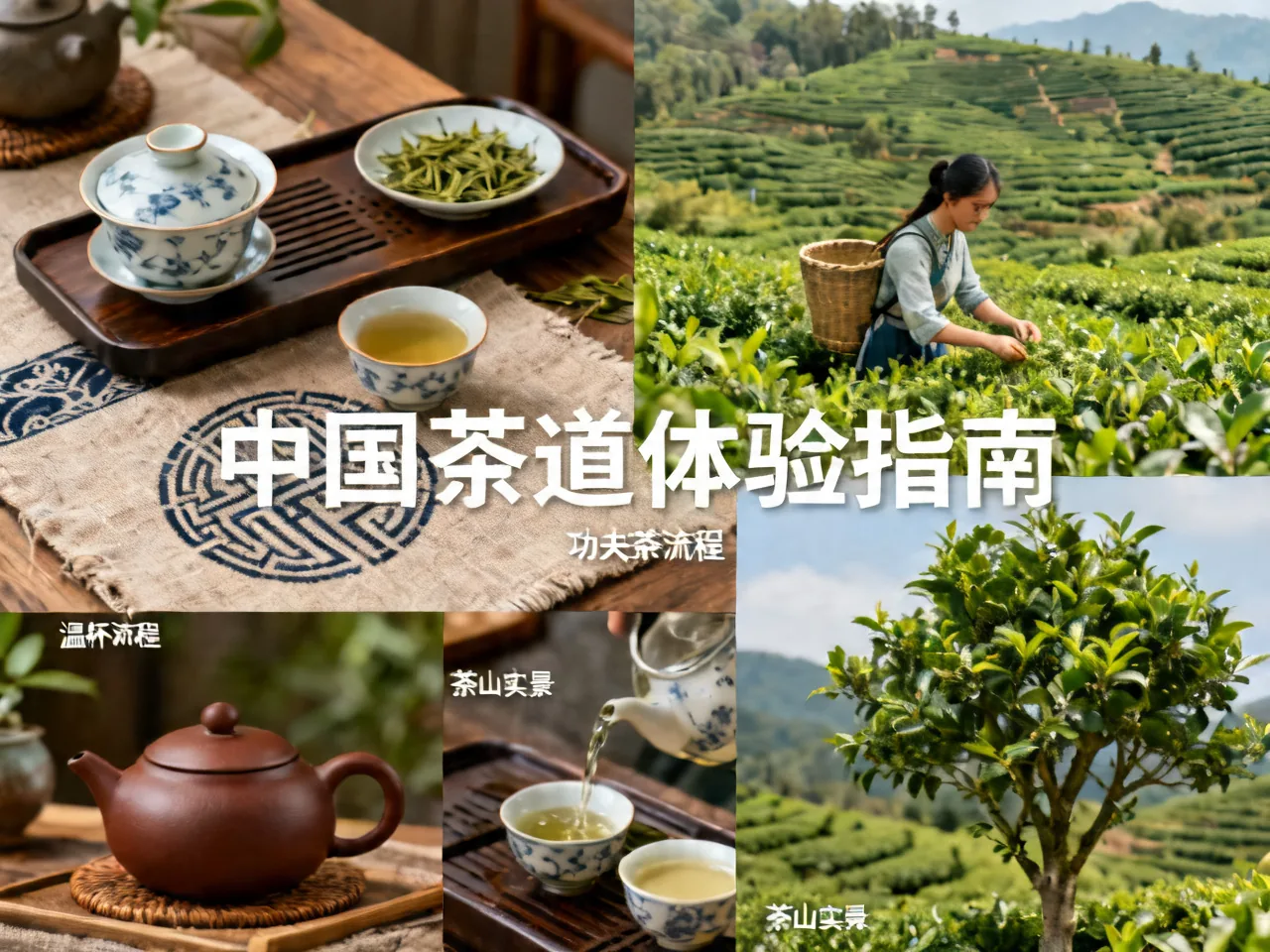
Rinse the tea — pour hot water quickly and immediately discard. This “awakens” the leaves and rinses off dust. Not for drinking.
Brew — pour boiling water from a height (“high pour”) to tumble the leaves and release flavor. First steep 15-30 seconds, adding 5-10 seconds each subsequent round.
Pour and serve — pour tea into the fairness pitcher first (to equalize strength), then distribute to individual cups. Fill only 70% — “a full cup insults the guest.”
Tea Tasting Etiquette
When receiving a cup, hold it with the right hand and support the bottom with the left, nodding slightly to the tea maker in thanks. Smell before sipping — first inhale the aroma, then take a small sip.
Recommended Places
- Wuyi Mountain, Fujian — birthplace of rock tea, authentic gongfu tea in farmers’ homes
- Chaozhou — birthplace of Chaoshan gongfu tea, teahouses on old streets are the real deal
- Chengdu People’s Park — outdoor bamboo-chair tea with ear cleaning and mahjong, the most Chengdu experience
Tips: Water temperature is crucial: green tea 80°C, oolong 95-100°C, black tea 90-95°C, Pu’er 100°C. Wrong temperature ruins even the finest leaves.
Related Reads
- Spring Bloom Map: China’s Most Beautiful Flower Fields
- Summer Escapes: Plateaus & Islands
- Huangshan Sea of Clouds & Welcome Pine: Beautiful in All Seasons
- Best Autumn Foliage Spots in China
- 10-Day East China Five-City Loop