Ten Chinese Street Snacks: Eating Your Way from North to South
The best souvenir from travel isn’t a fridge magnet — it’s a taste.
This list isn’t “the ten best” — that ranking is meaningless. These are ten street foods worth seeking out specifically, each representing a place’s culinary character.
1. Jian Bing Guo Zi (Tianjin/Beijing)
The vendor spreads a thin batter on a hot iron plate, cracks in an egg, scatters scallions and sesame, brushes on sweet bean sauce and chili sauce, adds a crispy cracker (or you tiao), folds it over. Done.
Under two minutes, ¥8–12, one of China’s most perfect breakfasts. Tianjin locals will tell you Beijing’s version isn’t authentic — they have a point, but Beijing’s is still excellent.
2. 臭豆腐(长沙/绍兴)/ Chou Dou Fu — Stinky Tofu (Changsha/Shaoxing)
The smell is the first barrier.
Changsha’s version is deep-fried — crispy shell, silky interior, topped with chili sauce and scallions. Shaoxing’s version is steamed or braised, deeper in flavor.
The rule: the smellier the stall, usually the better the product. The smell transforms during frying — what you taste is entirely different from what you smell.
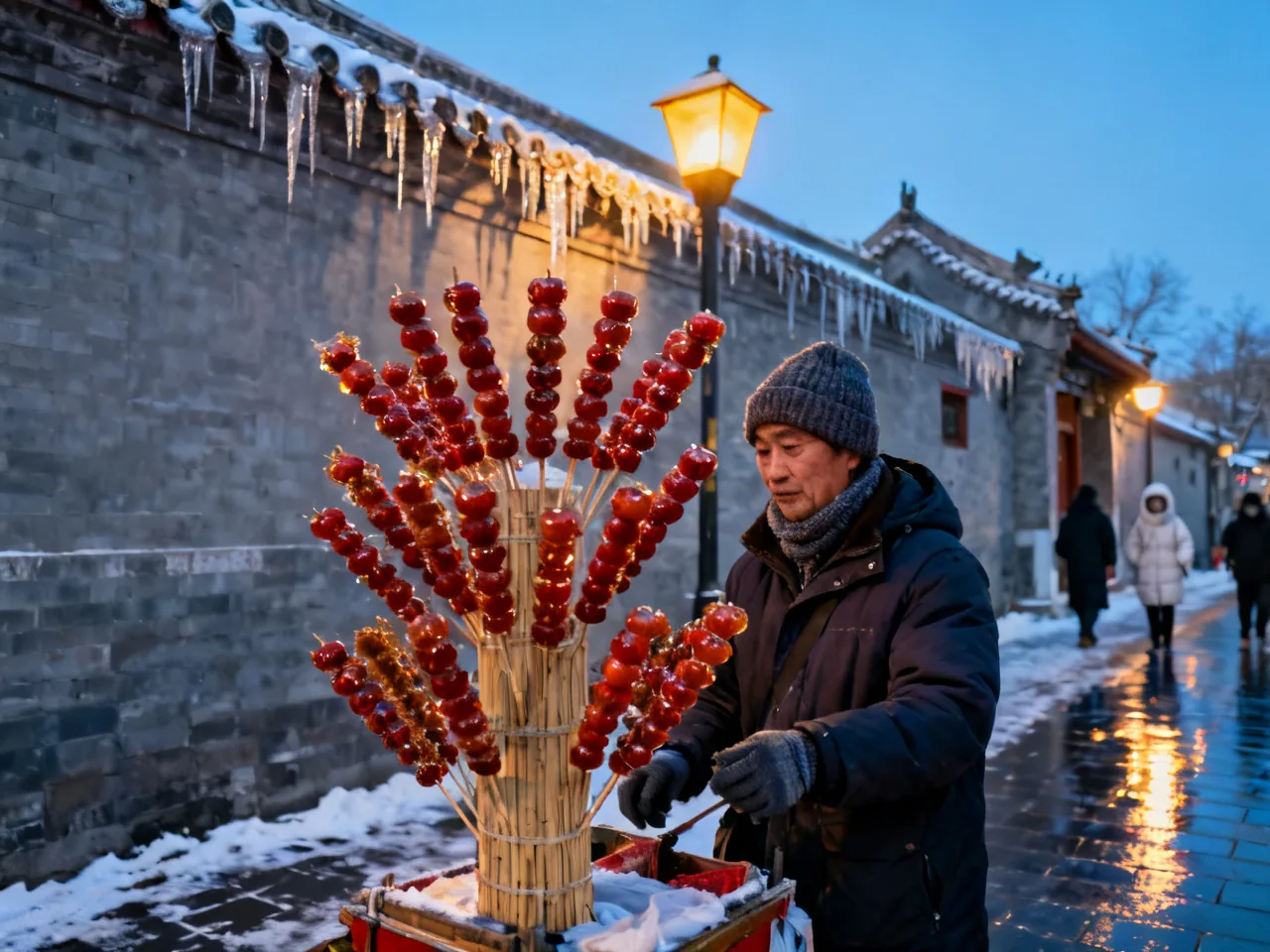
Tang Hu Lu — Candied Hawthorn (Northern Cities)
Seeing someone walk past in winter Beijing or Xi’an holding a stick of red candied hawthorn is one of those quintessentially Chinese visual moments.
Hawthorn berries on a bamboo skewer, coated in a thin layer of maltose syrup that hardens into a transparent shell. Perfect sweet-sour balance — first a crisp crack, then the tartness of hawthorn. Strawberry, tangerine, and grape versions exist now, but the original hawthorn is the classic.
Rou Jia Mo (Xi’an)
The bai ji mo (bun) is the key — not an ordinary flatbread, but baked with a specific technique that creates a crispy, layered shell with a soft interior.
Inside: pork braised for hours, chopped fine and mixed with braising liquid, fat and lean balanced, melting in the mouth. ¥5–8 each — one of Xi’an’s best value street foods.
5. Xiao Long Bao (Shanghai/Suzhou)
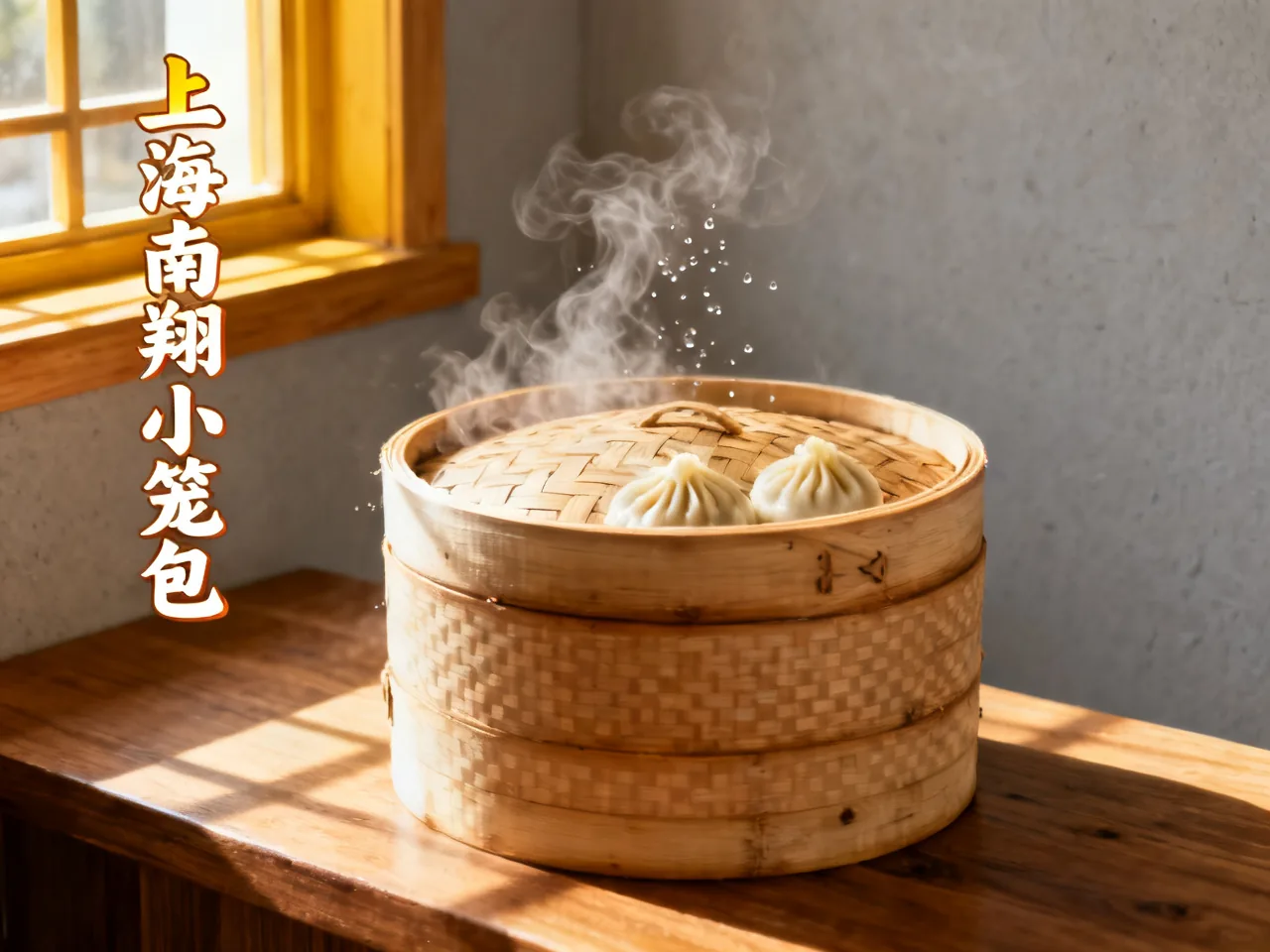
The soul of xiao long bao is the soup — skin thin enough to be translucent, enclosing meat filling and solidified pork skin gelatin that melts into broth when steamed.
Correct technique: pour shredded ginger and Zhenjiang black vinegar into a small dish, pick up the dumpling with chopsticks onto a spoon, bite a small hole, sip the soup first, then eat the filling and skin. Biting straight through burns your mouth and wastes the soup.
Kao Leng Mian — Grilled Cold Noodles (Northeast)
A Northeast specialty, hard to find authentic versions elsewhere.
Cold noodle sheets grilled on an iron plate until soft, an egg cracked on top, sausage slices added, sweet-spicy sauce brushed on, scallions and sesame scattered, rolled up and cut into sections. Soft and chewy texture, sweet-spicy sauce — a signature of Northeast night markets.
Ji Dan Guan Bing — Egg-Stuffed Flatbread (Nationwide)
The flatbread is cooked on an iron plate until it puffs up, then a chopstick pokes the bubble and beaten egg is poured inside, continuing to cook until set. Add lettuce, ham, sauce, fold and serve.
Found nationwide, ¥5–8, one of the most widespread street breakfasts. Looks simple, but a good stall produces layered, egg-fragrant results — the quality gap is significant.
Takoyaki — Octopus Balls (Nationwide, Japanese Origin)
Strictly speaking this is Japanese, but it’s been fully localized on Chinese streets.
Batter poured into iron molds, octopus pieces added, constantly turned with picks into spheres, cooked until crispy outside and soft inside, topped with teriyaki sauce, mayo, bonito flakes, and seaweed powder. The bonito flakes waving in the steam is a satisfying visual ritual.
Ci Ba — Glutinous Rice Cake (Southwest)
Glutinous rice steamed then pounded repeatedly until elastic, sliced and pan-fried or grilled, dipped in brown sugar or chili powder.
Guizhou’s version often includes houttuynia (fish mint herb) — distinctive flavor, polarizing. Yunnan’s version sometimes adds sesame and crushed peanuts. Soft, chewy, warming — one of the Southwest’s best winter street foods.
10. Oyster Omelette (Fujian/Taiwan)
Fresh oysters mixed with sweet potato starch batter and egg, pan-fried into a semi-translucent thick omelette, topped with sweet-spicy sauce and lettuce.
The sweet potato starch creates a texture between omelette and jelly — silky, springy, combined with the briny freshness of oysters. Xiamen and Quanzhou versions differ slightly; Taiwan’s version uses sweeter sauce.
These ten foods cover China’s culinary spectrum from Northeast to Southwest, breakfast to late-night snack. None require reservations, none require formal attire — just walk into the streets and follow the crowds.
For more Chinese food exploration, China’s Breakfast Map dives deep into eight cities’ morning flavors, and Hot Pot Ordering Guide helps you navigate your first hot pot without mistakes.
外链: Wikipedia — Street Food in China