A Vinegar Dish in a Northern Dumpling Shop Taught Me to Watch How Locals Eat
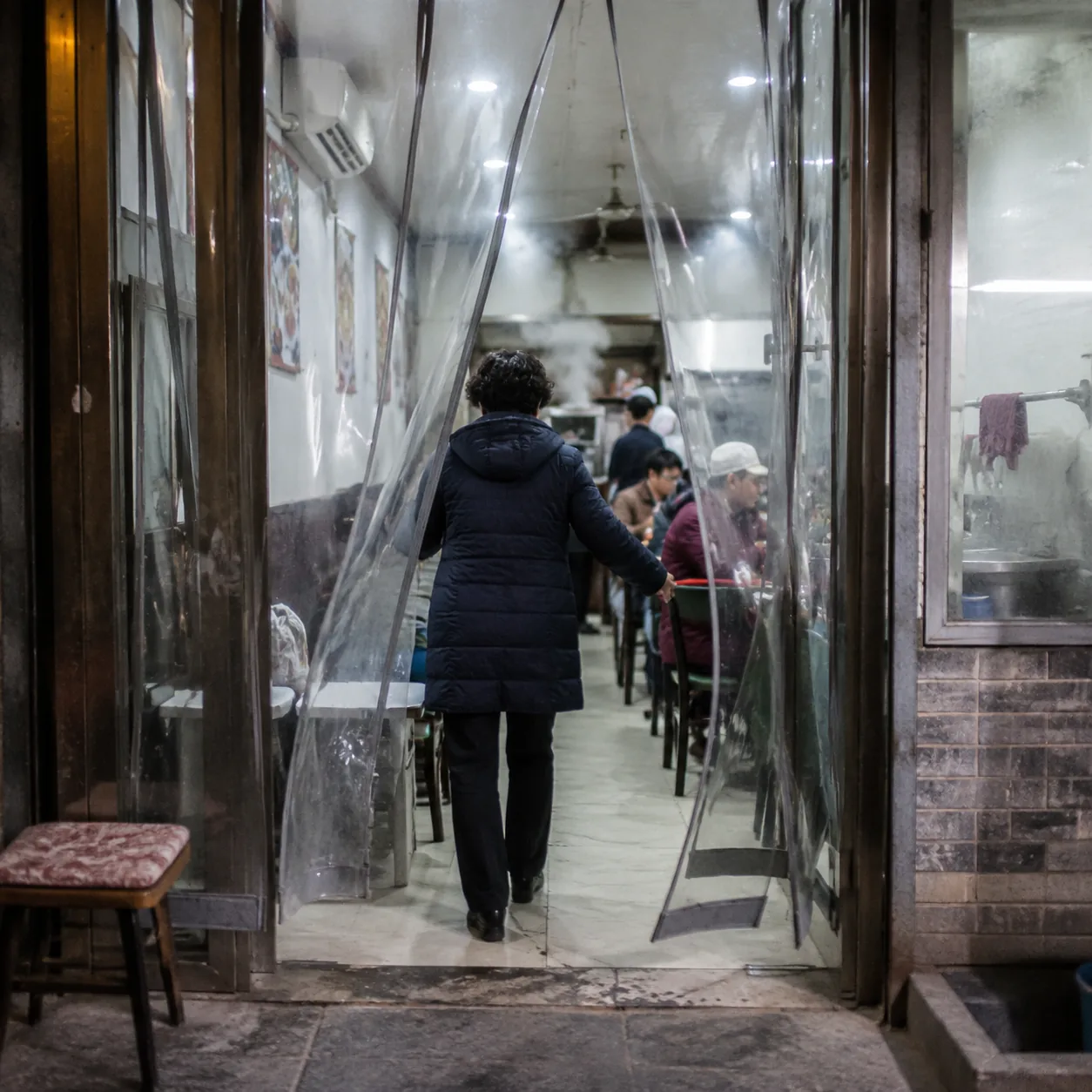
When I walked into that northern dumpling shop, the wind outside slapped the plastic doorway curtain against the frame. It was a dry, cold evening, and my fingers had not recovered from waiting at the bus stop. The light inside was bright and white, handwritten menus were taped to the wall, steam rolled out from the kitchen, and the air smelled of flour, hot water, and garlic.
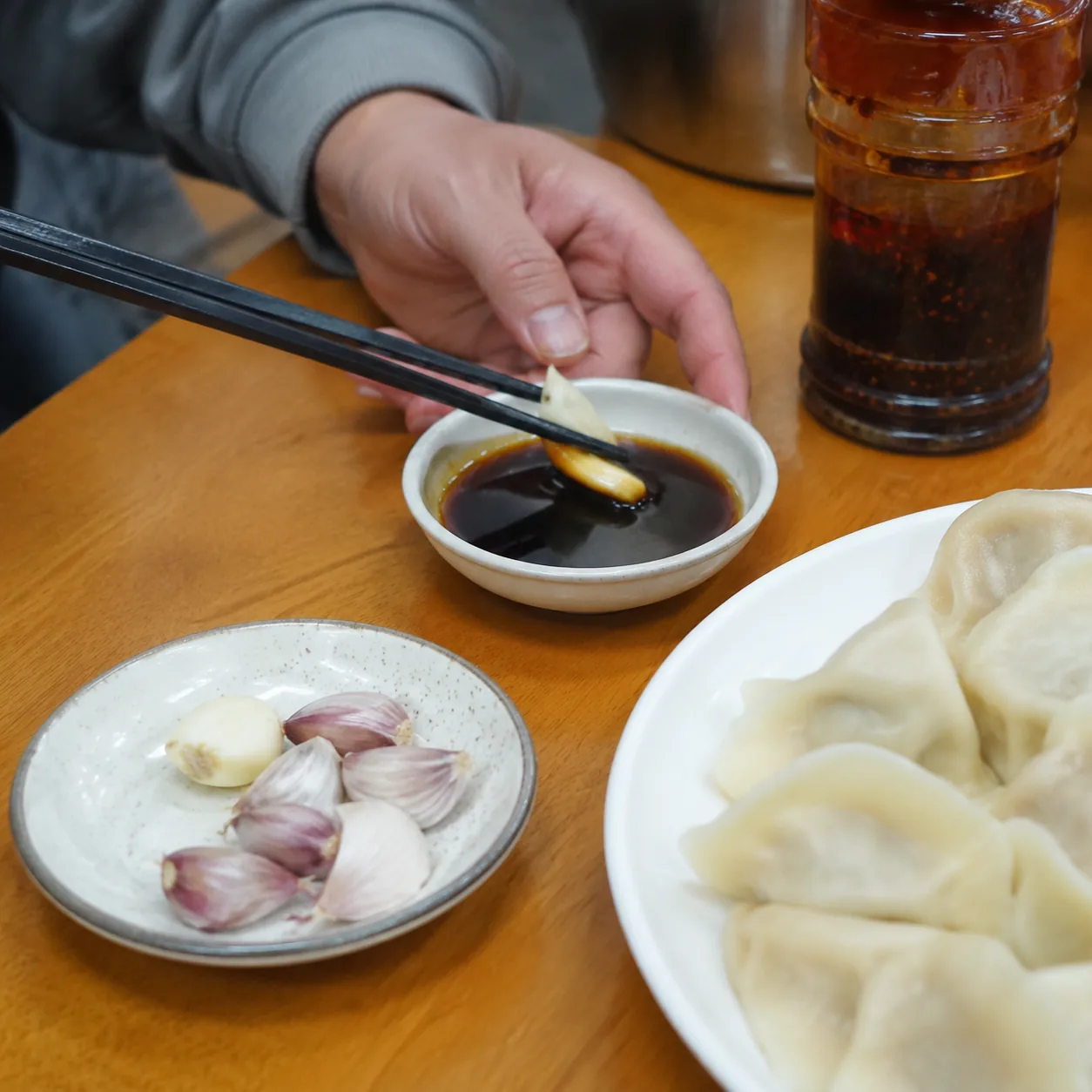
I had assumed eating dumplings was simple: order a plate, dip them in vinegar, finish, and leave. But after I sat down, I noticed every table had its own small world. Someone crushed garlic cloves, someone added chili oil to the vinegar dish, someone poured only a little vinegar as carefully as if mixing medicine. On my table there was also a shallow dish, its white porcelain rim worn gray.
When the server handed me the menu, she asked whether I wanted pork with cabbage or chive with egg. I understood the words but did not know which to choose. At the next table, two men in dark padded coats ordered pork with pickled cabbage, plus a head of garlic and a spoonful of chili oil. I copied them and ordered pork with pickled cabbage, trying to sound natural. The server looked at me and asked, “Do you eat garlic?” I hesitated for a second and said yes.
Before the dumplings arrived, the supporting characters had already made the meal lively. An old man by the door placed his hat on his knees and slowly peeled garlic. A young mother blew on warm water for her child. A cook leaned out from the counter and asked which table needed more vinegar. Everyone seemed to know the next step, while I stared at my empty vinegar dish like an exam paper without instructions.
I first poured half a dish of vinegar. The color was darker than I expected, almost like strong tea, and the sour smell immediately rose into my nose. I was about to drop a whole garlic clove into it when one of the men next to me laughed and said, “Don’t soak it whole. Smash it first.” He said it casually, not mockingly, as if reminding a newly arrived relative.
He picked up garlic from his own table and pressed it gently with the blunt end of his chopsticks. The clove split open and released its smell at once. “This way the flavor comes out,” he said. I copied him, failed the first time, and the clove slipped from the edge of the dish, almost rolling off the table. The young mother saw it and handed me a napkin, smiling. “Take your time. The dumplings are not cooked yet.”
That sentence relaxed me. I began to watch how the neighboring table prepared their vinegar dishes. One of the two men liked a stronger sour taste and filled his dish high. The other poured only a shallow layer, then added a few drops of chili oil, red circles floating on black vinegar. They did not debate a standard, yet each was certain in his own way. Even in the same dumpling shop, there was no single correct dipping method.
When the dumplings arrived, the plate was large and the steam looked like a small cloud. The wrappers had tiny wrinkles, the edges were pressed tight, and the pork with pickled cabbage pushed the dough into a rounded shape. I picked up the first one too quickly, pierced its belly with my chopsticks, and juice ran onto the plate. I felt embarrassed, and the man next to me spoke again: “Don’t grip the belly. Hold the edge.”

I held the second dumpling by its edge and lowered it into the vinegar dish. It did not sink completely; only one side caught the dark shine of vinegar. I instinctively wanted to soak it longer, but the old man by the door shook his head and told me, “Just dip it. Don’t soften the wrapper.” His voice was not loud, but it carried the clean firmness of a northern winter.
I followed his advice and bit a small opening. Steam and the smell of pickled cabbage rushed out. The vinegar did not cover the filling; instead, it made the pork’s richness clearer. Garlic heat arrived afterward, and the chili oil gave only a small warmth to the tongue. I suddenly understood that the little vinegar dish was not an accessory. It was the dumplings’ second stage.
At many travel tables, I was too used to asking, “How should I eat this?” The question sounds humble, but it can also make me lazy, because once someone gives an answer, I no longer need to watch. That night in the dumpling shop, no one formally taught me, yet everyone left clues through their hands: smash the garlic, do not overfill the vinegar, add chili oil according to mood, hold the dumpling by the edge.
The scene in the shop kept changing. The door curtain lifted again, and three workers came in, bringing cold air and spots of mud. They sat down and called for three plates of dumplings and two bottles of beer. One of them peeled garlic quickly, as if taking apart a familiar tool. The server behind the counter wrote nothing down, yet remembered every table’s taste: who wanted pickled cabbage, who did not want garlic, who needed extra chili oil.
Watching them eat, I noticed that speed had its own rules. The workers ate quickly, but not chaotically. The old man ate slowly, but without hesitation. The young mother bit open a dumpling to cool it before giving it to her child. Each speed had to do with the body, with a day’s fatigue, age, caring for someone, or being cared for. A way of eating was not only technique; it was a rhythm of life.
My third dumpling went better than the first two. I held it steadily by the edge, dipped it lightly in vinegar, let the smashed garlic cling to the wrapper, and bit from the side. Sourness, heat, meat aroma, and the fermented taste of pickled cabbage separated in layers and then came together in my mouth. I did not receive a grand revelation; I simply felt that I had finally not disturbed the dumpling.
The man beside me asked where I was from. I said I was a foreigner traveling in China. He nodded and told me he had gone south when he was young and had found sweet zongzi strange the first time he ate it. “With food, don’t rush to call it weird. Look twice,” he said. In the noisy dumpling shop, the sentence did not sound solemn at all, which made it exactly easy to remember.
I added a little more vinegar to my dish, not too much this time. The red chili oil spread at the edge, and the bits of garlic sank below like a map of the evening. I suddenly felt that a vinegar dish could reveal personality: some people wanted direct sourness, some wanted a reminder of heat, some feared the garlic smell would stay too long, and some felt dumplings without garlic were not really dumplings.
By the last few dumplings, I had developed a small order of my own. Hold the edge first, dip lightly in vinegar, touch a bit of garlic; if the wrapper was thick, add a little more chili oil; if the edge had already softened, eat it directly. This order did not come from a book. It was assembled slowly among the neighboring table, the old man, the server, and my own failed chopsticks.
When I paid, the server looked at my nearly empty vinegar dish and said, “You know how to eat now.” I knew she was joking, but those three words still pleased me. Knowing how to eat did not mean I had mastered northern food, and it did not mean I would never make a mistake again. It only meant that on this evening, I had not locked myself inside the transparent box of a tourist.
When I stepped out of the shop, the cold wind lifted the garlic smell from my sleeves. I had worried that the smell would linger too long, but while waiting by the road for a bus, it made me feel grounded. Behind me, the dumpling shop was still lit, its plastic curtain lifting and falling like a blinking white eye. Inside, new customers sat down, and new vinegar dishes were filled and adjusted.
What that small vinegar dish taught me was not a fixed ratio. It taught me to lift my eyes from my own plate and watch how others handled food, how they made tiny choices inside familiar flavors. Learning while traveling is often not formally announced. It hides in the sound of a garlic clove splitting, and in a neighboring table’s reminder to hold the edge.
The bus finally came. I sat by the window, my fingers still carrying a little vinegar and garlic. Outside, the dumpling shop sign slowly moved backward, and steam spread near the doorway. Looking toward the vinegar dish I could no longer see, I understood that what I carried away was not a set of rules, but the patience to watch for a while before eating the next time I sat down.