Luosifen: The Stinky Noodle That Conquered the World
Let’s get one thing straight: luosifen’s stink isn’t the smell of something gone bad — it’s the smell of fermentation. Like blue cheese, natto, or stinky tofu, it belongs to that category of food that smells alarming but tastes incredible. If you can handle durian, luosifen is a walk in the park.
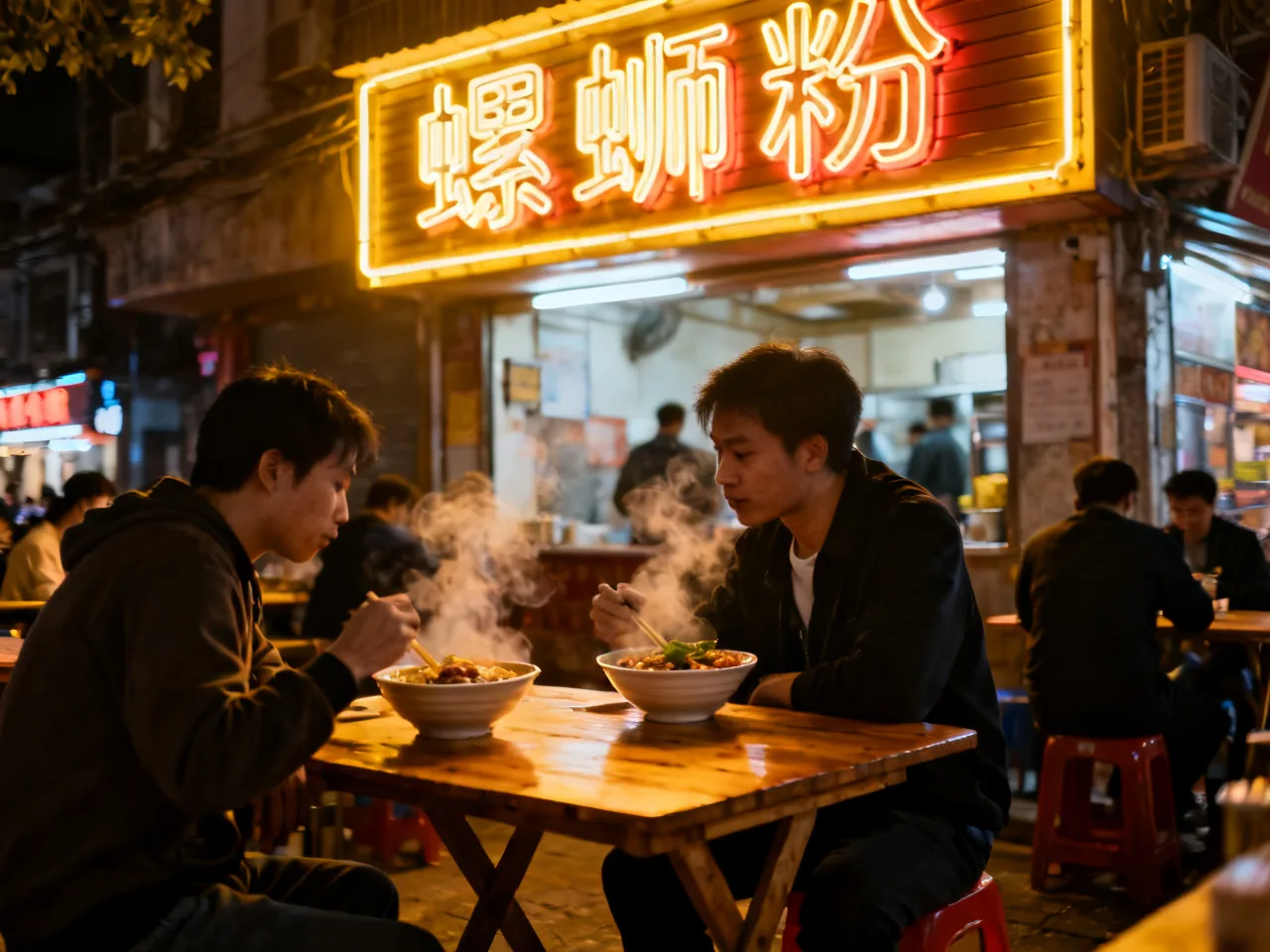
The story starts in Liuzhou, Guangxi. This modest industrial city of under five million people carved its name into China’s culinary map with a single bowl of noodles. Liuzhou locals have been eating luosifen since the 1980s, when it was just a humble night-market snack — river snails simmered into broth, rice noodles as the base, pickled bamboo shoots for punch. Three to five yuan a bowl, perfect for factory workers coming off the night shift.
Walk down any alley in Liuzhou and that signature sour-funk hangs in the air. Gubu Street Night Market is a pilgrimage site for serious eaters — dozens of luosifen shops crammed together, each claiming to be “authentic.” One detail I noticed: locals order with “extra pickled bamboo shoots, extra spicy, extra tofu skin,” but never “less bamboo shoots” — because the bamboo shoots are the soul. Remove them and it’s not luosifen anymore. A standard bowl in Liuzhou runs 8-15 RMB, with toppings including at minimum pickled bamboo shoots, fried tofu skin, peanuts, wood ear mushrooms, pickled long beans, and snail broth.
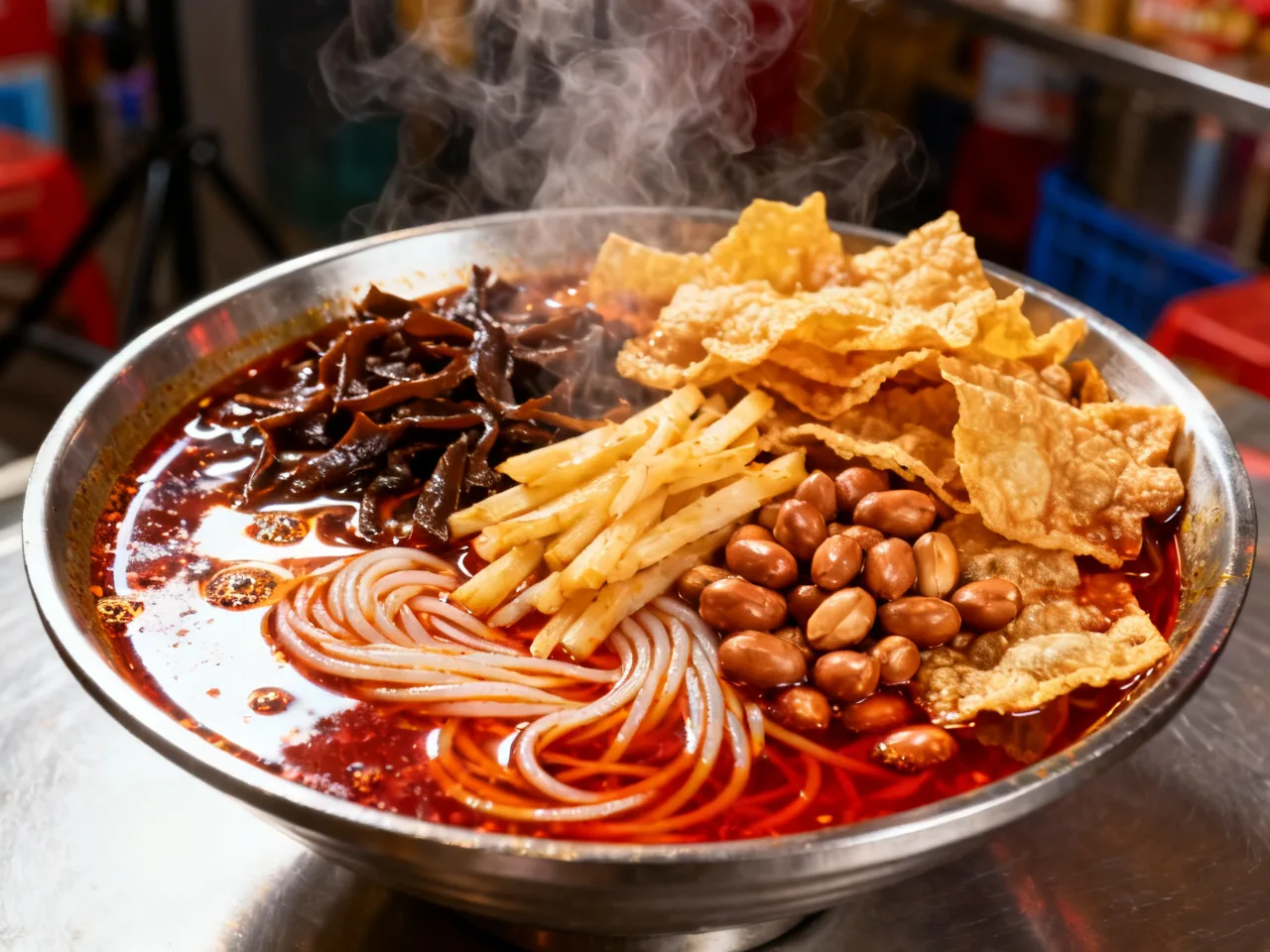
Luosifen’s real breakout came after 2012. The documentary “A Bite of China” put countless regional foods on the map, and though luosifen wasn’t a featured star, it went viral through social media “stink challenges.” In 2014, the first packaged instant luosifen hit the market — long shelf life, easy to ship, shattering geographic barriers overnight. By 2024, Liuzhou’s packaged luosifen industry surpassed 20 billion RMB in annual output, producing over 8 million bags daily, exported to 28 countries and regions.
This bowl of noodles even changed Liuzhou’s urban destiny. The former industrial city reinvented itself as “Luosifen Capital,” building a luosifen industrial park, a luosifen museum, and even vocational schools with luosifen majors. If you’re still hungry after eating your way from Guangzhou to Chaoshan, consider a detour to Liuzhou to experience a city reshaped by a single bowl of noodles.
In Chinese supermarkets in New York’s Flushing, luosifen permanently occupies prime shelf space in the instant food aisle. Chinatowns in London, Sydney, and Toronto are no different. On TikTok, “luosifen challenge” videos have racked up over 500 million views, and foreign vloggers’ expressions shifting from grimace to delight make the best advertising money can’t buy. According to public data from China’s General Administration of Customs, luosifen has become one of China’s highest-export-volume regional specialty foods.
Some advice for first-timers. For your debut bowl, eat at a restaurant rather than cooking the packaged version — restaurant broth is made from real snails, and the umami depth is on another level. If you’re outside Liuzhou, look for shops run by Liuzhou natives; asking the owner if they’re from Guangxi is a reliable litmus test. For packaged versions, “Haohuanluo” and “Luobawang” have the most consistent reputations. And when you cook it at home, open a window — otherwise the entire floor will know what you’re having.
The magic of luosifen lies in its contradictions: stinky yet fragrant, sour yet spicy, soft yet crunchy — all opposing taste experiences reconciled in a single bowl. That’s probably why it traveled from a Liuzhou night-market stall to the entire world. Great food needs no explanation; one bite and you get it.