敦煌からトルファンへ:3日間でシルクロードを横断。
Late last September, I stood on the platform at Dunhuang station with two bottles of water and a bag of beef jerky stuffed in my backpack, about to board train K9668 and barrel through the tail end of the Hexi Corridor straight into Xinjiang. Honestly, I’d hesitated for days before committing — three days from Gansu to Xinjiang, is that even enough? Turns out it wasn’t just enough; it might be the best-value Silk Road stretch I’ve ever done.
Day 1: Mogao Caves & Yadan — Dunhuang’s Two Faces
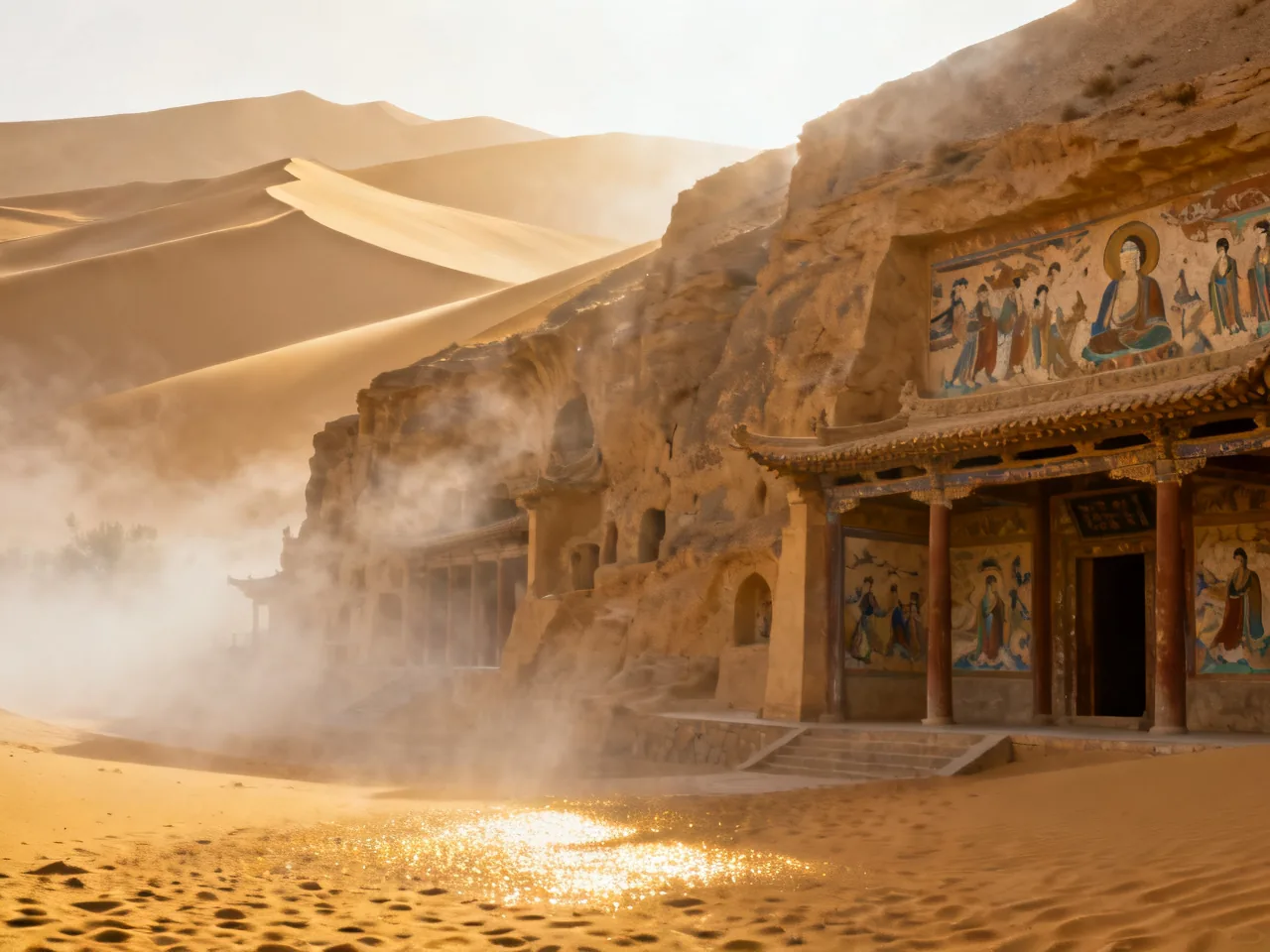
At 7 AM I left my hostel in Dunhuang — Tuoling Inn (驼铃客栈), a standard twin at ¥128/night with breakfast included, run by a no-nonsense guy surnamed Ma — and grabbed a taxi straight to the Mogao Caves. Peak-season tickets are ¥238, covering two intro films and a guided tour of eight grottoes. Lots of people gripe about “only eight caves,” but here’s my advice: book A-class tickets on the official Mogao reservation platform well in advance. Otherwise you’re stuck with emergency tickets (¥100) and only four caves.
I stood a long time at Cave 17, the Library Cave. The guide told us that when the Taoist priest Wang Yuanlu first cracked it open, he had no idea what he’d found. Tens of thousands of scrolls, most of which ended up carted off by Stein and Pelliot. Standing before that small opening, you can’t help thinking: if we could rewind history a hundred years… Anyway, let’s not go there. It just makes my blood pressure spike.
IMAGE_PLACEHOLDER_1
At 2:30 PM I hired a car to Yadan National Geopark (shared ride about ¥80/person, private charter around ¥400; roughly two hours from town). How do I put this — photos simply cannot capture Yadan. Wind-eroded mounds rise from the Gobi like an abandoned fortress city. At sunset the whole landscape turns deep crimson, the wind howls, and you feel like you’re on Mars, not northwest China. My driver Lao Zhang said locals used to call it “Ghost City” because on windy nights the sounds are straight-up terrifying. I believe him.
Back in Dunhuang that evening, I hit Shazhou Night Market for a bowl of donkey-meat yellow noodles (¥25) and a cup of apricot-skin juice (¥5). Dunhuang’s apricot juice is legitimately delicious — tart, sweet, and way healthier than milk tea. Full and happy, I headed back to the inn to pack up, because tomorrow I’d be on the road early.
Day 2: Crossing No-Man’s-Land from Gansu into Xinjiang
This day is the soul of the entire trip. I took train K9668, departing Dunhuang in the morning and arriving at Turpan North station in the afternoon. Hard seat runs about ¥90, hard sleeper around ¥160. The carriage was mostly Uyghur uncles and aunties; one guy lugged an entire crate of grapes on board. It was wonderfully, messily alive.
If you’d rather not take the train, you can drive the G3011 expressway. It’s about 500 km, and you’ll pass through Xingxingxia — the provincial border between Gansu and Xinjiang and an important Silk Road checkpoint. My friend drove this route last year and said that after Xingxingxia, you mentally shift your clock two hours later (Xinjiang officially uses Beijing time but daylight runs about two hours behind), and the scenery flips from Gobi to salt flats to the distant Tianshan Mountains shimmering on the horizon — “like someone hit a scene-change button.” If you’re planning to drive this stretch, check out this high-speed rail route guide for waypoint info that overlaps nicely.
Stepping out of Turpan North station, the heat hit me like a wall — even in late September, daytime temps still top 30°C here. I’d pre-booked the Turpan Silk Road Oasis Hotel (king room ¥260/night with breakfast); it’s a 15-minute walk to the Karez Wells scenic area. After dumping my bags, I went straight to Karez Paradise (ticket ¥40), a site showcasing the ancient underground irrigation system. Basically, people in an insanely arid environment hand-dug subterranean channels to divert Tianshan snowmelt to the oasis. The engineering rivals the Great Wall in sheer ambition.
Dinner was at Afanti BBQ near the hotel — a big-plate chicken (dapanji) for ¥68, lamb skewers at ¥5 each, plus a naan bread (¥3). Stuffed. Turpan’s grapes are legendary; at roadside fruit stalls, seedless white grapes go for ¥8/kg — ridiculously sweet and cheap. I bought a kilo as snacks and demolished them all climbing the Flaming Mountains the next day.
Day 3: Flaming Mountains, Jiaohe Ruins, and a Farewell
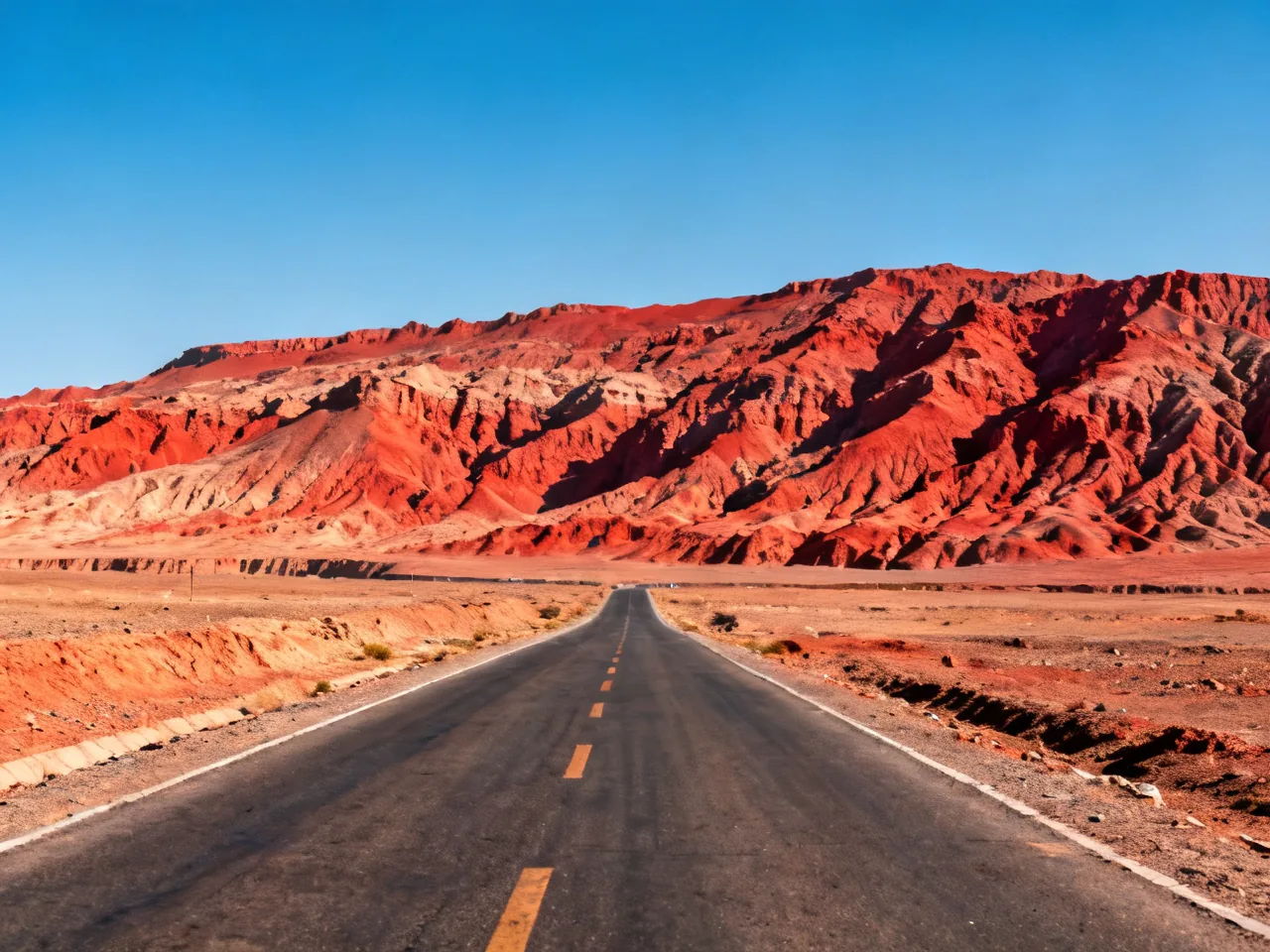
Flaming Mountains scenic area tickets are ¥40, but honestly the park itself is a bit touristy — a giant thermometer sculpture and some Journey to the West statues. The real spectacle is outside the park: you stand by the highway watching undulating red sandstone ridges shimmer with heat haze under the sun, as though the mountains are literally on fire. In Journey to the West, the Monkey King borrowed a magic fan to put out these flames. I reckon he should’ve borrowed two more.
IMAGE_PLACEHOLDER_2
In the afternoon I visited Jiaohe Ruins (ticket ¥70), one of the world’s largest and oldest rammed-earth city ruins, over 2,000 years old. The city sits on a plateau between two rivers (hence “Jiaohe,” meaning “where rivers meet”), and the buildings weren’t constructed upward but carved downward into the earth — yes, a city excavated from the ground. Walking through it, surrounded by crumbling loess walls under a vast blue sky, the only sounds are the wind and your own footsteps. That desolate beauty reminded me of a line I’d read in a two-week China itinerary: “China’s best scenery is often in its least accessible places.”
That evening I swung by the Grape Valley scenic area entrance (ticket ¥75, though peeking from outside gives you most of the experience). Vine-covered corridors with sunlight filtering through leaves in an impossibly vivid green. Locals drink tea, play chess, and chat beneath the trellises — a pace of life I deeply envy. I picked up a few boxes of raisins at a roadside stall (¥15/box) as gifts for family back home.
Practical Bits & Pieces
On timing: Late September to mid-October is the golden window for this route. Summer is brutally hot (Turpan’s surface temperature can hit 70°C), and in winter many sites close or slash their hours.
On budget: My three-day total came to roughly ¥1,800 (excluding transport to Dunhuang from elsewhere), covering accommodation, tickets, food, and local transport. Hostel-and-street-food mode could bring that down to about ¥1,200.
On safety: Security checks in Xinjiang are stricter than in inland China — ID checks at stations, scenic-area entrances, etc. Foreign visitors, keep your passport on you at all times. Don’t stress; it’s just extra process — public safety is excellent. If this is your first time visiting China, don’t worry; Xinjiang is one of the safest regions in the country.
Three days, from the murals of Mogao to the heat waves of the Flaming Mountains, from Yadan’s Ghost City to Jiaohe’s millennial ruins — this Silk Road stretch isn’t long, but every step lands on history. If you’re tempted to try it, head out in September. And bring extra water.